
REVIEW · CRUISES & BOAT TOURS
Cruise Shore Excursion – Private Tuk Tuk Tour to the Historic Center
Porto feels different at tuk tuk height. This private 3.5-hour shore excursion strings together Porto’s top landmarks with guided history, using small streets where cars and big buses usually struggle. I like that you get a real “first look” at the city’s geography, not just a list of stops.
I especially like two things: the personalized pace of a private vehicle, and the chance to glide between scenic viewpoints without grinding up steep hills on foot. I also appreciate the included port wine glass, which turns a quick lookout stop into something memorable. One consideration, plan for extra costs if you want to go inside ticketed sights like Torre dos Clérigos and Livraria Lello, since monuments entrance is not included.
In This Review
- Quick hits: what makes this Porto tuk tuk tour worth it
- Why a private tuk tuk works so well in Porto
- Price and value: what you’re paying for in Porto
- Pickup, timing, and how to not lose daylight
- Seafaring and industrial Porto: the early landmarks that set the tone
- Cordoaria Garden and the João Chagas story: a breather with real character
- Passeio das Virtudes: Douro views that make the river feel close
- Portuguese Centre for Photography: a polygonal building with a past
- Torre dos Clérigos: the skyline payoff, with an extra-ticket decision
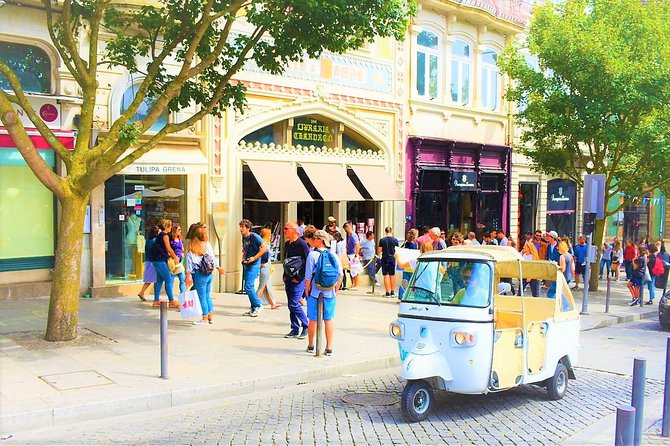
- Livraria Lello: Art Nouveau facade and the practical need for smart tickets
- Church time in Porto: Iglesia do Carmo and Igreja dos Carmelitas
- Ribeira and the Bolsa area: money, markets, and a ship-shaped feel
- Igreja de São Francisco and the golden interior factor
- Bridges that make Porto make sense: Maria Pia, D. Luís I context, and the modern arch
- Mosteiro da Serra do Pilar: the circular monastery terrace panorama
- A modern bridge finale: the Ponte do Infante type view
- Praça da Batalha and the theatre zone: Porto’s stage energy
- Bolhão Market, plus a note on closures
- Port wine, and how that tasting stop usually feels
- What to watch for: small practical notes that can change your day
- Should you book this Porto private tuk tuk shore excursion?
- FAQ
- How long is the private tuk tuk tour in Porto?
- Is this tour private?
- Do you offer pickup from cruise ports?
- Is the tour in English?
- Is port wine included?
- Are entrance tickets for monuments included?
- What if we miss the tour because the ship is late?
- Is there free cancellation?
Quick hits: what makes this Porto tuk tuk tour worth it
- Private tuk tuk access through narrow, hilly streets, so you spend more time looking and less time walking
- Guided context on Porto’s history, culture, and the “why” behind landmarks, not just dates
- Scenic stops built around viewpoints over the Douro River and its mouth
- Tuk tuk practicality for cruise days, with pickup at cruise port gates and a return right back to your meeting spot
- Port wine glass included during the ride at a designated tasting moment
- Free vs. ticketed sights mixed thoughtfully, but you still decide what to pay for inside
Other centuries-deep routes through Porto we have joined
- Douro Valley: Historical Sites, Wine Experience, Lunch & Cruise★ 5.0 · 5,133 reviews
- Porto: Historic City Center Walking Tour★ 4.7 · 1,172 reviews
- Porto: An Intimate Fado Show in a Historical Tavern★ 4.8 · 1,093 reviews
- Porto: Historical Center Walking Tour★ 4.8 · 898 reviews
Why a private tuk tuk works so well in Porto
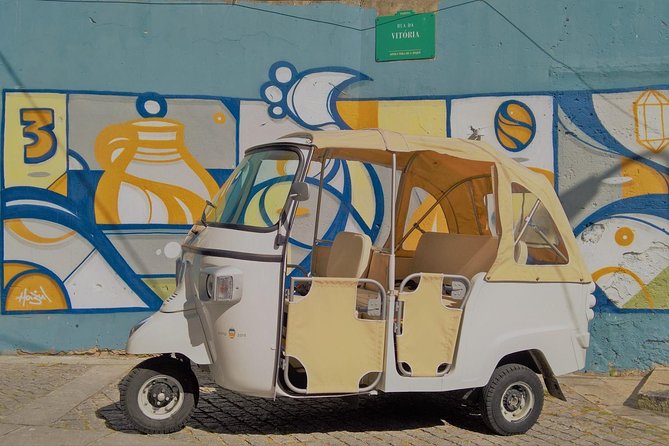
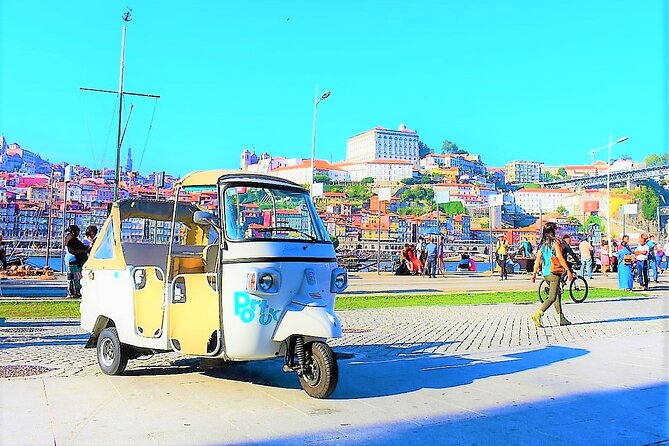
Porto is famously hilly. That means your time disappears fast when your day is limited, like most cruise shore visits. A tuk tuk lets you cover serious ground while you stay seated, and it can turn onto tighter streets where larger vehicles often can’t go.
The other big win is viewpoint efficiency. This tour builds stops around places that give you context for where things sit in the city, especially along the Douro. You end up with a mental map that helps you enjoy the rest of your day, whether you keep exploring on your own or head back for a meal.
Finally, the “private” format matters here. You’re not stuck watching everyone else’s pace or battling the usual group bottlenecks. You can pause for photos when it makes sense and spend time looking out from key spots without feeling rushed.
Price and value: what you’re paying for in Porto
At $106.93 per person for about 3 hours 30 minutes, the price isn’t just for transportation. It includes a driver/guide with live commentary, plus a local guide, and an alcoholic port wine glass.
That mix is the value. Porto is dense with buildings that look similar from street level, until someone explains what you’re actually seeing. This tour’s strength is that it gives you a guided orientation across multiple neighborhoods and architectural styles, including baroque churches, photo-worthy facades, and bridges that shaped the river crossings.
The one “gotcha” in value is also clear in the details: entrance fees for monuments are not included. Many stops are free, so you can still get a full visual hit without extra spending. If you want to go inside major ticketed attractions, you should budget time and money for those choices.
Pickup, timing, and how to not lose daylight
Your pickup is at the pier outdoor gate, from Leixões Port, Matosinhos Port, and Doca Norte. The tour starts no later than 1 hour after your ship arrives. That timing is designed for cruise logistics, where disembarkation can be slow and you don’t want a long wait.
From how this is run, I’d treat the first minutes like a mini mission. Get your shore time organized, be at the pickup point early, and keep your phone ready for the guide to find you fast. If you’re booking for a cruise, this kind of tight schedule is why people emphasize advance planning.
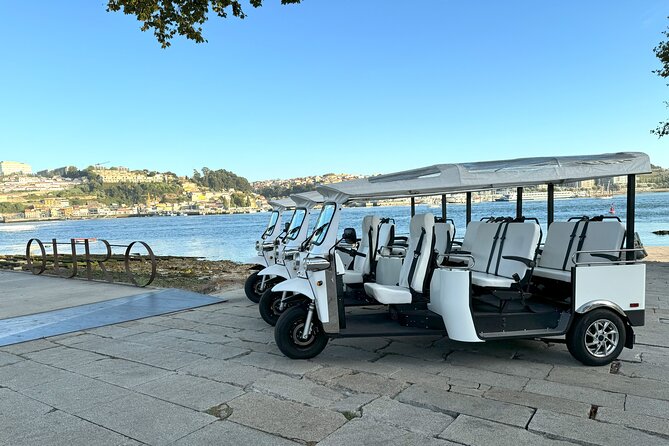
Also, the roads can be bumpy. One review noted the cobblestones can be rough, and another mentioned the tuk tuk was not comfortable for 3 people. If you have back issues or you’re traveling as a larger group, it’s worth thinking about vehicle fit before you commit.
Seafaring and industrial Porto: the early landmarks that set the tone
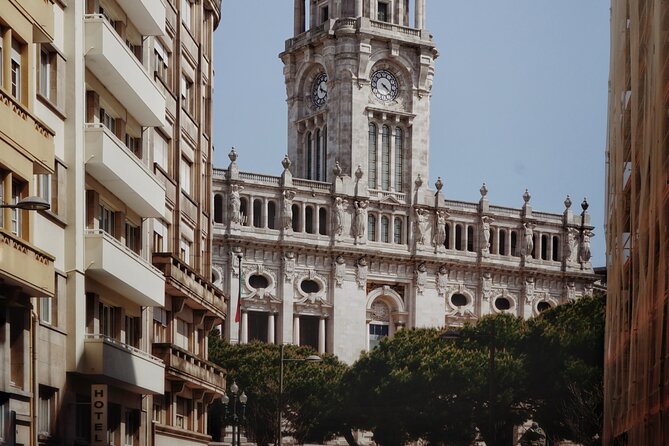
The tour starts with a sculpture that reflects Porto and Matosinhos’ seafaring and industrial heritage. It’s visually themed with details meant to reference smokestacks and lighthouses, and the net structure nods to the fishing industry. This works well as an opener because it frames Porto as a port city, not just a “pretty old town.”
Next you pass a striking hexagonal granite tower with a red balcony and lantern, plus a small annex building with white plastered walls. Even without going inside, it gives you an early taste of the city’s mix of stone, function, and ornament.
Why I like this early phase: you’re not staring at the same historic church facade for the first 30 minutes. You get variety, plus context about the city’s working identity before the tour moves into the big sightseeing hits.
More private, just-your-group bookings in Porto we have reviewed



Cordoaria Garden and the João Chagas story: a breather with real character
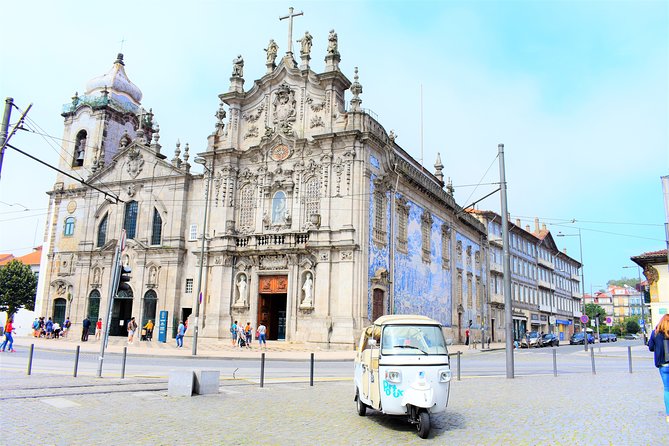
Cordoaria Garden, also known as Jardim de João Chagas, is a strong mid-tour reset. It was shaped starting in 1865 to 1866 by German landscaper Emile David, and the garden’s name is tied to rope makers who worked there for about 200 years.
What you’ll actually notice when you arrive is that the garden feels like a mix of public park and mini architectural showcase. The design includes elements like a granite fountain, Nasoni obelisks, and a small “romantic chalet” built in 1874. There’s also a miniature golf course, and the bandstand sometimes hosts philharmonic concerts.
One fun detail you might not expect in a garden stop is the public bathroom built in 1910, decorated with Art Nouveau tiles and finished in a distinct style. It’s the kind of “only-in-Porto” detail that makes a tour feel like more than check-the-box sightseeing.
If you’re someone who likes to slow down for 10 minutes and look around, this is a good stop. If you’re chasing only the most famous icons, it still works because it teaches you about how Porto spaces art, industry, and leisure.
Passeio das Virtudes: Douro views that make the river feel close
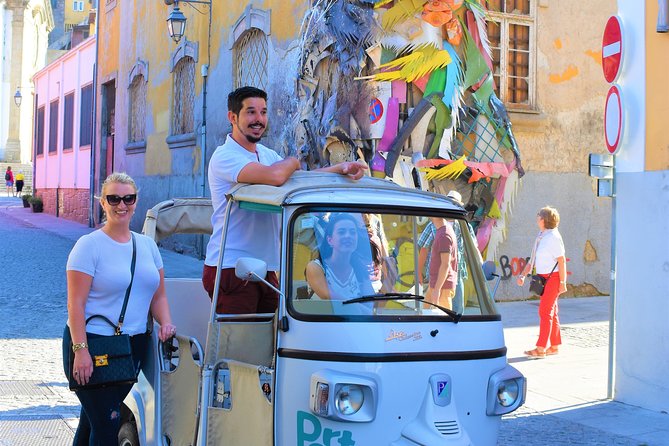
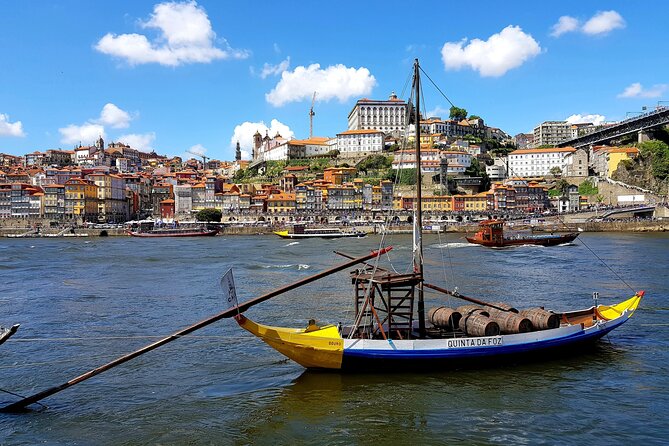
From the viewpoint at Passeio das Virtudes, you get a view over the Douro toward the river mouth. In the foreground you’ll see the Fountain of Virtudes, and the terraces stretch down toward São Pedro de Miragaia.
Along the river, you may also spot the imposing building that used to be the former Customs House. That’s a helpful visual cue, because it connects Porto’s river life to the city’s money and movement over centuries.
This stop is short, around 10 minutes, so you’ll want to use it strategically. Take a photo, then ask yourself what you want to remember about Porto’s geography: where the river bends, where the bridge lines up, and where the old city sits against the water.
Portuguese Centre for Photography: a polygonal building with a past
A big architectural shift happens when you arrive at the granite building designed in a polygonal shape. It dates from 1582, then was rebuilt in 1767 in neo-classical style by architect Eugénio dos Santos.
What makes it interesting is the function layering. The building has a geometric sequence of windows and multiple facades with distinct roles, including an area historically used for prisoners. It was restored between 1999 and 2002 under Eduardo Souto de Moura and Humberto Vieira, and it now houses the Portuguese Centre for Photography.
Even if you don’t go inside, this stop helps you understand Porto as an evolving city. Stuff changes roles over time, and the buildings don’t just become static “old things.” They keep adapting.
Torre dos Clérigos: the skyline payoff, with an extra-ticket decision
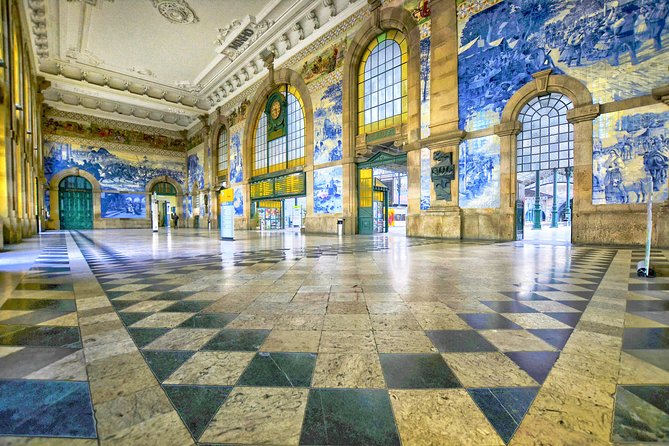
Torre dos Clérigos is one of Porto’s most emblematic monuments, a baroque tower by Nicolau Nasoni, built in the early 1700s. The big feature is the climb, with 240 steps for a panoramic view over Porto and the Douro.
The key practical point: admission is not included, and the climb takes effort. You’ll want good shoes and a willingness to climb, especially if you’re already tired from hills earlier in the day.
Still, if you decide to pay, the payoff is the perspective. From the top, Porto’s layout clicks. You see how bridges, hills, and riverfront neighborhoods relate to each other.
Livraria Lello: Art Nouveau facade and the practical need for smart tickets
Livraria Lello is known for its Art Nouveau facade with neo-Gothic details, and inside you’ll find a famous staircase plus a large stained-glass skylight. The library opened in 1906, and it’s decorated with painted plaster that imitates wood.
One review detail is crucial for your planning: if you want to go inside, buy a skip-the-line ticket online, because the regular lines can be huge and there often isn’t enough time during a shore tour.
Admission is not included here, so your choice is straightforward. If you’re a book lover and the architecture matters to you, prioritize it. If you’re mostly after the photo from outside, you can still enjoy the streetscape without paying.
Church time in Porto: Iglesia do Carmo and Igreja dos Carmelitas
Porto’s churches can be intense in a good way, and this tour gives you two different sides of rococo and tilework.
Igreja do Carmo is a rococo standout with carved interiors and a lateral facade covered in tiles in 1912. Those tile drawings were designed by Silvestre Silvestri, featuring scenes tied to the cult of Nossa Senhora. Admission is not included, so you’ll decide whether you want the interior experience.
Then Igreja dos Carmelitas brings a classical facade dated to the 1850s, with a project attributed to Nicolau Nasoni. The altarpiece is described as Porto rococo style and considered stylistically revolutionary. This stop lists free admission, so it’s a lower-risk choice if you want a calm church break without paying another ticket.
If you tend to get “churched out,” treat these as contrast stops. Look at the exterior style first, then decide how long you need inside.
Ribeira and the Bolsa area: money, markets, and a ship-shaped feel
You’ll spend time in the historic center around Mercado Ferreira Borges and the Palácio da Bolsa area. It’s a practical win because you’re covering the kind of space where Porto’s trading life lived and where today’s atmosphere still clusters.
The Palácio da Bolsa is a national monument and the headquarters of the Commercial Association of Porto. It was designed in neoclassical style in 1842, and the Arabian Room is its major highlight. The tour notes it’s part of the Urban Wine Route, and there’s also mention of reduced mobility access through a side entrance.
Near it, Mercado Ferreira Borges is an 1885 iron architecture building. It was built to replace an older market, and it later shifted into an entertainment venue, where Hard Club is now located. Even if you don’t linger, seeing the iron structure helps you understand Porto’s industrial elegance.
This part of the tour also leads naturally into the next “icon” zone around church interiors.
Igreja de São Francisco and the golden interior factor
Igreja de São Francisco is described as Porto’s most important Gothic temple, with construction beginning in the 1300s. What hits visitors hardest is the gilded interior woodwork from the seventeenth and eighteenth centuries, so much so that it earned the nickname Church of Gold.
You’ll also hear about features like the Tree of Jesse and the catacombs, and it’s a national monument and UNESCO World Heritage since 1996.
Admission is not included, so you’re deciding based on your priorities. If you love ornate interiors and sacred art, it’s worth paying. If you’re staying on a strict budget, you can still appreciate the exterior and move on.
Bridges that make Porto make sense: Maria Pia, D. Luís I context, and the modern arch
Porto’s river crossings are not just engineering. They’re part of how the city expanded and connected.
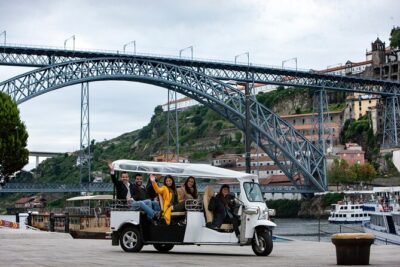
One iron bridge on the route is planned by Teófilo Seyrig, inspired by the Eiffel world, and inaugurated in 1886. It has two overlapping iron decks and the arch is described as the world’s biggest forged-iron arch at the time. Today the upper deck is used by the Metro of Porto, connecting the area of Porto’s Cathedral to the Garden of Morro and Avenida da República in Vila Nova de Gaia.
Later, you’ll reach the Praça da Ribeira area, one of the oldest in the city, tied to medieval origins and remodelled in the 18th century. There’s mention of archaeological work in the 1980s and a reconstructed fountain, crowned by a sculpture nicknamed the Cube of the Ribeira. The square is also said to be closed to vehicles during the visit, which is normal for pedestrian-heavy old-town areas.
Then comes Mosteiro da Serra do Pilar, where the tour flips back into a viewpoint theme with another bridge in view. This stop matters because you see the whole river system in one glance, including D. Luís I bridge and the historic center.
Mosteiro da Serra do Pilar: the circular monastery terrace panorama
Serra do Pilar Monastery is a UNESCO-listed site that began in 1538 and was finished around 1670. It started for Augustinian friars of Grijó, then later the liberal army used it during the Civil War of 1832 to 1834, leaving the complex in disrepair.
It was recovered through later efforts, including creation of a Royal Brotherhood for Lady of the Pilar and a 1925 group that helped restore the building.
What you’ll notice structurally is its circular plan. The church has a dome with a surrounding balcony, and the cloister is circular with 36 Ionic columns, noted as the only example in Portugal. Admission is free, and the terrace is where the stop really pays off.
From the terrace you can see riverside areas of Porto and Gaia, plus key bridges like Arrábida Bridge, the Cathedral area, and D. Luís I. In the opposite direction, you can look toward Fontainhas and São João bridge.
A modern bridge finale: the Ponte do Infante type view
The last big bridge moment is a Maillart-type arch bridge inaugurated on 30 March 2003, designed by engineer Adão da Fonseca. It’s 371 metres long and has a deck 20 metres wide, with an arch span of 280 metres, described as a world record for its type.
It connects the Fontainhas area to Oliveira do Douro in Vila Nova de Gaia. If you like engineering, this is a neat contrast to the older iron and concrete bridges you’ve already seen.
This is also a good “reset your eyes” stop before finishing the loop, especially because the tour’s day rhythm can mix high-intensity viewpoints with historic buildings.
Praça da Batalha and the theatre zone: Porto’s stage energy
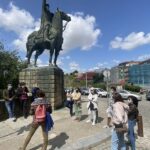
Praca da Batalha is dominated by a monument to D. Pedro V since 1866. The square also sits near São João National Theatre and the Cine-Teatro Batalha.
The theatre building dates to 1910, built on ruins of a Real Theatre that burned down in 1908. It includes stylistic emblems related to themes like pain, quality, hate, and love, and its facade was inspired by Luís XVI style typical of early 1900s France. It’s linked to the Carlos Alberto Theatre and the São Bento da Vitória monastery.
This stop is brief, but it’s useful. It gives you a slice of Porto as a living city with performance culture, not just a place of monuments.
Bolhão Market, plus a note on closures
The tour also passes the Bolhão Market, one of Porto’s most famous markets, dating back to 1850 with a two-floor structure and neoclassical architecture. It’s dedicated mainly to fresh products, including fishmongers, butchers, green grocers, and florists.
The catch is straightforward: it is currently closed for refurbishment works. So don’t plan on shopping there unless the closure status has changed for your specific day.
Port wine, and how that tasting stop usually feels
The tour includes an alcoholic port wine glass. One review described it as port poured from a bottle into small tasting cups during a lookout moment, not a sit-down bar stop.
That matters because it keeps your tour moving. You get the taste without losing time to a longer food break. If you’re doing this as a cruise shore excursion, that kind of compact tasting is a real advantage.
What to watch for: small practical notes that can change your day
Here’s what I’d keep in mind so expectations match reality.
First, ticketed interiors take time. Torre dos Clérigos and Livraria Lello are listed as admission not included, and you can’t count on slipping into long lines during a 3.5-hour tour. If a must-see interior is on your list, plan for it and consider buying tickets ahead, especially for Livraria Lello.
Second, tuk tuk comfort varies. One review said the vehicle was uncomfortable for 3 people and another noted a driver couldn’t put the top up at one point. If you’re sensitive to bumpy cobblestones or you’re traveling with more than two people, confirm comfort expectations.
Third, “private” should mean your group. The tour is described as private with only your group participating. Still, one review complained about sharing due to overbooking. That’s not how the tour is marketed, so if privacy is your top priority, it’s smart to double-check your booking details close to departure.
Should you book this Porto private tuk tuk shore excursion?
Yes, if you want a high-value orientation tour in a short time. This is especially good for first-time Porto visitors, people who dislike steep climbs, and anyone who wants a guided mix of viewpoints, churches, bridges, and city structure.
Skip it or choose a different option if you’re only interested in interiors and paid museum-style stops. Because monument entrances are not included, you may spend extra to get what you want inside.
Before you book, do one thing: pick your must-pay stops in advance. If Livraria Lello or Torre dos Clérigos matters to you, plan your entry strategy. For everyone else, you’ll still get an excellent “see the city, learn the story” day that makes your later exploration easier.
FAQ
How long is the private tuk tuk tour in Porto?
It’s listed as about 3 hours 30 minutes.
Is this tour private?
Yes. It’s described as a private tour where only your group or family participates.
Do you offer pickup from cruise ports?
Yes. Pickup is offered from the main gate at Leixões Port, Matosinhos Port, and Doca Norte.
Is the tour in English?
Yes, it’s offered in English.
Is port wine included?
Yes. The tour includes an alcoholic port wine glass.
Are entrance tickets for monuments included?
No. Monuments entrance is listed as not included.
What if we miss the tour because the ship is late?
Refunds will not be issued if the tour is missed due to late or non-arrival of the cruise ship.
Is there free cancellation?
Yes. You can cancel up to 24 hours in advance for a full refund.
Other Days Out Around Porto


Nobody Else Aboard, Other Private Porto Bookings




Centuries-Deep Routes Through Porto

Newly added around Porto
- From Porto: 516 Arouca Bridge and Paiva Walkways Guided Tour
★ 5.0 · 38 reviews - Private Vinho Verde Region Wine Tour from Porto Including Lunch
★ 5.0 · 39 reviews - Surf Lesson | Surf Lessons
★ 5.0 · 39 reviews - Bike or E-Bike Tour of Porto and Atlantic Coast
★ 5.0 · 39 reviews - Porto Street Art Tour
★ 4.5 · 39 reviews - Private Porto Secrets Walking Tour + Personal Port Wine Tasting
★ 4.5 · 39 reviews - Douro Valley Premium Private
★ 5.0 · 39 reviews - Private Tour to stunning Douro Valley and most renowned wineries
★ 5.0 · 39 reviews - Off the Beaten Track in Porto: Private City Tour
★ 5.0 · 39 reviews - Porto Sunset Bike Tour
★ 4.5 · 39 reviews
Other boats, other operators: Cruises & Boat Tours.
 ★ 4.7From Porto: Douro Valley w/ Boat Tour, Wine Tasting & LunchFrom $8219,061 reviews
 ★ 4.2Porto: Six Bridges CruiseFrom $2111,680 reviews
 ★ 4.8Portimão: Benagil Caves Speed Boat Tour with Sunset OptionFrom $239,329 reviews
 ★ 4.3Porto: 6 Bridges Douro River CruiseFrom $236,472 reviews
 ★ 4.6Albufeira: Benagil Caves & Dolphin Watching Speed Boat TourFrom $406,316 reviews
 ★ 4.6Douro Valley: Wine Tour with Lunch, Tastings & River CruiseFrom $1136,081 reviews
 ★ 4.5Porto: Guided Tour by Tuk-Tuk & Optional Douro River CruiseFrom $205,980 reviews
 ★ 4.5From Funchal: Ecological Catamaran Dolphin Whale WatchingFrom $405,771 reviews