
REVIEW · FUNCHAL CITY AND MONTE
Funchal: Old Town Walking Tour
Funchal has a knack for surprises. This 2-hour old town walk packs landmarks and practical local context into one easy loop, from the University setting to churches, gardens, and industry sites tied to Madeira’s sugar past. I like that it is not just photo stops, it is the why behind the streets and buildings, with visuals to keep the stories clear.
My favorite parts are the Farmers’ Market stop and the way the route connects daily life to big history. You get a guided look inside the market, plus a 19th-century sweet factory visit that turns Madeira’s trade and cooking into something you can actually picture. I also really appreciate the human side of the tour, since it is led by Madeiran Heritage guides that support education and student initiatives at the University of Madeira.
One thing to consider is the walking surface. The route includes cobbled streets and slight inclines, so it may feel tough if your mobility is limited, even though the tour is listed as wheelchair accessible.
In This Review
- Key things I’d plan around before you go
- Where the tour starts: Jesuits’ College at the University of Madeira
- Funchal City Hall and the sweet factory: industry you can see
- Farmers’ Market walkthrough: how the island eats and sells
- Santa Maria Street to Admiral’s Garden: medieval streets and flood protection
- Legislative Assembly and Cathedral: civic power and a giant diocese
- Municipal Garden and a Wine Lodge stop: a quick reset with Madeira taste
- Ending at the Jesuits’ Church and back to the College
- Price and value: how $19 turns into real stops
- Getting the most out of it: what to bring and how to pace
- Who should book this tour, and who might want a different fit
- Should you book the Funchal Old Town Walking Tour?
- FAQ
- Where do I meet the guide for the Funchal Old Town Walking Tour?
- How long is the tour?
- What is included during the tour?
- What should I bring?
- Is there anything I cannot bring?
- Is the tour wheelchair accessible?
- What languages are available?
- Is the tour kid-friendly?
- Where does the tour end?
Key things I’d plan around before you go
- Small groups keep it interactive, and you might get a group as small as two or three.
- Farmers’ Market + sweet factory make the food history feel real, not abstract.
- Street-to-fortress routing shows how Funchal adapted to floods, not just how it looked.
- Sugarcane and the Americas link gives you a surprising thread to follow at Colombo Square.
- Two church stops (Cathedral and Jesuits’ Church) add real architectural and civic context.
- A traditional Wine Lodge visit can include a small taste, which is a nice way to end.
More Funchal markets, Monte gardens and toboggan runs we have reviewed in Madeira
- From Funchal: Ecological Catamaran Dolphin Whale Watching★ 4.5 · 5,771 reviews
- Funchal: Dolphin and Whale Watching Catamaran Cruise★ 4.5 · 5,697 reviews
- Funchal: Enchanted Terraces, Porto do Moniz & Fanal 4WD Tour★ 4.8 · 4,930 reviews
- From Funchal: Best of Madeira’s West Tour★ 4.7 · 3,463 reviews
Where the tour starts: Jesuits’ College at the University of Madeira
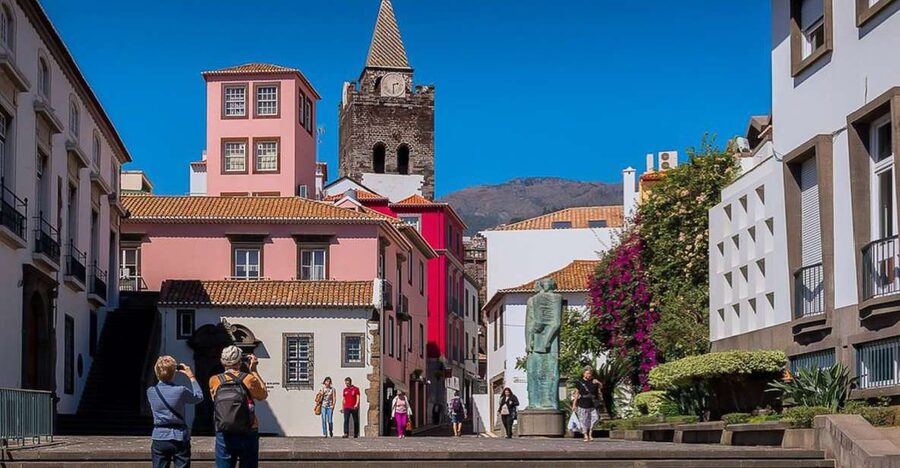
You begin at the Colégio dos Jesuítas do Funchal area on the University of Madeira grounds, near D’Oliveiras Madeira Wine, along Rua dos Ferreiros. The meeting point is at the University entrance by the street, beside the Jesuits’ Church, near the glass doors and University signage. Arrive about 10 minutes early so you can find your guide without stress.
This first stop matters because it sets the tone: you are not just starting with streets, you are starting with institutions. The Jesuits’ College connection, tied to the 16th century and King Sebastian of Portugal, frames the whole walk around how Madeira’s islands became organized, taught, and traded.
Guides are live and rotate through languages like English, German, and French. In past groups, guides have included names like Annabelle, Elias, Elea, Hannah, Hugo, and Sara, and the consistent thread is pacing you can handle in two hours, plus room for questions.
Funchal City Hall and the sweet factory: industry you can see
From the University start, the tour heads into the city center with a photo stop at Funchal City Hall. Even if you just glance at the building from the outside, your guide’s job is to make the city’s layout and civic life feel connected to Madeira’s economic story.
Next comes a highlight for a lot of people: a 19th-century sweet factory. This is one of those stops that turns “Madeira is known for wine” into “Madeira has been making food culture for centuries.” You are looking at production tied to trade, local ingredients, and the island’s long work rhythms.
Right after that, you move toward a busy corridor to learn about earlier industry, including embroidery. That connection is easy to miss on your own, because it lives in the city fabric rather than one big monument.
Farmers’ Market walkthrough: how the island eats and sells
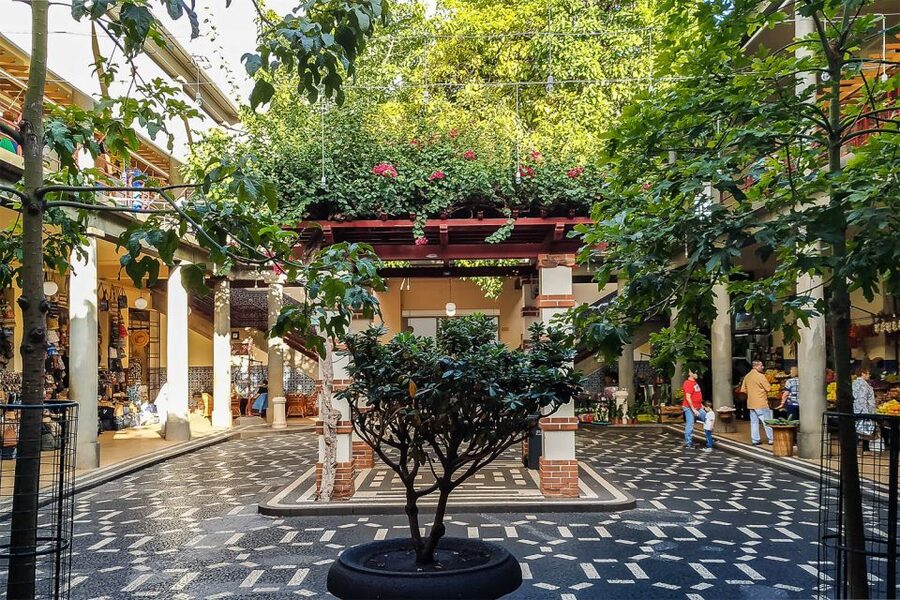
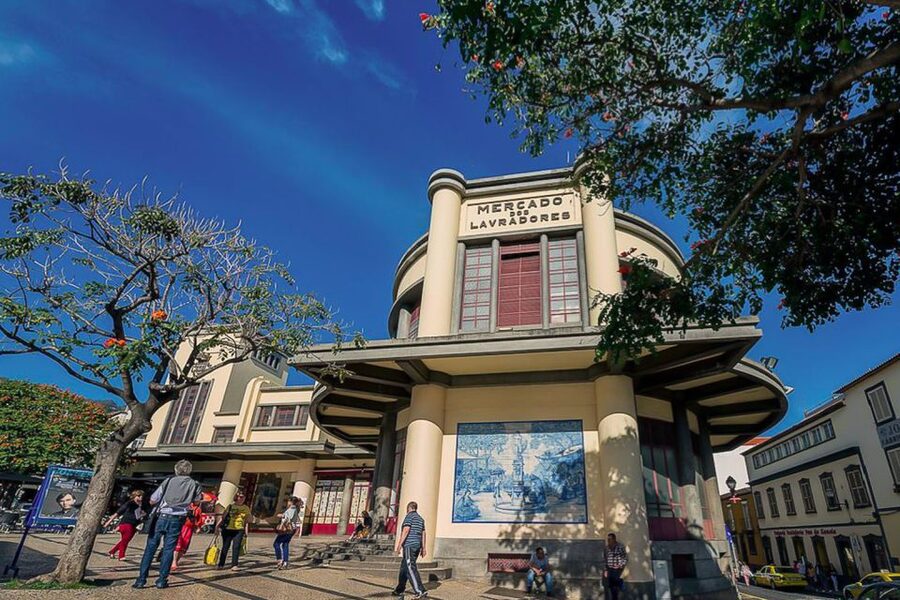
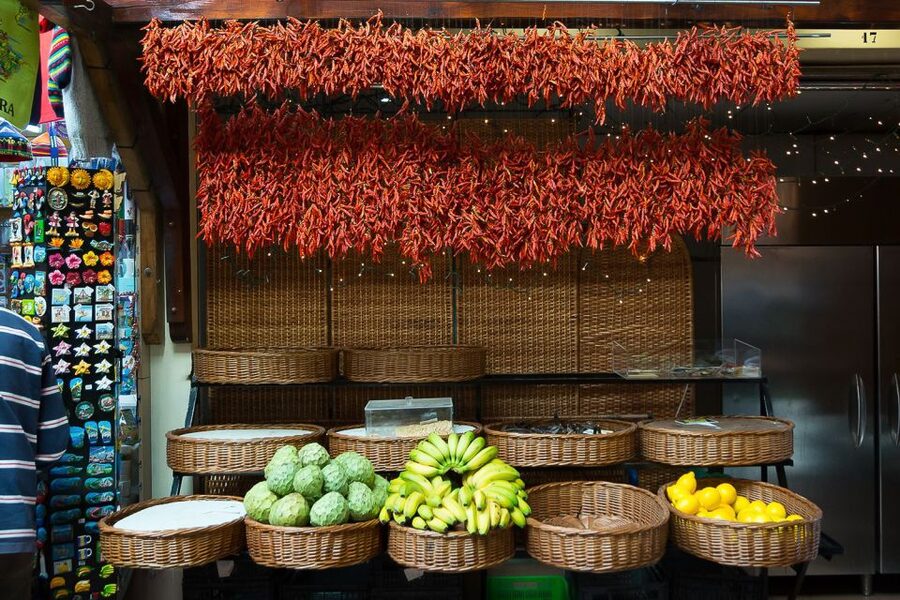
The Farmers’ Market, Funchal is one of the best uses of a short tour time. You do not just pass by, you get a guided look that helps you read what you are seeing: what people buy, how produce and local goods are presented, and how the market fits into daily life.
It also gives you a natural break in the middle of a history-heavy walk. When guides slow down here, it is usually to point out details you would otherwise skip. The people-led feel of the market is exactly what makes the rest of the tour easier to understand.
If you want a practical souvenir plan, this is a smart moment to ask your guide what is worth buying on Madeira. In some groups, guides have shared tips like where to find Bollo de Caco and what to look for if you want local-grown produce to take home.
Santa Maria Street to Admiral’s Garden: medieval streets and flood protection
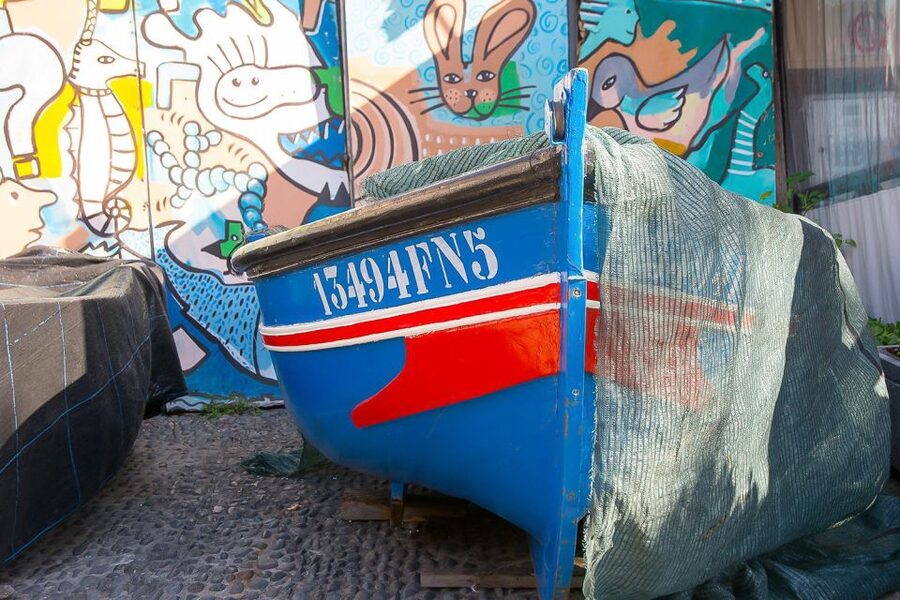
After the market, the route takes you toward Rua de Santa Maria and into the medieval lanes around Santa Maria Street. This section is the walking part that feels like “I would never find this on my own,” without using the cheap marketing wording. You get small street character and a clearer sense of how old Funchal developed near key spaces rather than just radiating outward.
Then you reach Admiral’s Garden and the ruins of an old fortress near the riverbeds. The story here is memorable because it is not just warfare and empires. Your guide talks about how riverbeds were once walled to protect the city from flooding, which makes the fortifications feel practical, not dramatic.
That is the kind of detail that pays off later in your trip. Once you understand the relationship between water risk and city design, you see more than buildings. You see decisions.
Other Madeira calcada routes we have followed on foot

Legislative Assembly and Cathedral: civic power and a giant diocese
From there, you hit Colombo Square, then important institutional stops like the Legislative Assembly of Madeira and the Funchal Cathedral.
Colombo Square is where the tour starts making your brain work in a good way. The guide explains the sugarcane industry, including its influence on economy and settlement, and then adds a surprising thread: a connection to the discoverer of the Americas who once lived on the island. Whether you already knew that detail or not, the point is that Madeira’s sugar story is tied to wider Atlantic history.
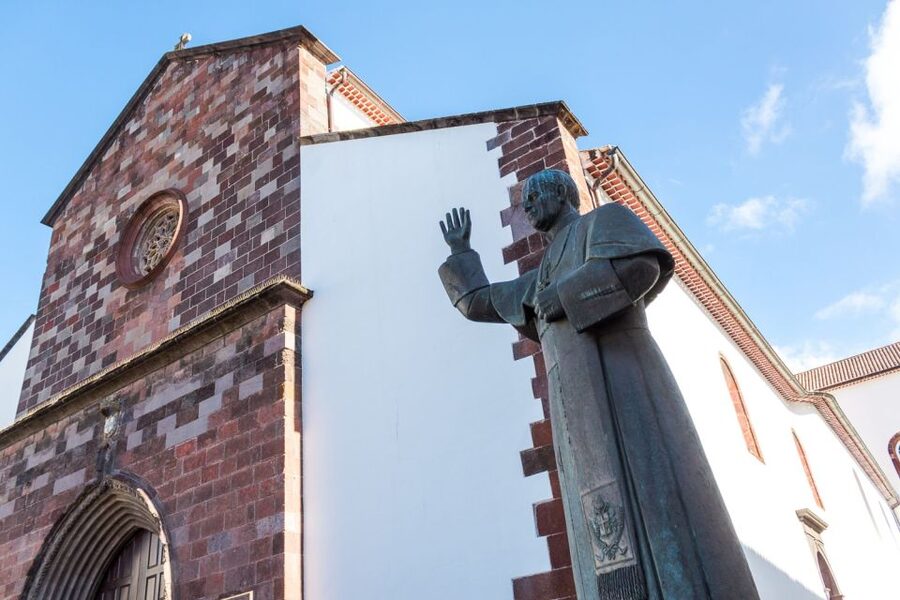
At the Cathedral, you get one of those specific facts that sticks. In the 16th century, it served as the seat of the largest diocese in the world. That one sentence turns the building from “old church” into “administrative center,” which helps you understand why this spot anchors the city.
The Legislative Assembly stop adds the modern civic layer. It is a good balance. You see how power moves from religious administration to later governmental structures, without the tour feeling like a dry lecture.
Municipal Garden and a Wine Lodge stop: a quick reset with Madeira taste
Next is the Jardim Municipal do Funchal area. You do not linger forever here, but it works as a pause between big indoor sites. The quick break matters because you will still want energy for the Jesuits Church stop and the return walk.
Then you visit a traditional Wine Lodge. Based on what people have shared from their own tours, this stop is sometimes paired with a small taste of Madeira wine, so it can feel like a fitting reward after all that sugarcane talk.
Even if you are not a wine person, you still benefit here. Wine is Madeira’s headline product, but the lodge stop helps explain the island’s identity in human terms: how locals learned to make and sell it, and why that history keeps showing up in shops, labels, and street names.
Ending at the Jesuits’ Church and back to the College
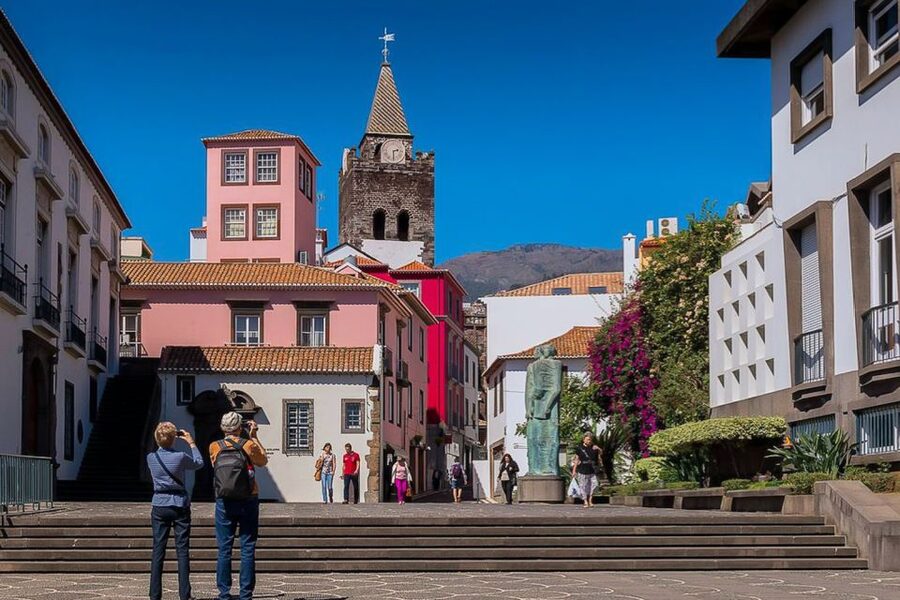
The tour finishes by passing through the Igreja do Colégio area, including the Jesuits’ Church, before returning to the former Jesuits’ College for wrap-up. This ending is smart because it circles back to your starting point, so you leave with a simple mental map: University origins, city power centers, market life, industry stories, then church and education again.
Your guide also uses printed or visual materials to support the storytelling, including archive-style images. That matters in places like old fort ruins or institutional buildings, where you might struggle to imagine earlier versions without a visual cue.
Price and value: how $19 turns into real stops
At $19 per person for about two hours, you are paying for more than walking. The value comes from the mix of guided storytelling plus multiple structured visits: entrance to the Jesuits’ College, a Farmers’ Market visit, a 19th-century sweet factory, and a Wine Lodge stop.
If you compare that to doing everything on your own, the tour saves you from the hardest part, which is knowing what to notice. Your guide’s job is to connect the street level to the bigger themes: sugarcane trade, industry shifts, and how civic and religious institutions shaped central Funchal.
The other value point is the social one. This walk supports student-led initiatives and educational programmes tied to the University of Madeira. You can feel good about spending money on something local that goes beyond your own afternoon.
Getting the most out of it: what to bring and how to pace
Wear comfortable shoes. Cobblestones and slight inclines are enough to make you glad you did. The tour is scheduled for two hours, so you should expect a lively pace that still leaves you time to take photos and ask questions.
You will also want to travel light. The tour notes no luggage or large bags, which keeps it smoother for everyone, especially around narrower historic streets.
Weather is usually manageable, but you should plan for Madeira’s shifting conditions. Bring sun protection if it looks clear, and toss in a rain layer if the forecast is shaky. The tour runs in most weather conditions, so you are not locked out by a little mist.
Language coverage is German, English, and French with a live guide. If you have a strong language preference, it is worth flagging it early so your group gets the guide you want.
Who should book this tour, and who might want a different fit
This walk is ideal if you want an easy first pass through Funchal’s center with context. It is also a good match for people who like history told through everyday places, like markets and food production, not just monuments.
It is also a strong choice if you like small group formats. Based on what people have described, the groups can be very small, which usually means your guide can slow down when you ask questions.
If you need step-free routes or flat ground only, plan carefully. Even though the activity is listed as wheelchair accessible, the route includes cobbled streets and slight inclines, and that can be tough in practice.
For families, it is listed as suitable for children aged 10+, with younger kids allowed with supervision.
Should you book the Funchal Old Town Walking Tour?
If you are visiting Funchal for a short stay or you want your first day to feel “organized without feeling rushed,” this is a smart booking. The $19 price is hard to beat for the mix of market time, a sweet factory visit, church stops, and a wine lodge finish, all tied together by stories about sugar, civic life, and how the city adapted to the riverbeds.
I would especially recommend it if you enjoy asking why things are where they are. This tour gives you a framework that makes the rest of Funchal easier to explore on your own.
If you dislike walking on cobbles or you want long sit-down time, consider a slower plan instead. Otherwise, bring comfy shoes, show up a little early, and let your guide connect the dots. That is where the tour earns its value.
FAQ
Where do I meet the guide for the Funchal Old Town Walking Tour?
Meet at the Jesuits’ College of Funchal (University of Madeira Rectory) on Rua dos Ferreiros in the city centre, next to D’Oliveiras Madeira Wine. The meeting point is at the University entrance on the street beside the Jesuits’ Church, look for the glass doors and the University of Madeira signage.
How long is the tour?
The walk lasts about 2 hours.
What is included during the tour?
You get a 2-hour guided walking tour, entrance to the Jesuits’ College of Funchal, and visits to the Farmers’ Market, a traditional Wine Lodge, and a 19th-century sweet factory. You also get historical and cultural commentary with printed or visual support materials.
What should I bring?
Bring comfortable shoes.
Is there anything I cannot bring?
Luggage or large bags are not allowed.
Is the tour wheelchair accessible?
The tour is listed as wheelchair accessible, but the route includes cobbled streets and slight inclines, which may be difficult for guests with limited mobility.
What languages are available?
The live guides operate in German, English, and French.
Is the tour kid-friendly?
It is suitable for children aged 10+, and younger guests are welcome with supervision.
Where does the tour end?
There are 2 drop-off locations, Jardim Municipal do Funchal and Colégio dos Jesuítas do Funchal.
Other Days Out Around Madeira




On Foot Around Madeira, Other Guided Walks
Funchal and Monte, More Markets, Gardens and Toboggans


Newly added around Madeira
- Funchal: Nuns Valley Half Day Tour
★ 4.5 · 81 reviews - Madeira : Nun’s Valleys and Pico Areeiro 4X4 Tour
★ 4.8 · 82 reviews - West Madeira Island Guided Tour & Fanal Mystic Forest
★ 4.5 · 87 reviews - “Re-Canto” Farm-to-Table with Stunning Views at Madeira
★ 5.0 · 87 reviews - Real Life, Mountains & Sea Cliffs (Nun´s Valley View) – Half Day 4×4 Tour
★ 5.0 · 87 reviews - Incredible tour to a ‘Faja’ with a story
★ 5.0 · 90 reviews - Private tour:Tuk Tuk Ride to Monte Funchal Toboggans
★ 4.7 · 90 reviews - Full Day Ponta de São Lourenço – Natural Reserve
★ 4.7 · 90 reviews - Madeira: Beginner (Level 1) Canyoning Experience
★ 4.9 · 94 reviews - Madeira Private Sunset Boat Tour from Funchal
★ 5.0 · 96 reviews
Other boats, other operators: Funchal City and Monte.
 ★ 4.5From Funchal: Ecological Catamaran Dolphin Whale WatchingFrom $405,771 reviews
 ★ 4.5Funchal: Dolphin and Whale Watching Catamaran CruiseFrom $415,697 reviews
 ★ 4.8Funchal: Enchanted Terraces, Porto do Moniz & Fanal 4WD TourFrom $744,930 reviews
 ★ 4.7From Funchal: Best of Madeira’s West TourFrom $423,463 reviews
 ★ 4.7Madeira: Best of the East Tour from FunchalFrom $423,364 reviews
 ★ 4.2Funchal Bay: Dolphin & Whale Watch Luxury Catamaran CruiseFrom $472,684 reviews
 ★ 4.7From Funchal: West Madeira Waterfalls and Fanal Forest TourFrom $332,630 reviews
 ★ 4.7From Funchal: West Madeira and Laurel Forest Day TripFrom $372,067 reviews
Filed under