
REVIEW · PORTO LANDMARKS AND RIVERSIDE WALKS
Ribeira Grande, Azores: Group Surf Lessons
Two hours, zero experience, real ocean time.
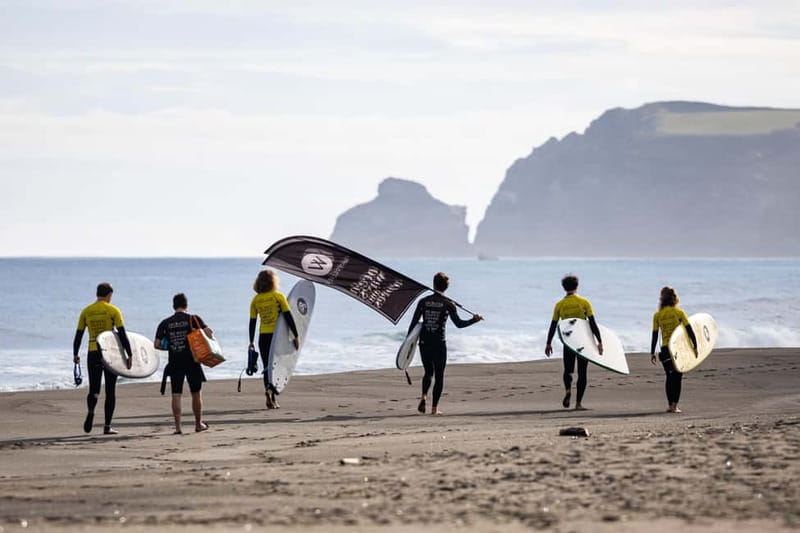
This beginner surf lesson in Ribeira Grande turns that first nervous moment into actual whitewater wave time, with instructors picking the best beach based on conditions. You’ll get coaching, equipment, and a solid safety foundation, all while enjoying amazing views from the sea.
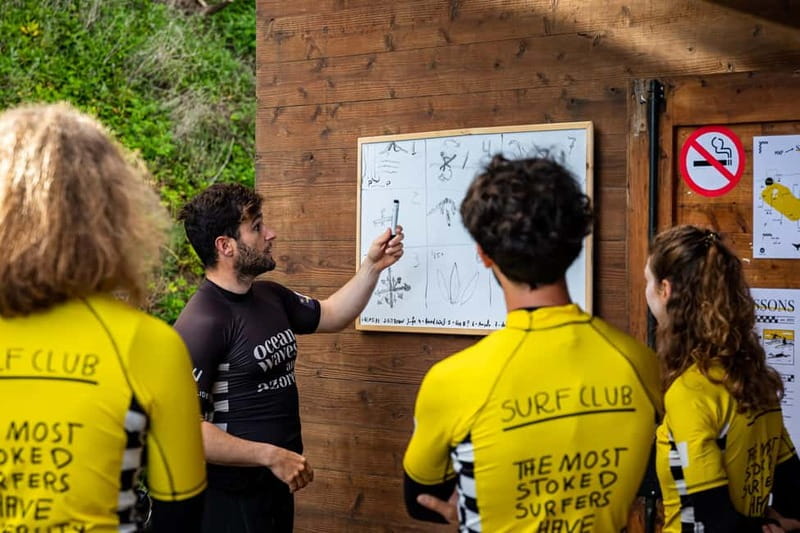
What I like most is how structured the teaching feels. You start on land with take-off practice, then move into the water for paddling, entering properly, and catching waves with plenty of guidance from instructors like Constantino and Pedro. Second, the small group format, capped at 6 participants, means you are not shouting questions into a crowd.
One consideration: the surf spot can change. Because weather matters, your meeting point can be at the WATERGLIDERS school/store (north of the island) or at Milícias beach (south), and you’ll get the exact location the day before.
In This Review
- Key highlights you will care about
- Two Hours in Ribeira Grande: What the Lesson Really Covers
- How You Learn to Stand Up: From Sand Take-Off to Whitewater Waves
- Where You Surf and Why the Beach Changes
- What Happens Before You Hit the Water: Warm-up, Safety, and Equipment
- Value Check: $53 Includes Gear, Instructor, and Insurance
- Small Group Coaching: Why Up to 6 Participants Helps You Improve Fast
- Comfort and Prep: What to Bring for Azores Sea Time
- Safety Rules and Who Should Not Join
- Language and Communication: English and Portuguese Coaching
- My Booking Tips for First-Time Surfers in the Azores
- Should You Book This Beginner Surf Lesson in Ribeira Grande?
- FAQ
- How long is the surf lesson?
- Is this lesson only for people who already know how to surf?
- Where will the lesson take place?
- What is included in the price?
- Is pick-up and drop-off included?
- What should I bring with me?
- What group size should I expect?
- Who should not book this experience?
Key highlights you will care about
- Small group size (up to 6) means more individual tips when you try to stand up
- Beginner-first coaching focuses on safety, ocean knowledge, and take-off technique
- Gear included: board, suit, and leash, so you travel lighter
- Beach choice based on conditions among Praia das Milícias, Praia de Monte Verde, or Areal de Santa Bárbara
- English and Portuguese instructors help you understand what to do, not just what to hope for
Two Hours in Ribeira Grande: What the Lesson Really Covers
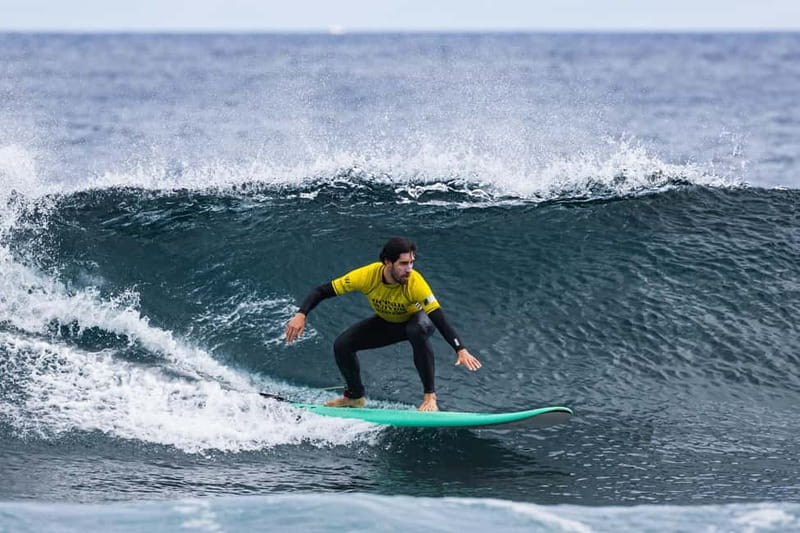
This is a 2-hour group surf program for beginners, priced at $53 per person, and it is built for people who have never surfed before. The aim is simple: give you enough technique and confidence that you can actually catch and ride while keeping things safe in the ocean.
Your session is led by a licensed instructor and designed step-by-step. You warm up first, then you get a clear run-through of equipment, ocean safety rules, and how surfing works in a practical way. After that, it becomes hands-on: land practice, then paddling and wave-catching in the water.
Even if you are the only true beginner in your group, the structure helps. Instructors are actively involved, not just giving a quick briefing and sending you off. From the coaching styles described, the goal is to keep you focused on the next small step until you start getting results.
How You Learn to Stand Up: From Sand Take-Off to Whitewater Waves
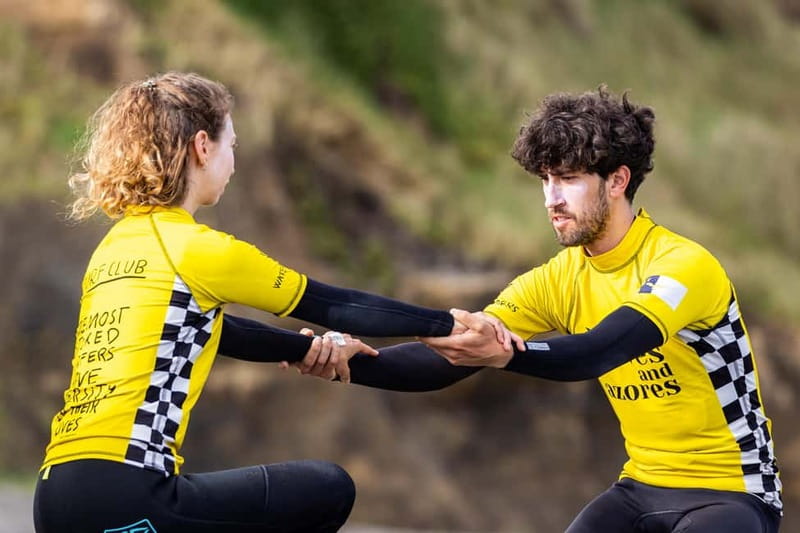
The lesson pacing makes a lot of sense for first-timers. You begin with take-off practice on the sand, so your body learns the motion before you have to deal with timing, balance, and waves at the same time. This matters because most beginners fail from hesitation, not from lack of desire.
Next comes board handling and how to enter the water. You work on handling your board with better control and learning how to get in gracefully. This is a big deal in real surf conditions, where you want to avoid chaos and keep yourself and others safe.
Then you move into whitewater. In whitewater, you get a more forgiving environment to build confidence. You practice wave-catching and improve paddling so you can position yourself better when a wave comes. Over time, those repeated attempts turn into measurable progress, even during a single session.
The coaching tone described in participant feedback is consistently encouraging. You’re not just told what you did wrong. You get specific pointers, then the instructor stays close while you try again, so the feedback connects directly to what is happening under your feet.
Where You Surf and Why the Beach Changes
Surf lessons in the Azores are weather-dependent, and you should expect that. Your class may run at Praia das Milícias, Praia de Monte Verde, or Areal de Santa Bárbara. The provider selects the spot based on the most favorable conditions for beginners.
That beach-switching affects your logistics, but it also affects your learning. If the conditions are better at one beach than another that day, you will usually get waves that are more suitable for new surfers. That helps you spend more time actually catching waves, not just waiting or struggling in rougher conditions.
Meeting point can be one of two options due to weather:
- WATERGLIDERS school/store, north of the island
- Milícias beach, south of the island
You will be informed the day before your lesson via WhatsApp message or SMS, and you should treat that message as part of the plan, not a suggestion.
If you like calm structure, this system is a plus. You do not need to research conditions yourself. The team makes the call for the most beginner-friendly setup.
What Happens Before You Hit the Water: Warm-up, Safety, and Equipment
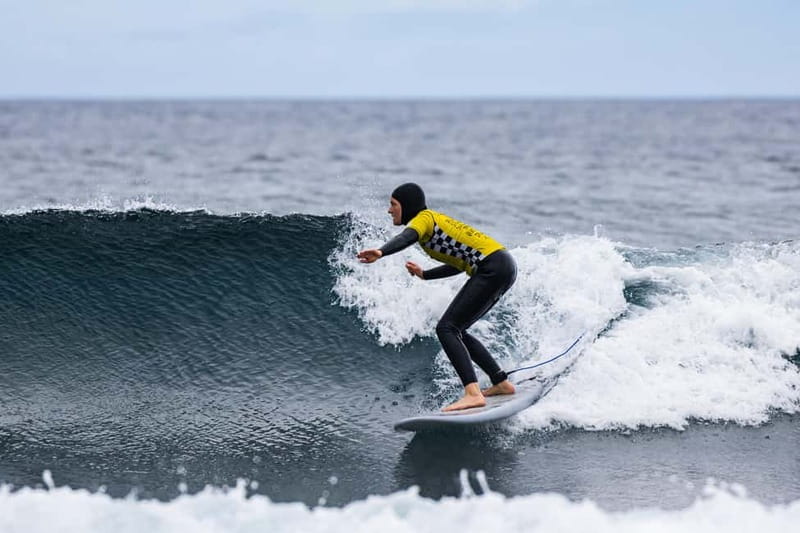
Good surf lessons do three things early: prepare your body, explain the ocean, and remove confusion about gear. This one does all three.
First, you warm up with dynamic exercises aimed at flexibility and reducing injury risk. Surfing uses muscles in ways you might not expect, especially if you spend most days walking around on land. A proper warm-up helps you avoid the stiff, sore feeling that can hit even after a short session.
Then you get an overview of surf equipment: the board, suit, and leash and what each one is for. This is not just technical trivia. Understanding your leash, for example, helps you trust the system and move more safely in the water. If you do not know what a leash does, you tend to panic when something happens quickly.
You also learn ocean knowledge and safety rules. Expect discussion around how to handle marine conditions safely. This is where the lesson becomes more than sport. You are learning how to read the water well enough to make smarter choices while you are out there.
Finally, you practice take-off mechanics in a controlled way, starting on sand. That step-by-step rhythm is what makes it possible for first-time surfers to stand and ride within the lesson timeframe.
Value Check: $53 Includes Gear, Instructor, and Insurance
On paper, $53 for a 2-hour beginner surf lesson in the Azores is easy to look at. In practice, value depends on what is included, and this one covers the big stuff.
Included:
- Surf board
- Suit and leash
- Licensed instructor
- Insurance
That matters because surf gear can add up fast if you have to rent everything separately. If you arrive without a wetsuit, the included suit helps you stay comfortable and focused on learning instead of fighting cold water.
Not included:
- Pick-up and drop-off service (15 EUR per person)
- Optional regional gastronomic experience after the surf lesson (about 20 EUR)
If you are already staying near the coast or can reach the meeting point on your own, you keep the total cost close to the advertised price. If you want convenience, the pick-up option is there, but you should factor it in early so the math stays clear.
For me, the best value angle is not only what you get, but how the lesson is structured around beginner success. When instruction is clear and the group is small, you usually get more actual wave time per dollar.
Small Group Coaching: Why Up to 6 Participants Helps You Improve Fast
A small group is not a luxury. It is practical. When you are capped at 6 participants, you get more chances for the instructor to correct you and keep you safe.
In feedback, instructors are described as constantly giving tips, staying involved during attempts, and adjusting teaching to each learner’s level. That is exactly what you want when you are learning balance, paddling timing, and take-off technique all at once.
If your group includes mixed experience levels or different ages, the coaching still has to work for everyone. The lesson format supports that by moving through core skills in order: warm-up, equipment basics, sand take-off, then water practice. You are not stuck doing only one thing for the full session.
Even if you are not guaranteed to stand on every try, you are very likely to leave with improved technique and confidence. That is the real goal for beginners.
Comfort and Prep: What to Bring for Azores Sea Time
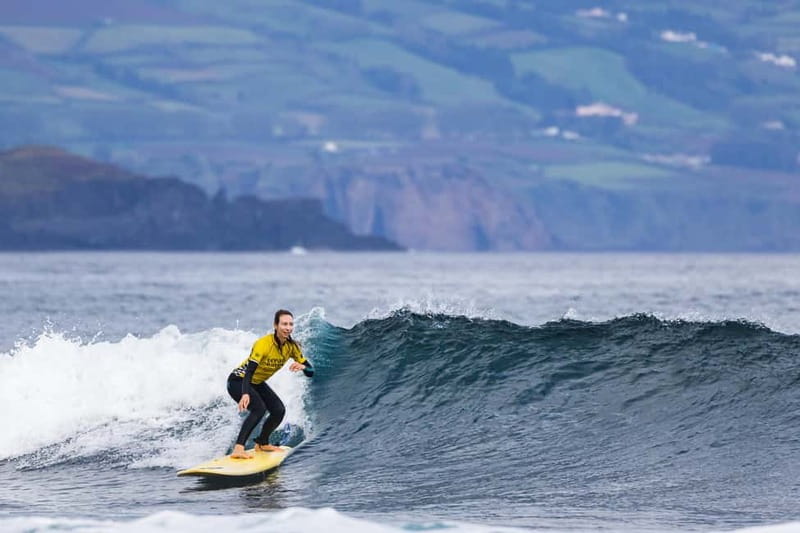
This is the part where you can make the experience easier on yourself. Bring:
- Change of clothes
- Towel
- Water
- Biodegradable sunscreen
- Beachwear
You’ll also want to think about how you handle soreness. Surfing works your legs, core, and shoulders in a hurry, and it can be tough work even for athletic people. The included suit helps with sun exposure and comfort, but you can still end up sore or bruised if you are unlucky on a first attempt.
If you have a preference about wetsuits, note that the session provides a suit. Still, if you have sensitive skin or you know you need extra padding, it can be worth considering what suit coverage feels best for you.
Also, this lesson is not for everyone physically. If you have back problems, you should skip it. The ocean plus board movements are not the kind of gentle exercise you want with any fragile areas.
Safety Rules and Who Should Not Join
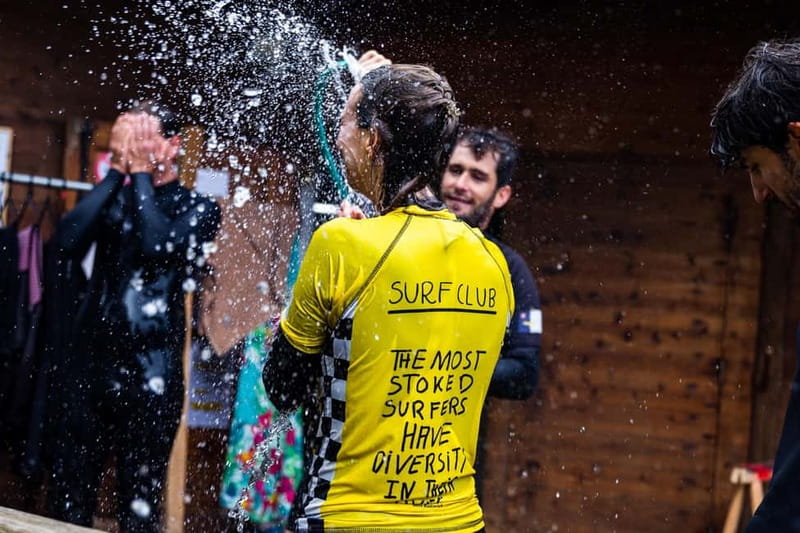
The lesson includes instruction on ocean safety rules, and that is essential for a beginner activity. But there are also clear limits on who should take part.
Not suitable for:
- Children under 13
- Pregnant women
- People with back problems
- Wheelchair users
- People over 60
If any of those apply, choose a different activity. The ocean is unpredictable, and even with good instruction, you do not want to gamble with your body or safety.
You also need to be able to swim, since the lesson is in the water. Your ability to swim is the main physical requirement stated.
Not allowed:
- Alcohol and drugs
That rule is standard for water activities, and it helps keep the group focused and safe.
Language and Communication: English and Portuguese Coaching
Good surf lessons reduce confusion fast. This one offers instruction in English and Portuguese, so you should be able to follow along even if you are not fluent.
Clear communication matters especially for beginners learning safety rules and technique. If you miss one instruction about paddling or entering the water, it can affect everything that follows. The format here is designed to teach step by step, and the bilingual approach helps.
My Booking Tips for First-Time Surfers in the Azores
If you want the best experience, set yourself up for success before the lesson starts.
First, treat the day-before message about your meeting point as priority. Weather can change where you go, so be ready to adjust. If you are traveling around the island, plan to have flexibility that day.
Second, aim for a clear, calm mind. Beginners learn faster when they are not rushing. Wear comfortable beach clothes and bring a towel so you can dry off and change quickly afterward.
Third, bring the right attitude. Surfing is partly technique, partly timing. You will likely feel wobbly on the board at first. That is normal. When you stay focused on the next instruction, your progress tends to happen quickly.
Finally, if you want to improve beyond the first session, consider booking more time. A two-hour beginner lesson is enough to get the basics and catch waves, but surfing gets easier when you repeat the same skills with slightly more confidence each time.
Should You Book This Beginner Surf Lesson in Ribeira Grande?
Book it if:
- You are truly a first-time surfer and want step-by-step coaching
- You want a small group experience with lots of instructor attention
- You like learning safety and ocean basics, not just trying tricks
- You are ready for a physical workout, not a casual stroll
Skip it if:
- You do not meet the stated limits, including age and medical considerations
- You are not comfortable swimming
- You want a predictable meeting point with no weather-based changes
If you are looking for a fun, high-value first surf session in the Azores, this one makes strong sense. The key strengths are the structured teaching flow, the small group size, and the fact that you get the gear and instruction together, so you can focus on catching your first waves rather than figuring out logistics.
FAQ
How long is the surf lesson?
It lasts 2 hours.
Is this lesson only for people who already know how to surf?
No. It is designed for beginners and first-time surfers, with a step-by-step approach. You do need the ability to swim.
Where will the lesson take place?
Lessons for beginners can be held at Praia das Milícias, Praia de Monte Verde, or Areal de Santa Bárbara. The exact location is communicated the day before your lesson by WhatsApp message or SMS.
What is included in the price?
The lesson includes the surf board, suit, leash, a licensed instructor, and insurance.
Is pick-up and drop-off included?
No. Pick-up and drop-off service is not included and costs 15 EUR per person.
What should I bring with me?
Bring a change of clothes, a towel, water, biodegradable sunscreen, and beachwear.
What group size should I expect?
The group is small, limited to 6 participants.
Who should not book this experience?
It is not suitable for children under 13, pregnant women, people with back problems, wheelchair users, and people over 60. Alcohol and drugs are not allowed.
Other boats, other operators: Porto Landmarks and Riverside Walks.
 ★ 5.0Porto Walking Tour, Lello Bookshop, River Cruise and Cable CarFrom $723,354 reviews
 ★ 4.8Porto: Walking Tour, Lello Bookshop, Boat and Cable CarFrom $70965 reviews
 ★ 5.0Canyoning Experience at Ribeira GrandeFrom $90965 reviews
 ★ 4.8Porto: Guided Walking Tour and Lello BookshopFrom $70895 reviews
 ★ 4.9Porto: Traditional Fado Show at Sao Bento with Port WineFrom $19882 reviews
 ★ 4.5Porto: Serralves Foundation All Access PassFrom $28507 reviews
 ★ 4.9Canyoning in Ribeira dos CaldeirõesFrom $76429 reviews
 ★ 5.0Canyoning Experience in Ribeira dos Caldeirões Sao Miguel -AzoresFrom $84428 reviews