
REVIEW · SURF LESSONS ON THE ATLANTIC COAST
Beginners, intermediate and advanced surf lessons
Surfing looks simple until the board tips. This 2-hour lesson breaks it into clear steps, then gives you real time in the water. What I like most is the small group size and the way the coaching stays practical, from stand-up basics to wave technique. I also appreciate that everything needed for the session is handled for you, including Billabong wetsuit gear and board access.
You’ll spend about 1.5 hours actually surfing, but the lesson also includes solid off-water time: safety rules, a quick surf history, and setup like what equipment to use. One possible drawback is the weather dependence, so if conditions are off, you may need to move your date.
In This Review
- Key things to know before you paddle out
- Ericeira World Surfing Reserve: why this area helps you learn faster
- Lesson format for beginners, intermediate, and advanced surfers
- The real itinerary: what happens during each chunk of your 2 hours
- 1) Meet, get sorted, and start with the basics
- 2) Off-water teaching: safety and technique before you’re in saltwater
- 3) Warm-up and stand-up mechanics
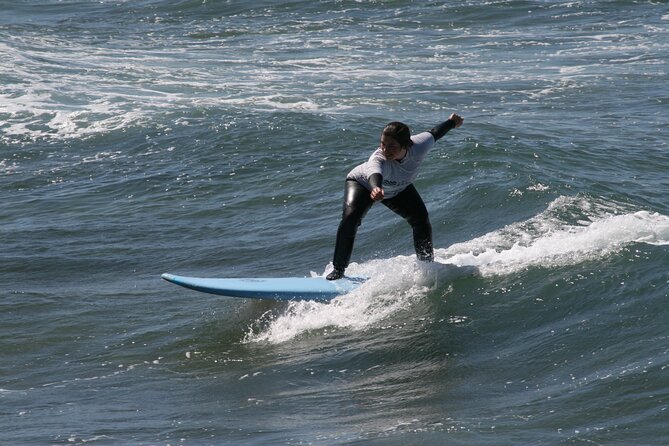
- 4) Into the ocean for about 1.5 hours of surfing time
- Included gear: why it’s easier than you think to pack for this
- Coaching style, small groups, and Ricardo’s kind encouragement
- Price and value: what $66.38 buys you in real learning time
- Getting there at Ribeira d’Ilhas and using the air-conditioned vehicle
- Weather rules: what to plan for when the ocean decides
- Who should book this surf lesson, and who should skip it
- Should you book this Ericeira surf lesson? My honest call
- FAQ
- How long is the surf lesson?
- What is the meeting point?
- What language is the instruction in?
- What surf gear is included?
- Is transportation included?
- How many people are in the group?
- Is the lesson for beginners, intermediates, and advanced surfers?
- What should I bring to the lesson?
- What happens if the weather is poor?
- When is it available?
Key things to know before you paddle out
- Small max group of 6 means you get more hands-on attention during the session.
- Beginner to advanced coaching so you can match the level, not just watch others.
- About 1.5 hours in the ocean after warm-up and learning the basics out of water.
- All key gear included, including Billabong surfing suits, boards, and boots.
- English instruction with friendly encouragement, highlighted by Ricardo’s coaching style.
More Atlantic beach breaks and first lessons we have reviewed in Cascais
- Surf Experience in Cascais★ 5.0 · 423 reviews
- Cascais: Local Surf Experience★ 4.9 · 135 reviews
- Lisbon: Surf Lesson★ 4.5 · 110 reviews
- Surf Lesson★ 5.0 · 99 reviews
Ericeira World Surfing Reserve: why this area helps you learn faster
Ericeira has a well-earned surf reputation, and this lesson is set inside the Ericeira World Surfing Reserve. That matters because good learning depends on consistent conditions and a place that surfers already understand. You’re not just chasing random waves, you’re training in a surfing zone built for the sport.
For me, the biggest value is how the reserve context changes the teaching. In a serious surf area, instructors can focus on technique and confidence rather than figuring out basic logistics in the moment. You’ll still need to respect the ocean, but you’re getting guided instruction in a place designed around surfing.
If you’re brand-new, that setting helps you avoid the common beginner problem: freezing up because the ocean feels bigger than your plan. If you’re already riding, the reserve also supports refining fundamentals, so your next session doesn’t feel like a repeat of everything you already know.
Lesson format for beginners, intermediate, and advanced surfers
This is built as a 2-hour lesson that adapts across skill levels. The flow starts with time out of the water, then moves into the ocean for about 1.5 hours. That structure is smart: you learn the why and the how first, then you test it right away.
Out of water, you get:
- a brief presentation on the history of surfing
- material and equipment guidance, so you understand what you’re using
- clear safety rules
- instruction on how to learn to stand on the board using the right movement
Then comes the warm-up and practice phase that leads into the ocean session. I like that the lesson doesn’t jump straight into chaos. Even advanced surfers often benefit from getting their basics dialed again, especially how balance, foot placement, and timing connect.
If you’re intermediate, the biggest win is that the session isn’t only for beginners. You can focus on improving your wave traveling technique instead of starting from zero. If you’re advanced, you’ll likely use the time to sharpen your fundamentals and get more reps with coaching feedback.
The real itinerary: what happens during each chunk of your 2 hours
This lesson is simple on paper, but you should understand how the timing works so you know what you’re signing up for.
1) Meet, get sorted, and start with the basics
You meet at the Estacionamento Praia de Ribeira d’Ilhas in Ericeira. From there, the session runs with an air-conditioned vehicle included, and the activity ends back at the meeting point. I like that round-trip setup, because it reduces stress when you’re wearing gear and trying to stay focused.
Other Cascais benches and studios we have sat down at
2) Off-water teaching: safety and technique before you’re in saltwater
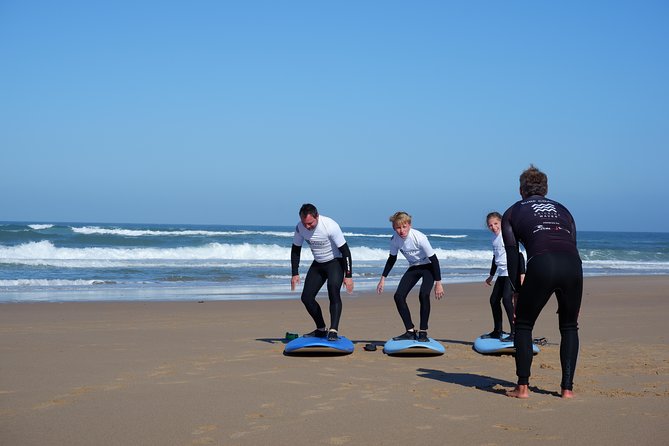
Before you hit the surf, you’ll spend time out of the water. This is when the instructor covers safety rules and explains what to do once you’re on the board. You’ll also get a quick introduction to surf history and the gear you’ll use.
This part is more than filler. Safety rules matter because they protect you and everyone else on the water. And equipment basics help you stop guessing, like why certain boards feel easier or harder in specific moments.
3) Warm-up and stand-up mechanics
Next, you warm up and practice the stand-up movements. The lesson aims to teach you the correct movements for getting on your board. For beginners, this is where you gain control instead of hoping luck carries you.
For intermediates and advanced surfers, warm-ups can still pay off because small adjustments can improve how you pop up, balance, and travel on waves.
4) Into the ocean for about 1.5 hours of surfing time
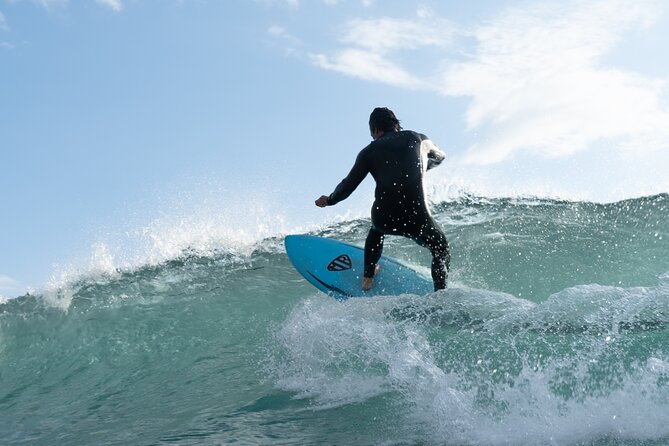
After you’ve learned the plan, you put it into practice in the ocean for around 1 1/2 hours. The goal is simple: take what you practiced and make it work on real waves.
This is where that small-group approach becomes noticeable. When you have fewer people in the water, the instructor can watch details and guide you with less guesswork.
Included gear: why it’s easier than you think to pack for this
The included setup is one of the best value signals here. You get Billabong surfing suits, boards (often listed as pranches), and boots. That means you can travel with less bulk and worry less about finding the right gear in your destination city.
This is especially helpful if you’re traveling light or you don’t want to spend time hunting for surf equipment before your lesson. The boots and suit also matter because they help you stay comfortable long enough to benefit from the session. If you’re cold or uncomfortable, your attention shifts away from technique.
Also, having a consistent kit from the school can make your learning smoother. Your board and traction feel more predictable, and the instructor can set coaching cues around the gear you’re using.
Practical tip: wear clothing you don’t mind getting a bit wet during the day, even though the main gear is provided. And if you’re prone to chafing, bring a small layer of protection you’re used to.
Coaching style, small groups, and Ricardo’s kind encouragement
The lesson caps at 6 travelers, which is huge for learning. In a small group, you’re not just a body in the water. You get closer attention, more frequent feedback, and less waiting around.
One review specifically mentions Ricardo for great explanations and encouragement. That detail tells me the vibe is supportive, not harsh. Surfing needs patience. When someone helps you understand what to do next, your confidence rises fast.
What you should look for during the lesson:
- Listen for one key instruction at a time. Then try that instruction immediately.
- Use safety cues seriously. If the instructor says something is a no-go, take it as technical coaching, not random scolding.
- Ask for clarity if you don’t understand what to do between waves. If you’re unsure, say so, because your time on the water is the payoff.
Even if you’re advanced, you’ll still benefit from a coaching presence that focuses on clear cues. The ocean is chaotic. A good instructor helps you turn chaos into repeatable habits.
Price and value: what $66.38 buys you in real learning time
At $66.38 per person for about 2 hours, this is priced like a focused surf lesson, not a long-day tour. The value comes from the combination of:
- included surf gear (suits, boards, boots)
- instructor coaching for a full session
- meaningful time in the ocean (about 1.5 hours)
If you’ve ever tried to learn without equipment included, you know how quickly costs add up. Even renting gear separately can make a surf lesson feel less affordable. Here, the important pieces are already part of the price.
It’s also a good value if you want instruction in both basics and technique. Some surf experiences only teach one stage. This one targets beginners, intermediate, and advanced, which can save you from booking multiple sessions just to get aligned.
One more value angle: you’re booking for a short block of time, and it ends where you started. That reduces day friction. Less hassle usually means you show up mentally ready to learn.
Getting there at Ribeira d’Ilhas and using the air-conditioned vehicle
Your meeting point is Estacionamento Praia de Ribeira d’Ilhas, listed as 2655-319 Ericeira, Portugal. It also notes that the activity is near public transportation, which is helpful if you’re not driving.
An air-conditioned vehicle is included, which is a comfort upgrade, especially if you’re doing this during warm hours. It also helps with timing because the group stays together and arrives ready to suit up.
Because the activity ends back at the meeting point, you won’t need a separate plan for transport right after you’re done. That’s practical, especially if you’re planning other activities in Cascais or the wider area.
Weather rules: what to plan for when the ocean decides
This experience requires good weather. If it’s canceled due to poor weather, you’ll be offered a different date or a full refund. That’s the right approach for surfing, because the ocean changes fast and safe conditions matter.
Here’s how I’d plan around it:
- Keep your schedule flexible if you can.
- Avoid booking this as your only open surfing slot for the day. If you have to reschedule, flexibility keeps the vacation rhythm intact.
- Expect that wave learning depends on actual conditions, not just good intentions.
If you’re traveling with a tight agenda, consider building in a backup day. Surf lessons are often weather-driven, and this one follows that reality.
Who should book this surf lesson, and who should skip it
This lesson fits best if you want a guided path to standing up and traveling on waves, with safety teaching built in. It’s also ideal if you like structured instruction, because the session starts with off-water lessons and ends with ocean practice.
Book this if:
- You’re a beginner and want step-by-step guidance on standing mechanics and safety.
- You’re intermediate or advanced and want coached reps for traveling on waves.
- You prefer a small group experience with clear feedback.
- You don’t want the hassle of bringing or renting gear.
Maybe skip or rethink if:
- You dislike water-based activities that depend on weather.
- You don’t think you can manage a moderate physical effort level. The lesson requests a moderate physical fitness level.
Should you book this Ericeira surf lesson? My honest call
I think you should book it if your goal is real skill, not just a quick splash and a photo. You get a full teaching loop, off-water safety and mechanics, then about 1.5 hours of surfing time. The small group size and included Billabong gear make the session feel efficient and good value.
If your schedule is rigid or your travel dates are tight, keep the weather factor in mind. But if you can be flexible, this is a strong choice for learning in the Ericeira World Surfing Reserve area, with supportive instruction that focuses on what you need to do next.
FAQ
How long is the surf lesson?
The lesson lasts about 2 hours (approx.), including time out of the water and about 1 1/2 hours in the ocean.
What is the meeting point?
You start at Estacionamento Praia de Ribeira d’Ilhas, 2655-319 Ericeira, Portugal, and the activity ends back at the meeting point.
What language is the instruction in?
The lesson is offered in English.
What surf gear is included?
Included gear is Billabong surfing suits, boards (pranches), and boots.
Is transportation included?
Yes. An air-conditioned vehicle is included.
How many people are in the group?
The maximum group size is 6 travelers.
Is the lesson for beginners, intermediates, and advanced surfers?
Yes. The surf lessons are offered for beginners, intermediate surfers, and advanced surfers.
What should I bring to the lesson?
Meals and drinks are not included, so plan for that. The key surfing gear is provided by the tour.
What happens if the weather is poor?
The experience requires good weather. If it’s canceled due to poor weather, you’ll be offered a different date or a full refund.
When is it available?
It runs Monday to Sunday from 8:00 AM to 9:00 PM, between 02/11/2025 and 11/26/2026. Confirmation is received at time of booking. Service animals are allowed, and the location is near public transportation.
Benches and Studios Across Cascais
Atlantic Beach Breaks, More Surf Lessons

Newly added around Cascais
- Cascais: Glamour and Decay by The Lisbon Coastline – Private Tour
★ 5.0 · 44 reviews - Cascais Private Sailing 2h Cruise with a drink
★ 5.0 · 48 reviews - Relaxed E-bike in the backroads of Cascais and Sintra
★ 5.0 · 62 reviews - Beginners, intermediate and advanced surf lessons
★ 5.0 · 64 reviews - Lisbon: E-bike Trip from the Sintra Mountains to Cascais Sea
★ 5.0 · 67 reviews - Open-Water Swimming in Cascais
★ 5.0 · 72 reviews - Surf Lesson on Praia de Carcavelos
★ 5.0 · 84 reviews - Cascais Deep-Sea Fishing Trip
★ 4.9 · 94 reviews - Surf Lesson
★ 5.0 · 99 reviews - Lisbon: Surf Lesson
★ 4.5 · 110 reviews
Other boats, other operators: Surf Lessons on the Atlantic Coast.
 ★ 4.9Lisbon Surf ExperienceFrom $35876 reviews
 ★ 4.8Matosinhos: Surfing Lesson with EquipmentFrom $34704 reviews
 ★ 4.7Albufeira: Surf LessonFrom $36699 reviews
 ★ 4.9Porto: Small Group Surf Lesson with TransportationFrom $58594 reviews
 ★ 4.8Albufeira: 2-Hour Falesia Beach Surf LessonFrom $40464 reviews
 ★ 5.0Surf Experience in CascaisFrom $50423 reviews
 ★ 5.0The Surf Instructor in Costa da CaparicaFrom $60403 reviews
 ★ 5.0Beginner Surf Lesson at the Beautiful Algarvian West CoastFrom $78377 reviews