
REVIEW · LAGOS AND PONTA DA PIEDADE
Dolphin and Whale Watching in Lagos
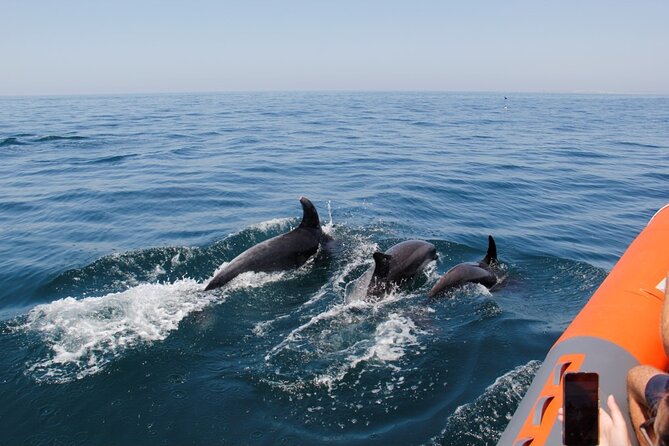
Dolphins turn a boat trip into real action. This Lagos excursion puts you on the water near the Algarve Coast in a rigid inflatable boat (RIB), with a guide working the best spots to spot cetaceans in their natural habitat. I especially like the late 11:30am start, which makes it feel relaxed, and the small group size (max 18) that helps the crew focus on the search. One possible drawback is that if animals are scarce that day, you may spend more time repositioning at sea than you want.
You’re also not just cruising for views. The plan is to actively look for species that commonly show up around this area, like common dolphins, bottlenose dolphins, harbor porpoises, and Risso’s dolphins, and the tour is set up for that “keep your eyes moving” style of spotting. On a windy day, or if the sea is choppy, the ride can feel a bit intense, so I’d go in with that in mind.
In This Review
- Key highlights to know before you go
- Lagos Grotto Trips starts at Passeio dos Descobrimentos
- The late 11:30am start, and why it feels better
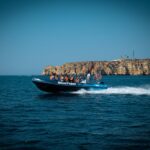
- On the water in the RIB “Aftermath”
- How the guide finds dolphins and whales near Lagos
- Where you cruise: outside the Algarve Coast in the Atlantic
- What you might see: dolphins, porpoises, and Risso’s
- A 1.5-hour experience built around real searching
- Photo and spotting tips that actually help
- Comfort, safety, and who this boat trip suits
- Value check: what you’re really buying
- Weather matters more than you think
- Should you book this dolphin and whale watching trip in Lagos?
- FAQ
- What is the meeting point for the Lagos dolphin and whale watching tour?
- What time does the tour start?
- How long is the tour?
- Is the tour offered in English?
- What boat will I be riding on?
- What sea animals can I expect to see?
- Is there a minimum age?
- What fitness level is required?
- What is the maximum group size?
- What happens if the weather is bad?
- What is the cancellation policy?
Key highlights to know before you go
- RIB boat “Aftermath”: fast, close-to-water, and designed for spotting at sea.
- A guide who searches: you’re not just drifting and hoping.
- Cetaceans in the wild: sightings are never guaranteed, but the goal is active searching.
- Small group, up to 18: better communication and a more personal feel.
- Late morning timing: a slower start that still gets you out during good daylight.
More Ponta da Piedade stacks and Lagos coves we have paddled in Lagos
- Boat trip to the grottos at Ponta da Piedade, Lagos★ 5.0 · 1,197 reviews
- Boat Trip to Ponta da Piedade from Lagos★ 5.0 · 1,016 reviews
- From Lagos: Kayak Tour of Ponta da Piedade Caves on Catamaran★ 5.0 · 905 reviews
- Unlock the Magic of Ponta da Piedade by Kayak – Lagos★ 5.0 · 723 reviews
Lagos Grotto Trips starts at Passeio dos Descobrimentos
The tour meets at Passeio dos Descobrimentos 10, 8600-315 Lagos. It’s a straightforward location to find, and it’s noted as being near public transportation, which matters if you do not want to build your day around a car.
Once you arrive, plan for a short setup before you head out. The big thing is that this is a working boat trip, not a long sightseeing bus ride. You’ll be moving at sea pretty quickly, so keep your layers ready and your phone secured.
The late 11:30am start, and why it feels better
Starting at 11:30am changes the mood. You get a slow morning in Lagos, time for coffee and a calmer walk around town, and you’re not racing from hotel to harbor early in the day.
That timing also fits how wildlife viewing often goes. The ocean can be unpredictable, and the crew needs time to find the best conditions and areas. A later start gives you a little more flexibility if the day is just waking up.
On the water in the RIB “Aftermath”
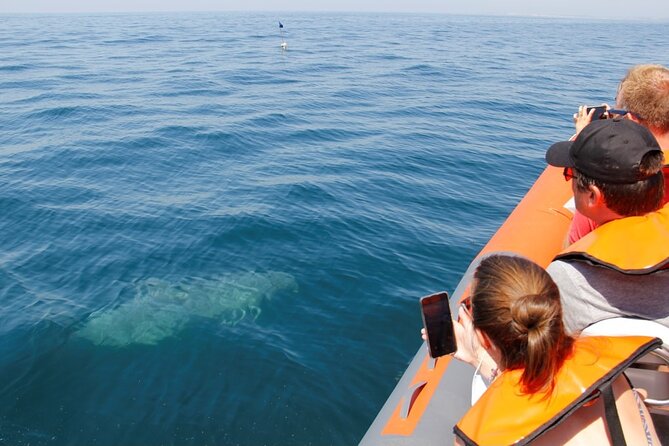
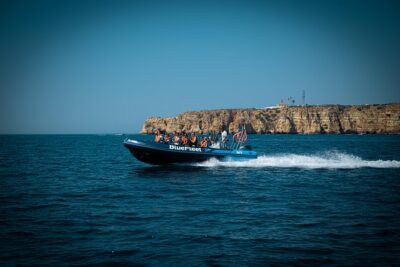
You’ll ride on a new rigid inflatable boat called Aftermath. RIBs are built for stability and speed, and they can put you close to the surface where dolphins often travel.
Here’s the practical part. If you’re sensitive to motion, expect some bouncing. One review described the ride as a little scary, then said the dolphins made up for it. That matches the vibe of this kind of boat: fast enough to reach good spots, and lively enough that you feel the sea.
Bring sensible expectations. This is an Atlantic excursion, so wind and chop can happen. If conditions are rough, you’ll likely feel it more on a smaller high-speed craft than on a large sightseeing boat.
How the guide finds dolphins and whales near Lagos
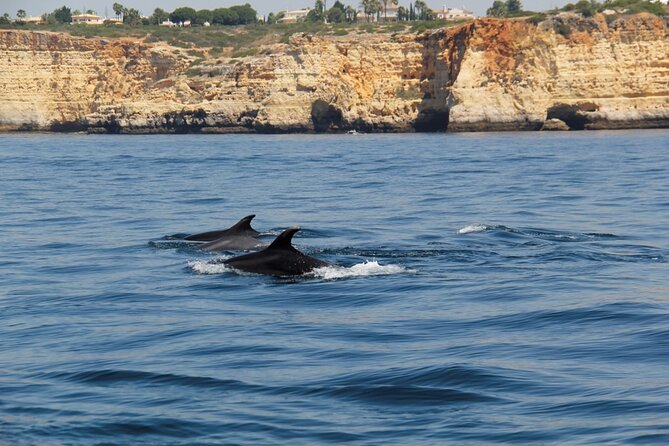
The core of the experience is the guide’s job: spotting and steering you toward sightings. The tour is described as a personalized service, and the point is that someone who knows where to look should increase your odds versus a generic cruise.
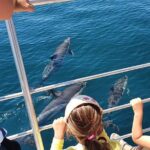
In this area, the hunt can be active. Dolphins are playful, intelligent, and they move. They can surface, do a quick show, and disappear before you get one perfect photo angle. That’s why you’ll want to look in multiple directions, not just stare at one line of horizon.
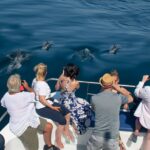
One review noted that you need to watch all around because you do not know where they will appear from. That’s excellent advice for your mental game too. If you pick one spot to watch the whole time, you’re more likely to miss the surprise pops.
Other dolphin boats out of Lagos we have ridden
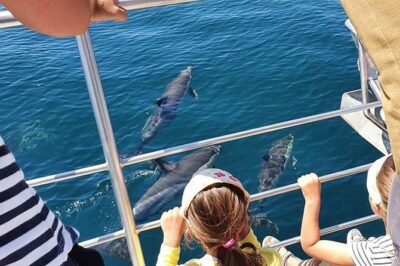
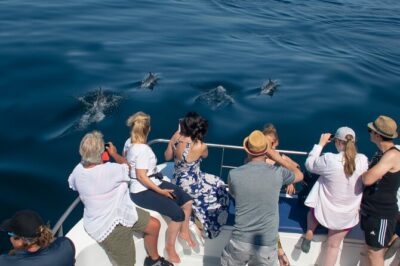
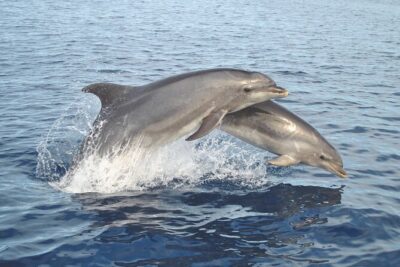
Where you cruise: outside the Algarve Coast in the Atlantic
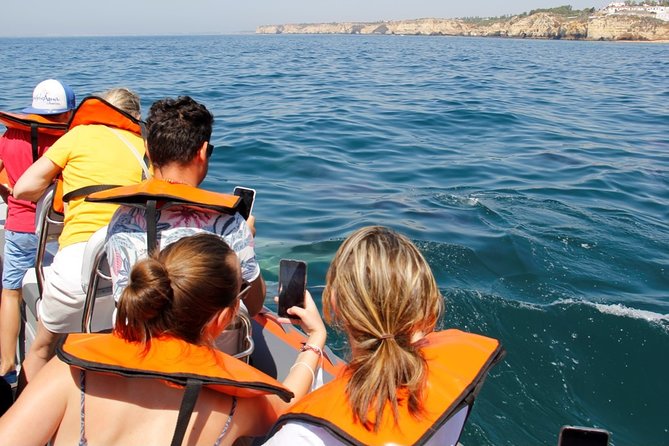
The boat heads out to the vast Atlantic Ocean just outside the Algarve Coast. That is the whole point of this excursion: you’re not staying in a sheltered bay where wildlife is limited. You’re going where cetaceans are more likely to travel through.
You should also understand the tradeoff. The Atlantic means more distance and more variability. Even with a skilled guide, you can’t control what animals do. Some days you get fast action; other days the sightings are brief or require repositioning.
What you might see: dolphins, porpoises, and Risso’s
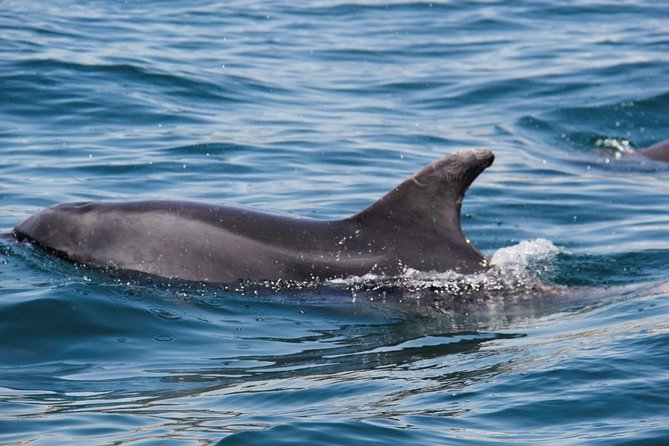
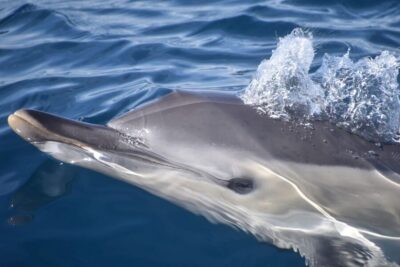
The tour focuses on meeting different cetaceans. Based on the description, commonly spotted species include:
- Common dolphin
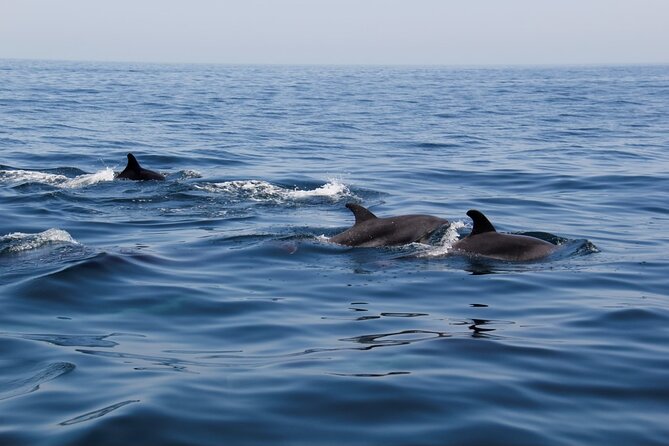
- Bottlenose dolphin
- Harbor porpoise
- Risso’s
It also says the goal is dolphins and whales. The species list above does not name specific whales, so I’d treat “whales” as a possibility rather than a promise. Your best strategy is to be ready for what the crew actually finds that day.
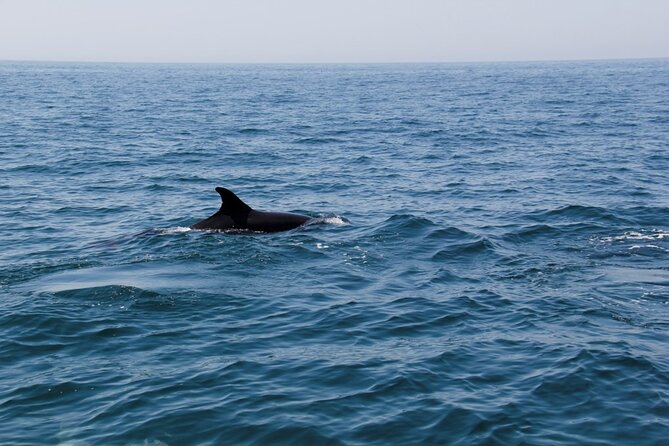
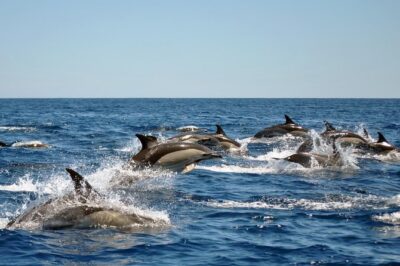
When you do spot dolphins, look for patterns. Dolphins often travel in groups and may appear in bursts, surfacing quickly and moving on. If you see one, keep scanning. A short moment can turn into a bigger sequence if the group is nearby.
A 1.5-hour experience built around real searching
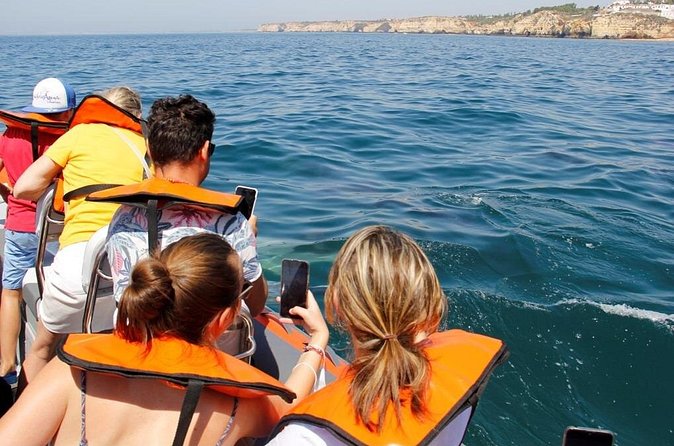
This outing runs about 1 hour 30 minutes. In that time, the crew’s priorities are simple: find life, stay safe, and keep you in the right area long enough to enjoy it.
One of the most important takeaways from the experience is how time gets managed. A highly positive review praised the team for waiting until they actually saw dolphins, even though time was running out. That tells me they can adjust to wildlife opportunities when something appears.
At the same time, there’s a clear caution from a mixed review. That person said dolphins were briefly spotted for around two minutes, then the boat moved to another location for much of the remaining time with no additional sightings. The complaint wasn’t about the animals being wild, it was about not giving more time at a sighting location they felt was already successful.
So here’s your balanced expectation: your tour may involve moving locations if sightings fade. That can be frustrating, but it can also be necessary when animals shift. If you’re okay with some uncertainty, you’ll probably enjoy it more.
Photo and spotting tips that actually help
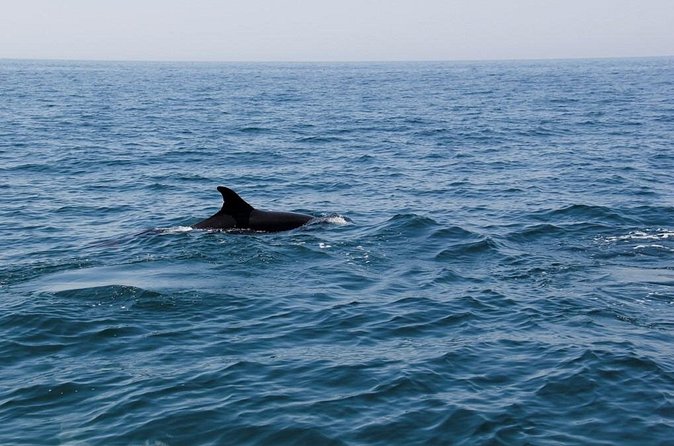
If you want photos, plan to be flexible. You can’t pose dolphins like models. You need to react fast, and you need to keep the horizon in view.
A review from a family trip pointed out the challenge of photographing dolphins because you have to scan around constantly. That’s a real-world tip. Your best photos usually come when you keep your eyes moving, not when you fix on one direction.
A few practical ideas:
- Get your camera settings ready before the boat starts hunting.
- Keep your phone or camera secure and easy to grab.
- Don’t panic when there’s no activity for a few minutes. Searching is part of the experience.
Also, try to enjoy the moment in real time. If you spend every second zooming and focusing on settings, you’ll miss the playful behavior that makes dolphin encounters special.
Comfort, safety, and who this boat trip suits
The tour recommends moderate physical fitness. That makes sense for a moving RIB and for the quick pace of spotting and repositioning.
It also is not recommended for children under 4 years old. For families, that usually means younger kids may struggle with motion or may find the open water experience less comfortable.
The small group size helps comfort. With a maximum of 18 travelers, you’re less likely to feel crowded, and the crew can keep track of everyone more easily.
If you’re prone to motion sickness, consider preparing in advance. This is an active speedboat experience on the Atlantic, and even short rides can feel intense when the water is rough.
Value check: what you’re really buying
There’s no trick here: wildlife is wild. You are paying for access, a guide’s searching skill, and the chance to be out on the water with the right boat.
The strongest value signal is the guide-led approach. Instead of a passive cruise, you’re actively looking with experienced direction, and the boat is designed for speed and closeness.
The second value signal is the small group format. Max 18 travelers means your experience is more controlled, and it is easier for the team to manage spotting directions and safety.
The main value risk is also clear from the mixed review. If the day is slow and sightings are brief, the experience can feel underwhelming for the time spent at sea. In other words, this is best for people who want the outing as an adventure, not a guaranteed dolphin show.
Weather matters more than you think
The tour requires good weather. That’s not a minor detail. On the Atlantic, sea state affects everything: comfort, how safe it is to operate the RIB, and how effectively the guide can scan.
If the experience is canceled due to poor weather, you should be offered a different date or a full refund. That’s reassuring, but it also means you should build some flexibility into your Lagos schedule.
If your trip is tight and you only have one day available, you’re still taking a calculated risk. That’s true for any cetacean trip, but it matters more when the vessel is a fast RIB.
Should you book this dolphin and whale watching trip in Lagos?
I think this is a smart booking if you want an authentic, outdoorsy wildlife outing with an emphasis on searching. The combination that convinces me most is the RIB Aftermath experience, the late morning start, and the small group size that makes the guide’s work more effective.
I’d be cautious if you hate uncertainty. This is a “go out and look” tour where dolphins can appear for a moment and then vanish. If you cannot handle the possibility of short sightings, or if you want a long, stable viewing session no matter what, this type of tour may frustrate you.
If you do book, go in with the right mindset: scan all directions, enjoy the real thrill when you see something, and accept that the ocean sets the schedule.
FAQ
What is the meeting point for the Lagos dolphin and whale watching tour?
The meeting point is Passeio dos Descobrimentos 10, 8600-315 Lagos, Portugal.
What time does the tour start?
The tour starts at 11:30am.
How long is the tour?
The duration is approximately 1 hour 30 minutes.
Is the tour offered in English?
Yes, the tour is offered in English.
What boat will I be riding on?
You ride on a rigid inflatable boat (RIB) called Aftermath.
What sea animals can I expect to see?
The tour aims to see different cetaceans (dolphins and whales). It also notes that species that can usually be seen include common dolphin, bottlenose dolphin, harbor porpoise, and Risso’s.
Is there a minimum age?
The tour is not recommended for children under 4 years old.
What fitness level is required?
Travelers should have a moderate physical fitness level.
What is the maximum group size?
The tour has a maximum of 18 travelers.
What happens if the weather is bad?
The tour requires good weather. If it is canceled due to poor weather, you will be offered a different date or a full refund.
What is the cancellation policy?
There is free cancellation. You can cancel up to 24 hours in advance of the experience for a full refund, and cancellations less than 24 hours before the start are not refunded.
Dolphin Boats Out of Lagos, Other Trips

Ponta da Piedade and the Lagos Coves, More Trips
Newly added around Lagos
- Lagos Private Boat Trip with Drinks, Snacks, Paddleboards Kayak
★ 5.0 · 89 reviews - Algarve: Lagos sightseeing guided tour with E-bikes
★ 5.0 · 89 reviews - Half-day tour 4×4 West Coast of the Natural Park
★ 5.0 · 91 reviews - Wild and Wonderful West Coast Full Day Tour
★ 5.0 · 92 reviews - Sagres Sunset Small Group Tour from Lagos
★ 5.0 · 94 reviews - Dolphin and Whale Watching in Lagos
★ 5.0 · 94 reviews - Ponta da Piedade Sunset Tour in Lagos, Algarve
★ 5.0 · 95 reviews - From Lagos: Benagil Caves Cruise on a Catamaran
★ 4.5 · 101 reviews - Surf Lessons in Algarve
★ 5.0 · 101 reviews - Ponta da Piedade Coastal Tour in Lagos, Algarve
★ 5.0 · 105 reviews
Other boats, other operators: Lagos and Ponta da Piedade.
 ★ 4.9From Lagos: Boat Cruise to Ponta da PiedadeFrom $213,346 reviews
 ★ 4.8Lagos: Boat Cruise to Ponta da PiedadeFrom $202,645 reviews
 ★ 4.7Lagos: Combo Dolphin and Benagil Tour with Marine BiologistFrom $632,352 reviews
 ★ 4.9Lagos: Ponta da Piedade Rock Formations Guided Boat TourFrom $202,290 reviews
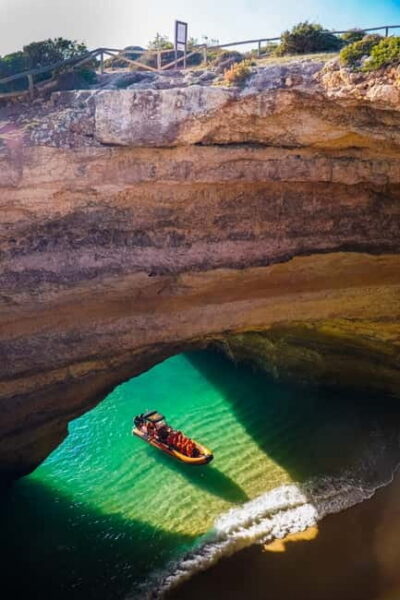 ★ 4.7From Lagos: Benagil Caves Speedboat AdventureFrom $382,211 reviews
 ★ 4.8From Lagos: Kayaking and Boat Cave Explorer TourFrom $411,988 reviews
 ★ 4.8Lagos: Guided Kayak TourFrom $401,639 reviews
 ★ 4.9Lagos: Dolphins & Caves – CatamaranFrom $581,512 reviews