
REVIEW · FATIMA, NAZARE AND OBIDOS DAY TRIPS
Óbidos: Medieval Tales & Secrets Spots Guided Walking Tour
Óbidos is tiny, but the stories hit hard. This guided walk threads queens, Moors, Jews, and Portuguese art through the town’s stone lanes, ending with a Ginjinha taste you will actually remember.
I especially like the way the tour mixes big landmarks with small details, so you do not just see walls and churches, you understand why they mattered. I also love the art stop, with Josefa de Óbidos pieces and the chance to learn her local importance in a place that actually preserved her work.
One consideration: it is a walking tour around the walled old town, with uneven stone and no wheelchair access. Bring comfy shoes, and plan on keeping a steady pace for two hours.
In This Review
- Key things you’ll notice fast
- Óbidos, the Town of the Queens you can walk in one evening
- Starting at the tourist office, then getting out of the tourist loop
- Narrow lanes, Moorish and Jewish quarters, and why the town feels different
- Inside the castle of Óbidos, reading 1300 years of Moorish origin
- Churches and small monuments: where Renaissance and Baroque Portugal show up
- Bookstores worth planning around: Ler Devagar and the other literary stops
- Camões Mark, Casa da Música, and the cultural breadcrumbs you might otherwise miss
- Out of the walls: calmer views, different angles, and a breather
- The ginjinha tasting, chocolate cup and all
- Price and value for a 2-hour medieval walking tour
- Who should book this Óbidos guided walk
- Should you book this Óbidos medieval tales walking tour?
- FAQ
- How long is the Óbidos Medieval Tales & Secrets Spots Guided Walking Tour?
- What is the price per person?
- What is included in the tour?
- Is food included?
- Where do we meet for the tour?
- What should I wear or bring?
- What languages are the guides available in?
- Is this tour suitable for wheelchair users?
- Can the tour be canceled due to weather?
Key things you’ll notice fast
- Ginjinha de Óbidos served in a chocolate cup, a signature local ritual
- A Moorish-origin castle that feels like a time machine once you start reading the walls
- Josefa de Óbidos paintings (5 original works) plus a Renaissance pietá linked to Nicolau de Chanterene
- Ler Devagar in a former royal chapel, plus two other bookstores that make great photo stops
- The Town of the Queens theme, with stories tied to Catherine of Austria, Isabel of Aragon, and Leonor de Avis
- Off-the-main-street walking, including an out-of-the-walls section for calmer views
Óbidos, the Town of the Queens you can walk in one evening
Óbidos is one of those Portuguese towns that feels purposely built for wandering. The guided format helps a lot, because the town is compact but layered, and it is easy to miss the threads if you only go where the crowds point you.
What makes this tour click is the queen angle. You get stories tied to Catherine of Austria, Isabel of Aragon (the Queen Saint Isabel), and Leonor de Avis, wife of King John II, who helped shape Óbidos through the creation of the Holy House of Mercy. You will start connecting how royal power affected everyday life, not just palace drama.
The pacing also stays practical. You are moving for two hours, but you are not rushed through the good parts, and you should be able to stop for photos at the best corners.
Starting at the tourist office, then getting out of the tourist loop
You meet at the front of the Óbidos Tourist Office, near the main parking, outside the walls. From there, the tour shifts into the historic heart, with a walking route that is designed for seeing a lot without feeling like a checklist sprint.
A pattern you will appreciate: the guide tends to point out photo angles and then slows down when it matters. In real life, that is gold, because Óbidos rewards people who look up at tiles, arches, and doorways, not just straight ahead.
If you like asking questions, this style works. Multiple guides named in bookings, like João Pedro and Ivo, show up as confident explainers who will answer follow-ups instead of brushing them off. That can turn your visit from pretty to meaningful.
Narrow lanes, Moorish and Jewish quarters, and why the town feels different
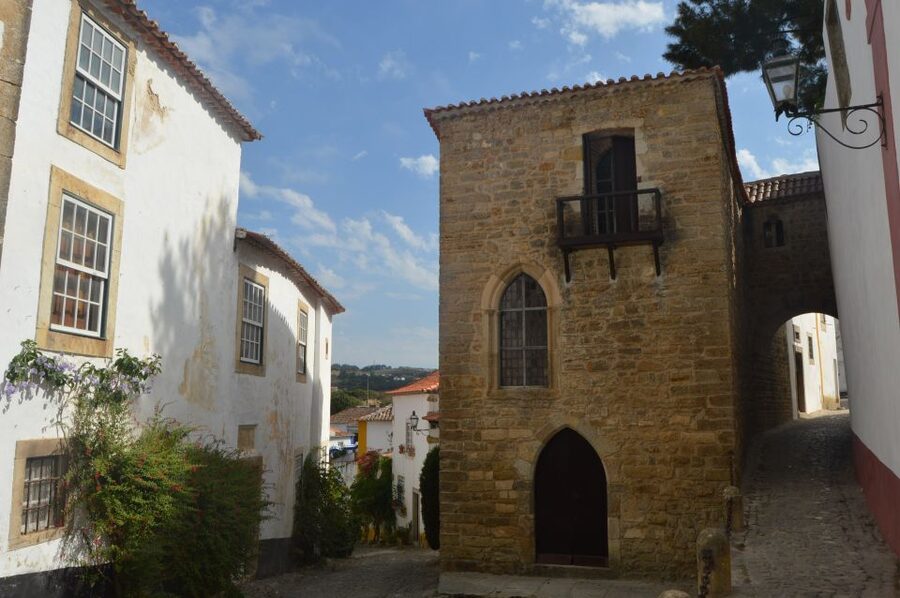
Óbidos sits at an intersection of cultures, and the walking route is built to show that without getting stuck in vague generalities. You will move through areas tied to Moorish and Jewish neighborhoods, which helps you understand why certain street patterns and landmarks feel distinct.
This is where a guide earns their tip. When someone connects the dots between what you see on the ground and the people who lived there, the town stops being a postcard. You start noticing how the medieval layout supports community life, trade, and defense.
You also get a steady rhythm of stops that includes churches, chapels, and towers. Even if you are not the type to read plaques for fun, these are the moments where history becomes visible in stone.
Inside the castle of Óbidos, reading 1300 years of Moorish origin
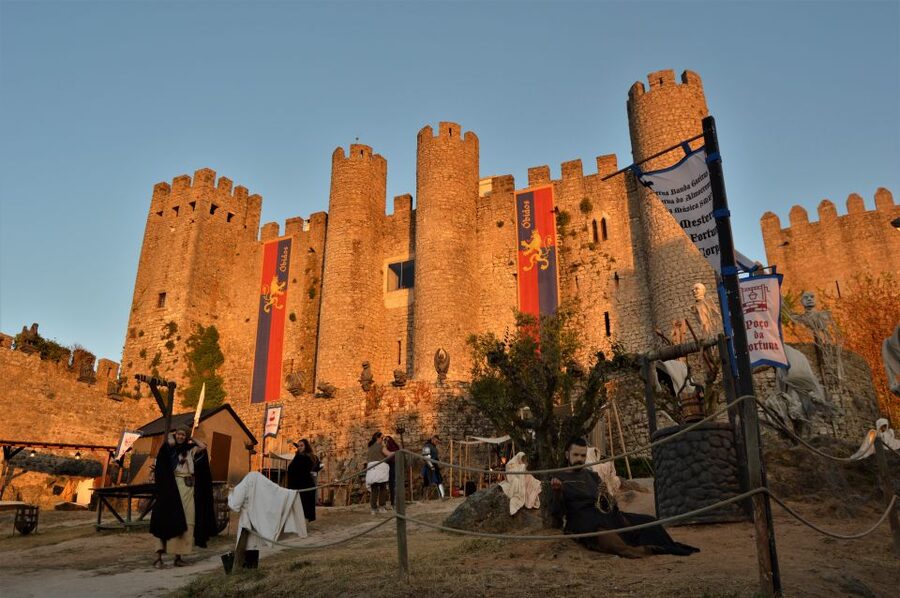
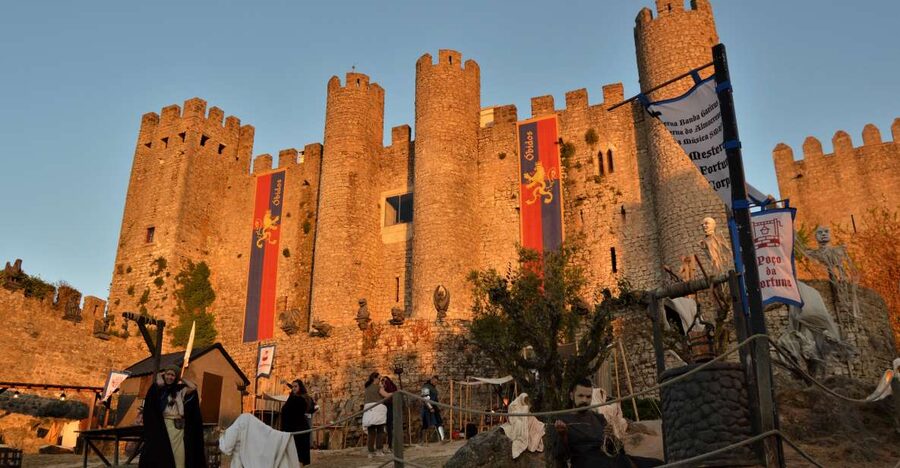
The 1300-year-old castle is the heavy hitter for many people, and for good reason. Once you reach it, you get a guided look at the castle area tied to Moorish origin, which helps frame why this fortification shaped Óbidos.
Castle time in Portugal can be either dramatic or confusing. This tour tries to keep it grounded, so you understand the bigger story while still appreciating the immediate experience of walking through an old defensive space.
There is a practical reason this stop works on a guided schedule. You will not just wander the battlements, you will be shown what to look for and how the castle fits into the town around it. You leave with a mental map, not just a few good shots.
Churches and small monuments: where Renaissance and Baroque Portugal show up
Óbidos rewards slower looking, and the tour supports that with art and religious stops that matter. You will visit the Museum of the Saint John the Baptist Church, plus several key churches and chapels, including Saint Peter Church, Saint Mary Church, Saint Martin Chappel, and the Almshouse Church.
One stop to pay attention to is the pietá connected to Renaissance master Nicolau de Chanterene. Even if you are not an art specialist, the guide’s explanation gives you context for how Renaissance sculpture and devotional culture coexisted in a medieval setting.
Another major art focus is the Josefa de Óbidos component. The highlight is seeing 5 original paintings by her, and the tour connects her to local pride and wider reach, noting she was the first Portuguese female artist to have works exhibited in the Louvre Museum in Paris. That is the kind of fact that changes how you look at art on the wall.
You should come ready for a mix of emotion and detail. Religious art can feel intense, and this itinerary gives you enough structure that you do not get lost in names and dates.
Bookstores worth planning around: Ler Devagar and the other literary stops
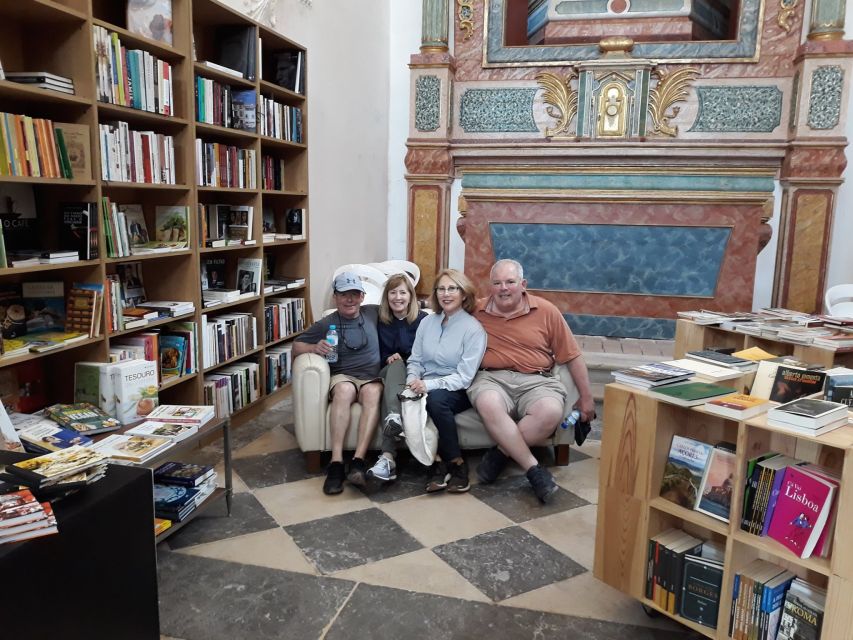
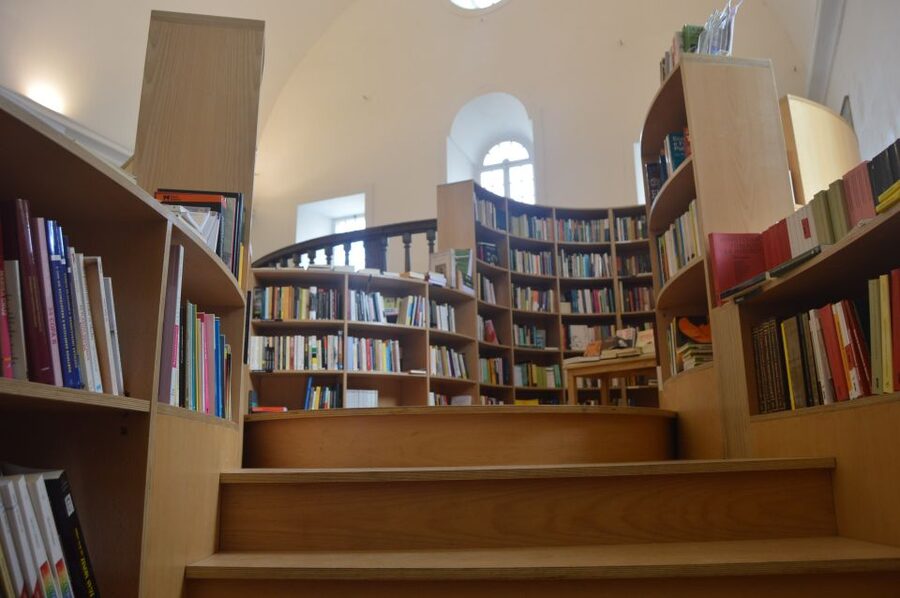
If you like browsing books on vacation, Óbidos has a bonus. This tour includes two gorgeous bookstores, and one of them is seriously worth timing your day around: Ler Devagar, located on a former royal chapel.
That setting matters. You are not just walking into a shop, you are stepping into a repurposed space with history baked into the architecture. It makes the visit feel like part museum, part book adventure.
You will also visit the Market Bookstore, Livraria do Mercado, described as a bookstore and organic products shop. It is a nice pairing, because it keeps the tone local and practical. You can browse while thinking about Portuguese daily life, not just monuments.
The route also includes São Tiago Bookstore, located on a former church and royal chapel. That gives you a theme of reuse and continuity, where old religious buildings become spaces for reading and gathering.
If you want souvenirs that do not look like souvenirs, these bookstores are your best bet. Even if you do not buy, the photos are great, and it is one of those stops where walking slower feels natural.
Camões Mark, Casa da Música, and the cultural breadcrumbs you might otherwise miss
Between the big stops, you pass cultural touchpoints like Camões Mark and Casa da Música. These are the kinds of small waypoints that can blend into the scenery if you are walking without a guide.
On this tour, they work like breadcrumbs. The guide uses them to connect Portugal’s wider cultural identity back to what you are standing in front of, so the town starts to feel like part of a bigger story rather than an isolated medieval bubble.
You do not need to be a literature fan to enjoy this section. It is more about how the tour keeps the information flowing, so your brain stays engaged during the walk.
Out of the walls: calmer views, different angles, and a breather
A highlight that many people appreciate is the out of the walls walk. You get a change of perspective, which helps break up the density of the walled historic center.
This section is especially useful if you want photos without fighting for position. Even in a popular town, stepping outside the wall line gives you a different feel and often a calmer scene.
It also makes the route feel complete. You do not just see Óbidos as an enclosed museum, you see it as a living place built into its surrounding terrain.
The ginjinha tasting, chocolate cup and all
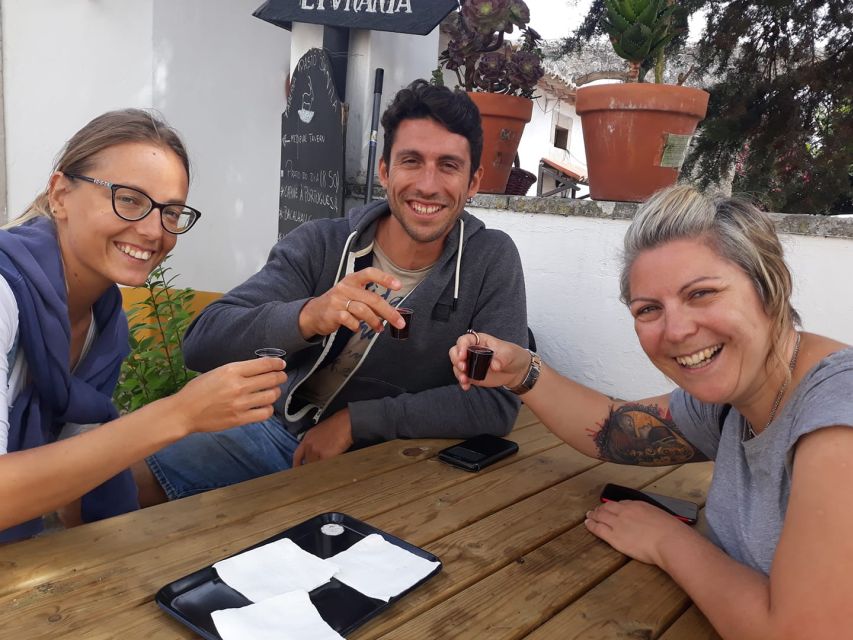
Now for the part that makes people smile: the included tasting of Óbidos ginjinha. You try Ginjinha de Óbidos, a sour cherry liqueur served in a chocolate cup, which turns a drink into a small edible souvenir.
This stop works at the end of the route because it is a reward, and it also helps you anchor the town’s flavor in your memory. Portugal has many regional drinks, but ginjinha in Óbidos has a specific identity, and the chocolate cup is the kind of detail you cannot fake with a photo.
Plan for it the way you would any tasting. If you have a sensitive palate or prefer not to drink alcohol, it is still included, but you can pace yourself. It is better to enjoy the moment than to power through it.
Price and value for a 2-hour medieval walking tour
At $41 per person for about two hours, this is not a bargain-price tour. But it is also not overpriced for what you get, because the value sits in three places: a live guide for the full walk, specific art access like the Josefa de Óbidos paintings, and the included ginjinha tasting.
The “live guide” part is not fluff. The quality you want here is someone who can connect the castle, the churches, and the bookstore stops into one coherent explanation. From the guide styles described in bookings, you can expect the route to be more story-driven than fact-dumping, and that changes what you take home.
You should also consider that food is not included. If you are hungry at the end, you will want a plan for lunch or a snack afterward. A good approach is to keep the tour as your morning or early afternoon anchor, then eat once you are back in the flow of the town.
Who should book this Óbidos guided walk
This tour is a strong match if you want a fast, guided intro to Óbidos that covers the major layers in a short time. It is also great for art lovers who want a focused stop at Josefa de Óbidos original works, plus someone willing to appreciate religious sculpture and the local context behind it.
It also suits travelers who like bookstores as much as monuments. With Ler Devagar plus two other literary stops, you get a different side of Óbidos that many “just castle and churches” routes skip.
Who might want to choose something else? If you have mobility limitations, you should be cautious. The tour is not suitable for wheelchair users and people with recent surgeries, and it involves walking on uneven stone.
Should you book this Óbidos medieval tales walking tour?
Yes, I would book it if you only have a couple of hours in town and you want more than pretty streets. The mix of castle, queen stories, original Josefa de Óbidos paintings, and the included ginjinha tasting makes it a very efficient way to understand why Óbidos feels so distinctive.
If you hate alcohol tastings or you want a slower, stop-every-corner kind of day, you might adjust your expectations. Otherwise, this is the kind of tour that helps you leave Óbidos with a real sense of place, not just a stack of photos.
FAQ
How long is the Óbidos Medieval Tales & Secrets Spots Guided Walking Tour?
The tour lasts 2 hours.
What is the price per person?
The price is $41 per person.
What is included in the tour?
The tour includes a live guide and a ginjinha tasting.
Is food included?
No, food is not included.
Where do we meet for the tour?
You meet in front of the Óbidos Tourist Office, near the main parking, outside the walls.
What should I wear or bring?
Wear comfortable shoes, since it is a walking tour.
What languages are the guides available in?
The live tour guide is available in English and Portuguese.
Is this tour suitable for wheelchair users?
No. It is not suitable for wheelchair users, people with mobility impairments, or people with recent surgeries.
Can the tour be canceled due to weather?
Yes, the tour can be canceled due to weather conditions.
Other boats, other operators: Fatima, Nazare and Obidos Day Trips.
 ★ 4.5Three Cities in One Day: Porto, Nazare and Obidos from LisbonFrom $1333,572 reviews
 ★ 4.5From Lisbon: Day Trip to Porto, Óbidos, and NazaréFrom $971,311 reviews
 ★ 4.8From Lisbon: Knights Templar Day Tour in TomarFrom $113465 reviews
 ★ 4.8Nazaré: 4×4 Buggy Tour with GuideFrom $153283 reviews
 ★ 5.0From Lisbon: Private Óbidos and Nazaré TourFrom $335152 reviews
 ★ 4.3Batalha Monastery Entrance TicketFrom $17140 reviews
 ★ 5.0Tour of the Knights Templar’s of Tomar in Private TourFrom $157138 reviews
 ★ 5.0Óbidos: Medieval Tales & Secrets SpotsFrom $42137 reviews