
REVIEW · SINTRA DAY TRIPS
Sintra Walking Tour: Romantic Village & Palaces
Sintra can feel like a movie set. This walking tour threads through the National Palace skyline and the Romantic village streets, then adds stops that connect architecture, food, and photo spots in a smooth, mostly gentle route. You get a local Sintra guide leading you across key landmarks without the hassle of hopping between towns.
What I like most is the way the tour makes the buildings make sense, especially with guide talent that shows up in the reviews, including architect-types like Stephanie and Julio. I also like the built-in food breaks, since you’ll stop at classic queijadas spots like Fábrica de Queijadas da Sapa and Casa Piriquita, even if actual purchases are separate.
One thing to plan for: two major sights have entrance tickets not included, and you’ll want to budget for them if you want to go inside. Also, this experience depends on good weather, so your day should stay flexible.
In This Review
- Key highlights you should care about
- Starting at Café Saudade, then getting your bearings in Sintra
- The tour’s walking rhythm: short stops that prevent Sintra fatigue
- Camara Municipal de Sintra and the clue that explains Sintra’s style mix
- Old Sintra sweet stops: Queijadas da Sapa and Piriquita breaks
- Moorish Fountain and the Pelourinho: small stops with big meaning
- National Palace of Sintra: the skyline icon, plus the ticket choice
- Church of São Martinho: a quiet reset near the palace
- Hotel Lawrence: when history is still in the building
- Quinta da Regaleira: UNESCO mood, gardens, and the Initiation Well
- Seteais viewpoint: the best photo window on the walk
- Value and price: why €13 and €15 tickets are the real budget math
- Who this Sintra walk suits best
- Should you book it, or do Sintra on your own?
- FAQ
- How long is the Sintra walking tour?
- What is the meeting point and where does the tour end?
- What language is the tour offered in?
- Is a mobile ticket included?
- What does the price include?
- Which attractions require extra entrance tickets?
- What if the weather is poor or the minimum group size is not met?
Key highlights you should care about

- Architect-level building talk that helps you read Sintra’s mixed styles fast
- Town-center stops that keep the walk relaxed, with plenty of short pauses
- Queijadas moments at old-school makers, plus a sweet break at Piriquita
- National Palace and Regaleira as optional add-ons with clear extra ticket pricing
- Seteais viewpoints for big photos over Pena Palace and the mountains
Other ways into Sintra for the day we have tried from Sintra
- Sintra: Pena Palace and Park Entrance Ticket★ 4.2 · 17,410 reviews
- Lisbon: Sintra, Pena Palace, Cabo da Roca, & Cascais Tour★ 4.9 · 3,509 reviews
- From Lisbon: Sintra & Cascais Small Group Tour with Tickets★ 4.8 · 2,224 reviews
- Sintra: Quinta da Regaleira Entry Tickets with Host★ 4.2 · 2,000 reviews
Starting at Café Saudade, then getting your bearings in Sintra
The walk starts at Café Saudade on Av. Dr. Miguel Bombarda, in the center of Sintra. It’s an easy meeting point and the tour ends back there, so you are not stuck figuring out where you land at the end of your 2 hours 15 minutes. You also get a mobile ticket, which is convenient when you are juggling photos, stairs, and a pocket full of coins.
Right away, this is the kind of tour that helps you understand what you see when you wander later. Sintra is compact, but it can feel confusing. You see palaces, towers, tiles, and gardens in different styles, and it is tempting to just take pictures and hope it all connects. This tour tries to do the connecting for you, using short stops that each add one more piece: a landmark here, a symbolic monument there, and then a palace that ties it all to the skyline.
You’ll also appreciate the pace. The route is described as a “healthy walk with a light pace,” and the overall plan includes options designed for different fitness levels. In practice, that means you are not going to be “running” between stops. Expect a rhythm of walking, looking, and listening, with time to pause for photos.
The group size is capped at 25, which matters in Sintra. Smaller groups can actually hear the guide instead of fighting for attention at the edge of a crowded street. If the group grows beyond 20, an additional guide is added to keep the experience workable.
The tour’s walking rhythm: short stops that prevent Sintra fatigue

This is not a “one big palace, then you’re done” outing. It is a structured stroll through Sintra’s core with a sequence of stops that each take about 10 to 15 minutes. That timing is helpful. It keeps you from getting stuck in long lines or spending so much time at one spot that you miss the rest of the story.
You should also know what to expect in terms of logistics: it is offered in English, and it runs near public transportation. Service animals are allowed, so it is built to be practical for real travel days, not just a perfect-scenario itinerary.
The itinerary is designed to be flexible. The route notes mention both gentle, accessible paths and more adventurous segments with panoramic views. That suggests you may have a choice in how you tackle certain stretches depending on how you feel that day. When you are touring in Sintra, weather and energy matter, because you can go from crisp air to drizzle fast. A guide-led pace also reduces the stress of figuring out turn-by-turn directions in older lanes.
At its core, this tour is about value through efficiency. You are not buying a “ticket to everything.” Instead, you’re investing in context. It gives you a mental map of what to prioritize later, whether you want to return for interiors or simply revisit the views.
If you hate rushed tours, this kind of stop-and-pause plan is a good match. If you only want one or two attractions and you want to spend the rest of the day at leisure, this might feel like it moves briskly after the first few stops. Still, the short duration overall helps.
Camara Municipal de Sintra and the clue that explains Sintra’s style mix
One of the first stops is the Camara Municipal de Sintra, also called Paços do Concelho. From the outside, it’s an eye-catching building with a tall tower decorated with tiles. The details matter here. The architecture blends neo-Manueline and neo-Romanesque influences, so it is a great place to start learning how Sintra likes to remix styles.
The building sits on the former site of the Chapel of São Sebastião, which helps explain why you see layers of meaning rather than one single era. The tower features items like the Cross of Christ and the national coat of arms, plus a distinctive armillary sphere at the top. That kind of iconography is the sort of thing that is easy to miss if you walk past quickly.
Inside, the description includes a two-story cloister and richly detailed decoration. Even if you do not go deep into interiors, this stop gives you a framework. It tells you to look for symbolism and craftsmanship, not just pretty facades. If you come back later on your own, you’ll know what to notice.
This stop is listed as free admission, about 10 minutes. That makes it a useful opener. You are not paying to get your bearings, and you’re already training your eyes on Sintra’s “why does this look like that?” question.
Old Sintra sweet stops: Queijadas da Sapa and Piriquita breaks
Food is part of Sintra, not a side quest. The tour builds in at least two classic pastry stops that connect directly to local identity.
First is Queijadas da Sapa at the Fábrica de Queijadas da Sapa. The history goes back to 1850, and the pastries are treated as a regional symbol. The stop is designed to show you the artisanal process, and yes, it includes tasting in the flow of the tour. Just keep expectations grounded: the tour includes a stop to taste traditional pastries, but consumption is not included. So you can try what is offered during the visit, but buying extra items is separate.
Next comes Casa Piriquita, one of Sintra’s best-known spots for travesseiros and queijadas. Like the factory stop, it is a short visit, about 10 minutes, and it’s a chance to take a break without losing time. If you have ever visited a town where sweets are just marketed, this is the opposite. These are long-running local names tied to specific styles of pastries.
Practical tip: treat these moments as timing anchors. If you snack here and pace yourself, you will avoid the common Sintra problem where you sprint from palace to palace and hit a sugar crash right when you need energy for walking outside again.

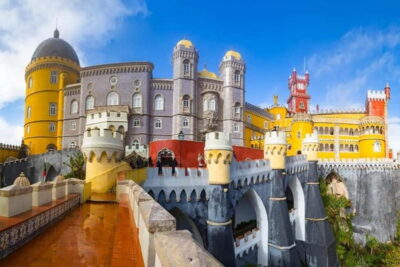
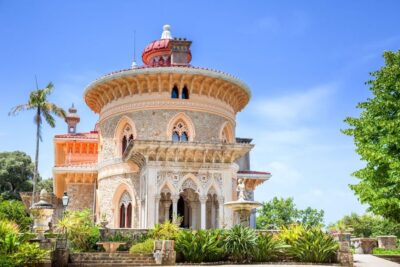

Moorish Fountain and the Pelourinho: small stops with big meaning
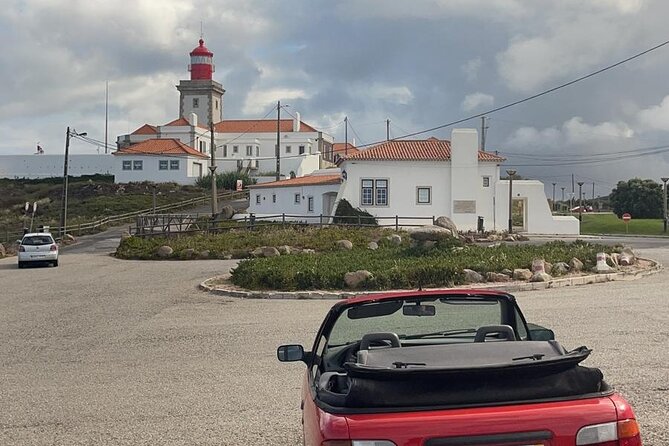
Between palace-heavy scenery, you get a couple of “look closely” stops that change how you understand Sintra.
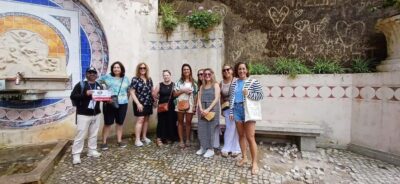
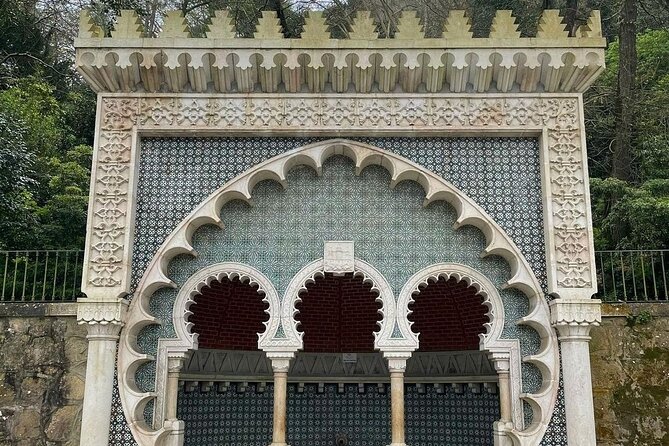
The Moorish Fountain is a small public fountain with Moorish-inspired architecture, colorful tiles, and intricate patterns. It is a great photo pause, but it is also useful for education. It signals how far-reaching Moorish influence shows up in Sintra’s decorative language, even when you are still in town.
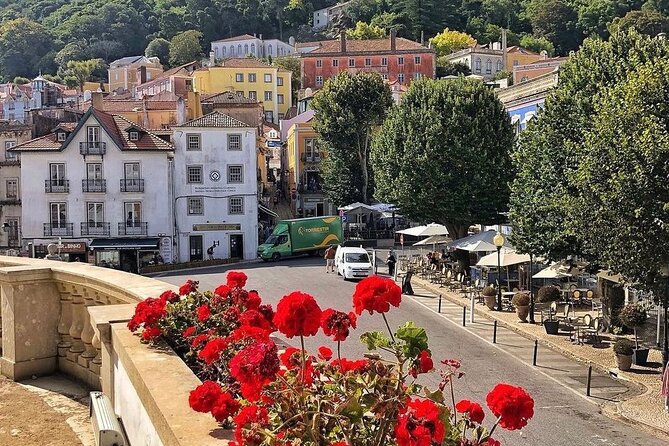
Then you hit the Pelourinho de Sintra, the pillory in the central square. This is not just a stone object for pictures. It represents freedom, justice, and the town’s administrative autonomy through centuries. The monument dates to the 16th century. In the Middle Ages, pillories were used publicly for punishments and displaying criminals. Today, it’s a reminder that Sintra’s importance was not only artistic and royal. It was administrative and political too.
These stops are free and short. But they add what most “palaces only” tours skip. They give you a sense of how Sintra functioned as a place people governed, argued, and lived in, not just visited as a fairytale weekend.
National Palace of Sintra: the skyline icon, plus the ticket choice
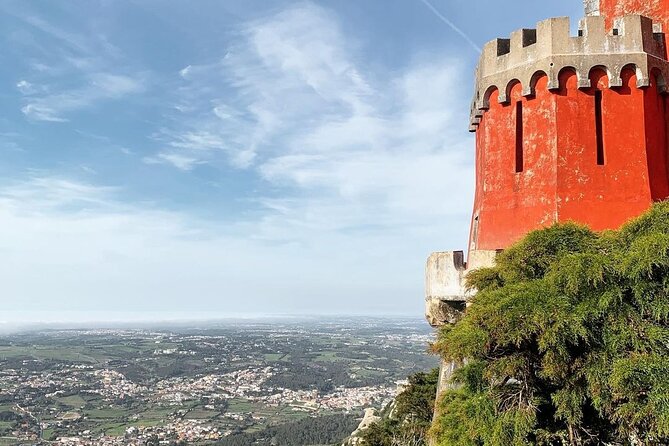
If you want one exterior to recognize from afar, it is the National Palace of Sintra with its conical chimneys dominating the village skyline. This is one of the main reasons Sintra looks so distinctive.
You’ll see the palace up close on the walk. The building is described as blending Gothic, Manueline, and Moorish elements, which is exactly the kind of style mixing that makes Sintra fun to study. The façade is also a photo magnet. Inside, you’re looking at ornate halls and stunning tiles, tied to the splendor of the Portuguese monarchy.
Here is the key practical point. The National Palace entrance ticket is not included, with a listed cost of €13.00 per person. So you are making a decision mid-walk: do you want the interior visit, or do you prefer to keep your time and money for other stops?
My advice: if you care about craftsmanship and interior tilework, budget for it. If you are more photo-first and you already know you want to move on quickly, you can treat the exterior as your “must-see” and skip the paid entry. Either way, the guide’s architectural context helps you interpret what you are seeing.
Also note that the tour includes a nearby church stop, Igreja de Sao Martinho, which is free. That means you are not bouncing around randomly. You are clustering related landmarks.
Church of São Martinho: a quiet reset near the palace
I like adding at least one calm, human-scale building into a big sightseeing day. The Church of São Martinho fits that role. It is described as simple in architecture but serene in feel, dedicated to Saint Martin. It’s located near the National Palace of Sintra, so it works well as a short pause between bigger sights.
This stop is free and about 10 minutes. It is the kind of place where you can slow down, catch your breath, and reset your eyes after staring at tile patterns and chimney shapes for a while. Even if you do not go inside, the exterior and setting help you understand how religious and everyday life sat close to royal architecture in Sintra’s center.
Hotel Lawrence: when history is still in the building
A fun stop that many walking tours skip is Hotel Lawrence. The tour includes it as an about 10-minute point of interest, and it is special because it is tied to real continuity, not just ruins.
Hotel Lawrence was inaugurated in 1764 and is described as the oldest hotel in Sintra. The building’s classic architecture preserves an atmosphere that connects to artists, writers, and travelers who came seeking inspiration. The hotel is also in a prime location in the historic center, meaning it functions like a living landmark, not just a trivia stop.
Even if you never plan to stay here, this is worth a look because it gives Sintra a different flavor. It shows how the town became a destination and not just a palace village. You stop seeing Sintra as purely royal and start seeing it as a place that attracted creative life for centuries.
Quinta da Regaleira: UNESCO mood, gardens, and the Initiation Well
Quinta da Regaleira is one of the biggest “wow” stops on the route. It is a UNESCO World Heritage Site, and you feel that energy even if you only see parts from within the walk’s time frame.
The estate combines lush gardens with symbolic architecture. You have secret pathways, grottoes, and fountains. The palace is tied to its creator, António Augusto Carvalho Monteiro. And then there is the Initiation Well, often described as the estate’s most mysterious feature. It’s an inverted tower with spiral stairs, linked to initiation rituals and esoteric traditions connected to Freemasonry and alchemy.
This is where the tour shifts from street-level Sintra to estate Sintra. It can take time to slow down and take in. The stop is about 10 minutes on the walk, but the information notes that a guided visit can be arranged during the tour, led by an expert guide who explains the hidden meanings and stories of the estate.
Cost matters again. The Quinta da Regaleira entrance ticket is not included, listed at €15.00 per person. So treat it as a decision point. If you love symbolism and want the story behind the architecture, this is the place to spend money. If your priority is quick views and you are already paying for National Palace, you might pick one paid interior and keep the other as a visual stop from the outside.
Seteais viewpoint: the best photo window on the walk
Seteais is one of the strongest photo stops in Sintra because it is elevated. The tour frames it as a hilltop spot with panoramic views, including Sintra mountains, Pena Palace, and on clear days, even the distant Atlantic Ocean.
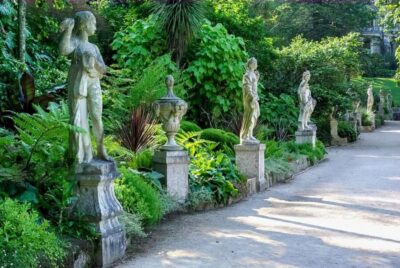
The architecture here also matters. The neoclassical façade includes an iconic triumphal arch. Gardens around the building have features like green labyrinths, fountains, and sculptures, so you are not just photographing a house. You are photographing a whole composition.
This stop is described as free and around 10 minutes. That is a good length. It gives you time to look, shoot a few angles, and then regroup before the walk continues. If you only have one chance for skyline photos that show how Sintra is layered, this is a solid bet.
Value and price: why €13 and €15 tickets are the real budget math
The listed price is $3.62 per person, with an approximate duration of 2 hours 15 minutes. That’s extremely low for what you get on paper, especially since insurance and a local Sintra guide are included. You also get a pastry tasting stop, though consumption is not included. Most of the stops are free admission.
So the real question is not just the base price. It’s what you choose to pay for inside. In this itinerary, two entrances have clear extra costs:
- National Palace of Sintra: €13.00 per person (not included)
- Quinta da Regaleira: €15.00 per person (not included)
If you buy both, your total goes up accordingly. If you buy neither, you still get a lot: town hall architecture, Moorish Fountain, historic center wandering, pillory symbolism, church calm, a historic hotel exterior, plus a strong viewpoint at Seteais.
This is why the tour can feel like great value even with paid add-ons. The paid entrances are optional. You are not forced to spend money to get value from the walk. You can decide what matches your interests once you are actually in the town and seeing what kind of Sintra day you are having.
One more practical note: the tour is subject to favorable weather conditions. If conditions are bad, it can be canceled with a new date or full refund offered. With Sintra, weather can also change visibility for viewpoint stops, so keep a backup plan in mind.
Who this Sintra walk suits best
This works especially well if you want:
- A guided orientation to Sintra’s streets and key buildings
- A paced route with lots of short breaks instead of marathon sightseeing
- Architecture and symbolism explained, not just photographed
- A sweet stop or two so your day does not feel like constant walking
It may not fit as well if you:
- Want only one major attraction and then a long free afternoon
- Dislike making any ticket decisions mid-tour
- Need a fully car-free day with no uneven terrain, since Sintra streets and estates can involve stairs and hills even on a “light pace” plan
Should you book it, or do Sintra on your own?
Book this tour if you want to learn what you are seeing while staying efficient. I like it for first-time Sintra days because it gives you both the obvious landmarks and the smaller meaning markers like the pillory and Moorish Fountain. It also gives you a natural snack rhythm, which matters when you are walking in town.
Skip it or pair it with a lighter plan if you already know Sintra’s architecture well and you mainly want interiors on your own schedule. In that case, you could focus directly on paid sights like the National Palace or Quinta da Regaleira and save money on a guide.
If you are deciding on the spot, here is a simple rule: if you enjoy the story behind tiles, chimneys, and symbolic landmarks, this walk will pay off. If you just want photos with minimal explanation, you might prefer a shorter self-guided route and spend your time only at the paid interiors.
FAQ
How long is the Sintra walking tour?
The tour lasts about 2 hours 15 minutes.
What is the meeting point and where does the tour end?
It starts at Café Saudade, Av. Dr. Miguel Bombarda 6, 2710-590 Sintra, Portugal, and it ends back at the meeting point.
What language is the tour offered in?
The tour is offered in English.
Is a mobile ticket included?
Yes, the tour includes a mobile ticket.
What does the price include?
The price includes insurance, a local Sintra guide, and a stop to taste Sintra’s traditional pastries. Lunch and snacks are not included.
Which attractions require extra entrance tickets?
Entrance tickets for the National Palace of Sintra (€13.00 per person) and Quinta da Regaleira (€15.00 per person) are not included.
What if the weather is poor or the minimum group size is not met?
The experience requires good weather. If it is canceled due to bad weather, you are offered a new date or a full refund. It also requires a minimum number of participants (4); if that minimum is not met, you can choose between rescheduling or receiving a full refund.
Other Days Out Around Sintra





Sintra for the Day, Other Routes In



Newly added around Sintra
- Sintra Tour With Tuktuk
★ 4.9 · 102 reviews - Sintra Off-Road Tour – Atlantic Views & Secret Paths
★ 5.0 · 105 reviews - Sintra Private Tour with Tickets: Pena Palace & Moorish Castle
★ 5.0 · 112 reviews - Private Tour Sintra Palaces/Cabo da Roca (2 people or more)
★ 5.0 · 115 reviews - Private Tuk Tuk Tour around Sintra
★ 5.0 · 118 reviews - From Lisbon: Sintra, Cabo da Roca, Cascais, & Estoril Tour
★ 4.8 · 119 reviews - Sintra EXCLUSIVE Private Day Trip by Car with a Private Guide
★ 5.0 · 127 reviews - Sintra Walking Tour: Romantic Village & Palaces
★ 5.0 · 148 reviews - Sintra: Private and Customizable Tour
★ 4.3 · 149 reviews - Sintra: Castle of the Moors E-Ticket and Audio Guide
★ 4.3 · 158 reviews
Other boats, other operators: Sintra Day Trips.
 ★ 4.7Lisbon: Sintra, Pena, Regaleira, Cabo da Roca & CascaisFrom $2319,656 reviews
 ★ 4.2Sintra: Pena Palace and Park Entrance TicketFrom $1117,410 reviews
 ★ 4.7Lisbon: Pena Palace, Sintra, Cabo da Roca, & Cascais DaytripFrom $919,981 reviews
 ★ 5.0Sintra and Cascais Small-Group Day Trip from LisbonFrom $607,018 reviews
 ★ 4.8Lisbon: Sintra, Pena, Cabo da Roca, Cascais Tour with PickupFrom $575,080 reviews
 ★ 5.0Small Group Tour to Sintra, Pena Palace, Cabo Roca and CascaisFrom $673,559 reviews
 ★ 4.9Lisbon: Sintra, Pena Palace, Cabo da Roca, & Cascais TourFrom $563,509 reviews
 ★ 4.8Lisbon: Sintra Cascais & Pena Palace Small Group TourFrom $1083,187 reviews
Filed under