
REVIEW · AZORES ISLAND TOURS
Azores: Canyoning in Salto do Cabrito
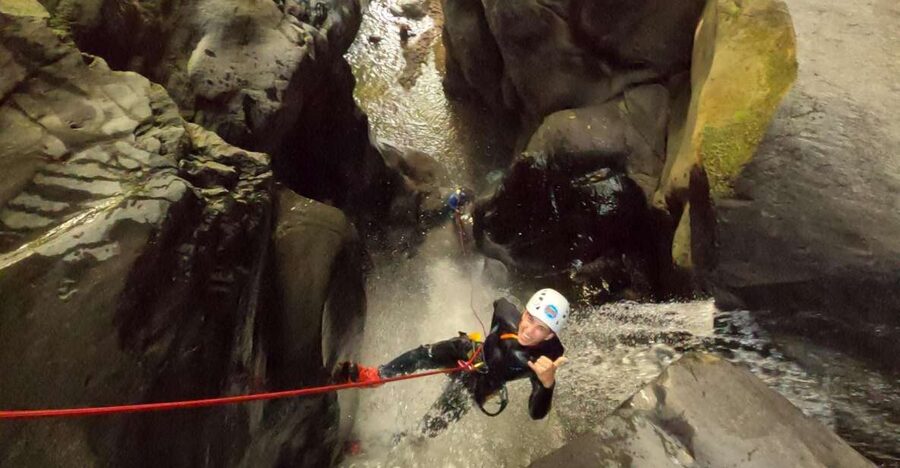
Canyoning at Salto do Cabrito is pure motion. This half-day adventure near Ribeira Grande on São Miguel Island mixes rappels down a volcanic canyon, multiple waterfall moments, and an optional zip-line. Guides like Claudio and João, Diogo and Ricardo, Rodrigo and Ines are repeatedly praised for keeping things organized and confidence-building.
I love the variety packed into a 4-hour outing. You get the full “gear up, learn the moves, then use them” flow, plus photos and videos afterward, so you can focus on the moment instead of trying to document every drop.
One drawback to consider: this is real canyon terrain, with slippery rocks and some scrambling. It is not recommended for people with back problems, and it is not suitable for kids under 14, pregnant travelers, or anyone with mobility limits.
In This Review
- Key points before you go
- Salto do Cabrito canyoning: what the 4 hours are really like
- Getting there: Ribeira Grande start and optional pickup
- Gear up and safety briefing: how the guides set you up
- The canyon route: rappels, waterfalls, and that optional zip-line
- Walking, slippery rocks, and scrambling: where fitness actually shows up
- Choosing the heights: jumps and decision moments
- What you get beyond the canyon: photos, videos, and memories
- Price and value: is about $111 per person a fair deal?
- Who this canyoning trip suits best on São Miguel
- A practical packing checklist that keeps you comfortable
- Final call: should you book Salto do Cabrito canyoning?
- FAQ
- How long is the canyoning experience at Salto do Cabrito?
- Where do I meet the group?
- Is pickup available from Ponta Delgada?
- What time does the tour usually start?
- What should I expect to do during the tour?
- Do I need to know how to swim?
- What gear is provided?
- Is the activity suitable for beginners?
- Who is the tour not suitable for?
- What should I bring with me?
Key points before you go
- Waterfalls plus technique, not just scenic hiking, with rappels around 4 to 16 meters
- Optional height choices, like a zip-line and optional jumps of about 3 meters depending on conditions
- Small-group feel with accredited guides and a safety-first setup at the start
- You do not need to know how to swim, but you must be comfortable in the water
- Bring the right basics, especially a towel and swimwear, since you will get wet early
- A schedule that works for day trips, starting in the morning and running about 4 hours
Still weighing up the options? These are other Azores trips our reviewers have actually been on.
- Islet Tour- Ilhéu de Vila Franca do Campo★ 4.8 · 471 reviews
- Ponta Delgada: São Miguel Buggy Tour Around Sete Cidades★ 5.0 · 210 reviews
- Vila Franca Islet: Around The Islet Guided Boat Tour★ 4.7 · 159 reviews
- Ponta Delgada: Pineapple wine tasting and pineapple tour★ 4.8 · 127 reviews
Salto do Cabrito canyoning: what the 4 hours are really like
Salto do Cabrito canyoning is the kind of activity where the time disappears because you are always doing something. You start at the waterfall area near Ribeira Grande, you walk in to reach the canyon section, then the real work begins with a series of descents and water crossings.
What makes it especially fun is that the canyon does not rely on one big drop. You pass multiple waterfall sections, and the rappels come in different heights, including the highest one around 16 meters. That keeps the pace active and gives you moments to reset between technical moves.
The Azores setting also matters. Even if you are not chasing “nature sightseeing,” the canyon gives you constant visual breaks: green slopes, wet rock, misty waterfall walls, and that volcanic feel you get on São Miguel. It is not a theme park canyon. It is an outdoor system that changes with conditions.
Getting there: Ribeira Grande start and optional pickup
The meeting point is the Salto do Cabrito parking lot in Ribeira Grande. If you are staying in Ponta Delgada, pickup can be arranged within the city, and you get dropped off at the same spot afterward.
If you are planning your morning, build a little buffer. Pick-up windows tend to be around:
- Low season (November to March): about 8:50 to 9:10 a.m.
- High season (April to October): about 8:20 to 8:40 a.m.
The drive to the canyon area is roughly 20 minutes from Ponta Delgada. I like this because it keeps the activity from eating your whole day. You can still do other Azores plans after lunch if you pace yourself.
Gear up and safety briefing: how the guides set you up
Before anyone touches the canyon, you get equipment distribution and a safety briefing. Expect harness setup, wetsuit and sock fitting, plus helmet and boots. The goal is simple: you should feel secure and clear on what to do before you ever leave solid ground.
You also get a walk-in segment, averaging about 30 minutes, from the waterfall start to the canyoning site. This is a smart period to build comfort. You see the terrain, you get used to your gear, and you understand how the route will feel on your legs before the vertical sections begin.
In the water, the guides are the difference between “scary” and “manageable.” People consistently describe the guides as patient and supportive, including when someone feels nervous about heights. Names that show up often in guide rosters include Claudio, João, Diogo, Ricardo, Rodrigo, Ines, and Brubo, and the pattern is the same: clear step-by-step help, especially when you need it most.
The canyon route: rappels, waterfalls, and that optional zip-line
Once the canyon route starts, you move through several stations of descent. The rappels range from about 4 to 16 meters, so you get both smaller drops and the bigger one that really wakes up your adrenaline.
Between rappels, you are not just standing around. You pass through waterfall sections and wet rock areas where you need to stay aware of footing. You will likely feel cold at first if the water is cool, but the wetsuit helps a lot, and the action warms you up quickly.
Here is a key detail: jumps and techniques depend on local conditions and seasons. That means the canyon is not always identical. On some days, you might have options like a jump of about 3 meters, but you can usually opt out if you are not feeling it. The same goes for the zip-line, which is an optional add-on rather than a requirement.
The best part is that you get multiple “wow” moments. One especially memorable moment for many people is the penultimate rappel through the waterfall, where you feel the spray and momentum at once. Even if you are nervous, the guided rhythm helps you time your focus and get through each section cleanly.
Walking, slippery rocks, and scrambling: where fitness actually shows up
This is not a gentle nature walk. Even though it is a half-day, it includes uneven terrain and slippery surfaces. You may deal with muddy slopes and some short uphill or downhill scrambles as you move between stations.
So think of the “moderate / good fitness” note as real. If you are comfortable walking on slick rocks and keeping your balance while wet, you are in the right zone. If you get shaky on uneven ground, plan to take it slow in the canyon walk-in and listen hard during technique instructions.
Also note this: you do not need to know how to swim. You just need to be comfortable in the water. That still matters, because canyoning often means moving through water while wearing gear and keeping your breathing calm.
If you have back problems, the activity is not recommended. That is not a small caution. Motion plus wet footing plus harness and equipment can be rough if your back is already sensitive.
Choosing the heights: jumps and decision moments
One thing I appreciate about Salto do Cabrito is that the adrenaline is controllable. You can usually take part in the standard rappel route, then decide on the bigger thrills as conditions allow.
You might face an optional zip-line, plus optional jump opportunities around 3 meters. People describe some fear at the start, then relief once they figure out the technique and realize the guides are controlling the safety details.
If you are coming in with “I am scared of heights” energy, treat the first rappel like your practice lap. The most useful strategy is not forcing bravery, it is building trust step by step. Once you complete one controlled descent, the rest feel less like a leap into the unknown.
And if you decide to skip a jump, you are not ruining the experience. The rappel sequence and waterfalls still deliver the core fun.
What you get beyond the canyon: photos, videos, and memories
After the action, you get photos and videos. That is more valuable than it sounds, because canyoning happens fast. Your hands and attention are busy, and the water can make it hard to capture anything clearly.
Having someone else handle documentation lets you stay present. You can focus on clean technique, not on pulling out a phone or trying to get a crisp shot mid-rappel. For me, this is one of the best “value” pieces in outdoor activities like this.
Also, because the canyon can change from season to season, having visual proof of what you actually did becomes part of the memory. You are not just remembering a general idea of canyoning. You are seeing your day.
Price and value: is about $111 per person a fair deal?
At about $111 per person, this is not a budget activity. But it also is not overpriced for what you get.
Here is the value math I see:
- You get accredited guides plus safety instruction
- You receive all core canyoning gear: harness, wetsuits, socks, helmet, and boots
- You are covered by insurance for the activity
- You get photos and videos afterward
- You get a real 4-hour guided route with multiple rappels, waterfalls, and optional thrill elements
For a half-day, guided canyoning in this kind of terrain usually costs more than simple sightseeing, because equipment, trained staff, and risk management take real effort. If you are already doing nature activities on São Miguel, this is a strong way to add an adrenaline component without needing to organize gear rentals or lesson plans yourself.
If your main goal is calm walking and scenic views from dry paths, you might feel the price is high. If you want hands-on action, I think $111 starts to look reasonable.
Who this canyoning trip suits best on São Miguel
This is best for adults and older teens who can handle wet, uneven ground and are willing to follow instructions closely.
It is well matched if you are:
- An adrenaline seeker who likes a mix of heights and technique
- Comfortable being in and around water
- Looking for a guided way to try canyoning without prior experience
- Traveling with a friend or small group and you like shared challenge
It is not the right fit if you are:
- Under 14 years old, or outside the stated minimums for height and weight
- Pregnant
- Have mobility impairments
- Have heart problems
- Over 264 lbs (120 kg)
- Have back problems
Also, if you do not enjoy the idea of slippery rock and wet scrambling, you might end up more stressed than thrilled. The canyon demands attention.
A practical packing checklist that keeps you comfortable
You will get wet, so pack like you want to stay warm afterward.
Bring:
- A towel
- Swimwear
- Comfortable clothes and comfortable shoes
- Hair tie (long hair matters when you are in a helmet and moving through water)
- Reusable water bottle
- Personal medication
I also recommend wearing quick-dry layers under your wetsuit if that is available to you. It helps you feel better in the walk-in phase and makes the changing moment afterward easier.
Final call: should you book Salto do Cabrito canyoning?
If you want a half-day activity that is genuinely active, this is an easy yes. Salto do Cabrito combines waterfall rappels, optional zip-line and jump moments, and a guide team that focuses on safety and encouragement. You will come away feeling like you did something bold, not just watched scenery.
I would hesitate if you are worried about uneven footing, have back issues, or prefer low-movement adventures. Also, if heights scare you, do not let that stop you, but plan to start with the mindset of learning technique first, not “proving” courage.
If your schedule allows only one thrill activity on São Miguel, canyoning here is one of the best bets, especially if you like the idea of controlled adrenaline in a volcanic canyon that changes with the day.
FAQ
How long is the canyoning experience at Salto do Cabrito?
The duration is about 4 hours.
Where do I meet the group?
You meet at the Salto do Cabrito parking lot in Ribeira Grande.
Is pickup available from Ponta Delgada?
Yes, hotel pickup and drop-off are available if you choose that option and it is available, within the city of Ponta Delgada.
What time does the tour usually start?
Approximate pickup times are about 8:20 to 8:40 a.m. in high season (April to October) and about 8:50 to 9:10 a.m. in low season (November to March).
What should I expect to do during the tour?
You’ll get a safety briefing, walk about 30 minutes to the canyon site, then descend through the canyon with several rappels (between 4 and 16 meters). A zip-line is an option, and jumps may be available depending on local conditions.
Do I need to know how to swim?
No. You do not need to know how to swim, but you should be comfortable in the water.
What gear is provided?
All canyoning equipment is included: harness, wetsuits, socks, helmet, and boots.
Is the activity suitable for beginners?
It is suitable for most ages and all levels of canyoning experience, but you do need moderate to good fitness because of slippery rocks and some scrambles.
Who is the tour not suitable for?
It is not recommended for children under 14, pregnant women, people with mobility impairments, people with heart problems, people over 264 lbs (120 kg), and people under 3 ft 9 in (120 cm). It is also not recommended for people with back problems.
What should I bring with me?
Bring a towel, comfortable shoes, comfortable clothes, swimwear, a hair tie, personal medication, and a reusable water bottle.
Newly added around Azores
- From Ponta Delgada: Lagoa do Fogo Half-Day Jeep Tour
★ 4.6 · 95 reviews - Azores: Canyoning in Salto do Cabrito
★ 4.9 · 105 reviews - Furnas: Volcano Crater, Lake, Tea Plantation, and Waterfall
★ 4.7 · 114 reviews - Vila Franca do Campo: Kayak Rental
★ 4.8 · 116 reviews - Ponta Delgada: Pineapple wine tasting and pineapple tour
★ 4.8 · 127 reviews - Vila Franca Islet: Around The Islet Guided Boat Tour
★ 4.7 · 159 reviews - Ponta Delgada: São Miguel Buggy Tour Around Sete Cidades
★ 5.0 · 210 reviews - Islet Tour- Ilhéu de Vila Franca do Campo
★ 4.8 · 471 reviews
Other boats, other operators: Azores Island Tours.
 ★ 4.6Azores Whale Watching & Islet Boat TourFrom $702,146 reviews
★ 4.5Azores Whale Watching & Islet Boat TourFrom $711,059 reviews
★ 4.6Azores Whale Watching & Islet Boat TourFrom $702,146 reviews
★ 4.5Azores Whale Watching & Islet Boat TourFrom $711,059 reviews
 ★ 4.5São Miguel Azores: Half-Day Whale Watching TripFrom $74983 reviews
 ★ 5.0Small-Group Ponta Delgada Food Tour in AzoresFrom $139884 reviews
 ★ 4.5Azores Whale Watching Tour – Ponta DelgadaFrom $78740 reviews
 ★ 4.8Azores: Sete Cidades Scenic Jeep Tour from Ponta DelgadaFrom $58450 reviews
 ★ 5.0Canyoning Experience in Ribeira dos Caldeirões Sao Miguel -AzoresFrom $84428 reviews
 ★ 4.8Pico Island: Azores Whale & Dolphin Watching on Zodiac BoatFrom $53408 reviews