
REVIEW · EVORA AND THE ALENTEJO
Évora: Private walking tour with tickets to main monuments
Évora feels like a living history book. This private walking tour strings together the city’s big eras in a tight loop, from Roman stone to Renaissance power, so you do not feel lost in all the narrow streets. I especially like the private group pace, which keeps the talk focused and your questions answered as you go.
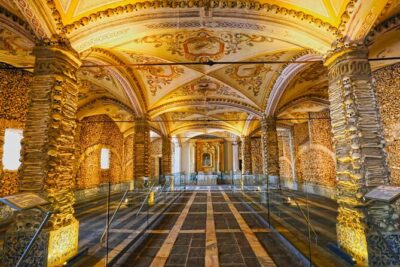
Two stops make the ticket value stand out: the Cathedral of Évora (with cloisters and roof views) and the Chapel of Bones (the famous macabre interior made with real human bones). On top of that, you get clear context around what you are seeing, not just dates and names.
One thing to plan for: this is a walking tour with a moderate fitness level. If you have knee trouble or you hate stairs and uneven medieval paving, you will want to pack comfortable shoes and be ready to take it at an easy rhythm.
In This Review
- Key highlights to look for
- Getting Oriented at Praça do Giraldo, the City’s Social Heart
- The Inquisition Memorial and the Dark Side of Praça do Giraldo
- A Typical Commerce Street for Alentejo Craft Shopping Mood
- Se Catedral de Évora: Gothic Scale, Cloisters, and a View from the Roof
- Templo Romano de Évora (Templo de Diana): Roman Power That Still Survives
- Pateo de São Miguel: The Quiet Courtyard Many People Skip
- The Mannerist Fountain and Renaissance Government Signals
- Igreja da Graça: Renaissance Structure and the Story of the Facade
- Chapel of Bones: Macabre, Real, and Extremely Unusual
- Igreja de São Francisco and Palacio de Dom Manuel: Royal Stories in Stone
- Ruinas Fingidas and a Photo Moment That Makes Sense
- Muralhas de Évora and Aqueduto da Água de Prata: Defenses and Renaissance Infrastructure
- What Makes This Tour Feel Worth It (Even If You Are Budget Conscious)
- Who Should Book, and Who Should Skip
- Should You Book This Évora Private Walking Tour?
- FAQ
- How long is the Évora private walking tour?
- Is this a private tour?
- What language is the guide offered in?
- What main monuments are included with tickets?
- Does the tour include admission to the Cathedral and Chapel of Bones?
- What is included in the price?
- What is not included?
- Where does the tour start and end?
- Is it suitable for people with mobility limitations?
- Do I need to bring paper tickets?
Key highlights to look for
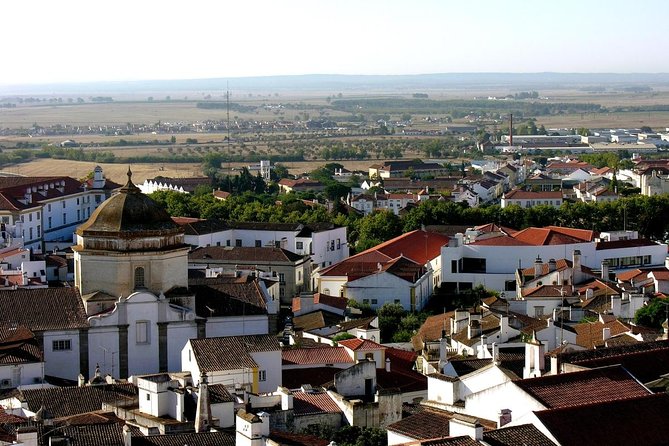
- Roof access at the Cathedral of Évora for panoramic views over the walled city
- Chapel of Bones tickets included, with a guided explanation that keeps it meaningful, not just spooky
- A route that connects Roman, Gothic, Mannerist, and Renaissance landmarks in one flow
- Stops in key squares and quiet corners, including Pateo de São Miguel
- The city walls pass-by framing, from Roman defenses to later bastions
- Guides like João, John, Elsa, Paulo, and Paolo are repeatedly praised for making it relaxed and personal
More Alentejo plains and Evora stops we have reviewed in Setubal District
- Évora: Private walking tour, By Local Guide★ 5.0 · 87 reviews
- Half Day Megaliths Cromlech Tour from Evora by Archaeologists★ 5.0 · 69 reviews
- Horse Riding on Melides Beach★ 4.5 · 42 reviews
Getting Oriented at Praça do Giraldo, the City’s Social Heart
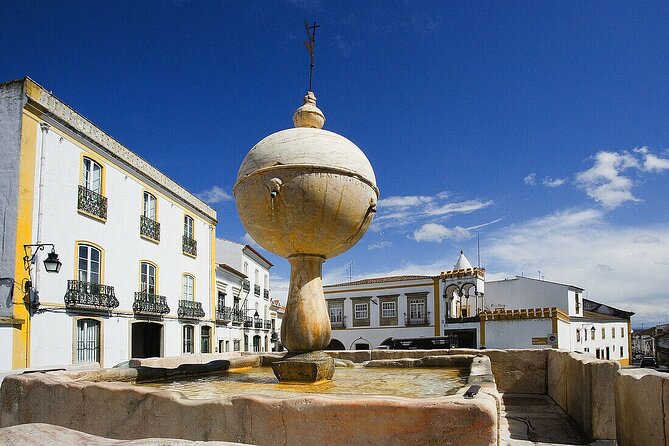
Your tour starts at the fountain in Praça do Giraldo, at Praça do Giraldo 7. This square is not just a landmark, it is the way Évora organizes itself: the main gathering place where economic, social, and political life has centered since long before modern tourism.
I like how your guide sets the frame early. You get historical context not only for Évora, but also for how it fits into Portugal and even wider history, so the stones you see later feel connected instead of random.
If you are only in Évora for a short time, this is the right first stop. You will leave with a mental map, plus the confidence to wander after the tour without feeling you missed the story thread.
The Inquisition Memorial and the Dark Side of Praça do Giraldo
Right nearby, you visit the memorial connected to Homenagem as vitimas da Inquisição em Portugal. The tour talks about the Inquisition’s presence from 1536 for almost 300 years, and how it contributed to fear, persecution, and deaths of victims considered innocent.
This part is heavy. If you are sensitive to grim historical subjects, it is worth bracing for that emotional tone. Still, it is historically important, and it helps explain why certain plazas and landmarks in Évora carry such intense meaning.
Even if you prefer lighter sightseeing, I think this stop improves the rest of the route. It shows you how power, religion, and intolerance shaped the city, not only art and architecture.
A Typical Commerce Street for Alentejo Craft Shopping Mood
After the memorial, the walk shifts into a more everyday rhythm: a traditional commerce street where you can spot Alentejo crafts. Expect the kind of items locals actually care about, like cork objects, pottery, painted furniture, chocalhos (rattles), and capotes, the traditional Alentejo cloaks.
This is not a hard sell kind of stop. It is more like a moving introduction to Évora’s surroundings, including what the region is known for and what you can take home that feels like place, not souvenir sticker.
If you want to shop, this is the moment to start thinking. You will see more than one type of craft style, and you can decide what fits your budget before you hit busier areas later.
Se Catedral de Évora: Gothic Scale, Cloisters, and a View from the Roof
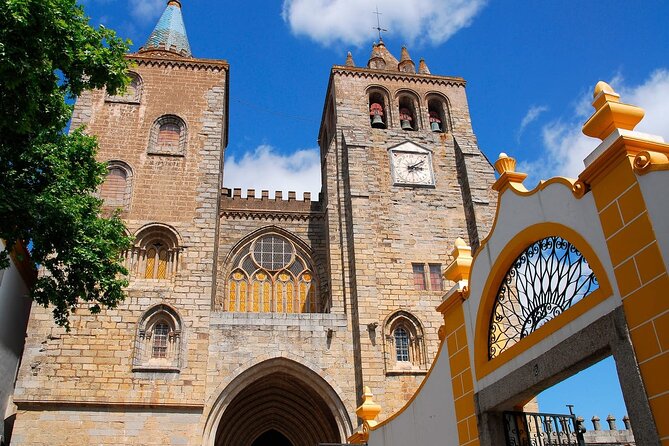
The Cathedral of Évora is the major ticketed highlight. It is the largest Portuguese Gothic cathedral, and the tour includes entrance to the cathedral, the cloisters, and a roof visit for panoramic views.
I love that this stop is not just about big architecture. You get a guided way to notice details, and the tour format gives you time to look, not just move through. The cloisters and roof access help you understand the building from inside, then from above, which is where Évora’s walled shape really lands.
If you visit in hot weather, plan around shade. Cathedral interiors cool things down a bit, but roof time can be sun heavy, so bring water and protect your head.


Templo Romano de Évora (Templo de Diana): Roman Power That Still Survives
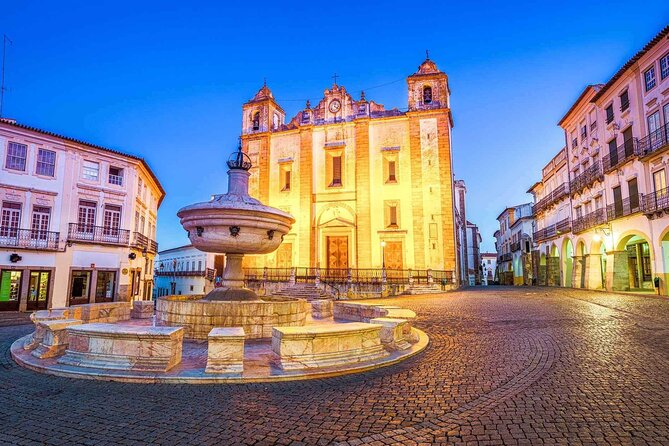
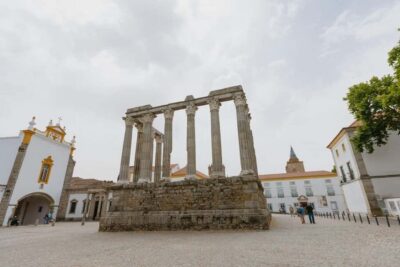
Next comes the Templo Romano de Evora, also called the Templo de Diana. The tour frames it as a monument with two millennia of history, and one of the best preserved and oldest Roman temples in the ancient empire.
This is a short stop, but it punches above its time. Roman Évora is not just a footnote, and a well-preserved structure like this helps you feel the continuity of the city where later civilizations built on earlier ones.
If you are the type who loves quick architectural wins, you will appreciate that this stop is efficient. You see something rare, then keep the story moving.
Pateo de São Miguel: The Quiet Courtyard Many People Skip
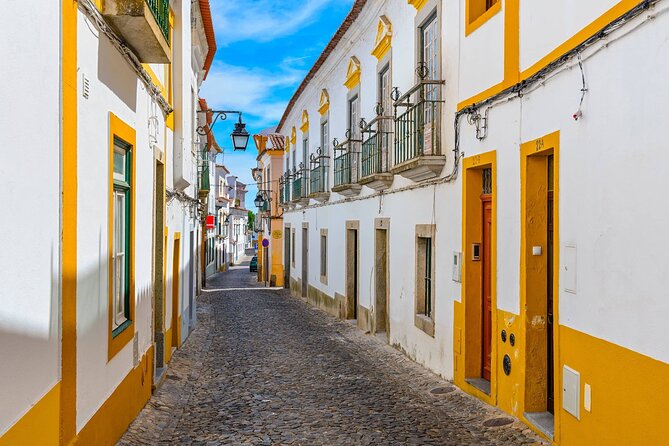
Pateo de São Miguel is one of those spots that feels like an insider secret, even though it sits in plain view once you know where to look. It is described as an ancient alcove that was heavily fortified, once tied to the city governor and royal stays.
What I like here is the way it connects architecture to governance. This is not a random pretty corner, it is a place where power and protection mattered, and the tour explains why.
It is also a fine stop if you care about art history. The details and the historical layering make it feel like a small stage set for big stories.
The Mannerist Fountain and Renaissance Government Signals
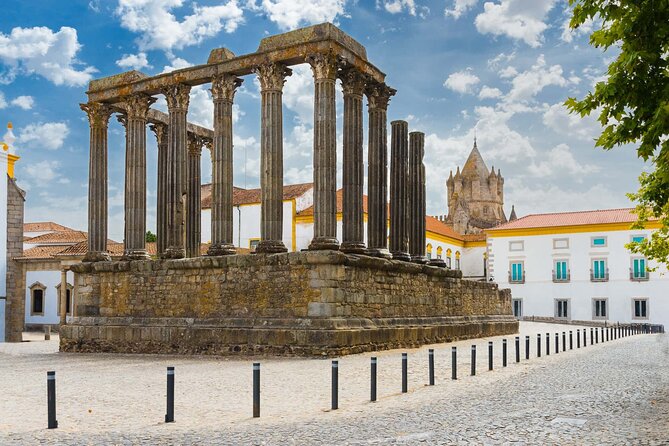
The tour passes by an important fountain tied to early Mannerist art in Portugal. It was solemnly inaugurated in 1556, and the stop links it to Portuguese urban architecture and to the influence of Cardinal D. Henrique, described as a major patron in Évora and the last king of the Avis dynasty.
Even if fountains sound like a pause between bigger sites, this one is doing work. It represents power and progress through public space, meaning the city was not only preserving the past, it was actively shaping a modern image.
If you like noticing small artistic styles, this stop will reward you. If you prefer fast pacing, just listen for what the guide emphasizes: why this fountain mattered to people at the time, not only how it looks.
Igreja da Graça: Renaissance Structure and the Story of the Facade
Igreja da Graça is where Portuguese Renaissance architecture takes center stage, with Mannerist inspiration folded into the design. The tour also calls out the famous boys of Graça, plus the symbolic meaning of the beautiful facade of the old hermitage.
This is a good stop for people who want more than a checklist photo. The facade symbolism is the kind of detail you might miss when you walk past quickly on your own.
I will add one practical thought: facades are easiest to read when you slow down. Take a breath, look at the shapes, and let your guide’s explanation anchor the visual.
Chapel of Bones: Macabre, Real, and Extremely Unusual
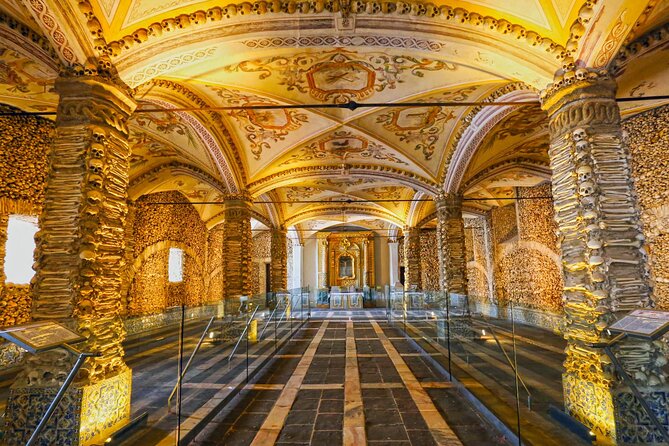
Then you reach the Chapel of Bones, and yes, it is exactly the kind of place people talk about. The tour references the macabre message, We, the bones that are here, await yours, and explains how the walls are covered with real human bones from thousands of people who lived in Évora.
You get entrance tickets included, and the timing is long enough to actually process what you are seeing. If you were expecting a gimmick, the guided approach is what makes it more human and more thoughtful.
Still, this is not for everyone. If bone-related themes feel upsetting, plan to stand back and focus on the symbolism and the history the guide explains.
Igreja de São Francisco and Palacio de Dom Manuel: Royal Stories in Stone
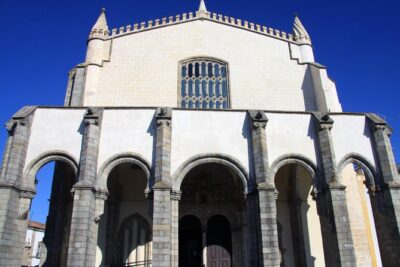
The route continues to Igreja De Sao Francisco, described as the golden convent in the 16th century. It is built on an older Franciscan convent, and the tour highlights its innovative architecture for its time, plus the way royal life played out here, including royal weddings and baptisms tied to major historical turns.
Right after, you also see Palacio de Dom Manuel, part of the old royal palace complex associated with the golden convent. Today, only the Ladies’ Gallery remains, and it is presented as one of the most beautiful and romantic parts of the complex from the 16th century.
This pairing works well because it shows Évora as more than monuments. It was a place where major events happened, and architecture was the stage for those moments.
Ruinas Fingidas and a Photo Moment That Makes Sense
Ruinas Fingidas is described as a romantic setting assembled with elements and ruins from a 16th-century palace. The point here is mood and storytelling, including how the site reflects romanticism in the late 19th century.
I like that the tour gives you a nudge to ask your guide to take a picture of you there. It is a quick break, but it also reinforces how Évora’s layers keep rewriting the city for new eras.
If you hate posed photo moments, you can treat it as a viewpoint stop instead. Look, listen, take one photo at most, and then move on.
Muralhas de Évora and Aqueduto da Água de Prata: Defenses and Renaissance Infrastructure
Near the end, you pass by Évora’s defensive walls, described across multiple civilizations. The tour frames Roman walls from the 3rd to 4th centuries, then later Visigoths and Muslims living in the city between the 8th and 12th centuries. It also points out medieval walls from the 14th century, bastioned structures from the 17th century, and reinforcement in the early 19th century connected to Napoleonic threats.
This is a great moment to connect the earlier cathedral and temple stops to real city survival. A place that looks beautiful also has reasons to protect itself.
Finally, you reach the Aqueduto da Água de Prata, the Aqueduct of Silver Waters. It opened in 1537 and stretches about 18 km. The tour presents it as perhaps the most iconic Portuguese civil work of the Renaissance, with houses inserted between its arches, plus details from the Renaissance period.
This last stop is where the tour’s logic clicks. You started with squares and churches, and you end with infrastructure, showing that Évora’s Renaissance power was not only in art, it was in water delivery and the confidence to build at scale.
What Makes This Tour Feel Worth It (Even If You Are Budget Conscious)
At about $105.26 per person for roughly 2 hours 30 minutes, it is not the cheapest option in Évora. But the value is more than timing.
You get entrance fees included for the Cathedral of Évora and the Chapel of Bones, two sights that are usually the most time-consuming and ticket-heavy on your own. You also get a private format, so you are not doing quiet nodding while the group gets split up, and you can ask questions when something catches your eye.
There is also evidence of strong guide performance in the way people describe the experience. Names like John, João, Elsa, Paulo, and Paolo come up again and again, with praise for clear English, a relaxed pace, interactive Q and A, and customization based on interests. One review also mentions help with dinner recommendations, and another mentions assistance with bookings, which is exactly the kind of practical bonus that makes a walking tour feel like a friend in your corner.
One more thing: the tour is offered in English and includes a mobile ticket. That saves time and friction, especially if you want to keep your travel day simple.
Who Should Book, and Who Should Skip
This tour is a strong fit if you want a guided way to understand Évora’s layers without spending your whole day researching. It also suits couples, friends, and solo travelers who like asking questions and prefer a calmer pace than big group tours.
It is also ideal if you want the big draw monuments, especially the cathedral roof experience and the Chapel of Bones, without having to plan tickets on your own.
Skip or reconsider if you have very limited mobility or if you dislike confronting dark topics like the Inquisition memorial and the bone chapel. Also, if you only want one or two signature photos and nothing else, the walking loop may feel like more effort than payoff.
Should You Book This Évora Private Walking Tour?
Yes, I would book it if you want high value in a short window and you care about real context. The cathedral and bones tickets alone make the pricing feel less “tour markup” and more “you paid for key access and time.”
I would also choose it if you like architecture and symbolism, since Évora is full of it, from Gothic scale to Mannerist style and Renaissance infrastructure. The route also keeps you from getting stuck in the wrong areas, starting at Praça do Giraldo and ending back near where you began.
If you want, tell yourself one goal: leave with a clear mental map of Évora’s eras. This tour is built to get you there without rushing.
FAQ
How long is the Évora private walking tour?
It runs about 2 hours 30 minutes.
Is this a private tour?
Yes. It is a private tour/activity, and only your group participates.
What language is the guide offered in?
The tour is offered in English.
What main monuments are included with tickets?
Entrance tickets are included for the Cathedral of Évora and the Chapel of Bones.
Does the tour include admission to the Cathedral and Chapel of Bones?
Yes. Entry tickets to the Chapel of Bones and the Cathedral are included.
What is included in the price?
The price includes entrance fees for the Chapel of Bones and the Cathedral.
What is not included?
Meals are not included.
Where does the tour start and end?
It starts at the Giraldo Square Fountain, Praça do Giraldo 7, 7000-508 Évora, Portugal, and it ends back at the meeting point.
Is it suitable for people with mobility limitations?
The tour notes a moderate physical fitness level. It is a walking tour.
Do I need to bring paper tickets?
No, the tour includes a mobile ticket. Confirmation is received at time of booking.
Nobody Else Aboard, Other Private Setubal District Bookings

On Foot Around Setubal District, Other Guided Walks
Evora and the Alentejo Plains, More Visits

Newly added around Setubal District
- Alpaca Farm MamaAdama Meet & Feed
★ 5.0 · 39 reviews - Boat Trip to Secret Bays and Beaches with Snorkeling
★ 5.0 · 40 reviews - Kayak tour from Sesimbra to Ribeira do Cavalo Beach, passing through the caves
★ 5.0 · 41 reviews - Horse Riding on Melides Beach
★ 4.5 · 42 reviews - A PRIVATE afternoon south of Lisbon, mountain WINES and SECRET places!
★ 5.0 · 49 reviews - Half-Day Kayak Tour in Sesimbra
★ 5.0 · 49 reviews - Dolphin Watching at the Arrabida (Lisbon region)
★ 5.0 · 51 reviews - Tour Arrábida / Azeitão
★ 5.0 · 68 reviews - Half Day Megaliths Cromlech Tour from Evora by Archaeologists
★ 5.0 · 69 reviews - Arrábida: Guided Transparent Kayaking Tour
★ 5.0 · 81 reviews
Other boats, other operators: Evora and the Alentejo.
 ★ 4.7Évora and Megaliths Full-Day Tour from LisbonFrom $94456 reviews
 ★ 4.8From Lisbon: Évora and Monsaraz Day Tour with Wine TastingFrom $108279 reviews
 ★ 5.02-Hour Surf Lesson in AlentejoFrom $60243 reviews
 ★ 4.5Évora and Monsaraz with Regional Wine Tasting from LisbonFrom $132229 reviews
 ★ 4.7From Lisbon: Horseback Riding on Comporta BeachFrom $165167 reviews
 ★ 5.0Private Day Tour With Guide to Évora and MonsarazFrom $212134 reviews
 ★ 4.5From Lisbon to Alentejo: Évora and Megaliths Full-Day TourFrom $108131 reviews
 ★ 5.0Tour Évora and Alentejo in a private tourFrom $169124 reviews
Filed under