
REVIEW · EVORA AND THE ALENTEJO
Half Day Megaliths Cromlech Tour from Evora by Archaeologists
Prehistory with archaeologists, not guesswork. This half-day outing from Évora brings you face-to-face with the Menir dos Almendres and the wider Almendres monument complex, with explanations from trained prehistory specialists. I especially like how the guides connect each stone to Neolithic life, not just myths, and how they keep the pace easy while still packing in real context.
I also love the small-group feel, with a maximum of 6 travelers, plus the fact that you can ask questions in plain English. Bianca and Gonzalo, the archaeologist guides behind Iberian Heritage Tours, are friendly and give a clear sense of what is known, what is debated, and what science can and cannot prove. One possible drawback: you walk on dirt footpaths, and the path toward the Menir is in poor condition, so reduced mobility may make the key stop harder to reach.
In This Review
- Key highlights at a glance
- Why Almendres feels personal, even when it is thousands of years old
- From the Roman Temple of Évora to cork forests
- Walking down to the Menir dos Almendres (and what to expect)
- The Cromlech of Almendres, explained by prehistory specialists
- A third site that turns a quick visit into real perspective
- Centro Interpretativo dos Almendres: use the free time well
- How long the tour takes, and when to go
- What you pay, and why it can be good value
- Who this tour suits best, and who should think twice
- Should you book Iberian Heritage Tours?
- FAQ
- What is included in the Almendres megaliths tour?
- Is there an admission ticket I need to buy separately?
- How long is the tour, and when will I be back in Évora?
- Do I need hotel pickup?
- What should I wear for the walks?
- Are car seats provided for children?
- What if weather is bad or I need to cancel?
Key highlights at a glance
- Bianca and Gonzalo lead the tour with degrees in archaeology and answers that stay grounded in the evidence
- Small group size (up to 6 people) for calmer, more back-and-forth conversation
- Cork forest drives plus on-foot visits that feel off the main tourist routes
- Theories explained clearly about why the stones were placed where they were
- Free time at the Centro Interpretativo dos Almendres so you can browse at your own speed
More Alentejo plains and Evora stops we have reviewed in Setubal District
- Évora: Private walking tour, By Local Guide★ 5.0 · 87 reviews
- Half Day Megaliths Cromlech Tour from Evora by Archaeologists★ 5.0 · 69 reviews
- Horse Riding on Melides Beach★ 4.5 · 42 reviews
Why Almendres feels personal, even when it is thousands of years old
If you have ever visited a big famous ruin and felt like you were being herded, this tour is a nice change. The Almendres megaliths are ancient, but the experience is human. You end up looking at the stones and thinking about people who had a very different sense of time.
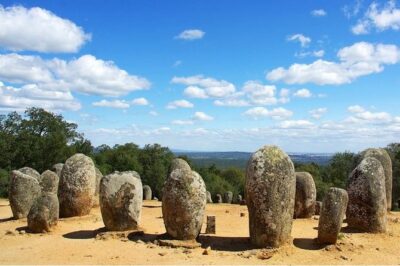
At the core, you are looking at a solitary standing stone and the broader stone complex that gives Almendres its nickname of Stonehenge of Portugal. And because archaeologists are guiding you, you get the best part of this kind of site: the mix of mystery plus real-world reasoning.
The tone is not lecture mode. It is more like, here is what we can say confidently, here is what we suspect, and here is how we came to those ideas.
From the Roman Temple of Évora to cork forests
The meeting point is the Roman Temple of Évora, at Largo do Conde de Vila Flor. From there, you transfer by van toward the Almendres area, about a 25-minute drive before you start walking.
Even before you reach the stones, the drive sets the mood. You go slowly along roads that can be rough, because this area is not built for large tour buses. One practical bonus of that smaller-vehicle approach is that you are less likely to feel rushed or stuck waiting around.
If you choose hotel pickup, your pickup time can be up to 30 minutes earlier than the tour start, and you will be told when to be ready at least 24 hours ahead. Either way, it is a simple start, and it helps you avoid the stress of finding those less-accessible roads on your own.
Walking down to the Menir dos Almendres (and what to expect)
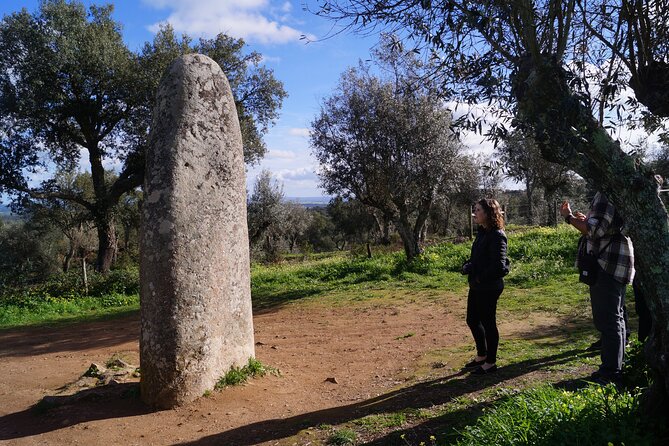
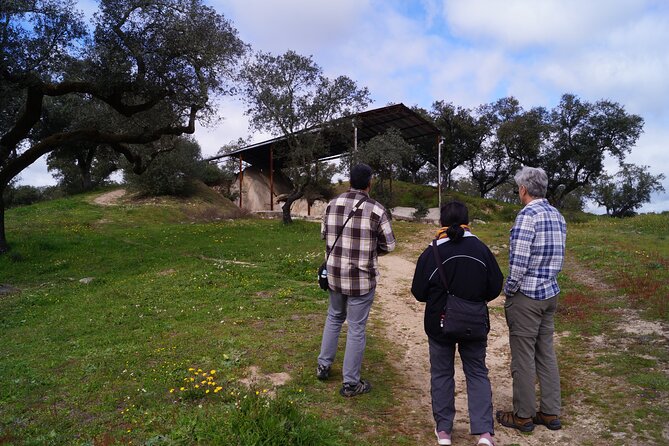
This part is short, but it matters. You take a 5 to 10 minute walk down a picturesque path to reach the Menir dos Almendres, the huge solitary standing stone.
Here is the honest consideration: the path is in poor condition. If you have reduced mobility, you may not be able to reach the Menir. Even if you can, muddy weather can make the dirt footpaths slippery, so good shoes are not optional if you want the walk to stay comfortable.
I suggest sneakers or hiking shoes with decent grip. If you are traveling in rainy season or right after rain, plan for mud, not dry ground.
Once you reach the stone, the payoff is immediate. You get a close, direct view that is hard to replicate with photos, and your guide can point out details that you would otherwise miss.
The Cromlech of Almendres, explained by prehistory specialists

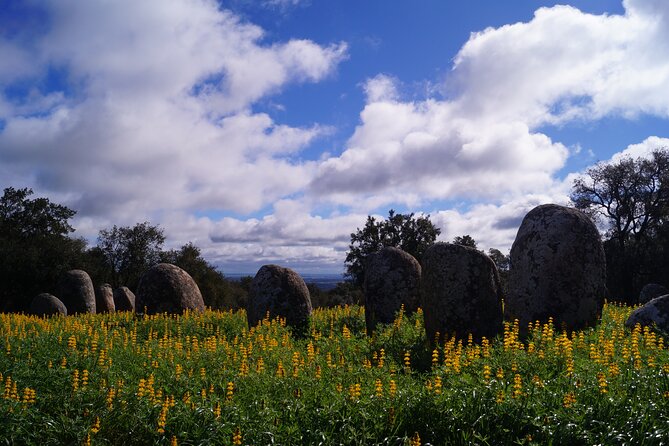
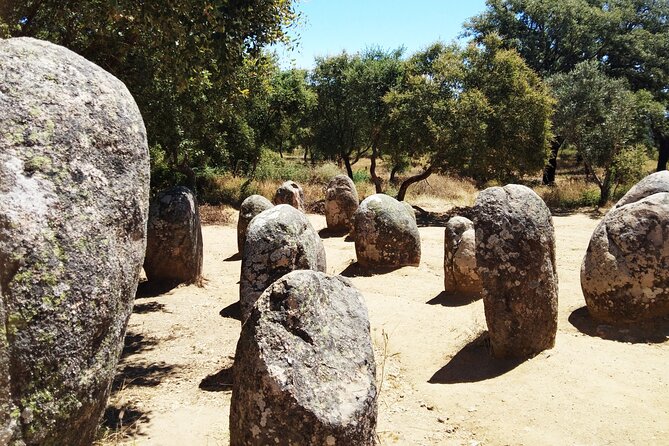
The next big moment is the Cromlech of Almendres, a stone complex where the setting and the geometry do most of the talking. You continue through the Almendres property in the van, then arrive at the main site area where you get guided interpretation.
This is where Bianca and Gonzalo really shine. They explain the Neolithic context in a way that makes the site feel connected to everyday life, not just a weird pile of stones. You learn about the time period, what archaeologists think the monument may have been used for, and how interpretations have evolved over time.
You also hear about theories tied to the monument and the process of discovery and conservation. That mix is valuable because megalith sites are full of “maybe” statements. A good guide helps you separate what is strong evidence from what is speculation.
And because the group is small, you can ask follow-up questions as you go. That is a big part of why this tour earns such consistently high marks.


A third site that turns a quick visit into real perspective
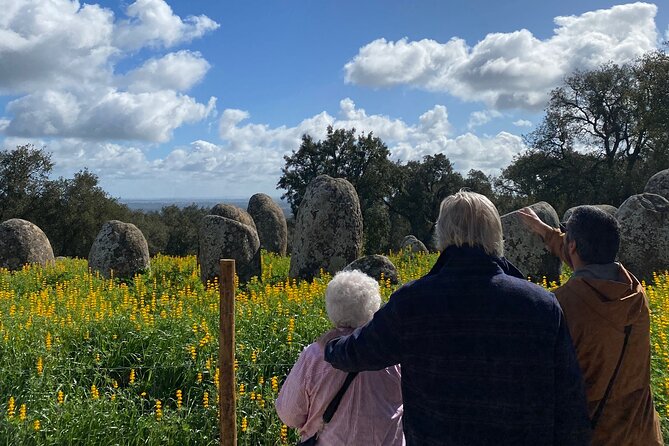
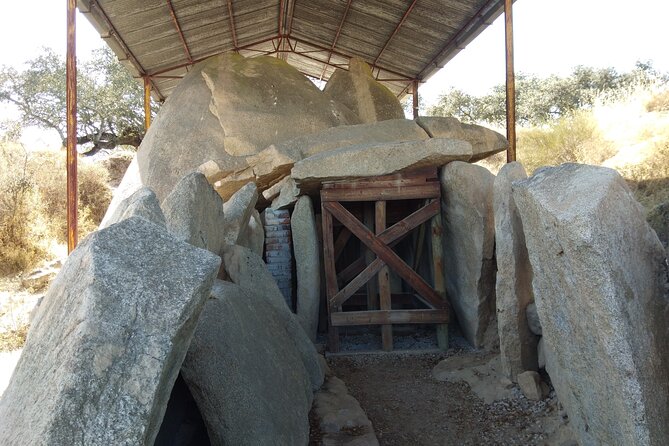
Multiple guests describe the outing as visiting three Neolithic structures, including the Menir dos Almendres and the Cromlech area, plus the Dolmen of Zambujeiro (also referred to as Anta Grande do Zambujeiro). If your day includes it, that extra stop changes the whole feeling of the tour.
A menhir is one kind of monument. A cromlech is another. A dolmen or chamber tomb adds a different layer, because it shifts from standing stones and stone arrangements toward burial architecture and how communities treated the dead.
That variety helps you see Almendres not as a single isolated site, but as part of a broader prehistoric world around Évora. It also keeps the visit from turning repetitive, because each monument type carries its own set of questions.
Centro Interpretativo dos Almendres: use the free time well
After the main megalith time, you walk back to the van and return through the Almendres complex. Then you stop at the Centro Interpretativo dos Almendres, which functions as an interpretive center and gift shop.
You get free time to browse and explore. I like using interpretive centers in a practical way: scan the panels for the key terms your guide used outside, then come back to the monument in your head with clearer labels. Even if you already paid attention on-site, the center can help you fill in gaps while you are not standing in the wind or on uneven ground.
It is also a good reset. If you have been doing museum-style visits in cities, the center provides a quieter, slower rhythm before you head back to Évora.
How long the tour takes, and when to go
The tour runs about 2 to 4 hours (including driving time). That is a manageable half-day slot, especially if you want to see the megaliths without sacrificing your entire morning or afternoon.
Return drop-offs happen between 12:00 and 13:00 for the morning tour, and 17:00 to 18:00 for the afternoon tour, with the activity ending back at the meeting point area.
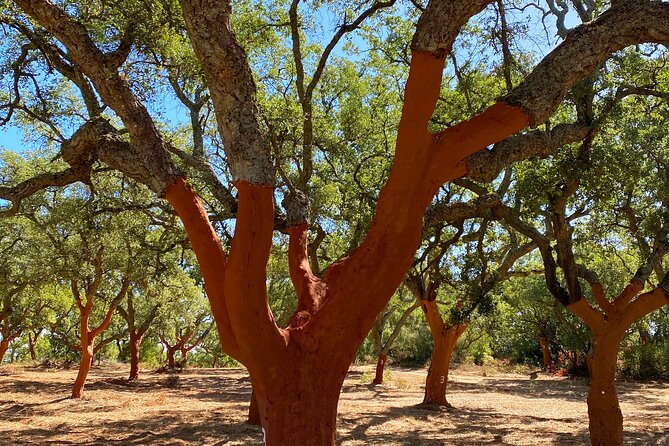
If you care about comfort, go in the morning. One guest recommendation sticks out for a reason: mornings tend to feel easier in the sun. The site is outdoors, so timing can affect how enjoyable the walk feels.
Also, the pace is described as easy. That matters because you are mixing short walks with driving on uneven roads. For most people, this feels like a straightforward “half-day adventure,” not a grind.
What you pay, and why it can be good value
At $78.44 per person, this is not a bargain bus tour, but it is also not priced like a private chauffeured day. The value comes from what is included.
You get entrance to all monuments visited and guided tours at each site, plus some free time at the interpretive center. Mobile ticketing is offered, and multiple parts of the visit are described as admission free. In plain terms, you are paying for expertise and access, not for a stack of entry fees.
You are also paying for the guide’s ability to make sense of a place that is easy to misunderstand. If you show up self-guided, you can still enjoy the stones, but you will miss a lot of the “why” and “how,” and you might waste time figuring out what you are looking at.
Given that the guides are archaeologists, and the feedback consistently highlights their passion and clarity, this price often feels fair for what you get. You are basically buying a guided translation of prehistory into something you can actually think about on your own.
Who this tour suits best, and who should think twice
This is best for you if you want real explanation. You enjoy history but do not want dry recaps. You also like small groups and being able to ask questions.
It suits people with moderate physical fitness, because you do some walking on dirt paths. If you have balance problems, the tour is not recommended. And if mobility is limited, the poor condition of the path to the Menir dos Almendres can be a deal-breaker for that key stop.
Families can go, but plan ahead for infants and children. Car seats or boosters are not provided, so bring your own. Service animals are allowed, and the tour is offered in English.
If you are the type who prefers to park yourself at one museum and read for hours, you might find the outdoor walking a bit limiting. But if you want a guided, moving day with context, this one fits.
Should you book Iberian Heritage Tours?
I think this tour is an easy yes if your main goal is to understand the Almendres megaliths beyond the postcard level. You get archaeologist-led guidance from Bianca and Gonzalo, a small group size that keeps the experience personal, and a route that includes both stone monuments and the interpretive center.
Book it early if you can, since it is commonly reserved about a month in advance. And be honest about your footwear and mobility needs, because the site access paths are not “museum smooth.”
If you are happy with short walks, want serious context, and like learning from people who actually study prehistory for a living, this is one of the more satisfying half-days you can add to an Évora trip.
FAQ
What is included in the Almendres megaliths tour?
The tour includes entrance to all monuments visited and guided tours at each site, plus free-time at the interpretive center/gift shop.
Is there an admission ticket I need to buy separately?
Admission tickets are listed as free for the stops included in the experience, so you should not need to purchase separate entries for the monuments visited.
How long is the tour, and when will I be back in Évora?
The experience lasts about 2 to 4 hours, including drive time. Drop-offs back at the meeting point are scheduled between 12:00 and 13:00 for the morning tour, and 17:00 and 18:00 for the afternoon tour.
Do I need hotel pickup?
Pickup is offered. If you choose hotel pickup, the pickup time can be up to 30 minutes earlier than the tour start time, and you will be told when to be ready at least 24 hours before.
What should I wear for the walks?
Wear appropriate footwear such as sneakers or hiking shoes. The sites involve walking on dirt footpaths, and the path to the Menir is in poor condition. Footpaths may be muddy after rainy weather.
Are car seats provided for children?
No. Car seats for infants and children are not provided, so you need to bring your own. The tour also notes that children under age 12 or under 1.5 meters must sit in a child car seat or booster in the back seat.
What if weather is bad or I need to cancel?
The tour requires good weather. If it is canceled due to poor weather, you will be offered another date or a full refund. You can cancel for a full refund up to 24 hours in advance; cancellations made less than 24 hours before start time are not refunded.
Other Days Out Around Setubal District





Evora and the Alentejo Plains, More Visits

Newly added around Setubal District
- Alpaca Farm MamaAdama Meet & Feed
★ 5.0 · 39 reviews - Boat Trip to Secret Bays and Beaches with Snorkeling
★ 5.0 · 40 reviews - Kayak tour from Sesimbra to Ribeira do Cavalo Beach, passing through the caves
★ 5.0 · 41 reviews - Horse Riding on Melides Beach
★ 4.5 · 42 reviews - A PRIVATE afternoon south of Lisbon, mountain WINES and SECRET places!
★ 5.0 · 49 reviews - Half-Day Kayak Tour in Sesimbra
★ 5.0 · 49 reviews - Dolphin Watching at the Arrabida (Lisbon region)
★ 5.0 · 51 reviews - Tour Arrábida / Azeitão
★ 5.0 · 68 reviews - Half Day Megaliths Cromlech Tour from Evora by Archaeologists
★ 5.0 · 69 reviews - Arrábida: Guided Transparent Kayaking Tour
★ 5.0 · 81 reviews
Other boats, other operators: Evora and the Alentejo.
 ★ 4.7Évora and Megaliths Full-Day Tour from LisbonFrom $94456 reviews
 ★ 4.8From Lisbon: Évora and Monsaraz Day Tour with Wine TastingFrom $108279 reviews
 ★ 5.02-Hour Surf Lesson in AlentejoFrom $60243 reviews
 ★ 4.5Évora and Monsaraz with Regional Wine Tasting from LisbonFrom $132229 reviews
 ★ 5.0Évora: Private walking tour with tickets to main monumentsFrom $105223 reviews
 ★ 4.7From Lisbon: Horseback Riding on Comporta BeachFrom $165167 reviews
 ★ 5.0Private Day Tour With Guide to Évora and MonsarazFrom $212134 reviews
 ★ 4.5From Lisbon to Alentejo: Évora and Megaliths Full-Day TourFrom $108131 reviews
Filed under