
REVIEW · PORTUGAL
Lisbon Awakens: A Culinary Crossroads, Reborn.
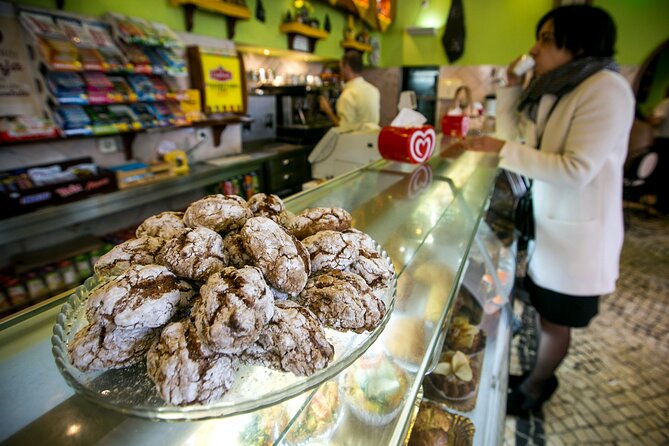
Food turns Lisbon into a story. This small-group Lisbon food tour uses Portuguese history, spices, and sweets to make the city’s flavors click fast. You get a day of walking between neighborhoods that most people skip.
I love that you leave with a generous meal worth of tastings, not just a few samples. And I like how the route mixes big, recognizable stops like Basilica da Estrela with local texture in places like Campo de Ourique.
One consideration: you really should plan to go hungry, because the pace is built around multiple bites in a row. If you eat a heavy breakfast, you might feel stuffed before the best custard-tart moment.
In This Review
- Key highlights you’ll feel in the moment
- Lisbon Awakens: what this food tour is really about
- Start at Jardim da Estrela, then follow the food thread
- Basilica da Estrela: pastries, spices, and church-linked storytelling
- Mercado de Campo de Ourique: a real neighborhood food map
- Jardim da Parada: the custard-tart moment, plus tile-and-tree calm
- Igreja do Santo Condestável: new Gothic, artist-and-writer streets
- What you eat and drink, and why the timing is planned
- The guide makes the difference: storytelling that connects food to Portugal
- How to fit Lisbon Awakens into your trip (do it early)
- Price and value: is $150 per person worth it?
- Practical tips so you get the most out of the day
- Should you book Lisbon Awakens?
- FAQ
- How long is the Lisbon Awakens tour?
- What does the tour cost?
- How many people are in the group?
- Is the tour offered in English?
- Where do we meet, and where does the tour end?
- Do I need to pay admission tickets for the stops?
- Can I join if I have dietary restrictions or allergies?
- What if the weather is bad?
- Can I get a full refund if I cancel?
Key highlights you’ll feel in the moment

- Max 7 people, so questions and small detours feel possible, not rushed
- Enough tastings to equal a meal, with sweet to savory flow through the day
- Neighborhood-first route, including Campo de Ourique market energy
- Food tied to Portuguese history, explained through guide stories
- Classic Lisbon landmarks mixed with lesser-visited local corners
Still weighing up the options? These are other Lisbon trips our reviewers have actually been on.
- Lisbon City Center Tour – The Unmissable Lisbon★ 5.0 · 22,234 reviews
- Lisbon: Sintra, Pena, Regaleira, Cabo da Roca & Cascais★ 4.7 · 19,656 reviews
- Lisbon: Jerónimos Monastery Entrance Ticket★ 4.1 · 14,164 reviews
- Lisbon: History, Stories and Lifestyle Walking Tour★ 4.8 · 10,902 reviews
Lisbon Awakens: what this food tour is really about
Lisbon is famous for many things, but eating here is also about movement, trade, and cultural mixing. This tour works because it treats food like evidence. Each stop adds a layer, from the convent-and-church side of Portuguese pastry culture to market-day eating in everyday neighborhoods.
And because it is small-group, you get more than a script. Your guide can answer the follow-up questions that pop up while you’re standing in front of a spice, staring at a pastry display, or watching a stall-holder prep something small and shareable.
The overall vibe is part history lesson, part taste crawl. You’ll get enough samples that you can comfortably skip planning lunch. You’ll also learn how Portuguese cuisine reflects routes across the Atlantic, so the flavors make more sense when you later eat on your own.
Start at Jardim da Estrela, then follow the food thread
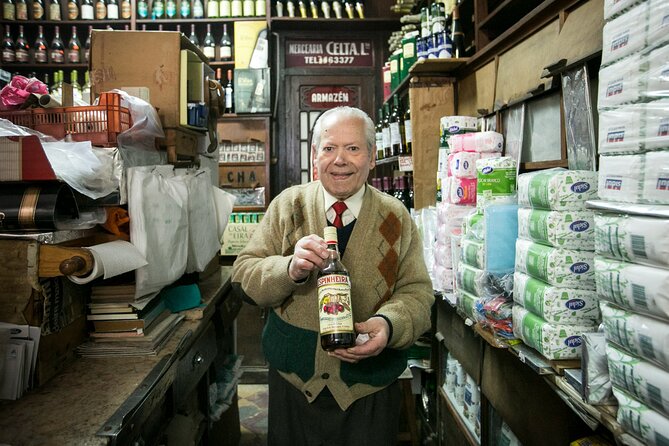
The meeting point is Jardim da Estrela, Praça da Estrela 1200-667 Lisboa, Portugal. It is a park-based start, which helps. You begin in a calmer spot before you head into denser neighborhood food scenes.
A park start also makes timing easier. Lisbon can be bright and busy, so starting in a green area helps you settle in and get oriented. If you like, arrive a touch early so you can check out what’s nearby before the group moves on. One practical tip from a prior participant is to get to the meeting area early if you also want to see nearby churches.
From there, the day is structured around short walks between places where you can actually taste what’s being described. You are not racing across town with long transit breaks. The tour keeps you in a walkable rhythm.
Basilica da Estrela: pastries, spices, and church-linked storytelling
Stop 1 is Basilica da Estrela for about 1 hour. This is a strong opener because it sets the theme immediately: Lisbon’s famous-looking food culture does not come out of nowhere. It is tied to convent life, religious spaces, and the way spices and ingredients traveled and stuck.
Here, you will explore how history shows up in what people eat, not just what people built. The tour description points to history hidden in iconic pastries and spices, plus the idea of convent and churches as places where food traditions formed. Even if you have eaten Portuguese sweets before, this is the moment where the guide’s stories can turn a familiar flavor into something more specific.
What I like about a start like this is the “why.” You are not just tasting. You’re learning what you’re tasting and why it developed where it did.
Practical note: basilicas can be cooler inside than outside, so dress for layers. Also, since this is the first stop, you’ll likely still be in your best energy window, which makes it easier to absorb the history as you move.
Mercado de Campo de Ourique: a real neighborhood food map

Next is Mercado de Campo de Ourique for about 45 minutes. This area is described as a neighborhood packed with traditional food shops, plus a small but interesting market.
This is where the tour stops feeling like a museum of flavors and starts feeling like Lisbon living. Markets here are not just a place to buy. They’re a place to see how Portuguese eating works day to day: what people snack on, what gets shared, what seems casual but clearly matters.
You also get a change in sensory experience. Expect more variety of stalls, more “grab-and-go” energy, and more chances to taste different things in quick succession. One highlight mentioned by past participants is exploring multiple stalls and meeting stall people who share tasty samples.
Drawback to consider: markets can be lively and a bit chaotic, especially if you prefer quiet spaces. But that’s part of the point. If your goal is Lisbon’s food culture, this is the kind of place that teaches you to look for food the way locals do.




Jardim da Parada: the custard-tart moment, plus tile-and-tree calm
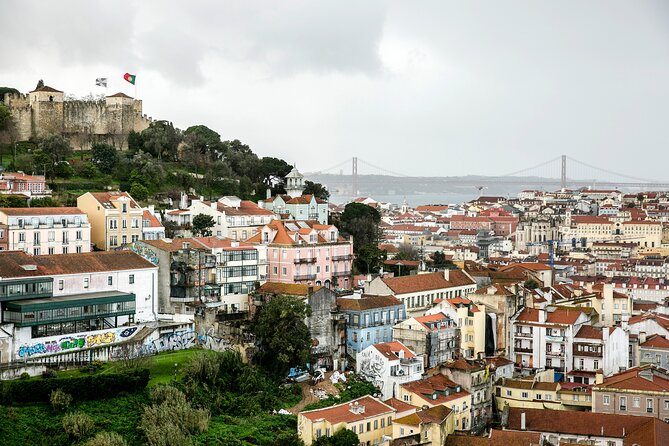
Stop 3 is Jardim da Parada for about 45 minutes. This is one of the route’s best breaks. The tour centers this stop on tasting some of the best custard tarts in the city, while you also admire the 19th-century tiles and trees.
This is where your day gets intentionally paced. You get a food hit, then you get a visual reward, and you do it in a park setting that lets you slow down. Custard tarts are the kind of food where quality is obvious fast. If you want to understand Portuguese pastry at a practical level, this is a smart tasting target.
The tiles matter because they change the vibe from “food tourism” into “place awareness.” You start to notice how Lisbon’s aesthetics show up in everyday life, not just postcards.
One caution: tart is a rich, creamy bite. If you arrived hungry, you’ll love it. If you ate too much earlier, you might find yourself struggling to enjoy the full range of flavors. This is why that recurring advice matters. Skip breakfast so you can taste this properly.
Igreja do Santo Condestável: new Gothic, artist-and-writer streets

Stop 4 is Igreja do Santo Condestável for about 25 minutes. The framing here is interesting: it’s described as a new gothic church in a neighborhood of artists and writers.
That matters because it gives the day variety. You’re not only moving through the historical postcard Lisbon of older churches and convent-linked sweets. You also see Lisbon as a city that keeps creating, rewriting, and living in new forms.
This stop is shorter, so it feels like a landing after the heavier tasting blocks. It’s also a chance to reset your ears and eyes, especially if earlier stops were busy. The guide can tie this kind of neighborhood identity back to how culture and food influence each other, especially in places shaped by communities rather than only monuments.
If you are someone who likes architecture, this stop offers just enough without turning the day into a pure sightseeing crawl.
What you eat and drink, and why the timing is planned
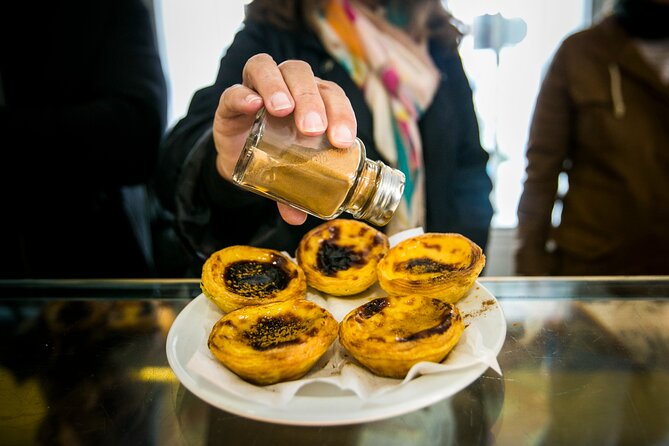
The highlights promise “enough bites and samples to add up to a generous meal.” That’s not marketing fluff. The day is built around multiple taste moments that start sweet and move through different types of Portuguese eating.
From what you’ll likely experience, think along these lines:
- Pastry and spice flavors early in the day
- Market sampling that can shift between savory snacks and small bites
- A custard-tart highlight that gives you a clear pastry payoff
- Drinks mixed in alongside the food, often including coffee and wine, and in some cases spirits and other pours, depending on the guide’s selections and the specific tasting flow
Here is the practical reason to follow the common advice: don’t eat a big breakfast. This tour’s “meal worth of tastings” only works if you give your appetite room. If you show up already full, you’ll miss the point, because there is a sequence built for a reason.
Also, go in expecting variety. Lisbon’s food doesn’t repeat itself in a loop. The tour’s theme is cross-influence, and that shows up through ingredients, spices, and Portuguese flavor habits.
The guide makes the difference: storytelling that connects food to Portugal
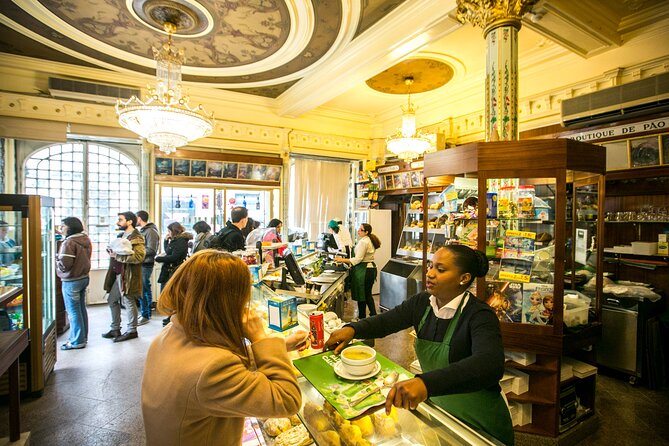
One thing that repeatedly comes through is how much the guides matter. Names you might meet include Kika (described as a former teacher), Inês, Gisela, Celia, Laura, and Martim. Different personalities, same goal: connect what you taste to why it exists.
This is not just random facts. The guides tend to link Portuguese cuisine to the country’s historical role in exploration and trade. So when you taste something that seems “simple,” the story helps you understand it as part of a larger movement of ingredients, spices, and cultural contact.
That approach is also why the walk tends to feel effortless. When you’re given context, you stop thinking of tastings as errands and start experiencing them as chapters.
If you like to ask questions, this is a good format. With a group capped at 7 travelers, you are more likely to get real answers rather than a quick nod and a move-on.
How to fit Lisbon Awakens into your trip (do it early)
This tour is priced as a serious “food day,” not a quick snack stop, so placement matters. I recommend scheduling it early in your stay. Past participants have called it a great first-day in Portugal move, and the logic is sound.
Why early works:
- You learn what to look for in markets and bakeries later
- You get historical context that makes your independent meals easier to interpret
- You walk Lisbon neighborhoods with fresh eyes, so you remember streets and flavors faster
Even if you cannot do it early, doing it later still helps. By then, you’ve tasted a few things already, and the guide’s connections can refine what you thought you understood.
In general, plan a simple rest-of-the-day schedule afterward. You will have plenty to eat during the tour, and the point is to enjoy Lisbon again after, not start a second food marathon immediately.
Price and value: is $150 per person worth it?
At $150 per person for about 5 hours 30 minutes, you are paying for more than food. You are paying for:
- A small-group experience (maximum 7)
- Multiple tastings that add up to a meal
- Local neighborhood access, including a market area most people only glance at
- A guide who connects Portuguese culinary traditions to history and trade
Let’s be honest. If your idea of value is a cheap bite and a photo, this won’t match that. But if you want a guided, structured way to eat your way through Lisbon while understanding the story behind what you’re tasting, the cost starts to make sense quickly.
One more value signal: this tour tends to get booked ahead. The average booking window is 36 days in advance, which usually means it’s in demand and can sell out on popular dates. If you have a fixed schedule, don’t wait until the last minute.
Practical tips so you get the most out of the day
A few small choices can make the tour feel smoother:
- Skip a big breakfast. This is the single best way to enjoy the full range of tastings, especially the custard tarts.
- Wear comfortable walking shoes. The day involves walking between distinct neighborhoods and stops.
- If you have allergies or dietary restrictions, send them in ahead of time. The tour specifically asks you to share these details.
- Bring a flexible mindset. Some stops are short and some are designed for tasting and conversation, but the day flows as a whole.
Also, since this is offered in English and uses a mobile ticket, it is straightforward to manage once you arrive. The tour ends back at the meeting point, which makes planning easier at the end of a long, taste-heavy afternoon.
Should you book Lisbon Awakens?
Book it if you want Lisbon through food and story at the same time. This is best for you if you enjoy learning why Portuguese sweets and flavors developed the way they did, and if you like walking neighborhoods where food is the main event.
Skip it (or rethink timing) if you hate structured tastings or if you know you will show up full. The tour is built around the assumption that you can comfortably eat several bites in sequence, and the custard-tart highlight needs you to enjoy it, not survive it.
If you are trying to choose between a generic “see the sights” day and a day focused on Portuguese cuisine with context, this one is a smart pick. It is a compact route, a small group, and a real chance to taste Lisbon like locals do, one stop at a time.
FAQ
How long is the Lisbon Awakens tour?
The tour lasts about 5 hours 30 minutes.
What does the tour cost?
The price is $150.00 per person.
How many people are in the group?
The tour has a maximum group size of 7 travelers.
Is the tour offered in English?
Yes. The tour is offered in English.
Where do we meet, and where does the tour end?
You meet at Jardim da Estrela, Praça da Estrela, 1200-667 Lisboa, Portugal. The tour ends back at the meeting point.
Do I need to pay admission tickets for the stops?
Admission tickets for the listed stops are free.
Can I join if I have dietary restrictions or allergies?
Yes, you should send your allergies or dietary restrictions to the tour provider.
What if the weather is bad?
The experience requires good weather. If it is canceled due to poor weather, you will be offered a different date or a full refund.
Can I get a full refund if I cancel?
Yes, you can cancel up to 24 hours in advance for a full refund. If you cancel less than 24 hours before the start time, the amount paid will not be refunded.
Newly added around Lisbon
- Lisbon: Street Art Walk
★ 5.0 · 79 reviews - From Lisbon: Nazare Big Waves and Óbidos Guide Day Trip
★ 4.7 · 79 reviews - Small Group Walking Tour of Belém
★ 4.9 · 80 reviews - Lisbon: Regaleira, Sintra, Cape Rock & Cascais Day Trip
★ 4.6 · 80 reviews - Lisbon: Evening Local Food Crawl with Drink Pairings
★ 4.6 · 80 reviews - From Lisbon: Sintra and Portuguese Coast Private Day Tour
★ 5.0 · 80 reviews - Lisbon: Authentic Fado Show, Dinner and Night Tour
★ 4.6 · 80 reviews - Golden Hour Boat Tour – Sailing by the Monuments with Wine
★ 5.0 · 81 reviews - Hard Rock Cafe Lisbon with Set Lunch or Dinner
★ 4.0 · 81 reviews - Fado Musical Experience with Portuguese Wine & Appetizers
★ 4.5 · 81 reviews