
REVIEW · CITY TOURS
Lisbon City Center Tour – The Unmissable Lisbon
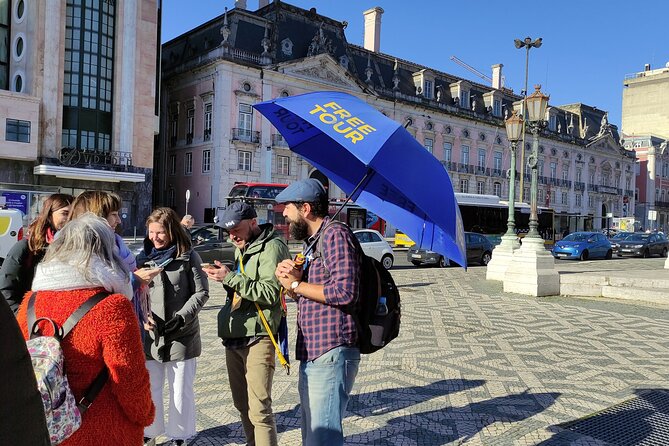
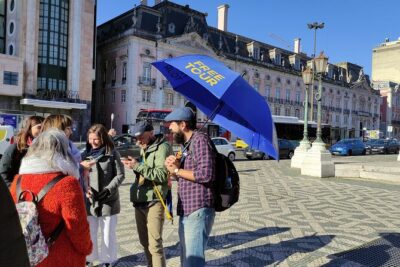
Lisbon is best learned on foot, not from a map. This city-center walk is built for first-time orientation with real street-level detours, alleys, and viewpoints you would skip on your own. I love the small-group feel (up to 25) and the pay-what-you-think approach that keeps the tour focused on value.
The route also hands you practical “how to move through the city” advice, so you’re not wandering blind the rest of the day. The main thing to consider is pacing and focus: it is a history-forward walk, so if you prefer fewer facts and more free time, you may want to balance it with lighter sightseeing afterward.
If you like a guided backbone for your Lisbon days, this is a smart place to start. You’ll end in the postcard setting at Praça do Comércio, ready to plan the next leg along the river.
In This Review
- Key highlights you can feel right away
- Why this Lisbon City Center walk is such a good first move
- Where you meet and how the route naturally makes sense
- Restauradores and the independence mood-setter
- São Domingos church: plain outside, unexpected depth inside
- A 1506 massacre memorial: intolerance, memory, and context
- Rossio Square, a 1846 landmark, and the theatre-and-street vibe
- Chiado: the cosmopolitan entry point
- Santa Justa Elevator free area: Lisbon’s vertical drama
- Largo do Carmo and the revolutionary stage
- São Roque church: early Jesuit roots and a famous chapel
- Bairro Alto and the Pessoa-era link through A Brasileira
- São Carlos theatre: opera and orchestral music as the core mission
- Rua Augusta to Praça do Comércio: finish with the iconic Lisbon postcard
- Pay-what-you-think pricing, and why it can still be a bargain
- Rain, fog, and how to handle it like a pro
- Who this tour is best for
- What to do right after the tour (so it sticks)
- Should you book this Lisbon City Center Tour?
Key highlights you can feel right away
- A smooth start-to-finish loop through the city center, from Restauradores to Praça do Comércio
- Street-level shortcuts in areas cars cannot access, including Chiado and Bairro Alto approach lanes
- Landmark variety in 2.5 hours, from major squares to churches and viewpoints
- Coffee, theater, and literature stop at A Brasileira and a serious arts stop at São Carlos
- Santa Justa Elevator access to the free area, so you get views without being forced into a paid add-on
- A guide who turns stops into stories, with many mini history moments across the walk
More whole-city loops around Lisbon we have ridden
- Lisbon City Center Tour – The Unmissable Lisbon★ 5.0 · 22,234 reviews
- Lisbon: Daytime/Sunset/Night City Sailboat Tour with Drink★ 4.9 · 3,114 reviews
- Lisbon: City Highlights and Viewpoints E-Bike Tour★ 4.9 · 1,556 reviews
- Lisbon: Private City Tour by Eco Tuk Tuk★ 4.9 · 1,215 reviews
Why this Lisbon City Center walk is such a good first move
This tour works because it gives you a “city frame” fast. You’re not just seeing famous places, you’re learning how Lisbon pieces fit together, especially downtown, Chiado, and the edge of Bairro Alto. That matters because Lisbon is hills and layers, and getting bearings early saves you time later.
I also like the basic approach of walking with a purpose. There’s a clear rhythm: quick stop, short explanation, then you move. That keeps you engaged even if the day is busy or your energy is not fully recovered from travel.
Finally, the pay-what-you-think model changes the feel of the experience. It’s not about checking a box. It’s about whether the guide and route actually earn your money. If you’re a careful shopper, that’s a nice fit.
Where you meet and how the route naturally makes sense
You start at Monumento dos Restauradores in Praça dos Restauradores, on the east end of the downtown strip where Avenida da Liberdade ends. The finish is Praça do Comércio, between the large arch and the equestrian statue of D. José I, with the Tagus close by.
That start and end pairing is great for practical reasons. You begin near a major artery into the center, so you can reach it easily. You finish in the big open riverfront square, which makes it easier to keep going on your own, whether you head toward tram lines or just want a long sunset stroll.
Expect a walking tour format with uneven streets. Even when it is not raining, Lisbon’s sidewalks can be a workout, especially if you’re carrying bags. Wear shoes you trust.
Restauradores and the independence mood-setter
The first stop is Praça dos Restauradores, right at the square tied to Portugal’s independence. This isn’t just a “look, a monument” moment. It sets the emotional tone for Lisbon’s story, so later sites about tolerance, conflict, and change make more sense.
From there, you move toward the old-town feel where details matter. Your guide points out what to watch for as you walk, like street geometry, building edges, and where the city opens up for views.
If you’re traveling solo, this opening is especially useful. It gives you an anchor point to compare later neighborhoods. You’ll start noticing how Lisbon “reshapes” itself from square to alley.
São Domingos church: plain outside, unexpected depth inside
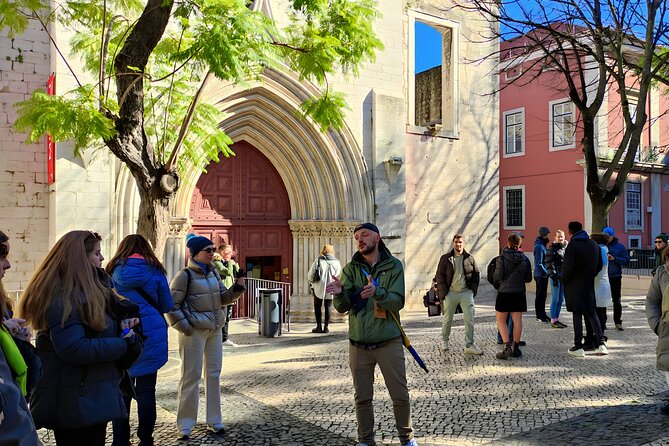
Next you hit Igreja de S Domingos. The interesting twist here is the contrast: it is described as one of the least adorned churches, but also among the richest in what it represents.
What I like about this kind of stop is how it trains your eye. Lisbon has many places where the best part is not the obvious exterior. Even if you only catch glimpses between steps, your guide helps you understand why the building matters and what message it carries.
This is also a good chance to slow down. Your group pauses briefly, so you can reset before the walk turns more historical and more “story-heavy.”


A 1506 massacre memorial: intolerance, memory, and context
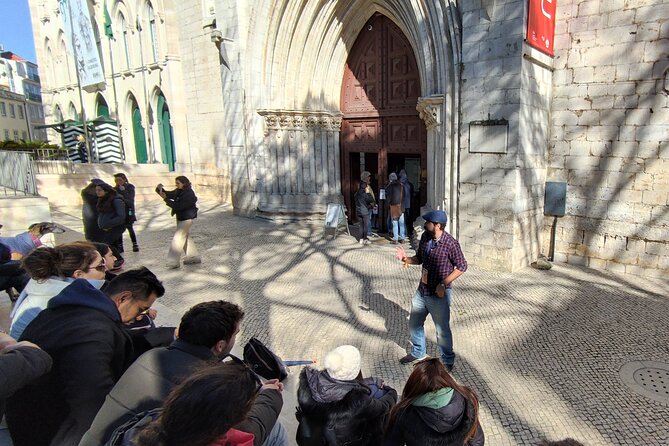
Then you reach the memorial dedicated to the victims of the Jewish massacre of 1506. This stop shifts the tour into a heavier theme: intolerance and religious fanaticism, and how Lisbon remembers those wounds.
I appreciate that the route does not only celebrate power and architecture. It includes the civic side of history, where a city chooses to acknowledge trauma rather than only triumph. It’s the kind of context that makes later Portuguese art and culture easier to interpret.
One consideration: this part can feel intense if you’re sensitive to human tragedy. It may also be more fact-dense than the earlier square stops. If you prefer lighter stops, just mentally budget for a serious moment here.
Rossio Square, a 1846 landmark, and the theatre-and-street vibe
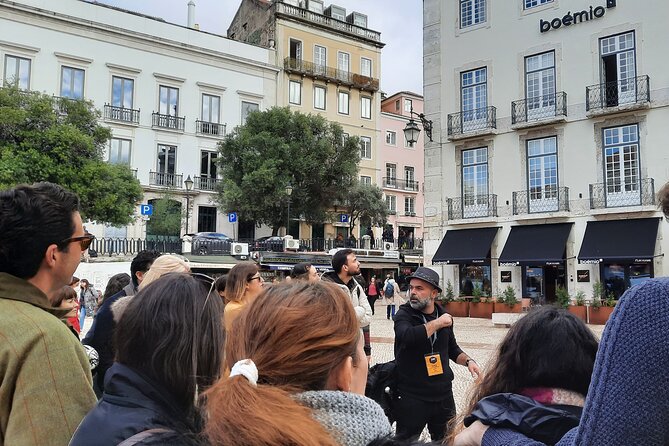
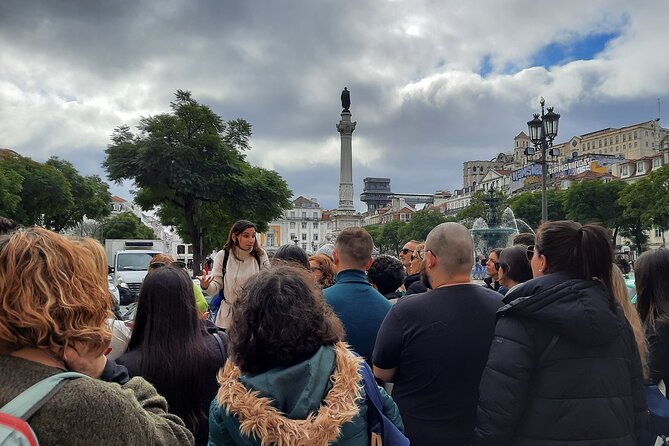
After that you land in Praca Dom Pedro IV, also known as Rossio Square. It’s one of the oldest and most beautiful squares in Lisbon and it has hosted major events across more than six centuries.
Rossio Square is useful to you in two ways. First, it’s a visual “hub,” so it helps you map the city center in your head. Second, it’s a natural place for your guide to explain the flow between neighborhoods, because many routes radiate outward from here.
You then pass a major theatre building opened in 1846. Even without getting lost in technical detail, the point is clear: this area has been a stage for the city’s big moments for a long time.
Right after, you visit Estação do Rossio, an imposing station that surprises many visitors because of when its construction dates back. Stations in Lisbon are not just transport. They’re landmarks with strong visual presence, and your guide helps you read that.
Chiado: the cosmopolitan entry point
The walk moves into Chiado, Lisbon’s most cosmopolitan neighborhood. Think of Chiado as the smoother, more “classic downtown” step between the open squares and the hillier nightlife streets.
You get only a short stop here, so the value is in what your guide points out, not in lingering. If you’re the type who likes to understand the character of a neighborhood quickly, you’ll enjoy this segment.
Also, the Chiado transition is a gift when you’re planning later. Chiado is a good base for walking and for pairing museums or cafés with your evening plans.
Santa Justa Elevator free area: Lisbon’s vertical drama
Next comes Elevador de Santa Justa. The elevator is considered one of Lisbon’s most beautiful “monuments,” and your tour includes access to the free area.
This is important for value. You get the iconic structure and the viewpoint energy without being forced into extra spending during the tour. Even if you do not ride it, it’s one of the best photo angles because it frames Lisbon’s layered streets.
Keep expectations realistic on camera time. If it’s foggy or rainy, the city views can be muted. Still, your guide helps you aim for the angles that hold up best when conditions are less cooperative.
Largo do Carmo and the revolutionary stage
At Largo do Carmo, the story turns to revolutions. This is one of those places where the square scale helps you feel the drama. It also gives you a “Lisbon is political as well as scenic” reminder.
A short pause here helps break the walking. It’s also a helpful stop if you want to understand how Lisbon’s identity includes social change, not just monarchy, churches, and royal squares.
If you like your tours to feel like a narrative rather than a checklist, this is one of the spots that does it.
São Roque church: early Jesuit roots and a famous chapel
Then you reach Igreja de Sao Roque, built in the 16th century. This is described as the earliest Jesuit church in Portugal, and it served as the society’s home church in Portugal for more than 200 years before the Jesuits were expelled.
What makes this stop click is the way the tour builds layers. A Jesuit church is not just art or architecture here. It’s also a window into Portugal’s shifts in power and belief.
Inside, your guide points out that one of the world’s most valuable chapels is found here. The takeaway for you: if you care about details, go in with patience. If you do not, at least ask your guide what to look for, because the value comes from knowing where to focus.
Bairro Alto and the Pessoa-era link through A Brasileira
Next you hit Bairro Alto, a nightlife district with more than 500 years of history. Your guide brings the tone here, so it doesn’t feel like a random party neighborhood.
Then you loop to A Brasileira, where coffee was launched and where Fernando Pessoa and other intellectuals and artists created the modernist magazine Orpheu. This is one of the most “Lisbon-literature” moments on the walk, and it’s the kind of stop that makes you want to read or at least watch for Portuguese literary references later.
This is also a smart mental cue for planning. If you’re going out at night, you now know where the energy starts. And if you’re not, you still get the atmosphere without needing to commit to nightlife.
São Carlos theatre: opera and orchestral music as the core mission
Teatro Nacional de Sao Carlos is next. The focus here is specific: it’s still today the only Portuguese theatre geared toward producing and presenting opera and choral and symphonic music.
I love that the tour does not treat this as a generic “famous building.” It explains the mission. That helps you understand why Lisbon takes its music institutions seriously.
Even with only about ten minutes, you can pick up a sense of the cultural spine of the city. If you want one stop to justify a later return, this is a good candidate.
Rua Augusta to Praça do Comércio: finish with the iconic Lisbon postcard
The final stretch goes to Rua Augusta, described as the most agitated and charming street in downtown Lisbon. It’s a sensory moment. The street is where downtown energy feels physical, like the city compresses into motion.
Then you end at Praca do Comercio, one of Europe’s most beautiful squares. It’s the moment where the city ends and the Tagus begins, and the riverfront setting gives you an easy reward for walking.
This finish is also useful because it transitions your travel day into evening plans. From Praça do Comércio, it’s natural to look for river rides, long walks, or simple café breaks without feeling like you’re getting lost.
Pay-what-you-think pricing, and why it can still be a bargain
The tour is listed at $3.62 per person, with a pay-what-you-think model. That combination is unusual in a good way. You’re not locked into a premium “tour or nothing” structure. You’re encouraged to match payment to the experience quality.
So what makes it feel like value in practice? It’s the combination of major landmarks, neighborhood transitions, and takeaway tips. You’re not just consuming sightseeing. You’re collecting navigation ideas for the rest of your stay.
There’s also a group-size ceiling of 25, which helps the tour avoid turning into a giant human conveyor belt. Many people in the guide notes praised how the smaller group kept the conversation lively and made it easier to connect.
One thing to watch: because it’s history-forward and story-driven, the experience is less about quiet strolling and more about learning while moving. If you want total silence and free roam, you might find it too structured.
Rain, fog, and how to handle it like a pro
Lisbon weather can be unpredictable, and the tour still runs even when the sky misbehaves, as long as conditions are good enough for walking. In rainy weather, picture quality can suffer, and street reflections can make it harder to get clean shots.
My practical advice: pack for the walk, not the forecast headline. Bring a compact umbrella or light rain jacket, and plan to focus on the guide’s stories rather than perfect photos.
Also, uneven streets still matter in rain. Keep your steps steady, especially around older stone areas and steep edges.
Who this tour is best for
This one fits best if you want a confident start. It’s especially good for first-time visitors who need a clear route through central Lisbon, plus a sense of which neighborhoods to prioritize next.
It’s also a strong option for solo travelers. A small group makes it easier to ask questions, and the guide support tends to turn into real local advice.
If you travel with a child, it can work well because the tour uses frequent short stops rather than one long lecture. Still, you should expect steady walking, so bring snacks and water.
If you dislike history lectures, plan to treat the tour as an orientation layer, then balance it with more relaxed breaks afterward.
What to do right after the tour (so it sticks)
Once you’re done at Praça do Comércio, don’t rush away. Use the tour as a map in your head.
Here’s a simple way to turn it into a smart itinerary:
- Pick one direction to go next: toward the river for a slower pace, or back toward the center for more exploring.
- Choose one “culture return” you liked most, like the theatre zone around São Carlos or the literary stop around Chiado.
- If you’re planning viewpoints, use Santa Justa as your guide for what to look for visually. Think frames, not random corners.
If your guide sends follow-up tips, save them. One guide example included sending a WhatsApp document filled with local information after the walk, and that kind of recap can save you time later.
Should you book this Lisbon City Center Tour?
Book it if you want a fast, practical orientation to downtown Lisbon, with a guided narrative that links monuments, neighborhoods, and culture into one walkable route. The small-group setup and pay-what-you-think feel like you can get real value even if you are watching your budget.
Skip it, or at least rethink timing, if you want a relaxed stroll with minimal facts. Also keep in mind it requires good weather for the walking plan to work well, and you should expect uneven streets.
Overall, I’d call this a smart first-day activity. It gives you bearings, and it points you toward the Lisbon you’ll want to explore more deeply once you know where you are.
Other Days Out Around Lisbon





Whole-City Loops of Lisbon, More Routes




Newly added around Lisbon
- Lisbon: Street Art Walk
★ 5.0 · 79 reviews - From Lisbon: Nazare Big Waves and Óbidos Guide Day Trip
★ 4.7 · 79 reviews - Small Group Walking Tour of Belém
★ 4.9 · 80 reviews - Lisbon: Regaleira, Sintra, Cape Rock & Cascais Day Trip
★ 4.6 · 80 reviews - Lisbon: Evening Local Food Crawl with Drink Pairings
★ 4.6 · 80 reviews - From Lisbon: Sintra and Portuguese Coast Private Day Tour
★ 5.0 · 80 reviews - Lisbon: Authentic Fado Show, Dinner and Night Tour
★ 4.6 · 80 reviews - Golden Hour Boat Tour – Sailing by the Monuments with Wine
★ 5.0 · 81 reviews - Hard Rock Cafe Lisbon with Set Lunch or Dinner
★ 4.0 · 81 reviews - Fado Musical Experience with Portuguese Wine & Appetizers
★ 4.5 · 81 reviews
Other boats, other operators: City Tours.
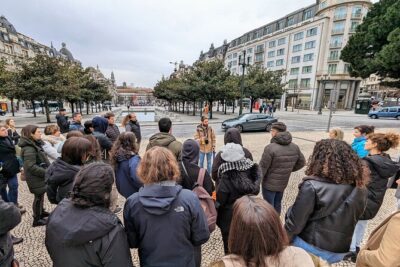 ★ 5.0The Unvanquished Tour in Porto City CenterFrom $326,497 reviews
 ★ 4.9Lisbon: Daytime/Sunset/Night City Sailboat Tour with DrinkFrom $413,114 reviews
 ★ 4.8Porto: City Highlights 3-Hour Guided Electric Bike TourFrom $513,092 reviews
 ★ 3.9Porto: City Train Tour, River Cruise & Wine CellarFrom $432,601 reviews
 ★ 4.0Porto: City Sightseeing Hop-On Hop-Off Bus TourFrom $312,588 reviews
 ★ 4.8Porto: 3-Hour Guided City Highlights Walking TourFrom $342,050 reviews
 ★ 4.9Lisbon: City Highlights and Viewpoints E-Bike TourFrom $291,556 reviews
 ★ 4.9Lisbon: Private City Tour by Eco Tuk TukFrom $281,215 reviews
Filed under