
REVIEW · HORSES
Lisbon: Portuguese Riding School Trainig with Lusitano Horse
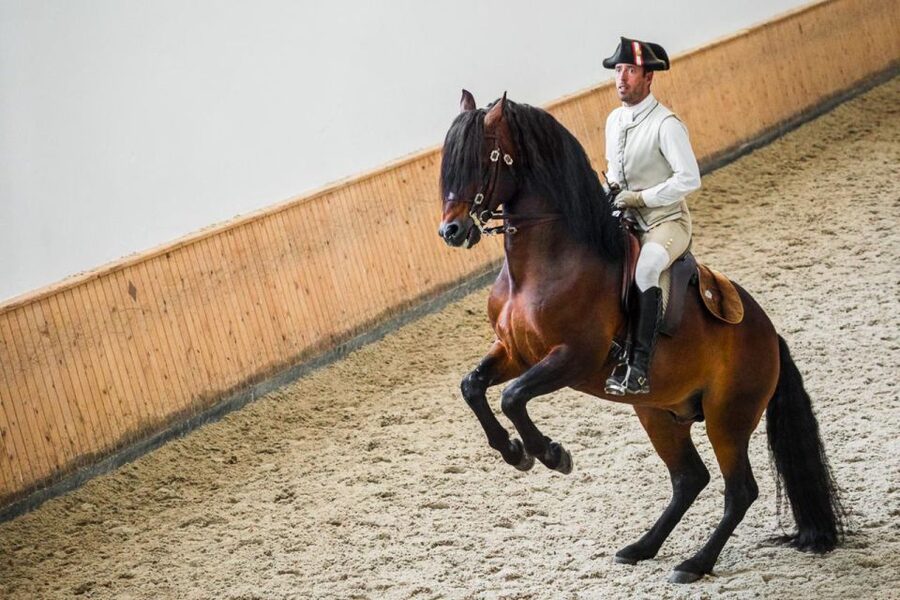
If you think equestrian art is all glamour, this morning fixes that. You spend time with Lusitano horses and trained riders as they run warm-ups and exercises with period music and costumes, then you move into a staged 18th-century court vibe.
Two things I really like: you get behind-the-scenes access to how horses are prepared and handled, and you also see the rehearsals for the complex Equestrian Art pieces (the kind you associate with the gala show).
One thing to keep in mind: the full visit is 10am to 1pm, and even though it is longer than a quick pass-through, the schedule is still tight. If you are hoping for a lot of extra stable time, plan your arrival for the busiest window.
In This Review
- Quick take
- Morning Lusitano training in Lisbon, what you actually see
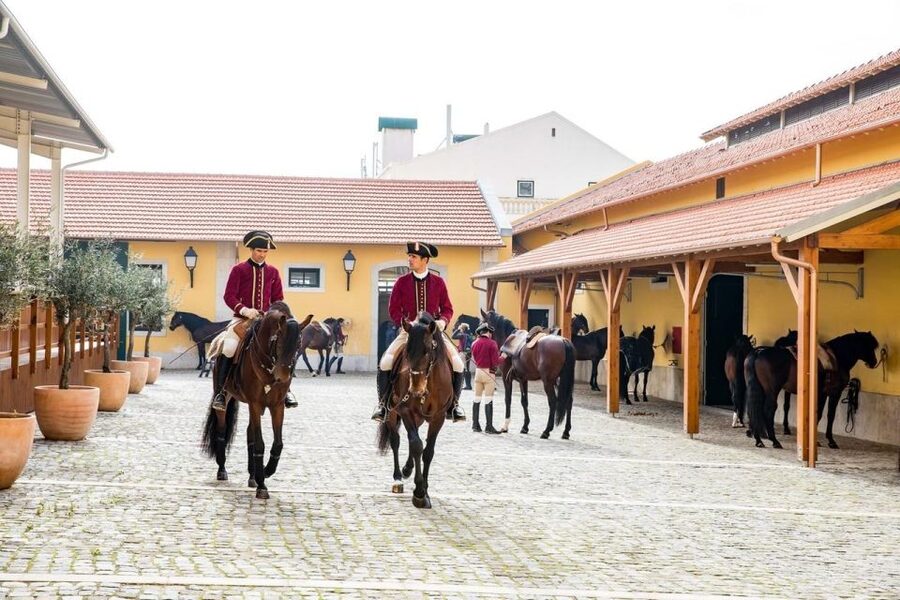
- Henrique Calado Riding Ring and the handlers behind the scenes
- Rehearsals in the Nora Patio, 18th-century court atmosphere without the guesswork
- How Equestrian Art training becomes choreography
- Audio guide that actually helps during stable time
- Price and duration: why $17 can feel fair
- Practical tips before you go (and what to avoid)
- Who this Lusitano training experience suits best
- Should you book this Portuguese Riding School training in Lisbon?
- FAQ
- How long is the Portuguese Riding School training experience?
- What is included in the ticket price?
- Do I get an audio guide, and what languages are available?
- What should I bring with me?
- Is flash photography allowed?
- Where and how do I show my ticket?
Quick take
- Lusitano warm-ups with rider exercises that respect each horse’s rhythm and health
- Henrique Calado Riding Ring care routines, so you see the work that happens before the performance
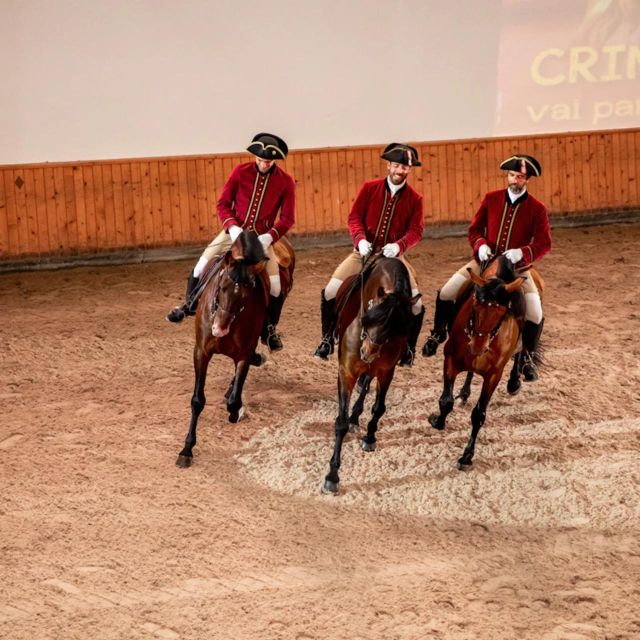
- Rehearsals for Equestrian Art choreographies that recreate an 18th-century court atmosphere
- Audio guide included in English, Portuguese, and French, designed to explain stables and horses
- Best timing is 11am to 12:30pm, so you catch the flow at its liveliest
- No flash photography and photography is not included, so bring your attention, not your camera skills
Other rides on horseback around Lisbon we have reviewed
- From Lisbon: Horseback Riding on Comporta Beach★ 4.7 · 167 reviews
- From Lisbon: Comporta and Setúbal Trip with Horseback Riding★ 4.3 · 90 reviews
- Lisbon: Morning of Equestrian Art with Lusitano Horses★ 4.4 · 87 reviews
- Setubal & Comporta Trip with Horseback Riding from Lisbon★ 4.5 · 38 reviews
Morning Lusitano training in Lisbon, what you actually see
This experience is built around training, not just sightseeing. The focus is the Lusitano horse tradition and how skilled riders prepare for high-level work. You start with the warm-up and resourcefulness exercises, the kind that look effortless only because the basics are done carefully and repeatedly.
What makes it compelling is the way the training is presented as a process. You watch riders dressed in period costumes, but the real story is the coordination: how they warm up, how the horse responds, and how each step depends on rhythm and physical readiness. The goal is not speed or spectacle. It is correct communication, repeated until it becomes natural.
You will also notice how often horse care comes up. The experience explicitly aims to respect the horse’s rhythm, health, and physical needs. That matters because it changes how you read the movements. Instead of seeing a performance only as art, you start seeing it as training with health and welfare in mind.
Expect the morning to feel like you are inside the day’s workflow. That is rare in travel activities. A lot of tours show the final moment. This one keeps you closer to the work that leads there.
Henrique Calado Riding Ring and the handlers behind the scenes
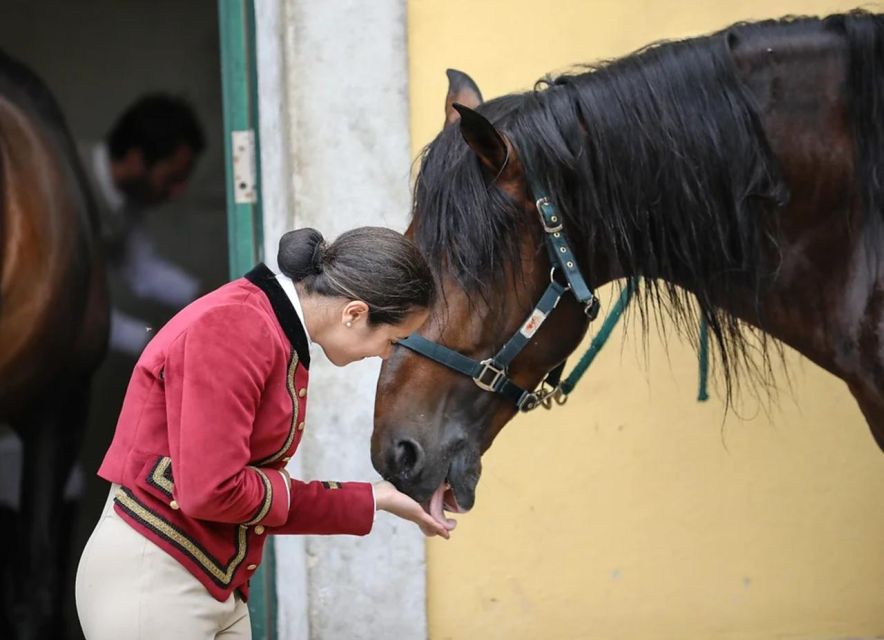
A major part of the value is the time spent at Henrique Calado Riding Ring with the handlers caring for the horses. That is where the day becomes real. Horses do not just appear ready. They need preparation, attention, and steady care.
You are essentially getting a window into stable operations. You will see how handlers support the horses in a setting designed for training. Even if you do not know equestrian terminology, you can still follow what is happening: people working with purpose, horses being managed, and training continuing in a controlled environment.
This is also where the experience helps you understand what goes into a high-level gala show. The included viewing of daily training from the Alter Real Stud Farm is the other half of that picture, connecting the Lusitano horses to the larger Portuguese School of Equestrian Art world. When you see the morning work first, the later rehearsals make more sense.
If you love animals and also like practical details, this stable segment is likely your highlight. And if you are the type who gets impatient with long attractions, you will still have something to watch, since the work is continuous during the session.
Rehearsals in the Nora Patio, 18th-century court atmosphere without the guesswork
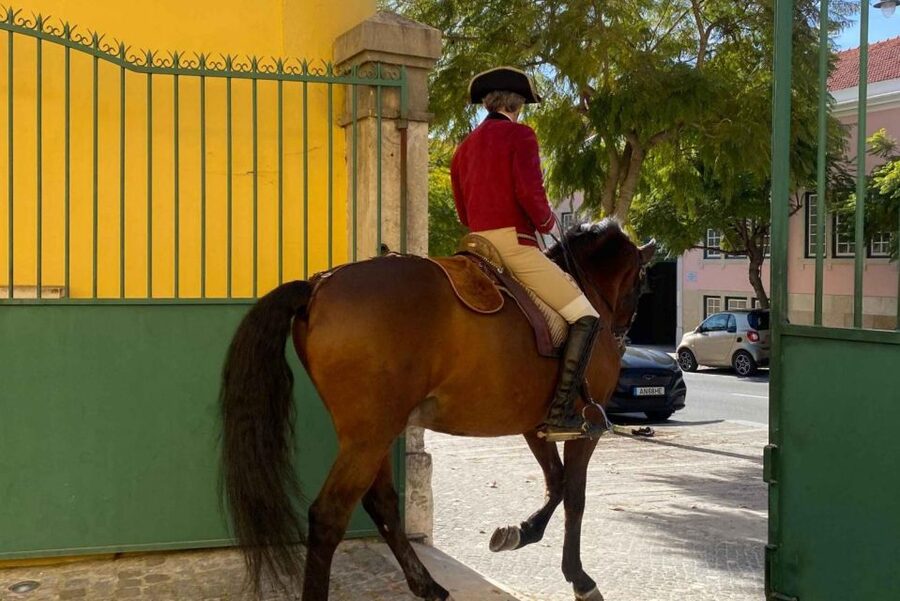
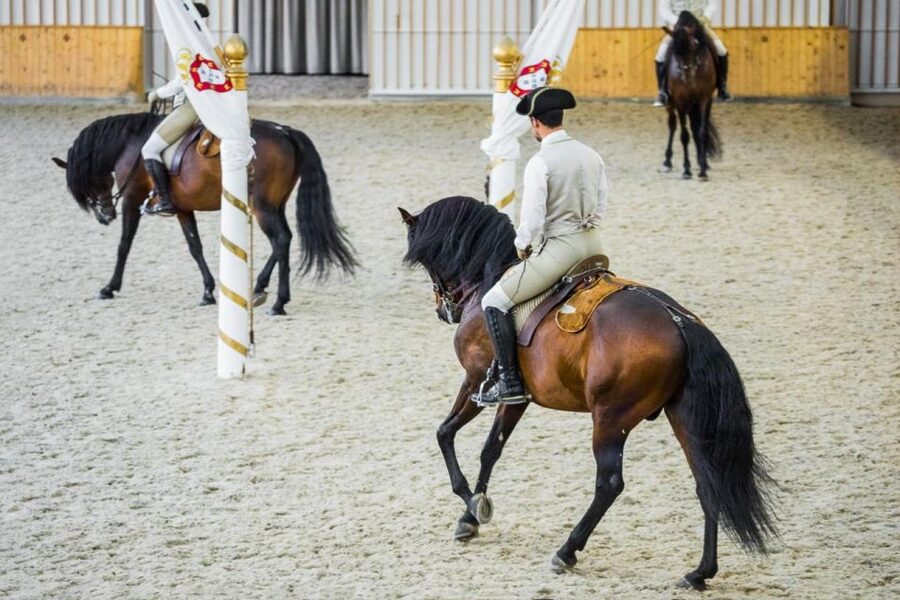
After the stable and ring time, the experience shifts to training and rehearsals of the complex Equestrian Art exercises and choreographies. You get period music, and the setting is designed to feel like an 18th-century court.
The Nora Patio atmosphere is charming in a very specific way. It is not just decorations. It is the feeling that you are watching a formal rehearsal, with the choreography built around both rider movements and the horse’s readiness. In other words, you are not only seeing style. You are seeing how style gets built.
This is also where your timing helps. The experience runs from 10am to 1pm, and the best time to visit is 11am to 12:30pm. That window tends to give you the smoothest experience because you are more likely to catch both active training and rehearsals without the lull that can happen at the ends.
One more practical note: this kind of rehearsal can be a bit quieter than an actual full show. That is not a negative, it is the nature of practice. It is worth leaning into it. You are here to observe craft, not to chase a crowd-energy performance.
How Equestrian Art training becomes choreography
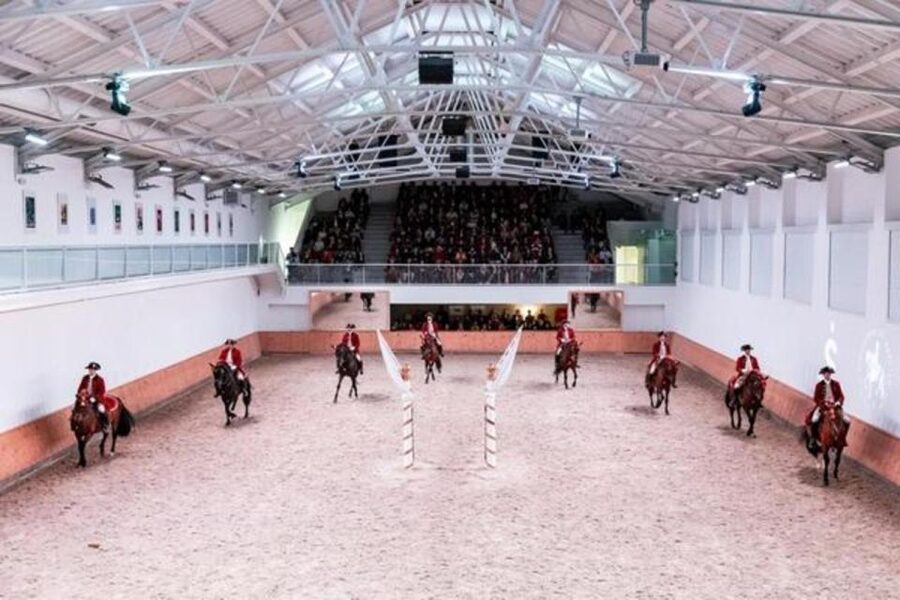
The tour is carefully framed around the idea that the training supports a high-level gala show of the Portuguese School of Equestrian Art. That framing is helpful, because it turns abstract equestrian art into something you can track step by step.
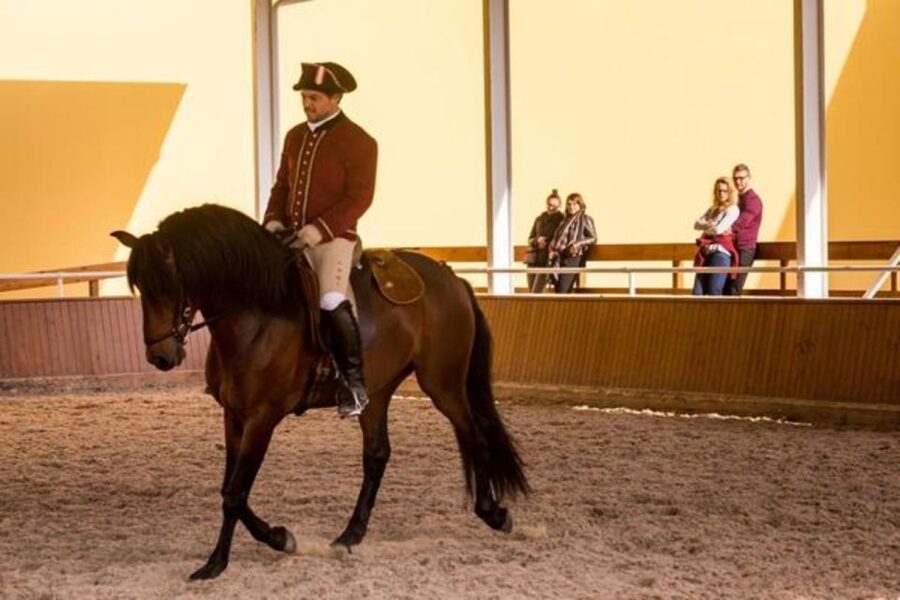
You will watch riders dressed in period costume, and you will see exercises that emphasize rhythm and health. The tour description is explicit about respecting each horse’s physical needs. Even without deep technical knowledge, you can pick up the pattern: consistency, repetition, and careful transitions.
You also get a sense of resourcefulness exercises. This is the training side of what looks like elegance. Horses learn to respond to cues and maintain balance over time. Riders learn to communicate in a way that feels calm and controlled.
The rehearsals for complex Equestrian Art exercises and choreographies recreate the charm of an 18th-century court. Still, what you should pay attention to is the mechanics of preparation. Watch how riders move between moments, how handlers keep the environment stable, and how the pace adjusts based on what the horse needs at that time.
If you are a fan of theater and dance, you will likely enjoy this too. There is choreography, but it is choreography with living partners. That is why it feels more honest than purely staged entertainment.



Audio guide that actually helps during stable time
One of the best value add-ons here is the included audio guide. It covers the stables and introduces different horses. It is available in English, Portuguese, and French.
What I like about audio guides for experiences like this is that they remove the pressure to understand everything instantly. Stable work can be detailed, and if you are not familiar with the discipline, a live explanation might not keep up with what you are physically seeing. The audio guide lets you match the commentary to the moment.
Also, the audio guide is included, but headphones are not. So bring your own headphones. The tour guidance specifically flags what to bring, including comfortable shoes, headphones, a charged smartphone, and internet access. That points to an app or download process you will handle before or during the visit.
Timing also affects audio quality. If you arrive during a slower gap, you might have more time to listen. During busy rehearsal blocks, you will use the guide as a smart companion while you watch.
One practical reality from the experience format: the live guide piece can be less prominent than you expect. If you prefer lots of real-time narration from a person, consider going in with the mindset that the audio guide will do most of the heavy lifting.
Price and duration: why $17 can feel fair
At around $17 per person for a 1-day activity, this sits in the affordable-to-mid range for a structured entry experience in Lisbon. What makes it feel worthwhile is not only the ticket access to the Portuguese School of Equestrian Art, but the mix of viewing.
You are not just buying entry. You are watching:
- daily training of Lusitano horses connected to the Alter Real Stud Farm
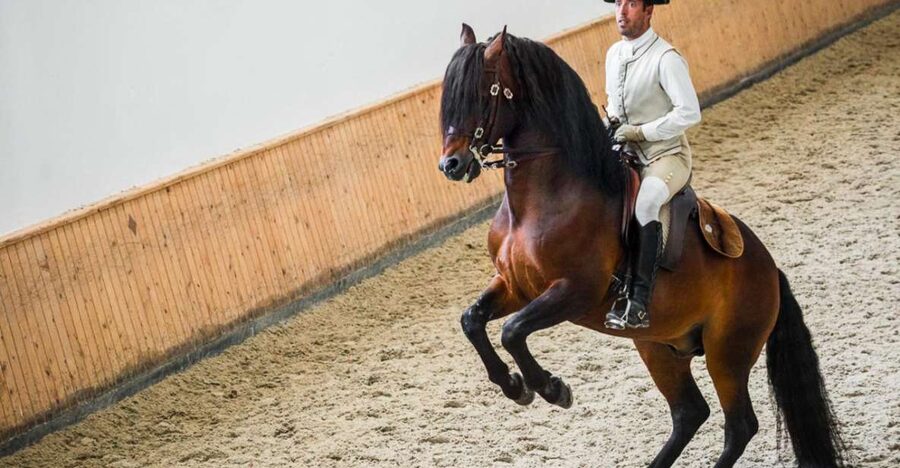
- warm-up and resourcefulness exercises by riders in period costume
- training and rehearsals of complex Equestrian Art exercises
- horse care observations at Henrique Calado Riding Ring
That combination of stable observation plus rehearsal viewing is hard to replicate on your own unless you are already comfortable navigating the equestrian schedule.
You also get an audio guide included. Many similar experiences either charge extra for commentary or provide minimal guidance. Here, the audio guide is part of the package.
The one value caution is time. The activity runs 10am to 1pm, and the best window is 11am to 12:30pm. If you only have one morning slot and you show up late, you might compress the experience more than you want. Still, at this price, you are paying for real access to training, not just atmosphere.
Practical tips before you go (and what to avoid)
This experience is straightforward, but a few small choices make a big difference.
Wear comfortable shoes. You are spending time in and around stable and ring areas, and you likely will not be sitting much.
Bring headphones. Headphones are not listed as included, so plan to use your own wired or Bluetooth option. Also, make sure your smartphone is charged and you have internet access, because the instructions indicate you will download access and the audio guide via email.
No flash photography is explicitly not allowed, and photography is listed as not included. That means you should assume there may be restrictions on cameras overall. If you want photos, keep it simple, avoid flash, and follow staff directions.
Plan for a morning pace. The activity is scheduled from 10am to 1pm, with the best time 11am to 12:30pm. If you can choose, build your day around that.
Ticket and contact rules matter. You will need to show a Book N Tour paper ticket at reception. The instructions also say it is not your ticket if you only show a GetYourGuide QR code or voucher. And you should have at least one working number via WhatsApp or email so the provider can reach you if needed. Since you will receive an email with further instructions, check spam folders too.
Also avoid smoking and alcohol and drugs, since those are listed as not allowed.
Who this Lusitano training experience suits best
This is a good fit if you enjoy animal-centered experiences with structure. You will get time watching horses being cared for and trained, not just walked past for a quick look.
It also suits travelers who like authenticity. Period costumes and court-like settings are part of the experience, but the heart of it is training: rhythm, health, and repeated exercises.
If you are traveling with family, it can work too, as long as kids can handle a quiet training-style morning. It is not a thrill ride. It is a craft observation.
Where it may disappoint: if you are expecting a super chatty live guide at every moment, adjust your expectations. The audio guide is a core part of the experience, and you should plan to rely on it.
If you hate walking or standing for long periods, you might find the ring and stable segments tiring. Comfortable shoes become non-negotiable.
And if you want heavy photography or lots of action close-up, you will need patience. The rules are clear about flash, and photography is not included, so this is more about seeing and learning than capturing content.
Should you book this Portuguese Riding School training in Lisbon?
Book it if you want a Lisbon experience that feels specific and grounded in real work. You get a smart mix: stable access at Henrique Calado Riding Ring, warm-up and resourcefulness exercises with Lusitano horses, and rehearsals for the Portuguese School of Equestrian Art in a court-style setting.
Skip it or choose something else if you are seeking a full, high-energy performance only, or if you strongly prefer lots of live guide talk and extensive extra stable time. This is a training-focused morning with a tight schedule.
One last practical recommendation: aim for 11am to 12:30pm, bring headphones, and treat the audio guide as your best friend. With that approach, $17 feels like you are paying for access to craft, not just a ticket.
FAQ
How long is the Portuguese Riding School training experience?
It runs for a morning window from 10am to 1pm. The information you receive notes that 11am to 12:30pm is the best time to visit.
What is included in the ticket price?
You get an entry ticket to The Portuguese School of Equestrian Art, watching daily training of Lusitano horses from the Alter Real Stud Farm, and an audio guide.
Do I get an audio guide, and what languages are available?
Yes. The audio guide is included and is available in English, Portuguese, and French.
What should I bring with me?
Bring comfortable shoes, headphones, a charged smartphone, and internet access. You also need to be able to access any ticket and audio guide instructions sent to your email.
Is flash photography allowed?
No. Flash photography is not allowed.
Where and how do I show my ticket?
You must show your Book N Tour ticket (paper) to staff at the reception desk. The instructions say it is not your ticket if you only have a GetYourGuide QR code or voucher.
On Horseback Around Lisbon, Other Rides


Newly added around Lisbon
- Charming Sintra on Private Guided Tour with History (All Day)
★ 5.0 · 38 reviews - Setubal & Comporta Trip with Horseback Riding from Lisbon
★ 4.5 · 38 reviews - 2H Private Sailing Catamaran “Vertigo” Tour in Lisbon up to 18pax
★ 5.0 · 38 reviews - Private Open Top Coastal Tour with Coffee Included
★ 5.0 · 38 reviews - Lisbon Oceanarium and Belém and Modern Lisbon bus Hop On Hop Off Tours 48h
★ 3.5 · 38 reviews - Lisbon Cruise Port Private Transfer to/from Lisbon Airport
★ 4.5 · 38 reviews - Private Lisbon Wine & Tile Painting Tour – Sesimbra & Traditions
★ 5.0 · 38 reviews - City of Neighborhoods Tour 1H 30M Private Tour by Tuk Tuk
★ 5.0 · 38 reviews - Romantic Private Sailboat in Lisbon for couples
★ 5.0 · 38 reviews - City Highlights Eco Tuk Tours
★ 4.8 · 38 reviews
Other boats, other operators: Horses.
 ★ 5.0Algarve: 1-Hour Carrapateira Horseback Riding TourFrom $82295 reviews
 ★ 4.7From Albufeira: Horse Riding Tour with PickupFrom $78202 reviews
 ★ 4.5Horse Riding on the BeachFrom $98171 reviews
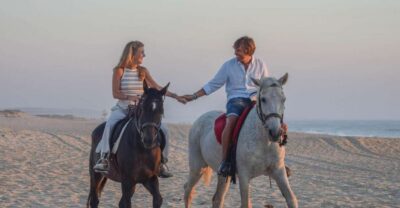 ★ 4.7From Lisbon: Horseback Riding on Comporta BeachFrom $165167 reviews
 ★ 5.0Algarve: Horse Riding Beach Tour at Sunset or MorningFrom $165155 reviews
 ★ 5.0Bordeira Beach – Horse Riding Tour at SunsetFrom $169133 reviews
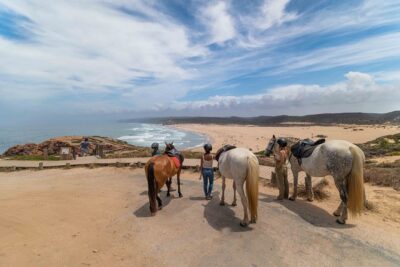 ★ 5.0Welcome to Carrapateira Horse Riding TourFrom $84124 reviews
 ★ 4.3Melides: Horse Riding on the Beach with Wine TastingFrom $100117 reviews
Filed under