
REVIEW · CITY TOURS
Lisbon Private Tour – The best introduction to the city
Lisbon clicks into place fast on this walk. You get a guided half day through Alfama and Mouraria, two neighborhoods that show how Lisbon layers faith, food, and fado into the same street corners.
I like that you are not just sightseeing, you are learning how the city is built and why these spots matter.
What I really love is the mix of major landmarks and small, story-heavy stops that make the streets feel understandable, not random. I also like the way the tour uses viewpoints like Portas do Sol and Santa Luzia to teach you Lisbon’s shape as you go.
One thing to consider: it is a focused walking tour, about three hours, and food or drinks are not included. So you’ll want water and a plan for timing if you are pairing it with a meal later.
In This Review
- Key highlights worth planning around
- Lisbon’s best first-day choice: Alfama and Mouraria, in a smart order
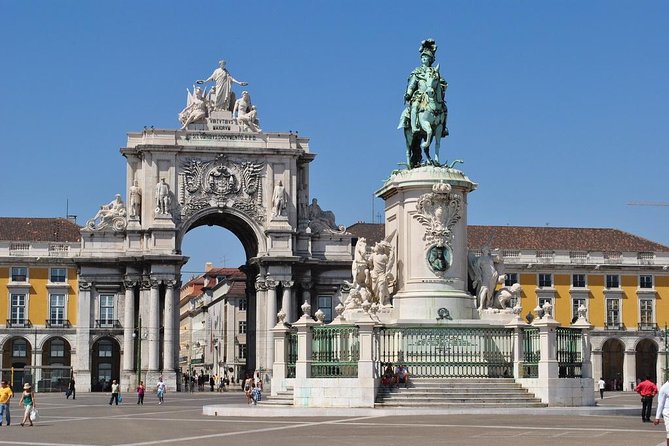
- Beginning at Praça do Comércio, then walking into the city’s memory
- Nossa Senhora da Conceição Velha and Casa dos Bicos: Lisbon’s layered faith and art
- Lisbon Cathedral and the church tied to Saint Anthony: how Lisbon rebuilt itself
- Alfama streets and the viewpoints that teach you the city’s layout
- Calçada da Amália and Mouraria: fado becomes a street-level story
- Price and value: when $181.48 makes sense for up to six people
- What the guides do right, and what you can ask for
- How to plan your day around this 3-hour walk
- Should you book Lisbon Private Tour: The best introduction to the city?
Key highlights worth planning around
- Praça do Comércio start, with an instant orientation boost so you know where you are in relation to the rest of the day
- Churches layered on older sites, including a 16th-century church built on the place of an old synagogue
- Manueline architecture at Casa dos Bicos, plus a stop tied to José Saramago’s legacy
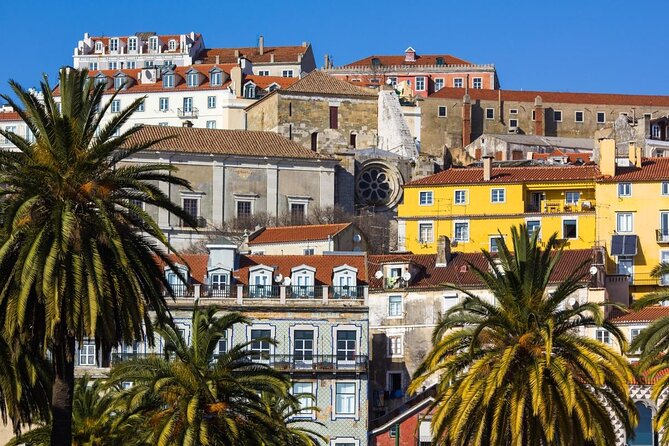
- Big-sky viewpoints built into the route, like Portas do Sol, Santa Luzia, and Graca
- Fado culture on the ground level, with stops in Mouraria that explain how the neighborhood formed
- Private guide energy, and the chance to get small course corrections for what you care about
More whole-city loops around Lisbon we have ridden
- Lisbon City Center Tour – The Unmissable Lisbon★ 5.0 · 22,234 reviews
- Lisbon: Daytime/Sunset/Night City Sailboat Tour with Drink★ 4.9 · 3,114 reviews
- Lisbon: City Highlights and Viewpoints E-Bike Tour★ 4.9 · 1,556 reviews
- Lisbon: Private City Tour by Eco Tuk Tuk★ 4.9 · 1,215 reviews
Lisbon’s best first-day choice: Alfama and Mouraria, in a smart order
If Lisbon is your first time, you want something that helps you stop feeling like you are just wandering uphill and hoping for a good view. This tour does that. It strings together key sights in Alfama and Mouraria in a way that builds a mental map fast, so later when you return on your own, the streets feel connected.
Alfama is Lisbon’s oldest neighborhood, and it shows. Mouraria is the other half of the story, tied to Moorish influence after the Christian conquest, with fado culture growing from the area’s identity. Walking both in one go means you are not stuck choosing between “the scenic side” and “the cultural side.” You get both, and you learn how the city’s changes are written into the buildings.
Beginning at Praça do Comércio, then walking into the city’s memory
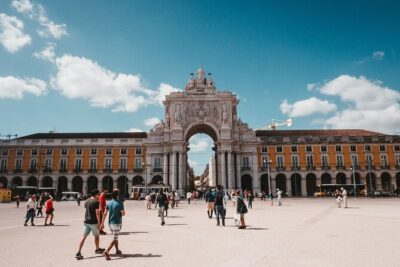
You start at Praça do Comércio, Lisbon’s huge, iconic square. It is a strong starting point because it gives you a sense of scale. You can feel how Lisbon looks when it is thinking big and ceremonial, before the narrow streets of the older quarters take over.
From there, the tour turns toward places where history is not in a museum, it is built into the neighborhood. You’re not just passing by churches and squares. Your guide connects them, explaining why certain spots exist where they do, and how Lisbon kept replacing one layer with another.
This is also a practical advantage. If you are used to cities where the “old town” begins immediately, Lisbon can feel like it is all hills and curveballs. Starting in a wide-open public space and then narrowing in helps you pace yourself. Your brain follows the route, instead of losing the thread.
Nossa Senhora da Conceição Velha and Casa dos Bicos: Lisbon’s layered faith and art
One of the standout early stops is Igreja de Nossa Senhora da Conceição Velha. The key detail is that it was built on the place of an old synagogue back in the 16th century. That one fact changes how you look at the church. It is not only a pretty façade, it is a marker of how communities and power shifted over time.
It’s the kind of stop that makes the tour feel more like a guided explanation than a checklist. Even if you are not into architecture theory, your guide’s commentary gives you the “why” behind what you see.
Next comes Casa dos Bicos, known for its Manueline style and its unique look, with Jose Saramago’s Foundation tied to the site today. This is where the day gets a little more modern without losing its historical roots. You see a former palace form and then learn how Lisbon also preserves its creative voice through literature and public cultural spaces.
If you like cities that explain the connections between art, religion, and politics, these two stops do a lot of work for relatively little time.
Lisbon Cathedral and the church tied to Saint Anthony: how Lisbon rebuilt itself
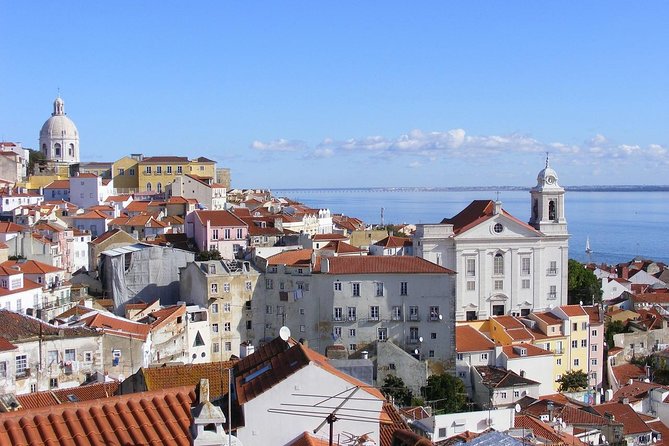
Lisbon Cathedral is a strong point for first-timers because it tells you how long the city has been making itself again. It’s the oldest church in Lisbon, and it was built on the place of an old mosque. That moment of time layering is the whole theme of the route, and it lands right here.
Right near this area, you also visit a Roman Catholic church that marks the place where Saint Anthony of Lisbon was born. Even without getting lost in religious details, it helps you understand why certain saints and stories shaped Lisbon’s identity. When you later hear people talk about Saint Anthony in Lisbon, you can place the reference in real space, not just in a guidebook paragraph.
There is a small nearby fountain stop as well, built in the 14th century. It is quick, but that kind of stop matters. It is a reminder that historic Lisbon is not only grand monuments. It is also the everyday elements people used and touched for centuries.
More private, just-your-group bookings in Lisbon we have reviewed


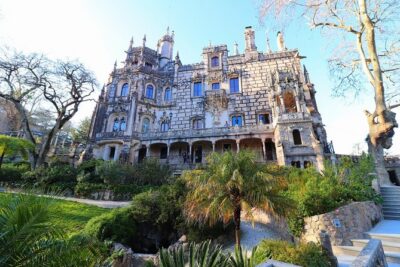
Alfama streets and the viewpoints that teach you the city’s layout
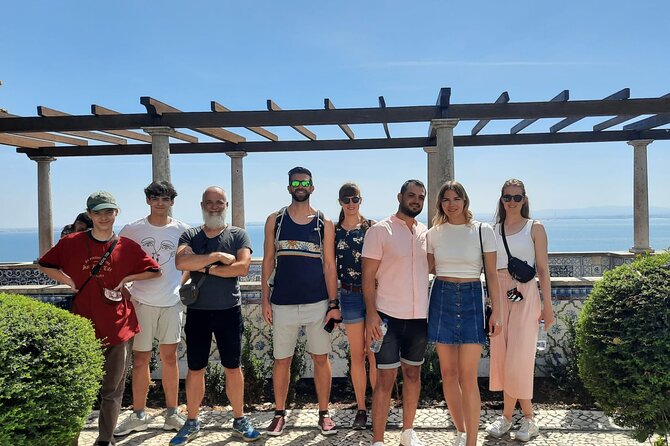
After the cathedral zone, you spend time walking around Alfama itself. This is the neighborhood where Lisbon’s age becomes visible: twisting streets, tight corners, and that constant feeling that the city is both slow and dramatic at the same time.
Your guide gives the walk purpose. You’re not just collecting photos. You’re learning how to read the place while moving through it.
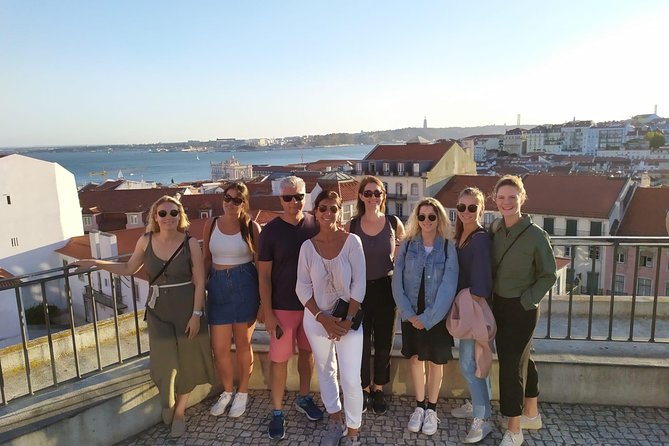
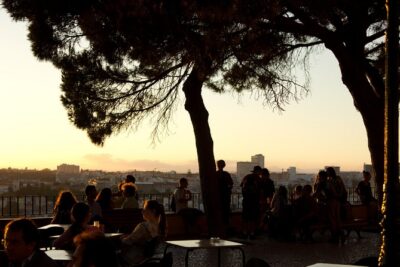
Then the route shifts into what I consider the best teaching method Lisbon offers, viewpoints. You visit Miradouro das Portas do Sol, one of the city’s most famous panoramas. Then you continue to Miradouro de Santa Luzia, set in a square and connected to the view from the back of Santa Luzia’s church.
Here’s why this matters for your trip. A good viewpoint stops you from getting “view fatigue,” where every stop looks the same. By hitting Portas do Sol and Santa Luzia in sequence, you get different angles and you start to understand which hills and districts sit where. After that, exploring on your own feels less like guesswork.
If you are the type who likes to ask, where exactly is this in relation to that, your guide’s explanations will pay off immediately during these panorama minutes.
Calçada da Amália and Mouraria: fado becomes a street-level story
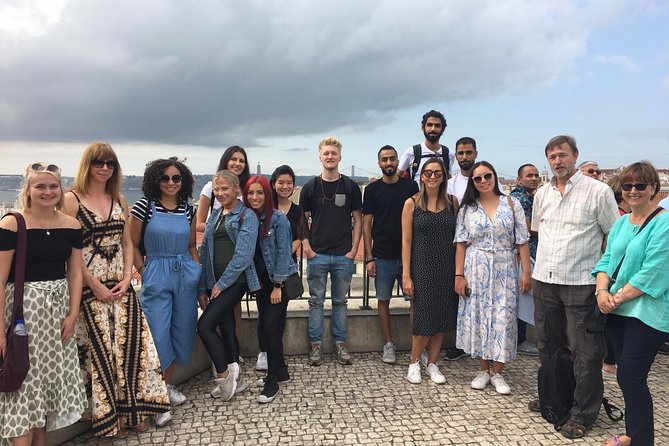
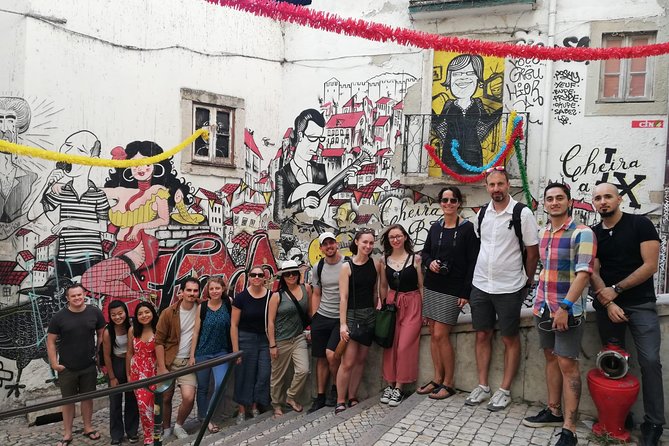
Not every Lisbon “fado stop” is a museum or a staged performance. This route gives you a more grounded view of the culture, starting with Calçada da Amália. You get a quick, visual moment at this famous street pattern that features the face of Amália Rodrigues, often described as the Queen of Fado.
It’s short, but it’s memorable because it turns a music legend into something you can see under your feet. It also helps explain why Lisbon’s neighborhoods are tied to song in the first place.
Then you move into Mouraria, with time to walk its streets and understand how the neighborhood was shaped by Moors after the Christian conquest. Your guide connects the neighborhood’s origin story to the area’s reputation for fado, and you end up seeing Mouraria as more than a “where to take a nightlife photo” area.
A key stop here is Monumento Mouraria Berço do Fado, positioned as a symbolic point for the neighborhood’s identity. It’s the kind of landmark that can look like just another sculpture until you understand what it represents and why it is placed where it is.
You also finish by reaching Praça da Figueira, a famous square built on the site of what used to be the biggest hospital in Lisbon. That detail adds a final layer to the walk. It’s not only about legends and viewpoints. Lisbon also remembers daily life, health, and public institutions in its urban footprint.
Price and value: when $181.48 makes sense for up to six people
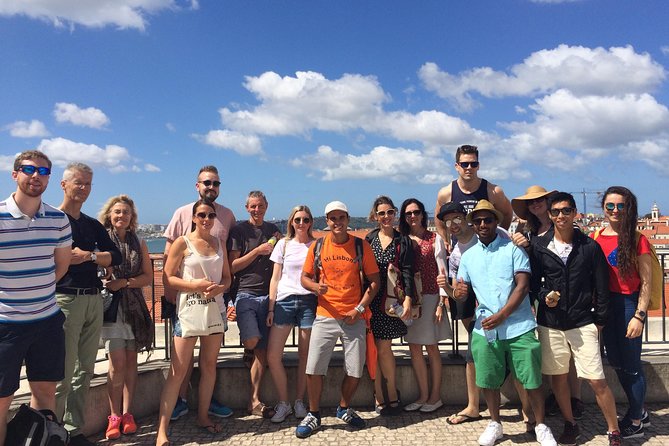
At $181.48 per group (up to 6), this is priced like a true private tour, not a seat on a bus tour. The best value comes when you actually fill the group size. If you go with a full group of six, you can think in rough terms of about $30 per person for a 3-hour guided orientation through some of Lisbon’s most meaningful older neighborhoods.
Even if you do not fill all six spots, it can still be worth it if you want:
- a guide who can adjust the pace and focus
- a tight route that hits big landmarks and the softer, local-feeling moments
- fewer wasted hours trying to piece together where to go first
I also like that the tour is in English and comes with a mobile ticket. That reduces friction when you are juggling other plans.
There is one more practical angle. This tour is booked fairly far in advance on average, so if you have fixed dates, you’ll be glad you booked early. That matters most in peak travel months, when your options shrink.
What the guides do right, and what you can ask for
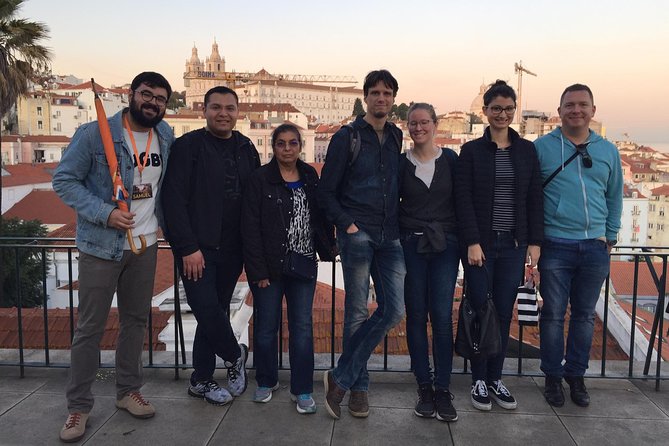
One of the most praised aspects of this tour experience is the guide quality. Guides like Sarah, Sara, Clayver, and Keiber are repeatedly described as engaging, insightful, and flexible with what groups need. The common thread in that feedback is simple: the explanation is clear, and the pacing respects the places you are actually walking through.
That matters because Alfama and Mouraria can be confusing if you arrive with only general ideas. A strong guide helps you avoid two common mistakes:
1) stopping only for photos and missing the meaning of what you see
2) walking too fast through viewpoints and missing the explanation that makes them memorable
If you want to get the most out of your guide time, ask a question at the start. Something like, what would you do in the next two days after this walk? Or, which streets here feel most local and least like the main tourist routes? You will likely get advice that goes beyond the official stops.
How to plan your day around this 3-hour walk
Because this is a half-day experience, plan it when you are not rushing between far-apart activities. Starting near Praça do Comércio means you can often connect it with other central Lisbon plans. Ending at Praça da Figueira also sets you up well for further exploring without needing a long transit shuffle.
Food and drinks are not included. So treat this like a walking tour with a sightseeing goal, not like a full day out. Bring water, and think about a nearby meal afterward rather than during the tour.
Also remember you are out for about three hours, private, and only your group joins. That helps if you travel with family or friends who want to talk, stop briefly, or go at a calmer pace. It can feel less like a production and more like a guided afternoon.
Should you book Lisbon Private Tour: The best introduction to the city?
If you want Lisbon to feel coherent on day one, book it. This is a strong choice because it focuses on Alfama and Mouraria in a route that builds your bearings fast. You get major landmarks like the cathedral and Praça do Comércio, plus viewpoint time that makes the city’s layout click. You also get culture that is not only staged, it is embedded in streets and squares.
I would skip it only if you already know Lisbon well and you hate guided walks, or if you prefer a longer day with more time for rest and meals. Otherwise, for first-timers, couples, and small groups who want value from a great private guide, this is a practical, high-impact introduction.
If you can only do one guided orientation, this is the one I’d bet on.
Other Days Out Around Lisbon




Nobody Else Aboard, Other Private Lisbon Bookings



Whole-City Loops of Lisbon, More Routes



Newly added around Lisbon
- Lisbon: Street Art Walk
★ 5.0 · 79 reviews - From Lisbon: Nazare Big Waves and Óbidos Guide Day Trip
★ 4.7 · 79 reviews - Small Group Walking Tour of Belém
★ 4.9 · 80 reviews - Lisbon: Regaleira, Sintra, Cape Rock & Cascais Day Trip
★ 4.6 · 80 reviews - Lisbon: Evening Local Food Crawl with Drink Pairings
★ 4.6 · 80 reviews - From Lisbon: Sintra and Portuguese Coast Private Day Tour
★ 5.0 · 80 reviews - Lisbon: Authentic Fado Show, Dinner and Night Tour
★ 4.6 · 80 reviews - Golden Hour Boat Tour – Sailing by the Monuments with Wine
★ 5.0 · 81 reviews - Hard Rock Cafe Lisbon with Set Lunch or Dinner
★ 4.0 · 81 reviews - Fado Musical Experience with Portuguese Wine & Appetizers
★ 4.5 · 81 reviews
Other boats, other operators: City Tours.
 ★ 5.0The Unvanquished Tour in Porto City CenterFrom $326,497 reviews
 ★ 5.0Lisbon City Center Tour – The Unmissable LisbonFrom $322,234 reviews
 ★ 4.9Lisbon: Daytime/Sunset/Night City Sailboat Tour with DrinkFrom $413,114 reviews
 ★ 4.8Porto: City Highlights 3-Hour Guided Electric Bike TourFrom $513,092 reviews
 ★ 3.9Porto: City Train Tour, River Cruise & Wine CellarFrom $432,601 reviews
 ★ 4.0Porto: City Sightseeing Hop-On Hop-Off Bus TourFrom $312,588 reviews
 ★ 4.8Porto: 3-Hour Guided City Highlights Walking TourFrom $342,050 reviews
 ★ 4.9Lisbon: City Highlights and Viewpoints E-Bike TourFrom $291,556 reviews
Filed under