
REVIEW · PORT WINE CELLARS IN VILA NOVA DE GAIA
Porto: Graham’s Port Lodge Tour and Port Essentials Tasting
Port wine history sits in the middle of Porto’s skyline. This Graham’s Port Lodge tour takes you through the 1890 Graham’s Lodge in Vila Nova de Gaia, plus you get bold, memorable views of Porto and the iconic two-tier bridge. If you like seeing where something is actually made, not just where it is sold, this works.
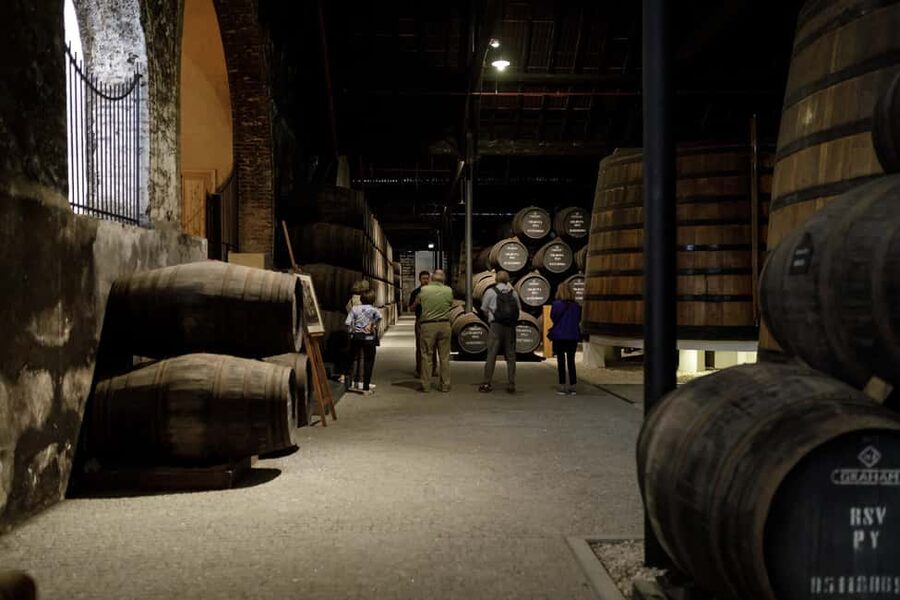
I especially like two things: the working cellar setting, and the 4-Port tasting that covers different styles so you can compare with your own palate. You’ll walk through the cellar spaces with over 2,000 pipes and 40 large oak vats, then taste four Ports side by side with food pairings.
One thing to keep in mind: this is a focused 2-hour experience, so if you want a long, slow hangout with zero structure, you may feel the pace a bit “tour mode.”
In This Review
- Key points I’d bet on
- Entering Graham’s Lodge, with the Douro River in view
- Getting to Rua do Agro 141 and finding the right entrance
- The guided cellar tour: 1890 history you can actually stand in
- Production process secrets, explained in a working cellar
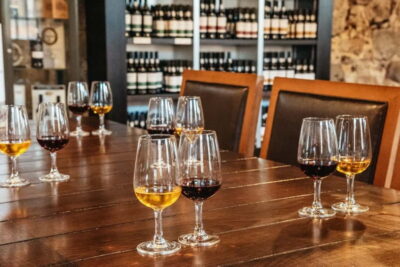
- Your Port Essentials tasting: 4 bottles, real comparison, and food pairing
- Spectacular Porto views and the two-tier bridge photo moment
- Time, pace, and what 2 hours really feels like
- Price and value: what $53 buys you in the real world
- Who this tour is best for (and who might skip it)
- Shopping after the tasting: how to buy without stress
- Should you book the Graham’s Port Lodge Tour and Port Essentials?
- FAQ
- How long is the Graham’s Port Lodge Tour and Port Essentials tasting?
- What Port wines are included in the tasting?
- Is transportation included?
- Where is the meeting point?
- What languages is the live guide available in?
- Can I cancel for a refund, and are pets allowed?
Key points I’d bet on
- 1890 Graham’s Lodge in Vila Nova de Gaia, still operating as a real cellar
- Over 2,000 pipes and 40 oak vats of aging Port wine you can see during the tour
- 4 tasting pours across styles, including a white blend, a Six Grapes, a Vintage Port, and a 30-Year-Old Tawny
- Views built in, with Porto’s historic center and the two-tier bridge in your photo rotation
- A guide can make or break it, and names like Max show up as examples of guides who bring the history to life
More Gaia lodges and port tastings we have sat down for in Vila Nova De Gaia
- Porto: Taylor’s Port Cellars & Tasting★ 4.6 · 3,374 reviews
- Vila Nova de Gaia: Port Wine Tasting with Cheese Pairing★ 4.8 · 1,074 reviews
- Porto: 6 Bridges Port Wine River Cruise with 4 Tastings★ 4.9 · 586 reviews
- Porto: Fonseca Cellar Tour & Fado Show with Optional Dinner★ 4.5 · 362 reviews
Entering Graham’s Lodge, with the Douro River in view
This tour starts where Porto and Gaia feel like neighbors instead of two separate places. You’re on the Gaia side, in Vila Nova de Gaia, across the Douro River from Porto. The lodge is built on a ridge, and you can feel that elevation when the tour starts to look outward toward the city.
What I like about choosing this type of visit is that you get the “made here” factor. You’re not just tasting in a tasting room. You’re walking through a place that was built in 1890 and still functions as a cellar today. That turns the Port story from something abstract into something physical, from the architecture to the aging barrels and the way the guide explains how things move from production to aging.
And yes, you also get the scenery. Expect big views of Porto’s historic center, plus the iconic bridge that links Oporto and Gaia.
Getting to Rua do Agro 141 and finding the right entrance
You meet at Rua do Agro 141. It’s helpful because Graham’s has two entrances, and the one you use depends on what you’re there for.
For the guided tour, go to the Graham’s Port Lodge Reception. That matters because you do not want to wander into the wrong doorway and lose time. This is a two-hour experience, so every minute counts.
Also, plan for the fact that transportation is not included. You’ll be responsible for getting yourself to the lodge at Rua do Agro 141. If you’re already in Gaia, that’s straightforward. If you’re in Porto proper, it’s worth checking how you’ll cross and budget a little extra time so you arrive comfortably before the start.
The guided cellar tour: 1890 history you can actually stand in
Once you’re in, the guided portion is designed to answer two big questions: where Graham’s came from, and what Port production looks like inside a real working cellar.
You’ll learn about the history of the 1890 Graham’s Lodge, including what “built on a commanding ridge” means in practical terms. In other words: the location isn’t just aesthetic. It’s part of how the cellar operates and how the lodge became a key stop for aging wine over long periods.
Then you move through the spaces where you can see the scale of the operation. The tour notes call out buildings currently housing over 2,000 pipes (oak casks) and 40 large oak vats for aging Port wine. Even if you are not a wine nerd, that number does something. It makes Port feel less like a single bottle and more like a long-running system.
What you’ll get from this stop: a sense of how tradition and logistics live side by side in Port making. You learn the process and then you immediately see the containers and the aging environment the process depends on.
Production process secrets, explained in a working cellar
Port has a reputation for being complicated, and some tours lean too hard on buzzwords. This one keeps it grounded by focusing on the production process inside the cellar you’re walking through.
The tour is set up so the guide can connect what you’re seeing to the steps behind Port wine, from how grapes become Port to how aging works in oak. The tour information also points out the breadth of the aging space, including extensive cellars of Vintage Port.
That Vintage Port detail is valuable because it helps you understand why Port isn’t just one style. When a cellar has dedicated spaces for Vintage Port, it signals that the wine has specific timing and aging needs. It’s a quick lesson, but it helps you make sense of what you’ll taste later.
Other Vila Nova De Gaia tables and tasting stops we have worked through
Your Port Essentials tasting: 4 bottles, real comparison, and food pairing
The tasting portion is the heart of why most people book this tour, and it’s also where you can decide if Port clicks for you.
You’ll taste four Ports:
- Graham’s Blend Nº5 White
- Graham’s Six Grapes
- Graham’s Quinta dos Malvedos Vintage Port
- Graham’s 30-Year-Old Tawny
I like that the lineup is not random. It gives you a sweep across styles: a white Port, a blend built from multiple grapes, a named Vintage Port from a specific Quinta, and an aged Tawny style. That makes the comparison easier because you’re not trying to judge four similar profiles back to back.
Also, the tour includes food pairings with the tasting. That’s worth paying attention to because it changes how the flavors read. Sweet and aged wines can either feel overpowering or balanced depending on what they’re paired with, and the pairing is part of how the guide wants you to experience the differences.
One practical note: this is a guided tasting with included pours. Snacks are not included as a general extra, though you can purchase snacks on site. If you tend to get hungry, plan to eat before you go, because you want to enjoy the pairing, not fight low energy.
Spectacular Porto views and the two-tier bridge photo moment
Porto is all angles. From Gaia, those angles sharpen. The tour specifically calls out spectacular views of Porto’s historic city center and the two-tier bridge that connects Oporto and Gaia.
You’re not stuck staring at a wall while someone explains wine. The tour’s design gives you moments to look out, and that helps the whole experience feel like more than just a tasting appointment. The bridge is an instant landmark, so even if you’re not obsessed with architecture, you’ll have a clear “there it is” moment for photos.
If you’re planning your day, I’d aim for decent daylight so you can enjoy the views. You don’t control the weather, but you can control what time you show up.
Time, pace, and what 2 hours really feels like
The duration is 2 hours, so the experience is tight and efficient. That’s not a bad thing. In fact, it’s part of the value. You get history, production context, a tasting, and the key viewpoint elements without losing half a day to a slow program.
But it does mean you should go in ready to pay attention. The guide is there to connect the visual details of the cellar to the four Ports you’ll drink. If you zone out, you’ll still taste great wines, but you’ll lose the “why this tastes the way it does” portion.
Price and value: what $53 buys you in the real world
At about $53 per person, you are paying for two things at once: guided access to a historic working cellar and a structured tasting of four Ports (with food pairings).
What makes this reasonable is that it is not just one wine. You sample a white Port, a multi-grape blend, a Vintage Port, and a 30-Year-Old Tawny. That range helps you figure out what you genuinely like, which is usually the best outcome of a tasting tour. If you only drink one style, you can walk away unsure. If you taste four with guidance, you leave with an opinion.
Also, the setting is part of the value. Being inside the Graham’s Lodge built in 1890, surrounded by the actual scale of aging vessels, is not the same as standing in front of a display of bottles. The guided cellar portion is doing real work for your understanding.
Who this tour is best for (and who might skip it)
This experience suits you best if:
- you want Port context, not just a sip
- you like historic sites that are still in use
- you enjoy comparing styles and learning what you like
- you care about the views as part of the story, not as a random bonus
It may not be the best match if:
- you want a longer, unstructured tasting session with no schedule
- you do not enjoy listening to guided explanations during a cellar walk
Shopping after the tasting: how to buy without stress
There is time for shopping at the end. That’s normal for these tours, and it can be a plus if you know what you want.
If you’re buying for gifts, this is an advantage because you tasted different types already. You can decide whether you prefer the approachable style of a blend, the more serious direction of a Vintage Port, or the softer, aged character of a 30-Year-Old Tawny.
If you want to keep it simple, I’d base your purchase on the last two tastings you enjoyed most. The last pours often leave a strong impression, and buying based on that helps avoid the classic travel mistake of going home with something you bought out of momentum.
Should you book the Graham’s Port Lodge Tour and Port Essentials?
If you like practical value, this one makes sense. For $53, you get a guided tour in an 1890 working cellar, you see the scale of aging vessels, you taste four Ports with food pairings, and you get Porto and the two-tier bridge in the same 2-hour window.
Book it if you want Port in context and you enjoy cellar tours that explain what you’re drinking. Consider skipping if your priority is purely scenic time or purely relaxation, because the experience is structured and timed.
If you do book, do this one thing for the best payoff: treat the tasting like a comparison exercise. Pay attention to how each wine changes, and use the guide’s explanations to connect what you taste with what you saw in the cellar. That’s when the experience really clicks.
FAQ
How long is the Graham’s Port Lodge Tour and Port Essentials tasting?
The experience lasts 2 hours.
What Port wines are included in the tasting?
You taste 4 Ports: Graham’s Blend Nº5 White, Graham’s Six Grapes, Graham’s Quinta dos Malvedos Vintage Port, and Graham’s 30-Year-Old Tawny.
Is transportation included?
No. Transportation is not included.
Where is the meeting point?
The starting location is Rua do Agro 141. For the guided tour, you should go to Graham’s Port Lodge Reception.
What languages is the live guide available in?
The live tour guide offers Spanish, French, and English.
Can I cancel for a refund, and are pets allowed?
You can cancel up to 24 hours in advance for a full refund. Pets are not allowed, but assistance dogs are allowed.
Tables and Tasting Stops Across Vila Nova De Gaia


Other Days Out Around Vila Nova De Gaia


Gaia Port Lodges, More Tastings We Sat Through


Newly added around Vila Nova De Gaia
- Porto: Graham’s Port Lodge Tour and Port Essentials Tasting
★ 4.9 · 39 reviews - Porto: Classic Sailboat Cruise Along the Douro River
★ 5.0 · 99 reviews - Porto: The Authentic Fado Concert with Port Wine
★ 4.9 · 188 reviews - Porto: Combined Ticket for WOW Cultural District
★ 4.7 · 188 reviews - Porto: Port Cellar Visit and Wine Tasting at Fonseca
★ 4.2 · 232 reviews - Porto: Fonseca Cellar Tour & Fado Show with Optional Dinner
★ 4.5 · 362 reviews - Porto: Luxury Yacht Tour of the 6 Bridges and Douro Estuary
★ 4.9 · 521 reviews - Porto: 6 Bridges Port Wine River Cruise with 4 Tastings
★ 4.9 · 586 reviews - Vila Nova de Gaia: Port Wine Tasting with Cheese Pairing
★ 4.8 · 1,074 reviews - Porto: Charming Sailboat Cruise with Port Wine,Sunset Option
★ 5.0 · 1,978 reviews
Other boats, other operators: Port Wine Cellars in Vila Nova de Gaia.
 ★ 4.8Porto: Live Fado Show with Glass of Port WineFrom $236,498 reviews
 ★ 4.7Lisbon: Live Fado Show with Port Wine in Historic CenterFrom $174,166 reviews
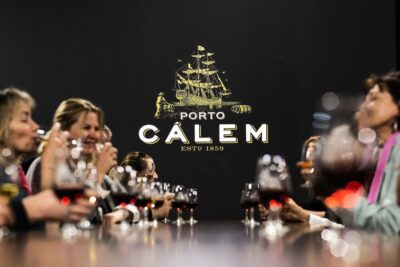 ★ 4.5Porto: Cálem Cellar Tour, Interactive Museum & Wine TastingFrom $234,113 reviews
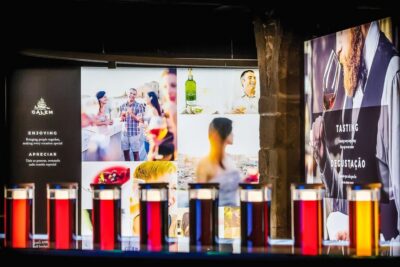 ★ 4.4Porto: Cálem Cellar Tour, Fado Show & Wine TastingFrom $333,530 reviews
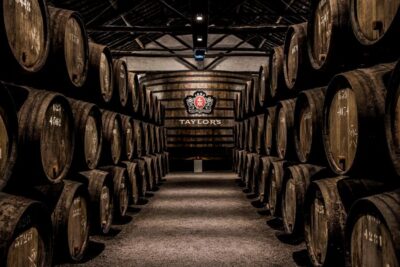 ★ 4.6Porto: Taylor’s Port Cellars & TastingFrom $293,374 reviews
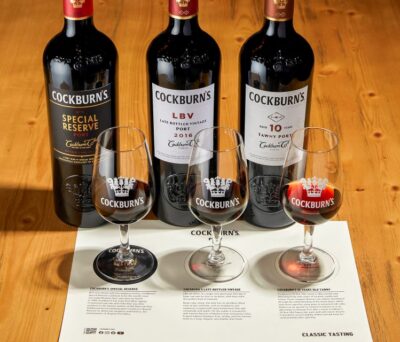 ★ 4.8Porto: Cockburn’s Port Lodge Tour and TastingFrom $353,360 reviews
 ★ 4.1Porto: Bridges Cruise with Wine Cellar Tour or Sunset OptionFrom $202,758 reviews
 ★ 4.8Porto: Authentic Fado Show, Port Wine & Handmade InstrumentsFrom $212,737 reviews