
REVIEW · HISTORICAL TOURS
Porto Guided Tour to the Historical Center on a Tuk Tuk
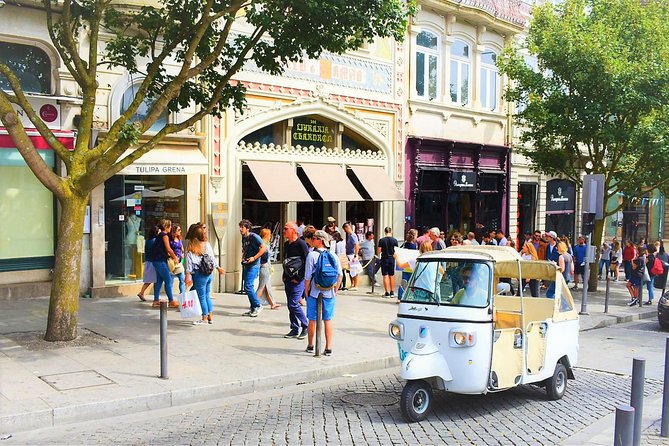
A two-hour tuk tuk loop is the fast track in Porto. You get a guided sweep through iconic buildings, old-city walls, and scenic viewpoints, with just enough time to step out and look around. Two things I like right away: tuk tuks handle narrow cobbled lanes well, and you also get a Port wine glass to make the history feel like a real evening in Porto.
You’ll likely love how the route mixes well-known hits with spots that are easy to miss on your own. If you end up with a lively driver, like Victor, Natalia, Anna, Ana, Bernardo, Gabby, Gonçalo, or Fabian, the commentary can turn a quick ride into a proper orientation. One possible drawback to plan for: the ride is short, so some stops are mostly photo time, and at least one guest noted it can be a bit hard to hear while you’re moving.
In This Review
- Quick Hits Before You Go
- Why a Tuk Tuk Works for Porto’s Tight Historic Streets
- Price and Time: Is $42.33 Worth It?
- Meeting Point Details and the Pacing Reality
- Teatro São João Area: From Burned Ruins to a Grand Facade
- Fernandina Wall: A Hidden Defensive Line You Can Feel
- Cathedral Zone: Romanesque Roots Plus a Modern Finish
- Pelourinho and the 1940 Changes: Local Power in Stone
- Paco Episcopal: A Quiet Facade With Bishop-Linked Details
- São Bento Station: 20,000 Tiles and One Simple Reason to Slow Down
- Praça Nova, Blacksmith Roots, and a War Memorial Thread
- Fonte dos Leões: A French-Cast Copy That Explains Porto’s Reach
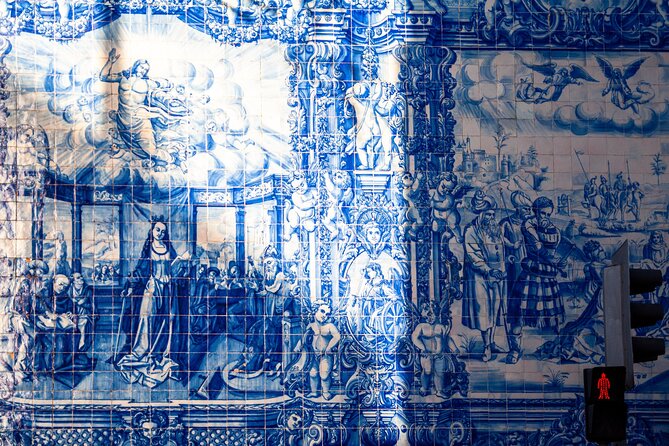
- Rococo Churches and Tile-Covered Sides: When Exterior Can Be the Main Show
- Cordoaria Garden (João Chagas Garden): A Rope-Maker Story in Green Form
- Clérigos Tower and the Baroque Skyline Effect
- Serra do Pilar Monastery: The View Stop That Resets Your Whole Trip
- Palácio da Bolsa and the Arabian Room Hint
- D. Pedro Statue and Lello Library: Two Stops With One Shared Theme
- Iron Market and Mercado Ferreira Borges Square: Porto’s Working Look
- São Francisco Church and Alfândega Nova: “Gold Interior” Energy
- Two Bridges and One Big Takeaway: Porto Is a River City
- Who This Tour Suits Best
- The Main Practical Tips That Make It Better
- Should You Book This Porto Tuk Tuk Tour?
- FAQ
- How long is the Porto guided historical center tuk tuk tour?
- How much does the tour cost?
- Is this tour private?
- Is port wine included?
- Are monument entrance tickets included?
- Is the tour offered in English?
- Where does the tour start?
- What if the weather is bad?
Quick Hits Before You Go
- Tuk tuk convenience for Porto’s tight, hilly old streets, with short on-foot breaks
- Port wine included, a small but memorable touch for the city
- A mix of big and lesser-seen stops, from cathedral area details to park and riverside views
- Multiple vehicles for larger groups, while still keeping the same stops and timing
- English guided experience with a mobile ticket
- View payoff at Serra do Pilar, a frequent favorite for getting your bearings
Other centuries-deep routes through Porto we have joined
- Douro Valley: Historical Sites, Wine Experience, Lunch & Cruise★ 5.0 · 5,133 reviews
- Porto: Historic City Center Walking Tour★ 4.7 · 1,172 reviews
- Porto: An Intimate Fado Show in a Historical Tavern★ 4.8 · 1,093 reviews
- Porto: Historical Center Walking Tour★ 4.8 · 898 reviews
Why a Tuk Tuk Works for Porto’s Tight Historic Streets
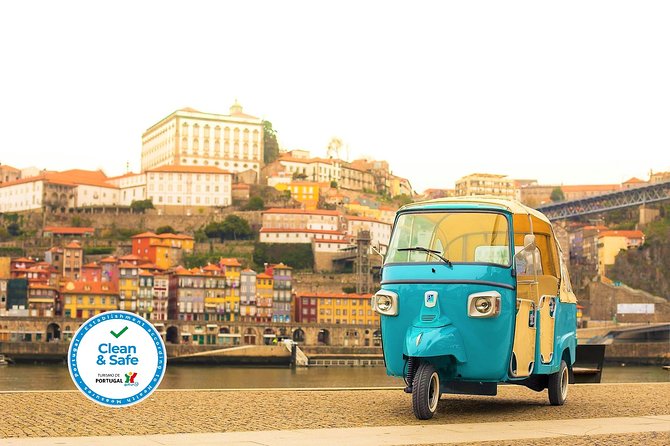
Porto is built for walking, but it can also be built against you, especially if you’re short on time or carrying sore legs. A tuk tuk tour solves that problem in a very Porto way: you glide through neighborhoods without fighting every steep street and slick cobblestone corner on foot.
The big practical win is flexibility. You can see a lot, get quick context from your driver, and then decide what you want to revisit later at a slower pace.
Price and Time: Is $42.33 Worth It?
At $42.33 per person for about 1 hour 50 minutes, this is priced like an efficient “orientation plus highlights” tour. You’re paying for transportation, a guide, and included Port wine, plus a curated route through the central historic area.
What you should factor in is that monument entrance tickets are not included. The schedule includes places where you might want to go inside, like the cathedral area or major churches. If you know you want to tour interiors, budget extra, or treat the stop as exterior views and then plan a separate visit later.
Meeting Point Details and the Pacing Reality
The tour meets at R. de Augusto Rosa 180, 4000-528 Porto, and it ends back at the same spot. Since the route can shift a bit due to local traffic, I suggest arriving a few minutes early and double-checking your map pin.
Pacing is the whole game here. Some stops are around 5 minutes, others get closer to 10 to 15 minutes, and the tuk tuk helps you cover ground quickly. This works best if you treat each stop like a guided “look, learn, photo, move” moment, not a museum visit.
Teatro São João Area: From Burned Ruins to a Grand Facade
The tour starts with a striking theater-related stop tied to the story of a site that dates back earlier, including the Real Theatre ruins and a later 1910 build. You’ll hear how the building’s details were designed with strong symbolism, and how the main facade draws inspiration from a renovation style linked to Luís XVI.
Why it matters for you: this is a fast way to understand how Porto layers eras on top of each other. Even before you reach the big squares and churches, you get the idea that the city keeps rebuilding itself, not just decorating.
Other guide-led outings in Porto we have booked

Fernandina Wall: A Hidden Defensive Line You Can Feel
Next up is a stop at the Muralha Fernandina do Porto, one of Porto’s most protected secrets. This is the medieval defensive wall built between 1368 and 1437, and the tour frames it as a key reminder of how the city protected itself.
For me, this is where the tour earns its “more than the postcard” label. Walls like this are hard to appreciate when you’re just passing by. Here, you get a bit of context, plus a chance to spot what a long line of stone looks like when you’re standing near it.
Cathedral Zone: Romanesque Roots Plus a Modern Finish
The Catedral do Porto stop focuses on the Romanesque base and the way the building expanded and changed across centuries. The tour also notes that the cathedral you see today reflects an idealized reconstitution of a medieval version, shaped by twentieth-century decisions.
If you’re the type who likes architectural evolution, this short stop can still hit hard. If you want to go inside for a longer look, remember entrances are not included.
Pelourinho and the 1940 Changes: Local Power in Stone
Near the cathedral area, you’ll see the Pelourinho monument tied to a national policy that led to demolitions around 1940. A paved terrace was built instead, and the stone monument placed there was constructed later, designed as a reproduction of an older drawing.
This is a great “wait, what?” moment for first-timers. It shows you how political change can reshape the physical center of a city, then leave a clue behind in the form of a monument.
Paco Episcopal: A Quiet Facade With Bishop-Linked Details
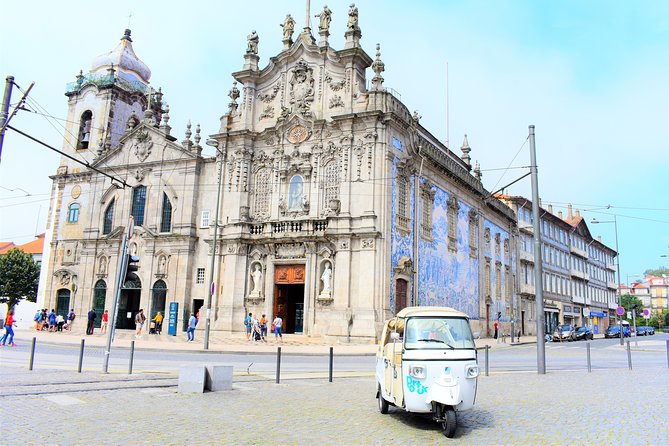
The Paco Episcopal stop is brief but specific. You’ll hear that it likely has roots in the thirteenth century, with remodeling in 1737 connected to Nicolau Nasoni. The facade description matters here: a large arch, flanking pilasters, decorated pediments, and a central window with stone balustrade.
What you get from a stop like this is a better eye. After this, when you see church-like structures around Porto, you’ll be more likely to notice who commissioned what, and when the city made upgrades.
São Bento Station: 20,000 Tiles and One Simple Reason to Slow Down
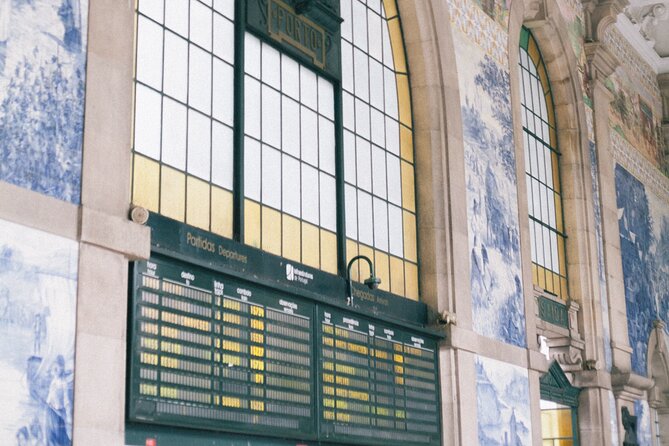
Sao Bento Railway Station is one of Porto’s signature interior scenes, and you’ll get a proper stop here. The station lobby is covered with narrative tiles by painter Jorge Colaço, with about twenty thousand tiles telling scenes as you move through the space.
Why this stop is such good value on a short tour: you do not need hours. Even if you only have time to stand still for a few minutes, the tiles are visual storytelling you can’t recreate with your camera later. It’s a “stop your feet and look” moment.
Praça Nova, Blacksmith Roots, and a War Memorial Thread
The tour then moves through a square area with a long timeline, starting with early eighteenth-century urban planning. You’ll hear how the area went from medieval walls and palaces to the creation of Praça Nova, then later became linked to blacksmith workshops when it was called Praça dos Ferradores.
You also get the Charles Albert of Sardinia connection, plus a monument in the garden honoring Portuguese who died in the Great War 1914-18. This is the kind of background that helps you read Porto as a lived-in city, not a museum set.
Fonte dos Leões: A French-Cast Copy That Explains Porto’s Reach
The Fountain of the Lions is a nineteenth-century fountain built by a French company, cast in France. It’s described as a copy, mostly, of a fountain in Leicester, England, which makes it a fun example of how Porto’s “local” art and infrastructure can be influenced by abroad.
If you like trivia that’s not useless, this is the kind of stop I enjoy. A quick fountain break can also refresh your legs before the church cluster later.
Rococo Churches and Tile-Covered Sides: When Exterior Can Be the Main Show
You’ll see two churches with strong rococo connections. One is tied to a classical facade and a Porto rococo-style altarpiece considered stylistically revolutionary. The other gets attention for a later addition of tile work on the lateral façade, with drawings attributed to Silvestre Silvestri and linked to the cult of Nossa Senhora.
Even if you do not enter, these stops can be worth it. Rococo in Porto is about detail, and tile work is a visual language you can read from the street. Just keep your expectations realistic: these are not long interior tours on this schedule.
Cordoaria Garden (João Chagas Garden): A Rope-Maker Story in Green Form
Cordoaria Garden is sometimes the best “breather stop” on this type of tour. You’ll learn it became a public garden after rope-making activity for about 200 years, and it was planned by German landscaper Emile David in the mid-1800s.
The statues you’ll notice include Ramalho Ortigão and António Nobre, plus later sculptures by Juan Muñoz added around Porto 2001, including O rapto de Ganímedes. This part works well because it’s a pause from architecture overload.
Clérigos Tower and the Baroque Skyline Effect
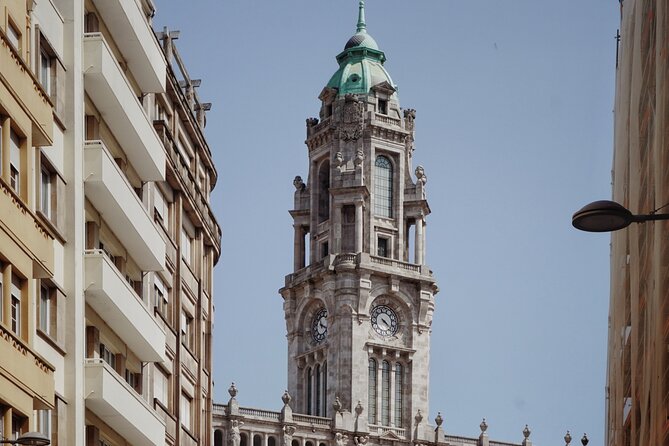
Torre dos Clerigos is the big baroque bell tower you can spot from many parts of the city. It’s one of Porto’s recognizable symbols, and the tour includes a short stop to see it and get oriented.
If you plan to come back later for photos, note this now. The stop is brief, but the tower is one of the quickest ways to start understanding Porto’s skyline and sight lines.
Serra do Pilar Monastery: The View Stop That Resets Your Whole Trip
This is the stop that keeps coming up as a favorite, especially for the viewpoint at Miradouro da Serra do Pilar in Vila Nova de Gaia. The monastery is a World Cultural Heritage site with a circular plan church and a dome surrounded by a balcony.
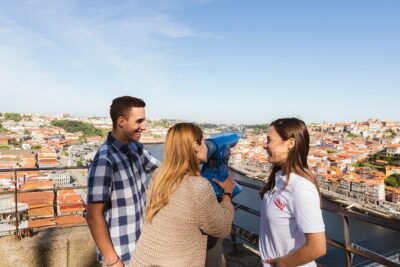
You’ll also hear details that make it feel specific, not generic, like the circular cloister with 36 Ionic columns, noted as the only example in Portugal. Then comes the payoff: from the grand terrace you can see the riverside of Porto and Gaia, stretching toward the Arrábida Bridge, plus the historic center with the Cathedral and D. Luís I Bridge. In the other direction, Fontainhas and the São João bridge show up in your mental map.
This is where a short tuk tuk tour becomes more than sightseeing. It gives you geography you can actually use later when you’re walking.
Palácio da Bolsa and the Arabian Room Hint
At Palácio da Bolsa, you’re in the Stock Exchange Palace, a neoclassical landmark designed in 1842, and it’s strongly linked to Porto’s commercial heritage. The Arabian Room is identified as the major highlight, but entrance to monuments is not included, so you might do this stop as an exterior or a look from wherever your timing allows.
Still, it’s valuable. This is one of those places that helps you understand that Porto’s wealth was built from trade as much as from art and religion.
D. Pedro Statue and Lello Library: Two Stops With One Shared Theme
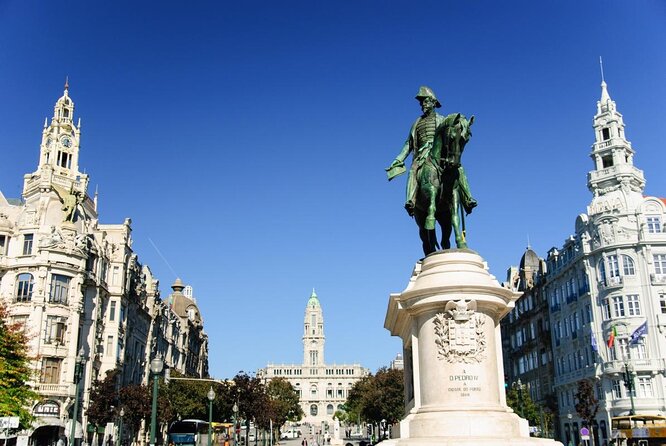
You’ll also see a statue connected to D. Pedro, with symbolism tied to his heart donation to Porto representatives and the arrival in Mindelo. The sculpture style is part of the story, too, since it was cast in Belgium, giving another small reminder that Porto’s connections ran far.
Then comes the library building inaugurated in 1906, with an Art Nouveau facade and neo-Gothic details. Inside, you’ll hear about painted plaster work imitating wood, a major staircase, and a large stained-glass skylight bearing the monogram and motto Decus in Labore. If this is on your wish list, plan for entrances to be a separate decision.
Iron Market and Mercado Ferreira Borges Square: Porto’s Working Look
The tour includes a former market built in 1885, made as a replacement for Mercado da Ribeira. It’s described as an important example of iron architecture, later renovated into an entertainment venue where Hard Club operates.
Nearby, there’s also a square area connected to Mercado Ferreira Borges and Palácio da Bolsa, with a small garden and an underground car park, plus a Monument to Infante D. Henrique tied to Portuguese navigation and faith. Even if you’re not going inside, this is where Porto feels like a living city, not just heritage stone.
São Francisco Church and Alfândega Nova: “Gold Interior” Energy
One of the biggest architecture stops is the city’s major Gothic temple, with construction beginning in the fourteenth century, then later known for an exuberant gilded Baroque interior from the seventeenth and eighteenth centuries. You’ll hear why it’s associated with the label Church of Gold, along with references to the Tree of Jesse and catacombs.
After that, you’ll see Alfândega Nova do Porto, a neoclassical building engineered in the nineteenth century with structural solutions using iron alongside other materials. The building later became tied to the future Museum of Transport and Communications, with restoration work connected to architect Eduardo Souto Moura. The building is also described as hosting a congress center, so it’s not frozen in time.
Two Bridges and One Big Takeaway: Porto Is a River City
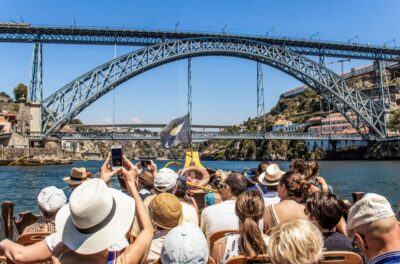
The Serra do Pilar stop sets you up for the bridge sequence. You’ll get to see the D. Luís I Bridge, designed by Teófilo Seyrig (a disciple of Eiffel), inaugurated in 1886. It’s built with two overlapping iron decks, 395 meters long, and the arch is framed as the world’s biggest forged iron arch. Today, the upper deck is used by the Porto Metro.
Then you’ll move to the São João bridge, described as a Maillart-type arch bridge inaugurated in 2003, with a 280 m arch span and noted as a world record by experts for its type. This bridge connects the Fontainhas area to Oliveira do Douro in Vila Nova de Gaia.
Even if you do not love engineering facts, the bridges are the point. Porto’s identity lives across the water, and seeing both bridge styles in one short run helps you stop thinking of the river as a barrier.
Who This Tour Suits Best
This tour is a smart choice if you want fast orientation, especially on your first day. It’s also a good fit if you’re traveling with family, since the pacing gives kids a steady rhythm of quick sights plus the big viewpoint moment.
I’d also recommend it if you hate the idea of picking between neighborhoods and trying to piece together a route yourself. The guide handles the order, the timing, and the story, and you can focus on enjoying Porto.
If you are the type who only cares about interiors, you may feel rushed because monument entrance tickets are not included and several stops are short.
The Main Practical Tips That Make It Better
A few small moves will make your experience smoother:
- If you can, bring a small rain layer. One rainy-day guest specifically wished they had a raincoat, and the tour still runs.
- Keep your expectation realistic: some stops are walk out, look up, photo, back in.
- For the best sound, lean toward your driver during stops, since the tuk tuk ride can be a little tough to hear over motion.
- If you’re traveling in a group at the upper edge of a tuk tuk’s seating, confirm how seating works. One group felt nervous about tight space.
Should You Book This Porto Tuk Tuk Tour?
Book it if you want a clear “Porto layout in 2 hours” plan, plus a fun way to cover the old center without burning your energy on steep, cobbled footwork. The included Port wine is a small thing that feels right in Porto, and the Serra do Pilar viewpoint is the kind of payoff that makes the whole route click.
Skip it or swap it for something else if your priority is deep museum-style time inside churches and palaces. Since entrances are not included, you may end up standing at the door if you don’t plan your follow-up visits.
FAQ
How long is the Porto guided historical center tuk tuk tour?
It lasts about 1 hour 50 minutes.
How much does the tour cost?
The price is $42.33 per person.
Is this tour private?
Yes. It is private, and only your group participates.
Is port wine included?
Yes. A glass of Port wine is included.
Are monument entrance tickets included?
No. Monument entrance tickets are not included.
Is the tour offered in English?
Yes, it is offered in English.
Where does the tour start?
It starts at R. de Augusto Rosa 180, 4000-528 Porto, Portugal, and ends back at the meeting point.
What if the weather is bad?
This experience requires good weather. If it is canceled due to poor weather, you will be offered a different date or a full refund.
Other Days Out Around Porto



Guide-Led Outings in Porto, More Bookings



Centuries-Deep Routes Through Porto


Newly added around Porto
- From Porto: 516 Arouca Bridge and Paiva Walkways Guided Tour
★ 5.0 · 38 reviews - Private Vinho Verde Region Wine Tour from Porto Including Lunch
★ 5.0 · 39 reviews - Surf Lesson | Surf Lessons
★ 5.0 · 39 reviews - Bike or E-Bike Tour of Porto and Atlantic Coast
★ 5.0 · 39 reviews - Porto Street Art Tour
★ 4.5 · 39 reviews - Private Porto Secrets Walking Tour + Personal Port Wine Tasting
★ 4.5 · 39 reviews - Douro Valley Premium Private
★ 5.0 · 39 reviews - Private Tour to stunning Douro Valley and most renowned wineries
★ 5.0 · 39 reviews - Off the Beaten Track in Porto: Private City Tour
★ 5.0 · 39 reviews - Porto Sunset Bike Tour
★ 4.5 · 39 reviews
Other boats, other operators: Historical Tours.
 ★ 4.8Lisbon: History, Stories and Lifestyle Walking TourFrom $2910,902 reviews
 ★ 5.0Douro Valley: Historical Sites, Wine Experience, Lunch & CruiseFrom $1075,133 reviews
 ★ 4.7Lisbon: Live Fado Show with Port Wine in Historic CenterFrom $174,166 reviews
 ★ 4.8Lisbon: Fado Show with Wine in a Historic VenueFrom $191,294 reviews
 ★ 4.7Porto: Historic City Center Walking TourFrom $331,172 reviews
 ★ 4.8Porto: An Intimate Fado Show in a Historical TavernFrom $211,093 reviews
 ★ 5.0Taste Funchal: food, wine & cultural tourFrom $112906 reviews
 ★ 4.8Porto: Historical Center Walking TourFrom $41898 reviews
Filed under