
REVIEW · WALKING TOURS
Experience Porto’s Charm: 3-Hour Guided Walking Tour
Porto does not ease you in. It pushes you uphill, then rewards you with big views and better stories. This 3-hour guided walking tour is a smart first day in town, mixing UNESCO sights with the kind of context that makes the city click.
What I like most is the focus on place-based history: you learn Porto’s Roman roots, then what Moorish and later Castilian rule did to the city, and why the 19th century is part of the dramatic story. I also like the way the itinerary keeps snapping you from landmark to landmark, from the Porto Cathedral and Clerigos Tower to the iron elegance of Dom Luis I over the Douro.
The one possible drawback is that it is still a walking tour in a hilly city. Comfortable shoes matter, and it runs in rain, so plan for weather and bring layers.
In This Review
- Key highlights worth planning around
- Why Porto’s UNESCO center makes a 3-hour walk work
- The meeting point and the pacing reality (uphill included)
- Inside the UNESCO zone: Roman walls, Moorish tiles, and the big turning points
- Porto Cathedral and Clerigos Tower: church architecture you can feel
- Sao Bento Station tiles: art, history, and a reason to slow down
- Mercado do Bolhao: local food energy without buying a ticket
- Cafe breaks and the Majestic area: plan on buying something small
- Lello & Irmão bookstore: worth seeing from the outside, then decide about inside
- Santa Clara, Aliados Avenue, and Liberdade Square: the city’s social spine
- King Peter IV and the Portugal to Brazil connection
- Dom Luis I bridge: the Eiffel touch and the Douro views
- Cais de Gaia, port cellars, and how fortified wine shaped the walk
- Ribeira Square finish: what to do after your last stop
- What I’d do differently if you have limited time or tight energy
- Guides make or break it, and Porto has some excellent storytellers
- Should you book Porto’s Charm: 3-Hour Guided Walking Tour?
- FAQ
- What is the duration of the Porto walking tour?
- Where does the tour start and how early should I arrive?
- Is the tour offered in English?
- Is the price $35.07 per person and what does it include?
- Does the tour include entrance tickets for major sights?
- Is there food or drinks provided during the tour?
- How big is the group?
- Does the tour run in rainy weather?
- What is the cancellation policy?
- Do I get a mobile ticket?
Key highlights worth planning around
- UNESCO historic center orientation that helps you understand where you are fast
- Roman, Moorish, and 19th-century stories tied to real streets and walls
- Photo stops that actually matter, like Porto Cathedral and Clerigos Tower
- Dom Luis I bridge views plus Douro river context and rabelo boats
- Winemaking walks in Gaia, with cellars and how port fortified wine is made
- Small-group feel (max 15) and lots of time for questions with your guide
Other Porto calcada routes we have followed on foot
- Porto Walking Tour, Lello Bookshop, River Cruise and Cable Car★ 5.0 · 3,354 reviews
- Experience Porto’s Charm: 3-Hour Guided Walking Tour★ 5.0 · 2,432 reviews
- Porto: 3-Hour Guided City Highlights Walking Tour★ 4.8 · 2,050 reviews
- Porto: Wine Tasting with Tapas Walking Tour★ 4.4 · 1,541 reviews
Why Porto’s UNESCO center makes a 3-hour walk work
Porto’s historic core is compact, but it is not simple to read. This tour helps you connect the dots between architecture, power, and daily life, without drowning you in facts. You get a guided thread from the earliest days of the city to the more recent chapters that shaped today’s streets.
The timing also makes sense. Three hours is long enough to cover major streets and landmarks, and short enough that you still have energy to explore on your own afterward. That’s a big value point when you’re paying per person and you want maximum payoff per hour.
The meeting point and the pacing reality (uphill included)
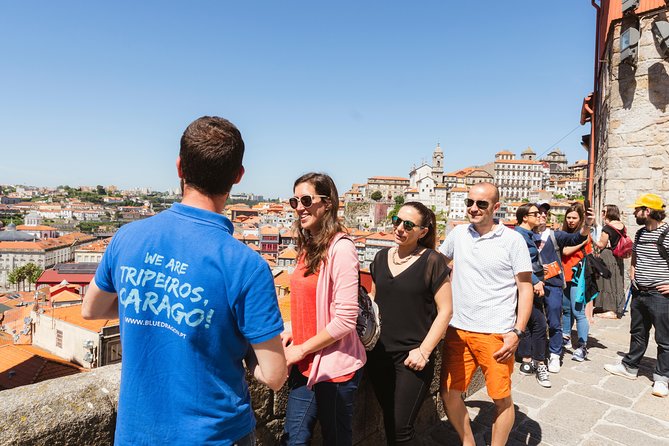
You meet at R. de Alexandre Herculano 251, near public transportation. Check in 15 minutes early, because you’ll start promptly and the first part of the walk gets you into the UNESCO area early.
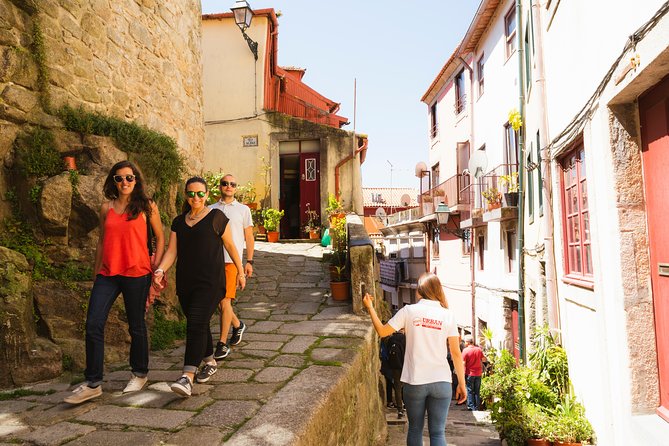
Expect a small amount of walking that adds up. Porto has hills, and the tour is designed for a mixed crowd, but a steady pace is still the norm. Even when it feels very manageable, you should assume some climbs and plan shoes that won’t punish your feet.
Inside the UNESCO zone: Roman walls, Moorish tiles, and the big turning points
The tour kicks off by entering Porto’s UNESCO-listed historic center, so you start with the right frame of mind. Your guide sets up Porto as a city shaped by conflict and reinvention. The story goes from an early Roman outpost, to Moorish rule, then to a major disruption in the 19th century, when the city was largely decimated.
You’ll then see old Romanesque elements and move into some of Porto’s signature religious architecture. The goal is not just to point, but to show how the city’s identity keeps changing while the stones stay in place. That makes the next stops easier to understand when you recognize style changes.
Moorish tiles also get their moment. You’ll see colorful ceramic work on building walls as you continue through the center, and that detail helps the city feel more specific than a generic Old Town brochure. It is one of those “look up” moments that turns a street corner into a memory.
Porto Cathedral and Clerigos Tower: church architecture you can feel
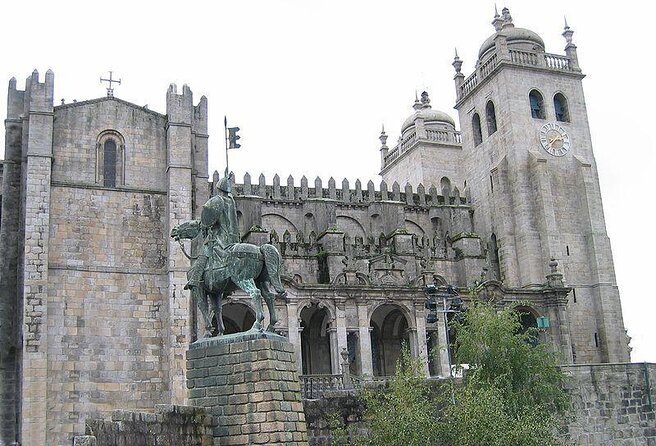
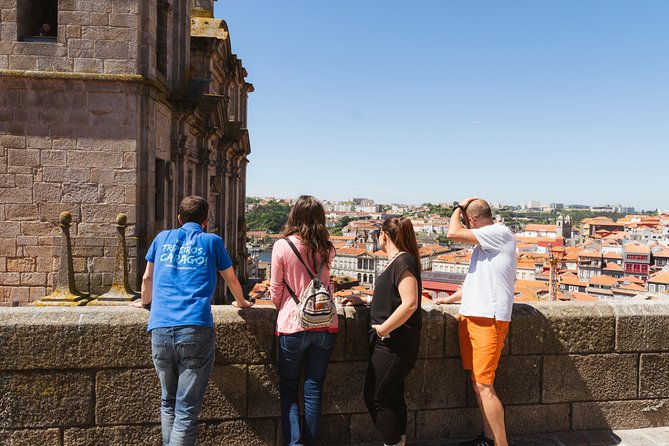
Porto Cathedral is one of the oldest monuments in Portugal, and it’s placed right in the historic core. You’ll spend time right there so the exterior makes sense before you think about going in. Entrance fees are not included, so treat the stop as a guided orientation unless you decide to add an indoor visit later.
Clerigos Tower is the other must-see vertical landmark on this walk. It’s an 18th-century Baroque church and tower designed by Nicolau Nasoni, and that tower silhouette is basically Porto’s calling card. You’ll get the “why” behind it, which makes the photo stop more than a quick snapshot.
Other guide-led outings in Porto we have booked


Sao Bento Station tiles: art, history, and a reason to slow down
Sao Bento Railway Station is brief on paper, but it deserves attention. This is where you see famed tile panels inside the station, tied to Portuguese history. You’ll also learn that the station connects routes through the Minho and Douro Valley.
What I like about including Sao Bento is that it breaks up the walking with something concentrated. Tiles are visual learning. Even if you only look for a few minutes, your brain files them under Porto immediately.
Mercado do Bolhao: local food energy without buying a ticket
Mercado do Bolhao is a classic neoclassical market building, and the stop is designed for you to observe without needing an entrance ticket. You’ll see how the market is organized by product areas, like fish, meat, vegetables, fruits, and flowers.
If you want a feel for daily life, this is a strong stop because it’s practical. Porto is famous for wine, but people also eat. This helps you move beyond monuments and into how the city functions.
Cafe breaks and the Majestic area: plan on buying something small
There’s a cafe stop in the Santa Catarina street area near the famous Cafe Majestic. Entrance to the cafe is not included, but it’s part of the tour pacing, so you get a breather mid-walk.
One review detail that matters for your budgeting: the nearby cafe experience can be much cheaper than stepping into the very famous names. If you want coffee and a pastry without paying major-sight pricing, this stop is a good chance to do it.
Lello & Irmão bookstore: worth seeing from the outside, then decide about inside
Lello & Irmão Bookstore is one of Porto’s famous addresses, known for architecture and a staircase that’s often compared to cinematic fantasy. The tour includes a stop here, but the details on timing inside are not spelled out, so treat this as a guided exterior and context stop unless you choose to add time.
In practice, this stop is useful because your guide can point out what you should notice. That turns a “pretty building” moment into something you actually remember.
Santa Clara, Aliados Avenue, and Liberdade Square: the city’s social spine
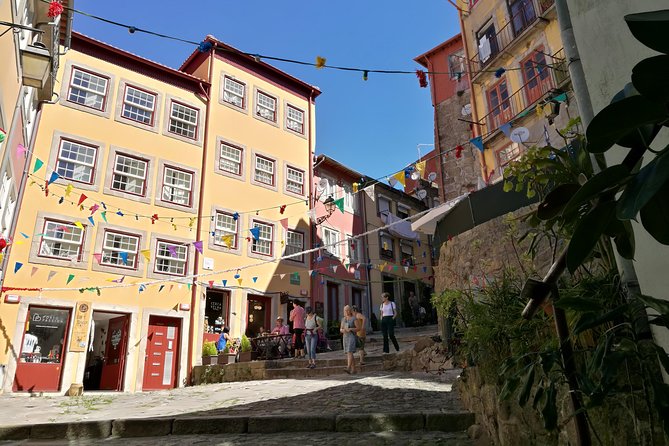
Between major monuments, you move along Aliados Avenue toward Liberdade Square. This is where you get the sense of Porto’s public rhythm, including the sound of everyday street life.
Santa Clara also appears in the walking story. You’ll pass the church and notice the style shift toward classic Baroque architecture, then come back to the Moorish tile colors that keep showing up on the walls. Together, these moments explain why Porto looks the way it does at street level, not just at landmark level.
King Peter IV and the Portugal to Brazil connection
You’ll also reach the monument to King Peter IV of Portugal. He’s known as The Liberator, and the tour connects his legacy to the broader story of Brazil. It’s a quick but meaningful context stop that turns Porto into a city with global reach.
This is a good reminder that Porto is not only a river city. It’s also a political and cultural city. When you understand that, the architecture starts to feel like it has a purpose beyond beauty.
Dom Luis I bridge: the Eiffel touch and the Douro views
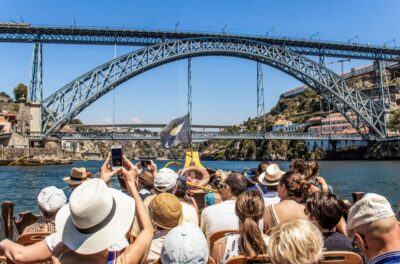
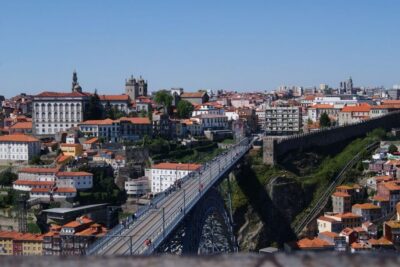
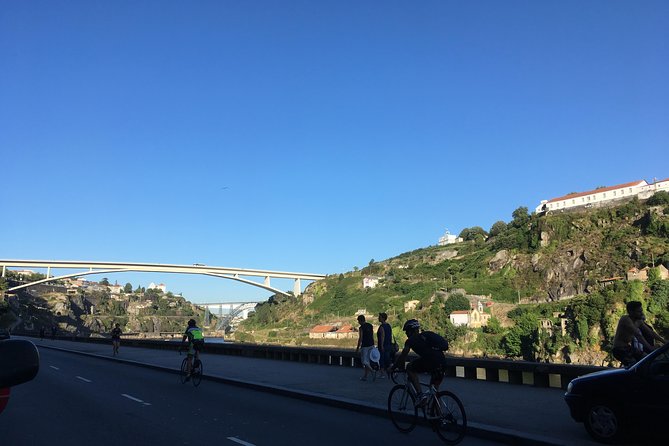
The tour moves on to Ponte de Dom Luis I, the iconic double-decker iron bridge linking Porto and Gaia. It was built between 1881 and 1888, and your guide will explain that it has an Eiffel-like influence through the work of a designer connected to Gustave Eiffel’s circle.
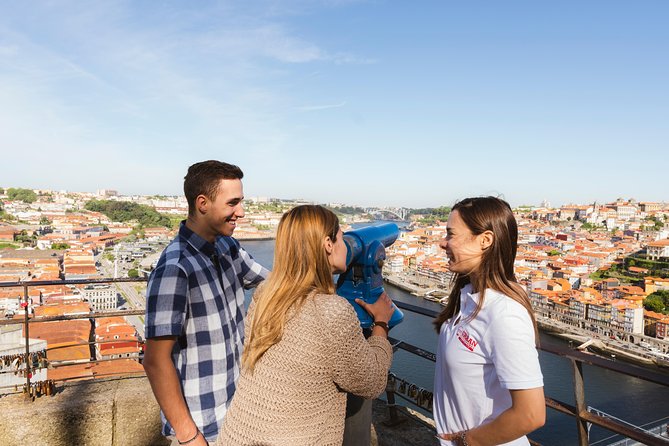
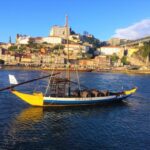
From the bridge, you’ll look out over the Duoro River. You’ll also hear about the traditional rabelo boats, once used to transport grapes to the cellars. That detail matters because it connects today’s sightseeing to how the wine industry used to move.
If you care about photos, time this stop for clear sightlines. Even if the skies are gray, the bridge structure reads well, and the river gives depth to everything behind it.
Cais de Gaia, port cellars, and how fortified wine shaped the walk
After the bridge, you promenade along Cais de Gaia. This side of the river is where the wine story becomes physical: cellars, streets, and the sense that the economy grew around this waterfront.
You learn how port, fortified wine, is made. The tour also references the role of the cellars in shipping and trade, so the walk is not random sightseeing. It feels like a logical continuation from the bridge down to the places where the industry lives.
Ribeira Square finish: what to do after your last stop
The tour ends in Ribeira Square. This is one of the oldest areas of Porto and it sits along the river. It’s also packed with restaurants and bars, so it’s a good finish because it gives you instant options without you needing to “hunt” your next plan.
Ribeira is also where you can use your guide’s earlier context. After learning about Porto’s layers, you’ll notice how the riverfront supports the city’s identity. Then you can choose what to linger on next.
What I’d do differently if you have limited time or tight energy
If you’re on a first visit, this tour is a smart way to build a mental map. It hits the major highlights quickly, and it also explains the “why” so you’re not just collecting photos.
If you want to move at a calmer pace, keep in mind that hills are real. This tour is designed to be doable for most travelers, but you’ll still benefit from planning extra time for the rest of your day. One good approach is to schedule this early, then use the rest of your trip to pick neighborhoods and sights that feel most interesting to you.
Guides make or break it, and Porto has some excellent storytellers
The best thing about this tour is the human part. In this tour’s recent experiences, guides like Joao, Diogo, Maria, Ana, Ramon, and Rodrigo are singled out for making the history clear and for answering questions in a friendly way.
Rain management also shows up in the feedback. Some guides keep the group comfortable by choosing indoors or using covered shortcuts when weather turns. If your timing lines up with bad weather, that flexibility can make the difference between a miserable walk and a memorable one.
Should you book Porto’s Charm: 3-Hour Guided Walking Tour?
Book this tour if you want a first-day orientation that includes real landmarks and real context. The price is solid for what you get: live commentary, an expert storytelling focus, and a route that takes you from the UNESCO center to the Douro and into Gaia’s wine world.
Skip it or think twice if you hate walking uphill or you get frustrated by weather. It runs in rain, and it’s still a walking loop. Also remember that entrance fees and food or drinks are not included, so bring a little cash or card budget for a cafe stop.
FAQ
What is the duration of the Porto walking tour?
The tour lasts about 3 hours.
Where does the tour start and how early should I arrive?
You start at R. de Alexandre Herculano 251, 4000-053 Porto. You must check in 15 minutes prior to the tour start.
Is the tour offered in English?
Yes, the tour is offered in English.
Is the price $35.07 per person and what does it include?
The price is $35.07 per person. Included items are the best of Porto walking tour with live commentary, general briefing, and company liability and personal injury insurance. Entrance fees and hotel pickup or drop-off are not included.
Does the tour include entrance tickets for major sights?
No. Entrance fees are not included, so if you want to go inside places like the cathedral or other stops, you may need to pay separately.
Is there food or drinks provided during the tour?
No food and beverages are included. The route includes a cafe stop, but you would need to purchase what you want.
How big is the group?
The tour has a maximum of 15 travelers.
Does the tour run in rainy weather?
Yes. The tour operates in the rain, so check conditions and dress accordingly.
What is the cancellation policy?
You can cancel for a full refund up to 24 hours in advance. If you cancel less than 24 hours before the start time, the amount paid is not refunded.
Do I get a mobile ticket?
Yes. The tour includes a mobile ticket.
Other Days Out Around Porto




Guide-Led Outings in Porto, More Bookings


On Foot Around Porto, Other Guided Walks


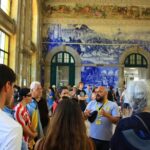
Newly added around Porto
- From Porto: Douro Valley 3 Vineyards Tour with Lunch
★ 4.8 · 79 reviews - Best of Porto Private Walking Tour
★ 5.0 · 80 reviews - Douro Valley in a Tesla
★ 5.0 · 81 reviews - Porto 360°: Helicopter Flight, Guided Walking Tour & River Cruise
★ 5.0 · 81 reviews - Private Transfer from Porto to Lisbon
★ 5.0 · 82 reviews - Minho Tour Private (Braga and Guimarães) Full Day
★ 5.0 · 82 reviews - Porto: Taylor’s Port Cellar Tour & WOW Wine Experience
★ 4.7 · 82 reviews - Porto Tile Painting Workshop in artist studio
★ 5.0 · 83 reviews - Private Tour
★ 5.0 · 83 reviews - City Bike Rental in Porto
★ 5.0 · 84 reviews
Other boats, other operators: Walking Tours.
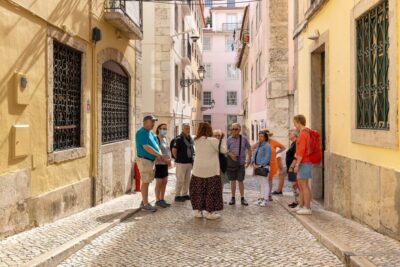 ★ 4.8Lisbon: History, Stories and Lifestyle Walking TourFrom $2910,902 reviews
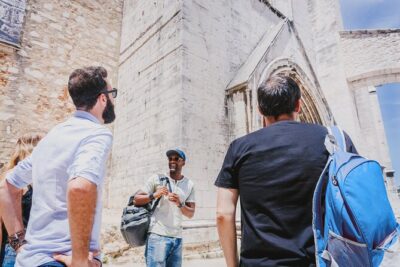 ★ 5.0Best of Lisbon Small-Group Guided Walking TourFrom $234,869 reviews
 ★ 4.9Lisbon: Food and Wine Small Group Walking TourFrom $724,082 reviews
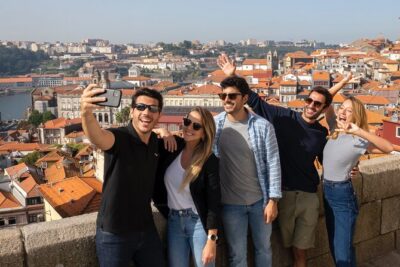 ★ 5.0Porto Walking Tour, Lello Bookshop, River Cruise and Cable CarFrom $723,354 reviews
 ★ 4.7Funchal: Old Town Walking TourFrom $193,233 reviews
 ★ 4.9Best of Lisbon Walking Tour: Rossio, Chiado & AlfamaFrom $232,700 reviews
 ★ 4.7Madeira: Enjoy a Guided Levada Walk in the Rabaçal ValleyFrom $502,197 reviews
 ★ 4.8Porto: 3-Hour Guided City Highlights Walking TourFrom $342,050 reviews
Filed under