
REVIEW · ALFAMA AND OLD LISBON WALKS
Alfama and Mouraria Tour – The oldest neighbourhoods in Lisbon
Lisbon’s oldest neighborhoods show up best on foot. This 2.5-hour walk strings together Alfama and Mouraria with viewpoints, major churches, and a castle.
I especially like the way the tour blends big city landmarks with neighborhood streets, so you get a clear sense of how Lisbon grew. I also like the small group size, up to 20 people, which keeps the pace human and makes it easier to ask questions, whether your guide is Walter, Tiago, Hugo, Jose, Claudia, or Rita.
One drawback to plan for is the walking. This route includes hills and steps, so you’ll want comfortable shoes and you may need a slower rhythm on uphill bits.
In This Review
- Key points that make this tour worth your time
- Why Alfama and Mouraria feel different from the main tourist strips
- Meeting at Praça do Comércio, then walking Lisbon like a local
- Stop 1: Statue of D. Jose I, a quick start that sets the tone
- Stop 2: Praça do Comércio, Lisbon’s most important square
- Stop 3: Church of St. Anthony, birthplace of a saint story
- Stop 4: Casa dos Bicos, Manueline style at street level
- Alfama in motion: winding streets, stairs, and views you earn
- Lisbon Cathedral and Panteão Nacional: two layers of old Lisbon
- Miradouro Das Portas do Sol: Lisbon’s classic look, explained
- Castelo de São Jorge: the climb, the story, and the payoff
- Miradouro de Santa Luzia: charm you can actually feel
- Mouraria streets and the Monumento Berço do Fado
- Pace and comfort: what the 2 hours 30 minutes really means
- Price and value: why this feels like a bargain (with one smart caution)
- Who should book this tour
- Should you book this Alfama and Mouraria tour?
- FAQ
- How long is the Alfama and Mouraria tour?
- Where does the tour start and end?
- Is the tour offered in English?
- What is the group size?
- Do I receive a mobile ticket?
- Are service animals allowed?
- What happens if the weather is bad?
- Can I cancel and get my money back?
Key points that make this tour worth your time
- Orange umbrella meeting details: at the start, your guide is positioned by the big arch and the statue.
- Viewpoint hits on purpose: Portas do Sol and Santa Luzia are timed for big, photo-ready moments.
- Manueline house stop: Casa dos Bicos gets you from street-level Lisbon into a specific architectural style.
- Cathedral plus Pantheon pairing: Lisbon Cathedral and Panteão Nacional help you connect old worship spaces with later national meaning.
- Castle included, but not rushed: guides often manage the climb in stages and pause for landmark explanations.
- Mouraria’s Fado memory: the route ends with stops tied to Mouraria’s cultural identity, including the Fado-related monument.
Other walks through the old Lisbon quarters we have reviewed in Lisbon
- Alfama Tour in Lisbon Old Town★ 5.0 · 4,936 reviews
- Private Lisbon Sightseeing Tuk-Tuk Tour: Alfama, Belém & More★ 5.0 · 4,277 reviews
- Lisbon: Hills, Alfama, and Mouraria Tour by Electric Bike★ 4.8 · 3,438 reviews
- Best of Lisbon Walking Tour: Rossio, Chiado & Alfama★ 4.9 · 2,700 reviews
Why Alfama and Mouraria feel different from the main tourist strips
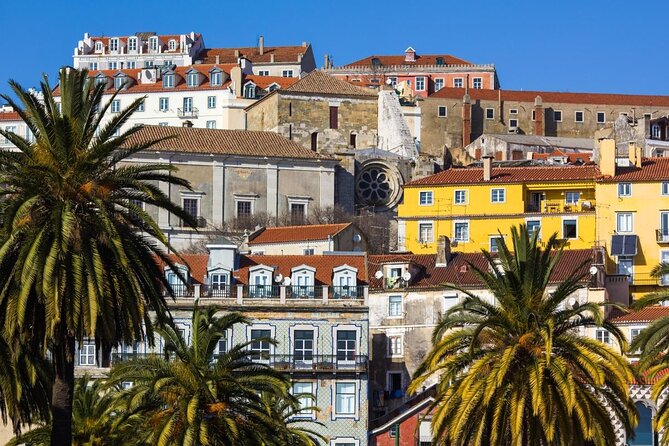
If you only see Lisbon from plazas and viewpoints, you miss the texture. Alfama and Mouraria are the parts where the city feels older, narrower, and more lived-in. You’ll spend the day walking real streets, not just hopping between sights.
This tour works because it moves in a smart line. You start in the grand open space of Praça do Comércio, then work your way through churches and historic buildings before dropping into Alfama’s lanes and continuing into Mouraria. Even the viewpoint stops feel like they belong, not like random photo breaks.
And the best part is that you’re not forced to “figure it out” alone. The guides on this route, including Walter, Hugo, Tiago, and Jose, are repeatedly praised for bringing history down to earth and keeping the energy up while the group climbs.
Meeting at Praça do Comércio, then walking Lisbon like a local
The tour starts at Praça do Comércio (1100-148 Lisbon). The route ends around Praça do Rossio, so you finish closer to central Lisbon and can keep wandering afterward.
Two small logistics matter a lot here:
- The meeting instructions are specific, and it helps to arrive early enough to locate your guide. At the first stop near the statue of King José I, guides are said to be easy to spot by an orange umbrella placed between the big arch and the statue.
- The tour is capped at a maximum of 20 travelers, so it stays manageable, but it also means the group will usually move promptly once everyone is gathered.
The tour is offered in English, and you’ll get a mobile ticket. That’s handy in Lisbon, where you might be stepping on and off buses or trams nearby during the day.
Stop 1: Statue of D. Jose I, a quick start that sets the tone
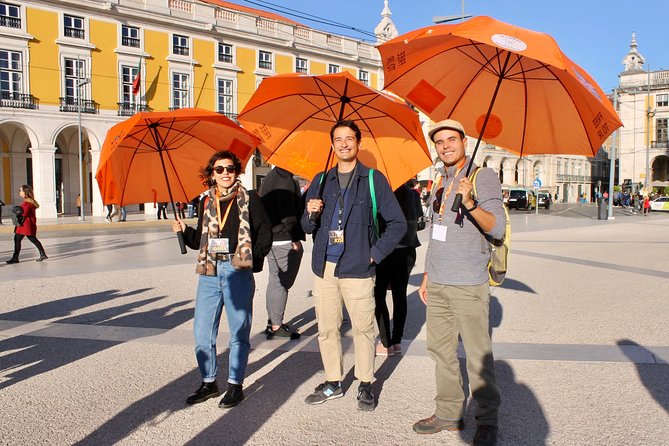
You begin at the Statue of D. José I, a monument honoring King José I of Portugal. It’s a short, simple start, but it matters. Big statues like this are Lisbon’s way of telling you, even before you hit Alfama, that this city has layers of power and planning behind the stone and arches.
You should think of this as your orientation jump-off point. You’re not there to linger. You’re there to sync with your guide, get the vibe of the route, and then move into the city’s older core.
Stop 2: Praça do Comércio, Lisbon’s most important square
From the king’s statue, you head to Praça do Comércio, described as the most important square in Lisbon. This is the opposite feeling of Alfama’s tight streets. It’s wide, open, and dramatic.
Why I like this stop for new visitors: it gives your brain a reference point. Once you’ve seen this open, formal square, the later narrow lanes of Alfama feel even more special. You can also reframe the day as a walk that moves from “official Lisbon” to “neighborhood Lisbon.”



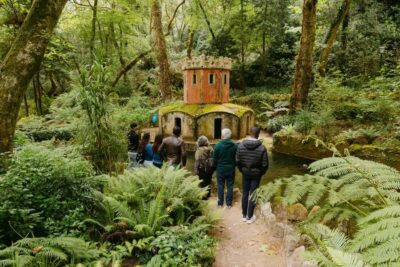

Stop 3: Church of St. Anthony, birthplace of a saint story
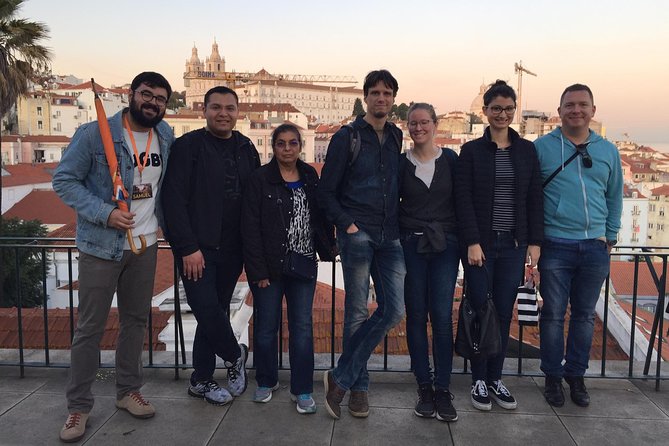
Next is the Church of St. Anthony, connected to the place where St. Antony of Padua was born. That link gives the church a sense of meaning beyond its architecture.
This stop is also a reminder of how Lisbon preserves spiritual stories in the middle of daily life. Even when you’re just passing through for minutes at a time, the purpose is to help you understand why these buildings still matter.
Stop 4: Casa dos Bicos, Manueline style at street level
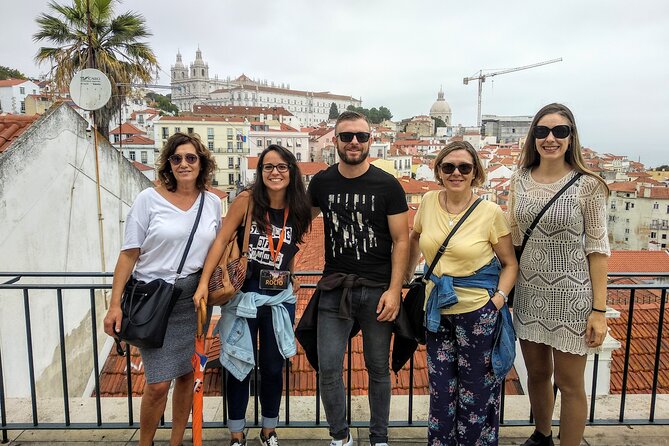
Then you reach Casa dos Bicos-Museu de Lisboa, one of Lisbon’s oldest houses, built in Manueline style. Manueline design is known for ornate, symbolic stonework, and you’ll spot why this house gets attention once you’re looking at it up close.
A practical note: since the tour time at each stop is brief, this is a place to slow down just for a moment. Look at the facade details, then let your guide connect those details to what Lisbon was doing during that era.
Alfama in motion: winding streets, stairs, and views you earn
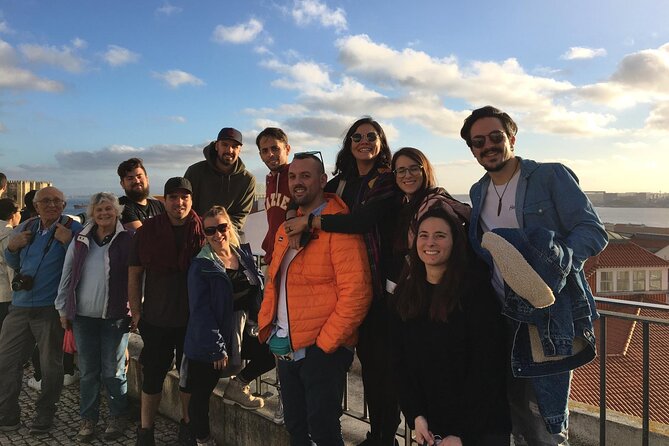
Once the tour gets into Alfama, you shift from monuments to neighborhood life. This part is built for walking through lovely streets, and it’s usually where first-time Lisbon visitors start to feel the magic.
Expect a mix of:
- narrow lanes
- small turns that reveal new angles
- and uphill stretches, because that’s how Alfama is laid out
This is also where guides often do their best work. People like Walter, Tiago, and Ann-Elisa are praised for pacing the group and making the history sound like it belongs to the street in front of you, not like a lecture.
Lisbon Cathedral and Panteão Nacional: two layers of old Lisbon
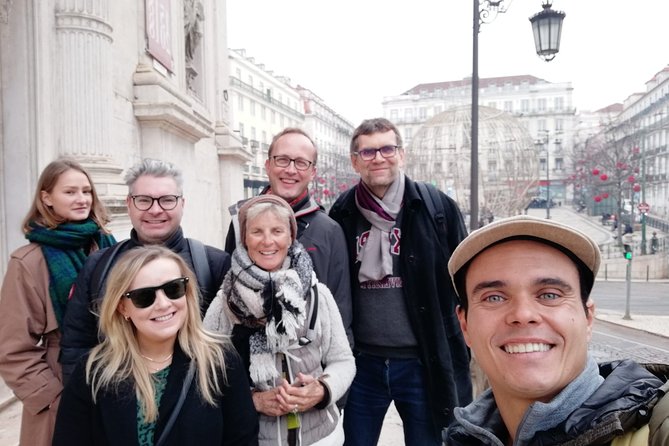
In the Alfama zone, the tour includes Lisbon Cathedral, described as the oldest church in Lisbon. This is a stop that can change how you look at the neighborhood. It’s easy to treat Alfama like a scenic postcard, but the cathedral shifts the focus to faith, continuity, and the long timeline of the city.
Right after, there’s Panteão Nacional, the National Pantheon of Lisbon. The emotional tone is different, but the pairing makes sense. You’re moving from sacred roots to a later national space that marks Portugal’s stories in stone.
If you’re the kind of visitor who likes to connect places to bigger meaning, this section is a strong win.
Miradouro Das Portas do Sol: Lisbon’s classic look, explained
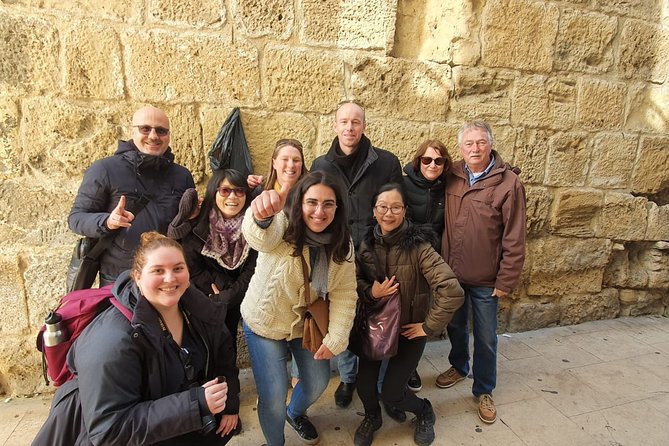
Next comes Miradouro das Portas do Sol, a viewpoint with one of the most beautiful views in Lisbon. This is the kind of stop that can become just a photo moment if you don’t have context.
That’s where a good guide helps. You’ll get perspective on what you’re looking at, and it’s not just about the horizon line. It’s about understanding how the city’s hills, rooftops, and street layout create those famous views.
If your day includes hot weather, aim to use the viewpoint pause for a water break. A few guides, including Hugo, are specifically credited with finding shade and building in breaks so the uphill effort doesn’t drain the fun.
Castelo de São Jorge: the climb, the story, and the payoff
You then reach Castelo de São Jorge, described as an old castle built by the Moors in the 8th century. Even if you’re not going deep into the castle grounds, it’s a major Lisbon landmark and it makes the walking feel worth it.
One thing to keep realistic: the tour time at the castle area is short. The value is in the viewpoint and the orientation your guide gives as you approach and look around.
Also, expect the route to feel hilly. Some guides are praised for moving up in stages so the pace stays workable for a group. That matters here, because if you charge uphill without breaks, you’ll miss the explanations.
Miradouro de Santa Luzia: charm you can actually feel
After the castle stop, you move to Miradouro de Santa Luzia, described as one of Lisbon’s most charming viewpoints. This is a classic “slow down” moment.
Even if you’ve seen lots of Lisbon photos, Santa Luzia has a different mood from Portas do Sol. It’s the kind of place where you stop, take a breath, and let the neighborhood shapes sink in.
If you’re traveling with someone who doesn’t love walking, this viewpoint sequence is your best compromise. It gives a scenic payoff right in the middle of the day’s effort.
Mouraria streets and the Monumento Berço do Fado
Once the route shifts to Mouraria, the vibe changes again. You go from Alfama’s lanes into Mouraria’s own character and cultural associations.
A highlight here is the Monumento Mouraria Berço do Fado, a monument tied to the idea of Mouraria as the cradle of fado. You’re not just walking, you’re learning how places earned their reputations and how culture gets attached to specific neighborhoods.
Then you finish with a quick stop at Igreja de São Vicente de Fora, a church built in honor of St. Vincent. It’s a short stop, but the connection helps close the loop on the day’s theme: old Lisbon isn’t just architecture. It’s stories.
Pace and comfort: what the 2 hours 30 minutes really means
The tour lasts about 2 hours 30 minutes. With 12 stops, that usually means you’re spending more time walking between places than you do standing still.
Because of that, you should plan like this:
- wear shoes that work on uneven sidewalks and steps
- assume some uphill sections
- treat stops as short orientation moments, not long sightseeing marathons
The group size, again, helps. At up to 20 people, you’re less likely to get lost in a huge crowd. And several guides are praised for keeping a pace that feels brisk but fair, sometimes with more breaks when the weather is warm.
Price and value: why this feels like a bargain (with one smart caution)
The price listed is $1.25 per person. Even if you adjust for currency and booking quirks you might see in your app, the big takeaway is this: for a 2.5-hour walking route with many major stops, the value can be excellent.
Here’s why it’s good value:
- You cover two historic neighborhoods, not just a single zone.
- You get multiple landmark explanations and viewpoint stops, which you would otherwise “piece together” on your own.
- You finish near Praça do Rossio, a convenient base for the rest of your day.
Smart caution: the schedule marks many stops as free entry. Still, big landmarks like the cathedral or castle can have areas with fees on-site. If your priority is entering every building at no cost, you’ll want to ask your guide what is included in the walk versus what might cost extra once you’re there.
Who should book this tour
This tour fits best if you want:
- a first-time Lisbon orientation that goes beyond the main streets
- history explained in a walkable way, not in a classroom tone
- viewpoint stops without needing to plan each one alone
It’s also a good choice if you enjoy small groups and like meeting a guide whose personality changes how you experience a neighborhood. Names that have stood out in this route’s guide lineup include Walter, Hugo, Tiago, Jose, Claudia, Ann-Elisa, Rita, and Kate.
Should you book this Alfama and Mouraria tour?
Yes, if you want to understand Lisbon by walking its oldest neighborhoods in a logical route. The combination of Alfama streets, major churches, and two key viewpoints gives you a strong “whole picture” even in just 2.5 hours.
Skip it or consider another option if hills and stairs would be a problem for you. The day is designed as an active walk, and the route includes multiple uphill segments and steps.
My advice: book it early enough to get the time you want, then show up ready to walk. Once you’re moving, this tour does the hard part for you, turning scattered sights into a coherent Lisbon story.
FAQ
How long is the Alfama and Mouraria tour?
It runs for about 2 hours 30 minutes.
Where does the tour start and end?
The meeting point is at Praça do Comércio, and the tour ends around Praça do Rossio.
Is the tour offered in English?
Yes, the tour is offered in English.
What is the group size?
The tour has a maximum of 20 travelers.
Do I receive a mobile ticket?
Yes, the tour uses a mobile ticket.
Are service animals allowed?
Yes, service animals are allowed.
What happens if the weather is bad?
The experience requires good weather. If it is canceled due to poor weather, you’ll be offered a different date or a full refund.
Can I cancel and get my money back?
You can cancel for free up to 24 hours in advance for a full refund.
Other Days Out Around Lisbon





Alfama and the Old Quarters, Other Walks We Reviewed





Newly added around Lisbon
- Lisbon: Street Art Walk
★ 5.0 · 79 reviews - From Lisbon: Nazare Big Waves and Óbidos Guide Day Trip
★ 4.7 · 79 reviews - Small Group Walking Tour of Belém
★ 4.9 · 80 reviews - Lisbon: Regaleira, Sintra, Cape Rock & Cascais Day Trip
★ 4.6 · 80 reviews - Lisbon: Evening Local Food Crawl with Drink Pairings
★ 4.6 · 80 reviews - From Lisbon: Sintra and Portuguese Coast Private Day Tour
★ 5.0 · 80 reviews - Lisbon: Authentic Fado Show, Dinner and Night Tour
★ 4.6 · 80 reviews - Golden Hour Boat Tour – Sailing by the Monuments with Wine
★ 5.0 · 81 reviews - Hard Rock Cafe Lisbon with Set Lunch or Dinner
★ 4.0 · 81 reviews - Fado Musical Experience with Portuguese Wine & Appetizers
★ 4.5 · 81 reviews
Other boats, other operators: Alfama and Old Lisbon Walks.
 ★ 5.0Private Lisbon Sightseeing Tuk-Tuk Tour: Alfama, Belém & MoreFrom $524,277 reviews
 ★ 4.8Lisbon: Hills, Alfama, and Mouraria Tour by Electric BikeFrom $253,438 reviews
 ★ 4.6Lisbon: Fado in Chiado Live ShowFrom $273,095 reviews
 ★ 4.9Best of Lisbon Walking Tour: Rossio, Chiado & AlfamaFrom $232,700 reviews
 ★ 4.3Lisbon: São Jorge Castle E-Ticket and Audio GuideFrom $302,182 reviews
 ★ 5.0Lisbon Small-Group Food Tour with 18 Tastings in Alfama DistrictFrom $1261,967 reviews
 ★ 4.9Lisbon: Baixa District Food Tour with Dinner and DrinksFrom $821,870 reviews
 ★ 4.5Lisbon E-Bike Tour Commerce Square, Mouraria and AlfamaFrom $301,688 reviews
Filed under