
REVIEW · ALFAMA AND OLD LISBON WALKS
Best of Lisbon Walking Tour: Rossio, Chiado & Alfama
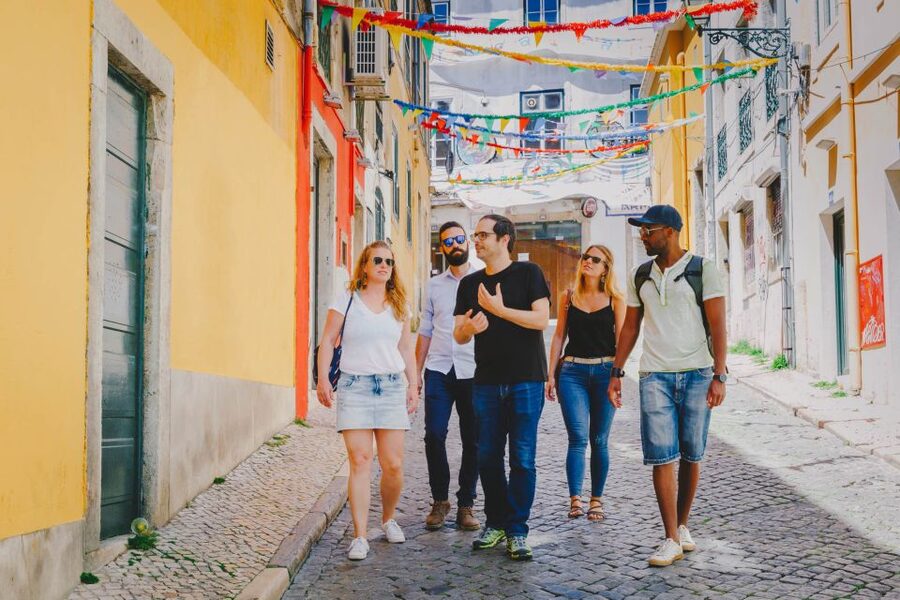
Lisbon feels different after this three-neighborhood walk. You’ll go from Rossio to Alfama on foot, with stops tied to Portugal’s modern history and the everyday culture you actually want on a first visit. Along the way, there are included tastings that keep the walk lively, not just lecture mode.
I especially love how the route connects major squares with real street-level details. Two standouts for me: the history stops around Carnation Revolution landmarks, and the built-in food breaks like the pastel de nata custard tart.
One drawback to consider: it’s a walking tour, and Alfama’s hills and tight lanes mean you’ll want solid traction and patience with the pace. Also, you’ll see a lot outside, so plan on skipping big museum-style entrance fees since they’re not included.
In This Review
- Key highlights worth your attention
- Rossio to Terreiro do Paço: why this route works
- Starting at the Estátua de D. Pedro IV, Rossio Square’s role in new and old Lisbon
- Largo do Carmo and the Restauradores Square story you’ll carry all day
- Chiado’s in-between vibe, cafés, theatres, boutiques, and bookshops
- Baixa: earthquake planning you can walk through, then taste your pastry break
- Alfama: fado culture, wine and snack tastings, and tiled facades
- Ending at Praça do Comércio (Terreiro do Paço): your Lisbon compass
- Price and value: is $23 for 3 hours fair?
- The guide factor: what to expect from the storytelling style
- Who this tour suits best, and who should choose differently
- FAQ
- FAQ
- How long is the Lisbon walking tour?
- How much does it cost?
- Where do I meet the guide?
- What language is the tour guide?
- What tastings are included?
- Does the tour include sites in Alfama and fado?
- What are some of the major areas you pass through?
- Are entrance fees included for attractions?
- What should I bring for the walk?
- Are pets allowed on the tour?
- Should you book this Best of Lisbon Walking Tour?
Key highlights worth your attention
- Neo-Manueline eye candy at Rossio Railway Station gives you quick visual context for Lisbon’s layered style
- Carnation Revolution storytelling turns a public square stop into something you’ll remember
- Chiado’s café and bookstore atmosphere shows what Lisbon does best between the eras
- Baixa’s rebuilt streets help you understand why the city looks the way it does after the 18th-century earthquake
- Alfama’s fado moments and tiled facades add culture you can’t really fake in a museum
- Snacks plus a wine tasting keep the experience from feeling like a nonstop history sprint
Other walks through the old Lisbon quarters we have reviewed in Lisbon
- Alfama Tour in Lisbon Old Town★ 5.0 · 4,936 reviews
- Private Lisbon Sightseeing Tuk-Tuk Tour: Alfama, Belém & More★ 5.0 · 4,277 reviews
- Lisbon: Hills, Alfama, and Mouraria Tour by Electric Bike★ 4.8 · 3,438 reviews
- Best of Lisbon Walking Tour: Rossio, Chiado & Alfama★ 4.9 · 2,700 reviews
Rossio to Terreiro do Paço: why this route works
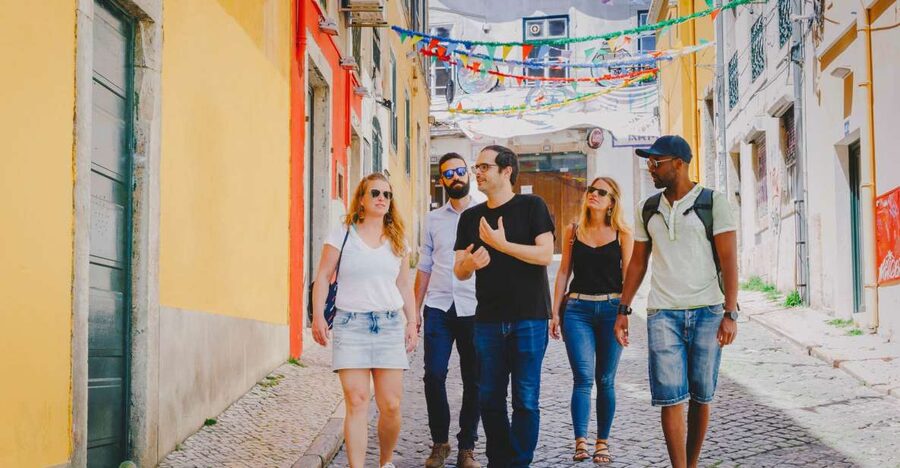
If Lisbon is your first big European city, you need orientation fast. This tour gives you that, without trying to cram everything into a single “highlights” slideshow. You walk through the old center’s key neighborhoods, and the guide stitches it together with explanations that make the streets feel logical.
I like that the route isn’t just pretty squares. It’s also about cause and effect: Lisbon’s political shifts, the 18th-century rebuilding after the earthquake, and the way daily life still carries those marks. By the end at Terreiro do Paço, you’ll have a much clearer mental map of where to return for dinner, photos, and a slower wander.
Starting at the Estátua de D. Pedro IV, Rossio Square’s role in new and old Lisbon
You meet at Rossio Square, near the statue of D. Pedro IV. This is a smart starting point because Rossio is both a transport hub and a civic crossroads. You’re already in the thick of “how Lisbon moves,” which helps later when you’re choosing tram stops or timing hills.
One early detail I’d watch for: the intricate neo-Manueline architecture around Rossio Central Station. It’s the kind of ornamental style you can miss if you’re just rushing through. On this walk, the guide points it out and ties it to Lisbon’s identity, so you understand what you’re looking at instead of just photographing it.
There are also quick photo stops as you transition toward St. Dominic’s Square and the Rossio Railway Station area. Those short breaks matter on a first morning, because they keep you from arriving at the next neighborhood already tired.
Largo do Carmo and the Restauradores Square story you’ll carry all day
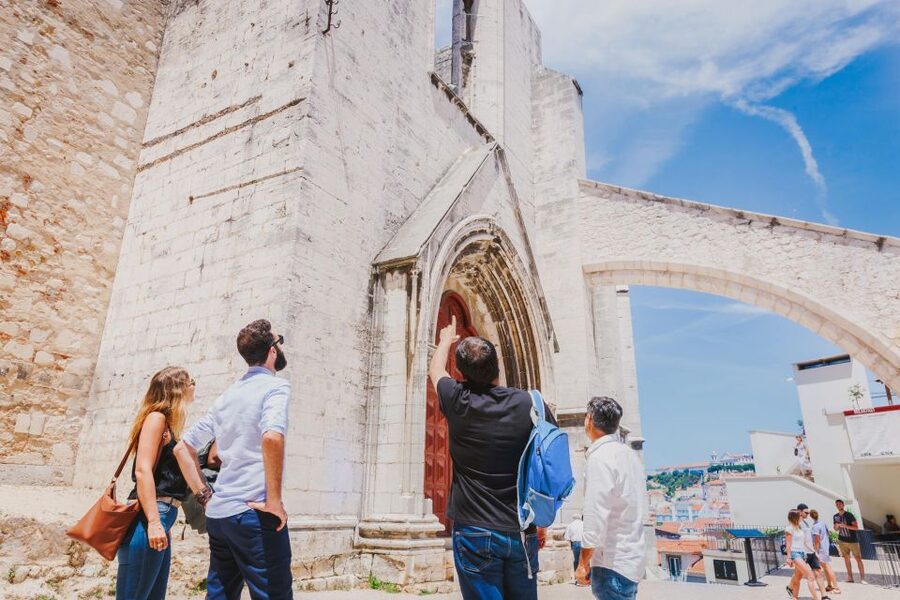
Once you’re near the Largo do Carmo area, the tour’s history emphasis becomes real. You’ll learn about the Carnation Revolution of 1974, the turning point that ended 48 years of dictatorship. Rather than treating it like a date on a timeline, the guide connects the revolution to the physical spaces where people would have gathered and reacted.
You’ll also see the kind of monument marker that makes history legible at street level, like the obelisk in Restauradores Square commemorating Portugal’s restoration of independence from Spain. It’s quick to spot, but it clicks because you understand what it’s marking.
Practical note: these stops include guided narration and viewpoints, so expect short waits in place. If you tend to run hot, bring water and plan a light layer, because Lisbon mornings can turn warm even when the shade looks promising.
Chiado’s in-between vibe, cafés, theatres, boutiques, and bookshops
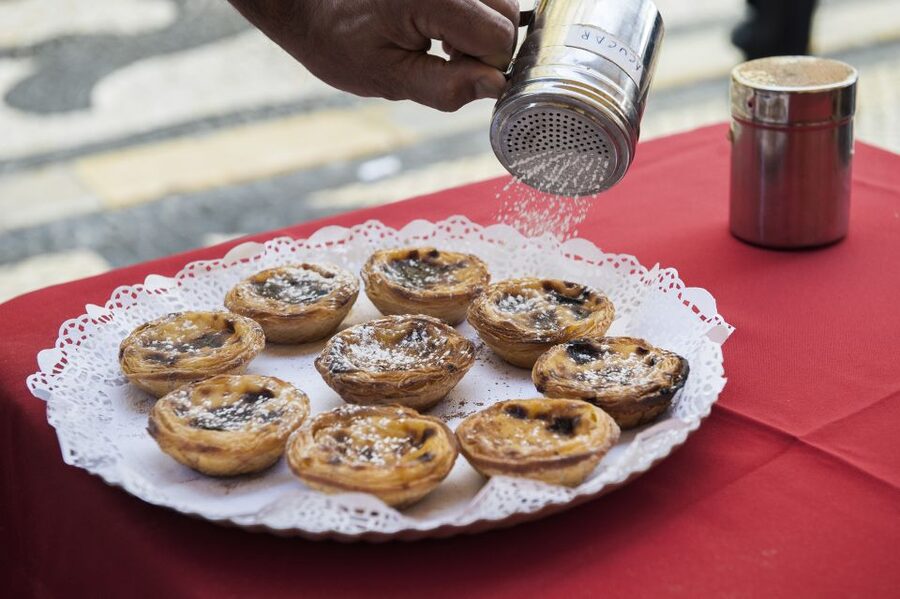
Next you move into Chiado, a neighborhood that feels like Lisbon’s cultural living room. You’ll pass by old cafés, boutiques, theatres, and quaint bookstores, and the guide frames what made Chiado a center of ideas rather than just consumption.
Why this part is valuable: Chiado helps you shift from “Lisbon in history” to “Lisbon in daily life.” After the revolution story and the grand squares, you get something softer. You start recognizing how Lisbon blends public life with intimate streets, and that’s a big help later when you pick a neighborhood for your own evening plans.
You’ll also get viewpoint moments on the way. They’re not just for photos. They help you understand how the city steps up in levels, so when you’re walking later on your own, the hills feel less mysterious and more predictable.
Other Lisbon calcada routes we have followed on foot




Baixa: earthquake planning you can walk through, then taste your pastry break
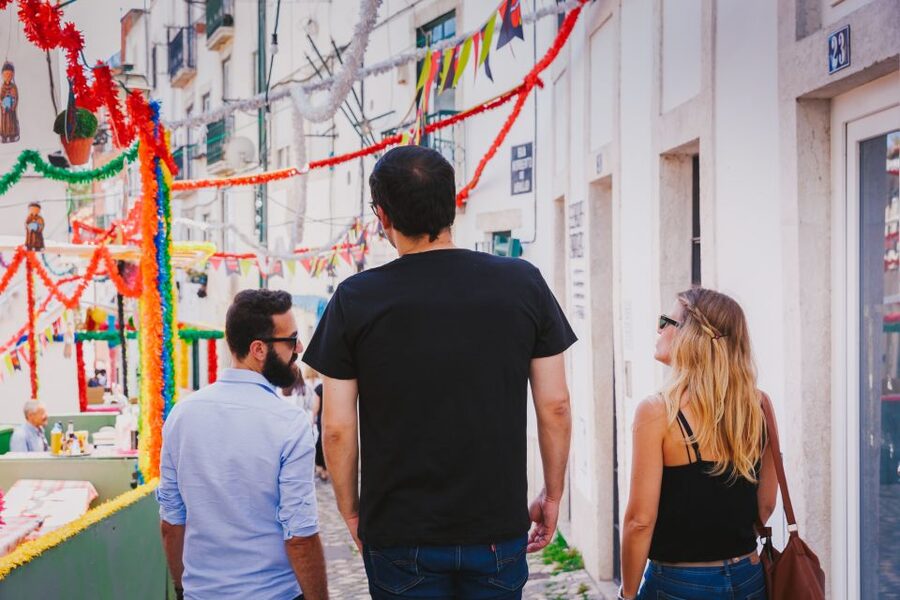
Baixa is where Lisbon’s rebuilding becomes visible. After the 18th-century earthquake, the city was rebuilt with new rules of urbanism and what the tour describes as anti-systemic architecture. Even if you’re not an architecture nerd, you’ll feel the difference in the street pattern.
This is also where the tour gives you a food moment without turning it into a restaurant detour. You get a food tasting stop in Baixa, and the included custard tart is part of this overall snack rhythm. The pastel de nata is the star here, an egg custard tart that Lisbon treats like a local rite of passage.
If you’re sensitive to sugary pastries, pace yourself. One tart portion plus a snack tasting is plenty for a 3-hour tour, especially when you’re also going to sample wine later. I’d treat it as a “taste and set you up” stop, not a full breakfast replacement.
The Baixa photo stop and additional viewpoint give you a second chance to connect what the guide said with what your eyes see. By the time you point your camera up at a street corner, you’ll know what you’re trying to capture, and that makes your photos feel more intentional.
Alfama: fado culture, wine and snack tastings, and tiled facades
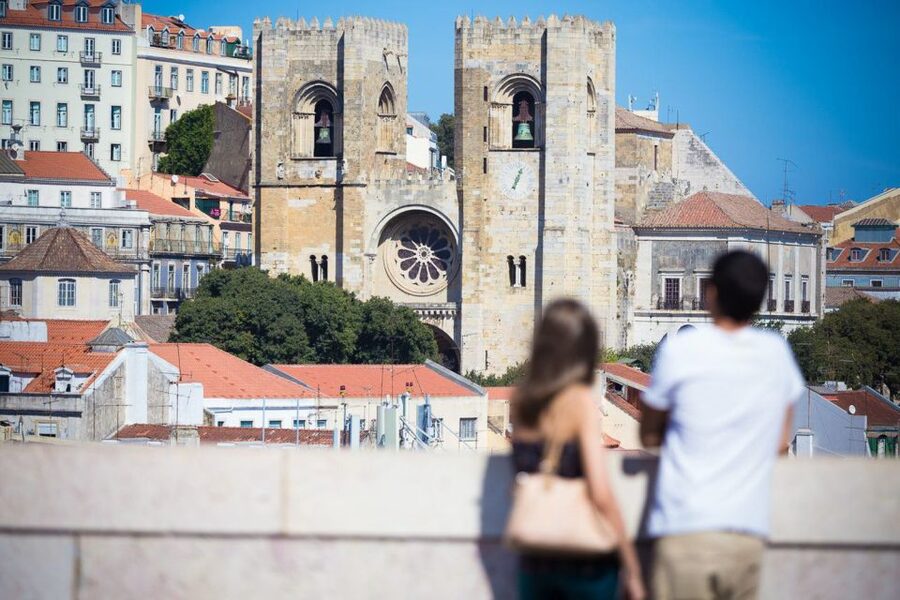
Alfama is the part that makes Lisbon feel like Lisbon. This is where you get an up-close encounter with fado, and the guide’s explanations help you understand that it’s more than a performance. It’s part of local identity, the kind of art that belongs to everyday life and family memory.
You’ll spend time in Alfama with both a wine tasting and an additional food tasting. Based on what’s shared by guides, you may be offered green wine as part of the tasting. Either way, the pairing with snacks makes sense for this neighborhood: it’s a slow, street-level place, not a sit-down circuit.
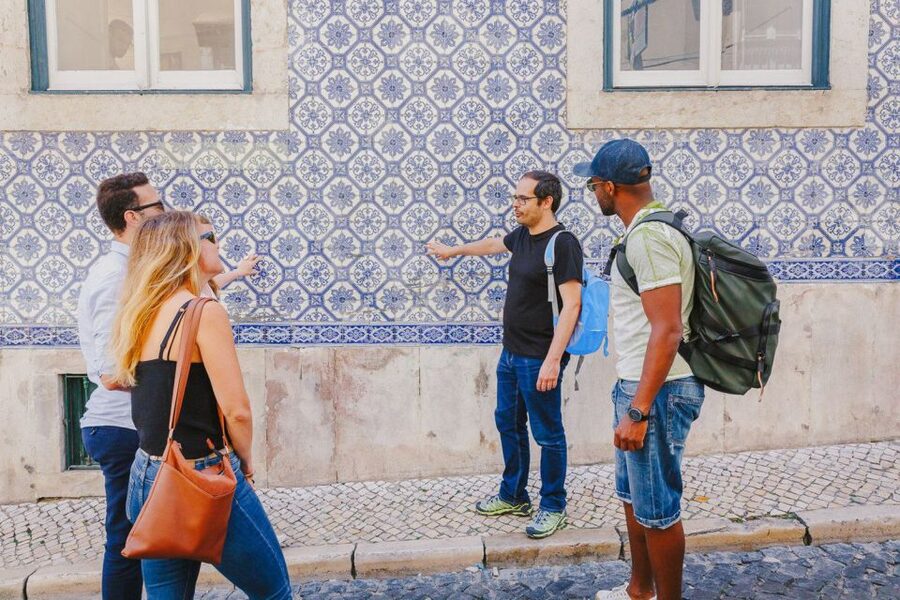
One specific detail I’d strongly suggest you ask your guide about: why so many building facades are tiled. If your guide happens to be someone like Kirsty’s pick of advice style, this becomes a fun “look closer” moment you can keep exploring after the tour.
Alfama is also where comfort matters most. Expect winding streets, occasional steep bits, and plenty of photo angles. If you’re visiting in hot weather, you’ll appreciate the pacing the guide brings. If it rains, you’ll still get value, since the tour leans on stories, photo stops, and short transitions rather than only indoor sights.
And yes, there is a longer photo stop in Alfama near the end, which helps you catch the neighborhood’s mood on your way out.
Ending at Praça do Comércio (Terreiro do Paço): your Lisbon compass
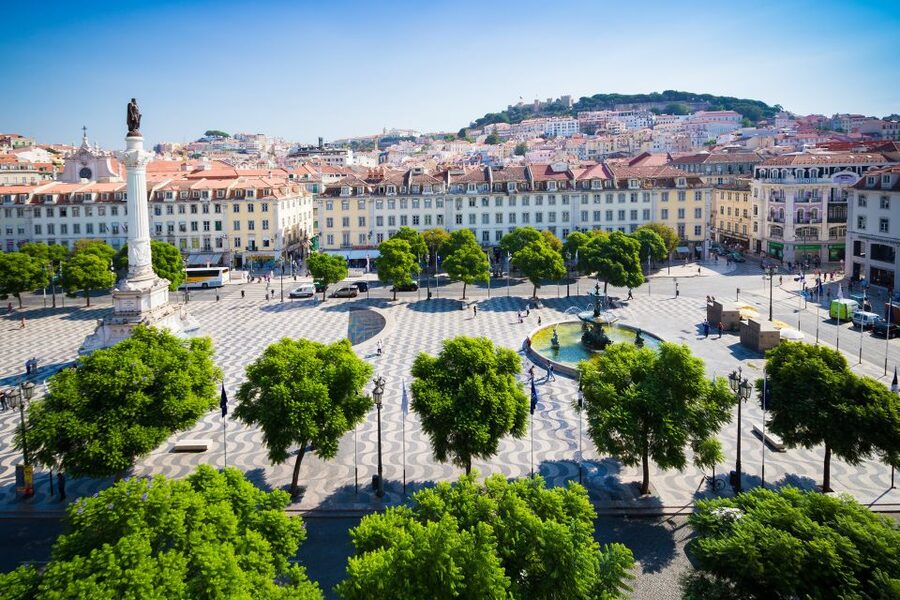
The walk finishes at Terreiro do Paço, also known as Praça do Comércio. This is a fitting end because it’s open, expansive, and easy to orient from after hours of alleys and stepped streets.
The tour frames it as the former entrance hall of the city, and that idea matters. Once you reach this wide square, it becomes easier to imagine Lisbon’s flow: how people arrived, where they would have gone, and why the center feels like it has both ceremony and everyday business.
If you’re planning your next moves, this finish point helps. You’ll be positioned well for evening strolling, riverfront views, and choosing a restaurant that doesn’t require guessing which direction is downhill or uphill.
Price and value: is $23 for 3 hours fair?
At $23 per person for a 3-hour guided walking tour, the value is mostly in three places.
First, you’re buying organization. Without a guide, you can still visit Rossio, Chiado, and Alfama, but you’re left piecing together history clues and neighborhood context on your own. With a live guide, those squares and street corners become connected.
Second, you’re buying time. This route hits Rossio and Rossio Railway Station, St. Dominic’s Square, Largo do Carmo, viewpoint stops, Chiado, Baixa, and then Alfama, before finishing at Praça do Comércio. You’re not walking randomly. You’re walking with purpose.
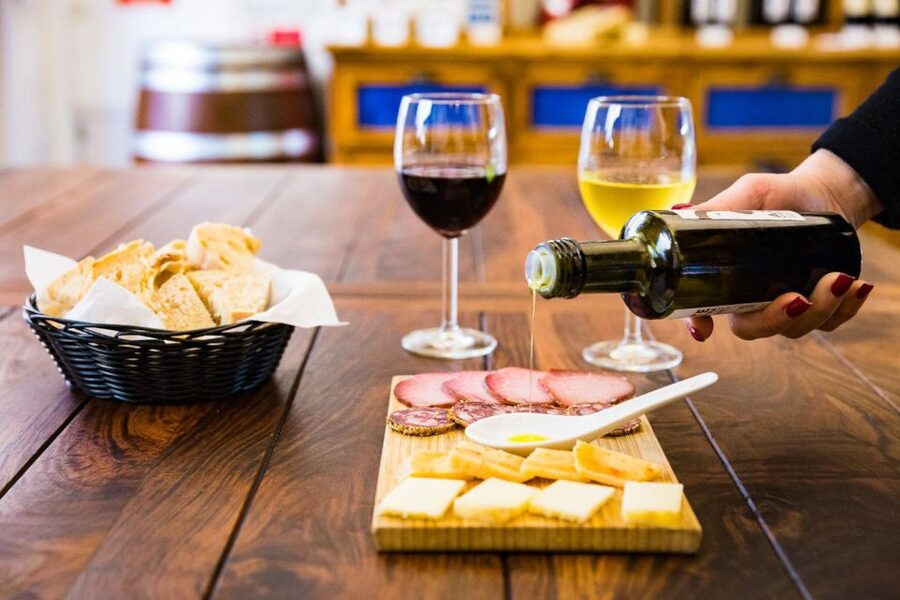
Third, you’re buying included tastings. The tour includes one pastel de nata plus a snack tasting and a wine tasting. Those breaks matter because they reward you during the walk and help you sample Lisbon flavors early, when everything else still feels new.
Entrance fees are not included, so if you were hoping for major indoor museum tickets, you should set expectations accordingly. Think “streets and stories,” not “paid attractions all day.”
The guide factor: what to expect from the storytelling style
A lot of the best moments are about pacing and tone. Guides on this route, including names like Filipa, Martin, Carlos A, Filipe, Maria, Joana, Catherine, and Daniel, are repeatedly praised for a balance of history plus practical Lisbon tips.
Here’s what you can hope for in how they work with the group:
- They keep explanations understandable and tied to places you’re standing in
- They answer questions in a way that doesn’t slow the group down too much
- They add small route intelligence, like shortcuts up the hills
If your guide is Daniel, you can even ask about his custard nickname story, since it’s part of the fun personality people mention. If you get Filipa or Martin, it’s worth asking for recommendations for the rest of your Lisbon day, not just where you’re walking right then.
Who this tour suits best, and who should choose differently
This works really well for:
- First-time Lisbon visitors who want an organized introduction without spending extra time planning
- People who like history explained through street-level stops
- Food-and-culture travelers who want pastel de nata and a tasting or two early
It might be less ideal for:
- Anyone with mobility issues or very limited ability to handle hills and uneven sidewalks
- Travelers who want major indoor ticketed attractions, because entrance fees are not part of the package
- People who dislike walking and prefer everything in a vehicle
If you’re unsure, bring comfortable shoes and accept that Alfama is the “best walking workout” segment of the day.
FAQ
FAQ
How long is the Lisbon walking tour?
It lasts about 3 hours.
How much does it cost?
The price is listed as $23 per person.
Where do I meet the guide?
Meet at Rossio Square, close to the statue of D. Pedro IV.
What language is the tour guide?
The tour includes a live guide in English.
What tastings are included?
You’ll get 1 pastel de nata (custard tart), 1 snack tasting, and 1 wine tasting.
Does the tour include sites in Alfama and fado?
Yes. In Alfama, you’ll get an up-close encounter with the art of fado, along with wine tasting and food tasting.
What are some of the major areas you pass through?
The route covers Rossio Square, Restauradores Square, Commerce Square (Praça do Comércio / Terreiro do Paço area), Lisbon Cathedral, Chiado, Baixa, and Alfama.
Are entrance fees included for attractions?
No. Entrance fees and guiding at attractions and sites are not included.
What should I bring for the walk?
Bring comfortable shoes and comfortable clothes.
Are pets allowed on the tour?
No, pets are not allowed.
Should you book this Best of Lisbon Walking Tour?
If you want a strong Lisbon orientation in just a few hours, I think this is a smart booking. You get a clear route through Rossio, Chiado, and Alfama, plus included tastings that keep the day moving and give you local flavors early.
Book it if you like learning through real neighborhoods, and if you’re comfortable doing a hill-heavy walk. Skip it if you’re hunting for mostly indoor, ticketed attractions, since this is built around streets, squares, and guided context.
Other Days Out Around Lisbon





On Foot Around Lisbon, Other Guided Walks




Alfama and the Old Quarters, Other Walks We Reviewed





Newly added around Lisbon
- Lisbon: Street Art Walk
★ 5.0 · 79 reviews - From Lisbon: Nazare Big Waves and Óbidos Guide Day Trip
★ 4.7 · 79 reviews - Small Group Walking Tour of Belém
★ 4.9 · 80 reviews - Lisbon: Regaleira, Sintra, Cape Rock & Cascais Day Trip
★ 4.6 · 80 reviews - Lisbon: Evening Local Food Crawl with Drink Pairings
★ 4.6 · 80 reviews - From Lisbon: Sintra and Portuguese Coast Private Day Tour
★ 5.0 · 80 reviews - Lisbon: Authentic Fado Show, Dinner and Night Tour
★ 4.6 · 80 reviews - Golden Hour Boat Tour – Sailing by the Monuments with Wine
★ 5.0 · 81 reviews - Hard Rock Cafe Lisbon with Set Lunch or Dinner
★ 4.0 · 81 reviews - Fado Musical Experience with Portuguese Wine & Appetizers
★ 4.5 · 81 reviews
Other boats, other operators: Alfama and Old Lisbon Walks.
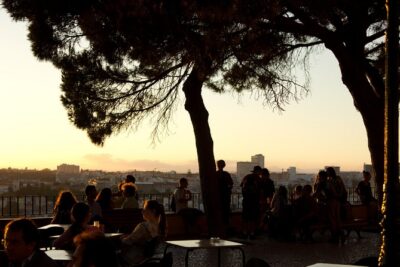 ★ 5.0Private Lisbon Sightseeing Tuk-Tuk Tour: Alfama, Belém & MoreFrom $524,277 reviews
 ★ 4.8Lisbon: Hills, Alfama, and Mouraria Tour by Electric BikeFrom $253,438 reviews
 ★ 4.6Lisbon: Fado in Chiado Live ShowFrom $273,095 reviews
 ★ 4.3Lisbon: São Jorge Castle E-Ticket and Audio GuideFrom $302,182 reviews
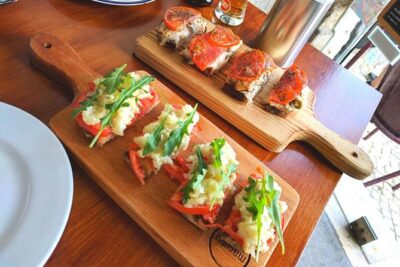 ★ 5.0Lisbon Small-Group Food Tour with 18 Tastings in Alfama DistrictFrom $1261,967 reviews
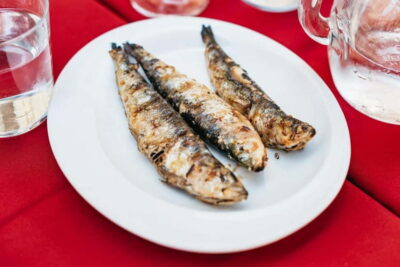 ★ 4.9Lisbon: Baixa District Food Tour with Dinner and DrinksFrom $821,870 reviews
 ★ 4.5Lisbon E-Bike Tour Commerce Square, Mouraria and AlfamaFrom $301,688 reviews
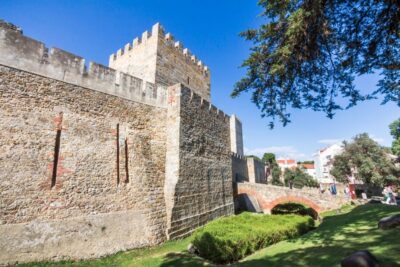 ★ 4.6Lisbon: Sao Jorge Castle Skip-the-Line Ticket with GuideFrom $371,191 reviews