
REVIEW · COIMBRA AND THE UNIVERSITY CITY
Conimbriga and The Roman Tour
Roman ruins do not have to feel like homework. This 4-hour Coimbra outing pairs major archaeological remains with two museum stops that explain how Roman life actually worked in this region. You also get round-trip transit in a small group, so you spend less time figuring things out and more time looking closely.
What I like most is the mix of engineering and daily life. You start at Alcabideque, where the aqueduct water story begins at a collecting basin that is still used as a local pond, and then you move into museums that map the site back to real buildings, tools, mosaics, and routines.
One thing to consider: the schedule depends on museum hours. Museu PO.RO.S is closed on Mondays, and like any site in real life, Conimbriga can also face unexpected closures, so it helps to plan your day with flexibility.
In This Review
- Key highlights that make this tour worth it
- Roman ruins by the calendar: how the 4-hour plan really works
- Alcabideque: where the aqueduct story starts at a village pond
- PO.RO.S in Sicó: the museum that makes the ruins make sense
- Conimbriga’s monographic museum: where Roman life turns tangible
- Conimbriga itself: mosaics, baths, and working water systems
- The guide makes the difference: what you’ll notice on the ground
- Pickup and getting there: Coimbra logistics without the stress
- Price and value: what $102.80 really buys you
- Small-group touring in weather: what to pack and how to plan
- Who this tour suits best, and who might want a different fit
- Should you book Conimbriga and The Roman Tour?
- FAQ
- What does the tour include?
- Is hotel pickup included?
- Where does the tour start?
- How long is the tour?
- Do I need to pay museum admission?
- How many people are in a group?
- What language is the tour offered in?
- What kind of transport do we use?
- Does the tour run in bad weather?
- Is a mobile ticket provided?
- Can I cancel for a refund?
Key highlights that make this tour worth it
- Alcabideque aqueduct ruins starting at the original collecting basin, next to a village pond
- PO.RO.S multimedia museum to connect the big ruins to what life in Roman Portugal looked like
- Conimbriga museum focus on everyday routines, worship, architecture, and the forum world
- Small private group with a max of 10 people, so questions and pacing are easier
- Photo included: one souvenir photo taken by the guide team
- Hotel pickup options for central Coimbra, Condeixa-a-Nova, and Penela (parking required)
Other Coimbra university and old-town visits we have reviewed in Coimbra
- Coimbra: Live Fado Show with Glass of Port Wine★ 4.7 · 998 reviews
- Guided tour of the University and city of Coimbra.★ 5.0 · 377 reviews
- Coimbra: Mondego River Kayaking Tour★ 4.7 · 324 reviews
- Coimbra: Guided tour with a local student★ 5.0 · 170 reviews
Roman ruins by the calendar: how the 4-hour plan really works
This is a tight half-day tour, built for people who want the highlights without racing around. The pacing is straightforward: you visit Alcabideque for about 30 minutes, then you spend time inside two museums, and you finish with the Conimbriga experience.
The time math matters. Stop durations are listed as 30 minutes, 1 hour, and 2 hours, which already fills most of the 4-hour window once you add driving and settling in. If you enjoy lingering over mosaics and details, you may want to mentally prepare for a fast but focused day.
Also, budget is part of the math. The tour price is about $102.80 per person, but museum admissions for PO.RO.S and the Conimbriga museum are not included, so plan on extra ticket costs on top.
Alcabideque: where the aqueduct story starts at a village pond
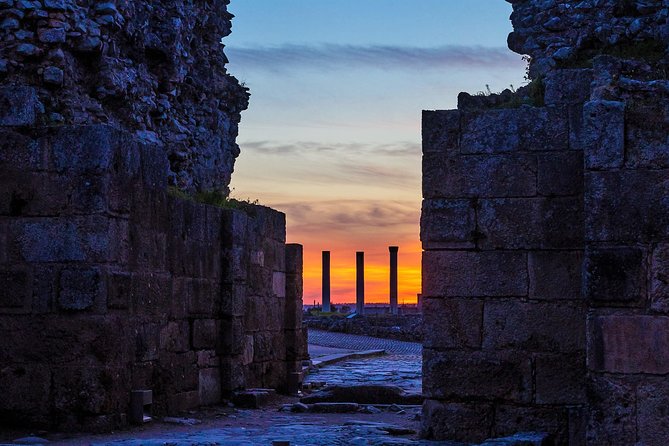
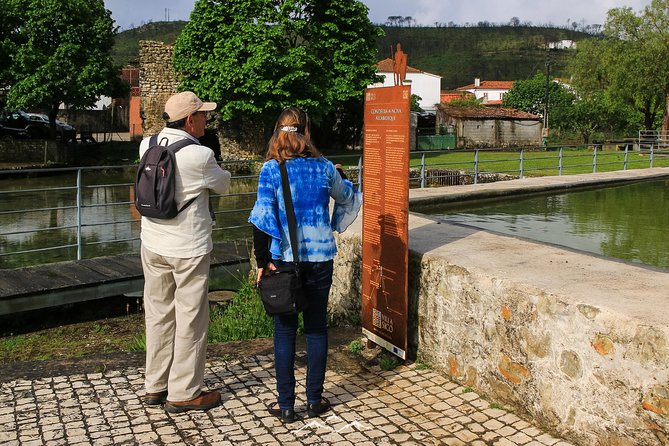
Your day opens at Alcabideque, tied directly to how Conimbriga was supplied with water. This is not just ruins-from-a-distance. You’ll be at the aqueduct’s collecting basin starting point, and the setting is still active because the collecting basin is used as a local village pond.
Beside that pond are the remains of a castellum, a specialized structure that acted like a cleaning basin. It’s a small idea in words, but when you’re standing next to it, you see how serious Roman water management was. The tour also connects the route of the water: after about 3.5 km, the water reached Conimbriga, partly carried by substructures, and it ended at a castellum aquae with a complex structure.
This stop is about getting your bearings fast. I like this beginning because it turns Conimbriga from a generic ruin site into a living system, water in, city life out. And there’s a practical win too: the admission ticket for this stop is listed as free.
PO.RO.S in Sicó: the museum that makes the ruins make sense
Next is Museu PO.RO.S, Roman Portugal Museum in Sicó. It’s a newer museum space, built as a multimedia and virtual-style project that works alongside Conimbriga as part of a Roman legacy tour.
Why this matters: if you show up at a Roman site without context, mosaics can look pretty but still feel random. PO.RO.S is meant to give you the connecting thread before you walk the larger remains.
Plan around closures. PO.RO.S is closed on Mondays, so if your travel dates land on a Monday, expect this stop may not happen as part of the schedule. If you’re trying to keep the day exactly as designed, aim for Tuesday through Sunday when possible.
Admission here is not included in the tour price, so you’ll want to add museum entry fees to your day. The upside is that this stop takes about 1 hour, which is enough time to orient yourself without turning the tour into a museum marathon.
Conimbriga’s monographic museum: where Roman life turns tangible
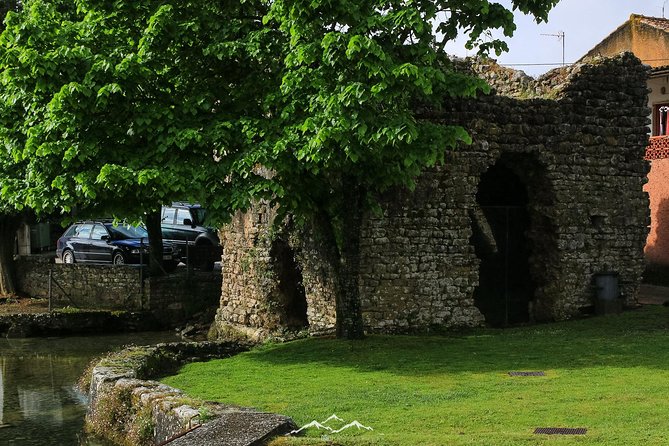
The second museum stop is Museu Monografico de Conimbriga, Museu Nacional. This is where the story tightens from water systems and context into lived experience.
Conimbriga had people well before Romans, with prehistoric habitation. The Roman military presence arrives in 139 BC, and the city later becomes the prosperous capital of the Lusitania province. Under Emperor Augustus, the urban area grows, and that’s when key everyday buildings take shape, including the forum, an amphitheatre, and thermal baths.
In the later period, a three-nave basilica appears in the town center, and the museum frames how the site changes over time. That timeline is important because it stops you from treating the ruins like one single snapshot.
Inside, you’re guided through rooms that focus on objects found during excavations and what they imply about daily life. The museum covers religious life, architecture, manor houses and decoration, and the forum environment. In practical terms, this helps you walk the ruins later and recognize what you’re seeing.
This stop runs about 2 hours. Admission is not included, so it’s another paid add-on. Still, I think it’s the kind of stop that can make Conimbriga click, especially if you’re the type who likes to understand why things were built, not just what’s still standing.
Conimbriga itself: mosaics, baths, and working water systems
The tour’s heart is getting you up close with major Roman ruins at Conimbriga. This site rewards close attention. The remains are not just walls, they’re connected spaces: homes, public areas, and building systems.
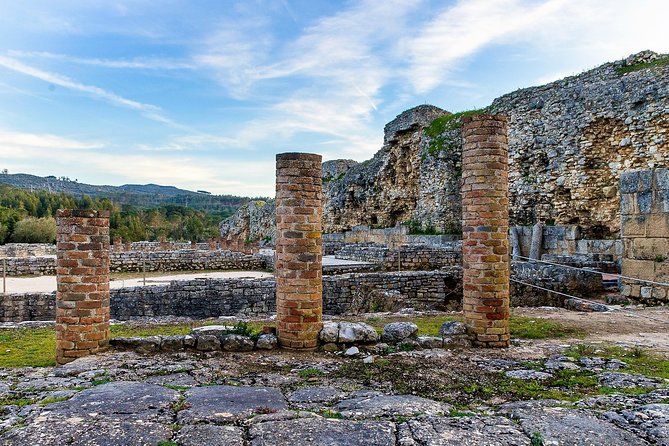
You can expect the kind of details that make Roman architecture feel practical. Mosaics are a major draw, and they’re often described as well preserved. Fountain-related features also come up in the experience, including water elements connected to the city’s systems.
Bath structures and visible water systems are another highlight. Roman baths were not just about hot water, they were about circulation, maintenance, and design that supported daily routines. When you’re looking at these remains with an explanation, you start to see the logic behind the complexity.
One useful note, based on what can happen in real life: if the site is unexpectedly closed due to strikes or other issues, the guide may shorten the time on-site and adjust the day. In at least one case, the day included extra Roman-themed stops nearby, such as seeing a local artist cutting mosaic stones and viewing a house built on Roman arches against Roman walls. That kind of pivot is not guaranteed, but it shows the tour team tries to protect your time.
The guide makes the difference: what you’ll notice on the ground
This is a private tour with a max of 10 people per booking, and the guide is part of what makes it work. You get a driver/guide, plus a professional photographer guide, and that combination shows up in how you move and how often you stop to look.
You may meet guides such as Alfredo, or other team members like Antonio or Ivone, depending on the day. The common thread is the way they explain what you’re seeing in plain language, then slow down when a question matters. I also like that the group size is small enough that the pacing can be adjusted.
That pacing shows up in practical ways. Some people need a little extra time on the walkways, and the guide can tailor the route and speed so you don’t feel left behind. Others just want time to focus on mosaics, fountains, and building layouts, and a smaller group makes that easier.
One inclusion that people often appreciate is the included souvenir photo. The tour lists one souvenir photo included, and it’s taken by the guide team. If you care about getting a photo, this is a good moment to engage, because the photo is part of the value.
Pickup and getting there: Coimbra logistics without the stress
From a planning standpoint, this tour is set up to remove friction. The meeting point is Largo da Portagem in Coimbra, and the tour ends back at the same meeting point.
Hotel pickup and drop-off are included only if you select that option. If you do, pickup covers most hotels in central Coimbra, plus Condeixa-a-Nova and Penela as long as parking is available. If you’re outside those areas, pickup may be possible for an additional fee of 10€ to 20€.
This matters because miscommunication about pickup is the most common kind of snag on tours like this. When you book, I’d confirm that hotel pickup is checked and that your hotel is within the pickup zone, and I’d also assume parking limitations could affect pickup.
The transit itself is by private vehicle, air-conditioned, and designed for a group of up to 10. You’ll spend less time transferring between buses or taxis, which is a big deal when the whole itinerary is only about 4 hours.
Price and value: what $102.80 really buys you
Let’s talk value, because this is not a $102.80-or-nothing deal. You are paying for transportation, interpretation, and a structured day across multiple sites.
Included items:
- Driver/guide
- Professional photographer guide
- Transport by private vehicle (air-conditioned)
- Hotel pickup and drop-off when the option is selected
- One souvenir photo
Not included items:
- Food and drinks
- Museum admissions for Museu PO.RO.S and Museu Monografico de Conimbriga – Museu Nacional
- Additional souvenir photos without logos (available to purchase)
So the true cost is the tour price plus museum tickets you pay on-site. The free stop at Alcabideque helps balance that, but you should still expect to budget for two paid museum entries.
Where the price starts to feel fair is the structure. In one afternoon, you’re not just viewing ruins, you’re also getting the context for them through PO.RO.S and the Conimbriga museum. And you’re doing it with a guide and private transport, not on your own with multiple ticket lines and bus schedules.
If you love Roman history but you also want it to feel practical, this format can be a good deal.
Small-group touring in weather: what to pack and how to plan
The tour operates in all weather conditions, so you should dress for what you’ll face that day. Bring a layer even in warmer months if you expect morning or late-day breeze, and wear shoes that handle walking on uneven surfaces.
The duration is short enough that weather won’t drain you for a full day. Still, if you’re sensitive to heat or sun, go for light clothing and plan water and snacks outside the included items.
If your day is Monday, remember PO.RO.S is closed. That doesn’t mean the whole tour is useless, but it does mean the planned museum component may not be available, and your schedule may be adjusted.
Who this tour suits best, and who might want a different fit
This tour is a strong fit if you want:
- A guided Roman ruins experience instead of wandering and hoping it all clicks
- A structured introduction to Conimbriga’s story, plus museum reinforcement
- A small group day that’s short enough to combine with other Coimbra plans
It’s also a good choice if you appreciate Roman engineering. Alcabideque and the aqueduct setting give you a physical start to the water supply story.
You might choose a different plan if:
- You only want the ruins and would rather skip museum time, since the tour builds in two museum stops.
- Your schedule is locked to Monday, because PO.RO.S is closed on Mondays.
- You are extremely cost-sensitive, because museum admission fees are on top of the tour price.
Should you book Conimbriga and The Roman Tour?
I’d book this if you want Conimbriga to feel understandable, not just impressive. The best part of the experience is how the day links water systems at Alcabideque, museum context at PO.RO.S, and Roman daily life at the Conimbriga museum to what you see at the site.
Before you book, do two quick checks. First, confirm whether you selected hotel pickup and whether parking at your hotel is possible. Second, double-check your day of the week so you don’t land on Monday if you were hoping for PO.RO.S as written.
If you get those two things right, this half-day tour is a very practical way to see major Roman ruins from Coimbra without turning the trip into a logistics puzzle.
FAQ
What does the tour include?
The tour includes a guided experience across Alcabideque ruins related to the aqueduct, Museu PO.RO.S, and Museu Monografico de Conimbriga – Museu Nacional, along with time at the Conimbriga Roman ruins. It also includes private transport, a driver/guide, and one souvenir photo.
Is hotel pickup included?
Hotel pickup and drop-off are included if you select that option. Pickup is available from most hotels in central Coimbra, Condeixa-a-Nova, and Penela if parking is available. Pickup from other locations may be available for an additional fee of 10€ to 20€.
Where does the tour start?
The tour starts at Largo da Portagem, 3000-337 Coimbra, Portugal, and it ends back at the same meeting point.
How long is the tour?
The duration is about 4 hours.
Do I need to pay museum admission?
Museum admissions are not included for Museu PO.RO.S and Museu Monografico de Conimbriga – Museu Nacional. Admission for Alcabideque is listed as free.
How many people are in a group?
A maximum of 10 people per booking. This is a private tour/activity, so only your group participates.
What language is the tour offered in?
The tour is offered in English. A multi-lingual guide may operate the tour.
What kind of transport do we use?
Transport is by private vehicle, and the vehicle is air-conditioned.
Does the tour run in bad weather?
It operates in all weather conditions. The guidance is to dress appropriately for the conditions.
Is a mobile ticket provided?
A mobile ticket is offered.
Can I cancel for a refund?
Free cancellation is available. You can cancel up to 24 hours in advance for a full refund, and changes less than 24 hours before the experience start time are not accepted.
Other Days Out Around Coimbra





Coimbra and the University Hill, Other Visits

Newly added around Coimbra
- Lousa Mountain Private Tour
★ 5.0 · 88 reviews - An adventure through the Schist Villages of Lousã
★ 5.0 · 98 reviews - Convent of Christ Tour “Portugal in the Map” – Visit Tomar with a local guide!
★ 5.0 · 105 reviews - Schist Villages at Lousa Mountain
★ 5.0 · 127 reviews - Coimbra: Barca Serrana Traditional Boat Trip
★ 4.6 · 127 reviews - Conimbriga and The Roman Tour
★ 5.0 · 132 reviews - Joanina Library & Coimbra University | Private Former Alumni Tour
★ 5.0 · 135 reviews - Portugal dos Pequenitos entry ticket
★ 4.2 · 167 reviews - Coimbra: Guided tour with a local student
★ 5.0 · 170 reviews - Coimbra: Mondego River Kayaking Tour
★ 4.7 · 324 reviews
Other boats, other operators: Coimbra and the University City.
 ★ 4.7Coimbra: Live Fado Show with Glass of Port WineFrom $18998 reviews
 ★ 5.0University of Coimbra guided tours without queueFrom $66518 reviews
 ★ 5.0Guided tour of the University and city of Coimbra.From $82377 reviews
 ★ 4.7Coimbra: Mondego River Kayaking TourFrom $35324 reviews
 ★ 4.5Aveiro and Coimbra Small Group Tour with Moliceiro Boat CruiseFrom $126236 reviews
 ★ 4.6From Porto: Aveiro & Coimbra Tour with Moliceiro Boat CruiseFrom $125219 reviews
 ★ 5.0Coimbra: Guided tour with a local studentFrom $23170 reviews
 ★ 4.5Full Day Tour from Porto to Coimbra and Aveiro with River CruiseFrom $119166 reviews
Filed under