
REVIEW · WINE TOURS
Food & Wine Lisbon Tour with Local Guide in Private Eco Tuk Tuk
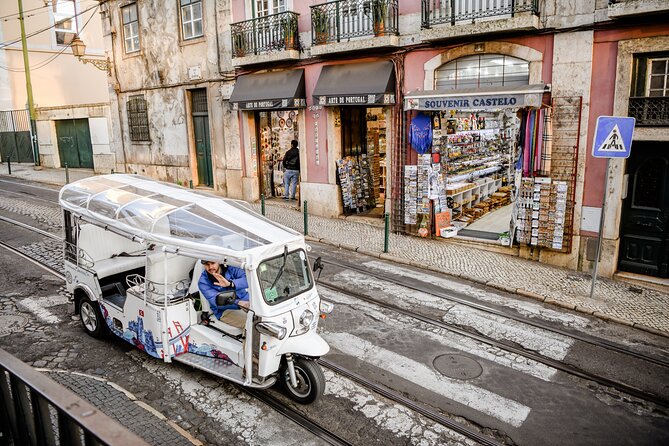
Lisbon smells like food and riverside air, fast. This private electric eco tuk tuk tour is built to cover major neighborhoods in 3 hours without tiring yourself out. You get an English-speaking local guide and a custom-feel ride, even though the route and photo stops are preset.
What I like most is that the “food and wine” part is real, not a throw-in. You’ll get snacks and different tastings of wine and cheeses, and the menu can be adapted for vegetarians. My second favorite thing is the way the stops mix local everyday life with iconic Lisbon views, so the whole ride feels useful.
One possible catch: this tour is called Food & Wine, but it’s still a sightseeing tour first. If you’re expecting a long, heavy tasting menu, plan for small samples rather than a full meal experience.
In This Review
- Key highlights worth planning around
- Electric Tuk Tuk Lisbon: Why this style of tour works
- Price and what you actually get for $107.03
- Food and wine tastings, what to expect (and how to judge it)
- Cais do Sodré: Markets, fado bars, and riverside atmosphere
- Chiado: Elegant cafés, book history, and easy strolling
- Bairro Alto: Cobblestones, fado venues, and late-night energy
- Baixa: The 1755 rebuild and Lisbon’s grand squares
- Sé de Lisboa and the old spine of the city
- Largo das Portas do Sol: The view that ties Lisbon together
- Miradouro Nossa Senhora do Monte in Graça: Panoramas and a chapel
- São Vicente de Fora and the National Pantheon: Spiritual Lisbon with structure
- Chafariz de El-Rei: The water story you can actually see
- Praça do Comércio: Finish where the riverfront power used to be
- Guides make the difference, and names matter
- Practical tips so you enjoy every stop
- Should you book this Food & Wine Lisbon Tour in a private eco tuk tuk?
- FAQ
- How long is the Lisbon Food & Wine tour?
- What does the tour include for food and drink?
- Is the tour private or shared?
- Does the tour offer pickup?
- Can vegetarians be accommodated?
- Is the vehicle electric?
- Where does the tour start?
- Does the tour run in bad weather?
- What is the cancellation refund policy?
- Are gratuities included?
Key highlights worth planning around
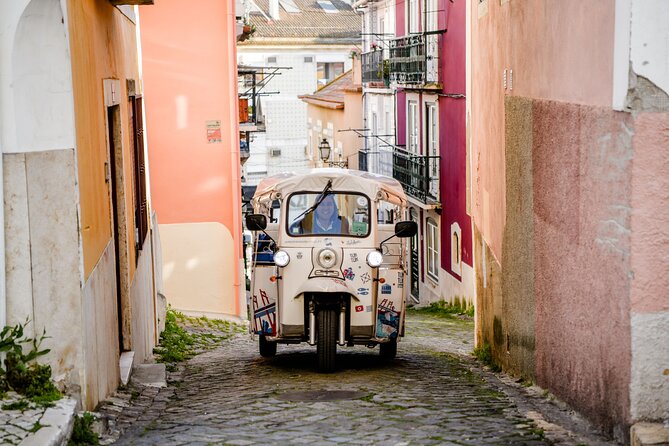
- Private eco tuk tuk for your group only with a driver-guide, so you can ask questions in real time
- 100% electric vehicle plus rain and wind covers, which matters more in Lisbon than you’d think
- Food-and-wine tastings included (with vegetarian adaptation), not just a stop at a restaurant
- No-queue start and planned photo stops so you spend time seeing, not waiting
- Miradouros plus classic landmarks in one logical loop, without fighting steep hills on foot
Other guide-led outings in Lisbon we have booked
- Best of Lisbon Small-Group Guided Walking Tour★ 5.0 · 4,869 reviews
- Lisbon: Private Guided Tuk-Tuk Tour with Hotel Pickup★ 4.9 · 4,552 reviews
- From Lisbon: Fátima, Nazaré, Batalha, and Óbidos Guided Tour★ 4.7 · 3,060 reviews
- Guided Tour to Sintra, Pena, Regaleira, Cabo da Roca and Cascais★ 5.0 · 2,978 reviews
Electric Tuk Tuk Lisbon: Why this style of tour works
Lisbon’s charm comes with a catch, lots of hills, lots of stairs, and streets that are too tight for most tour buses. That’s why I’m a fan of this format: a small private tuk tuk that gets you through narrow lanes while keeping your day moving. For 3 hours, it’s a smart way to cover both “pretty” Lisbon and “real life” Lisbon.
The vehicle is 100% electric and sustainable, and you’re not stuck in a smoky engine box. You also get blankets and protective covers for rain and wind. Even if you catch a breezy day near the Tagus, you’re not shivering through viewpoints.
Because it’s private, the pace feels smoother. And because there’s a driver who knows the streets, you spend less mental energy figuring out where to go next. That’s real value in a city where map pins can take you on a stair marathon.
Price and what you actually get for $107.03
At about $107.03 per person for roughly 3 hours, this is not the cheapest way to tour Lisbon. But it’s not overpriced if you compare it to what typically drives cost in Lisbon: private transport, guidance, and time-saving routes.
Here’s what you’re paying for:
- A private vehicle for your group only, not a shared bus shuffle
- Snacks and tastings included, which offsets the “I’ll just buy my own food” approach
- No-queue or waiting-time start, so you’re not wasting the best part of your day
- A local guide who can explain how the city fits together, street by street
One more practical point: your booking timing matters. This tour is commonly reserved about a month in advance on average, which suggests it stays popular. If you’re traveling in peak season, book early so you don’t have to compromise on time.
Food and wine tastings, what to expect (and how to judge it)
Food and wine are included as different tastings of wine, cheeses, etc. That wording is important. This is not a full-course meal tour with multiple seat-down plates. It’s more like snack-sized tastings paired with the places that explain Lisbon’s food culture.
So how do you judge whether it’s right for you?
- If you want a guided day that includes some food moments along the route, you’ll likely feel satisfied. The tastings are built into the experience, so you’re not hunting for a place after sightseeing.
- If you’re mainly chasing a heavy eating schedule, adjust expectations. The tasting portion is designed to keep you moving between neighborhoods and viewpoints.
Vegetarians get support here, too. The menu can be adapted for vegetarians, which is a big deal on tours that casually assume everyone eats the same things. If you have dietary needs beyond vegetarian, I’d still message ahead so the guide can plan correctly.
Cais do Sodré: Markets, fado bars, and riverside atmosphere
This ride starts near the riverside district of Cais do Sodré, an area known for nightlife and restaurants. Even if you visit in daylight, the energy is there. It’s one of those places where Lisbon feels like it’s always on the edge of something happening.
One stop centers on the Ribeira Market, a 19th-century food hub where the food court becomes the activity center. It’s a good place for a quick tasting rhythm, because you’re surrounded by vendors and smells, but you’re not dealing with a single formal dining experience.
You’ll also pass areas connected to fado culture, including Pink Street, where bars and restaurants line up for music nights. This is the part of Lisbon where nightlife isn’t just for tourists. It’s rooted in local tradition.
And if the weather’s kind, the Ribeira das Naus promenade gives you that Tagus River feel. You get a sense of why Lisbon’s geography shaped its life, fishing, trade, and the long history of ships.
More private, just-your-group bookings in Lisbon we have reviewed


Chiado: Elegant cafés, book history, and easy strolling
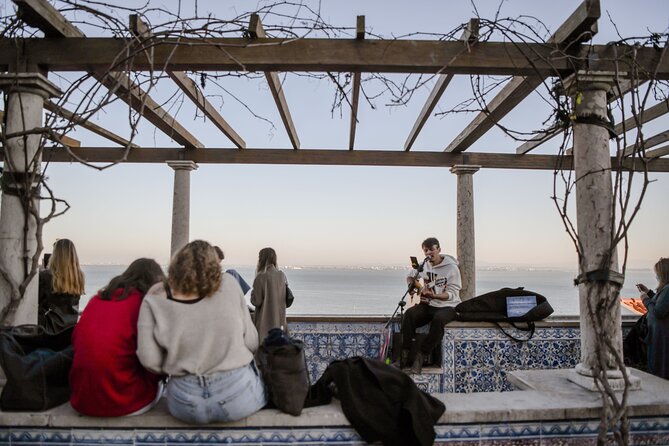
From Cais do Sodré, the tour moves into Chiado, Lisbon’s historic, stylish center between Baixa and Bairro Alto. Chiado is where Lisbon looks polished. But it doesn’t feel staged, because you’re still walking through neighborhoods locals actually use.
Key sights include:
- Café A Brasileira, a historic café tied to Lisbon’s cultural life
- Livraria Bertrand, the famous bookstore often described as the world’s oldest operating bookstore
- São Carlos Theater, a landmark for music and performance
Chiado also gives you traditional squares, art galleries, theaters, and luxury shops. Practical takeaway: this is a great break from the steepest streets. It’s still walking-friendly compared to the hilliest parts of Alfama and Graça.
If you get motion-sensitive, you may like this segment. It’s not just viewpoints. It’s also calmer streets where you can breathe and take photos without constant up-and-down effort.
Bairro Alto: Cobblestones, fado venues, and late-night energy
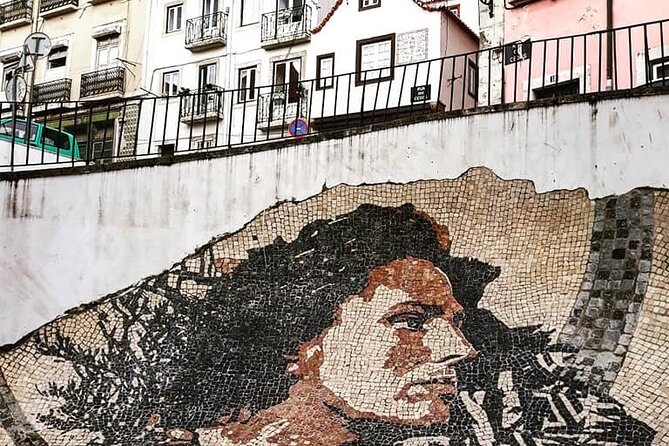
Next comes Bairro Alto, perched on one of Lisbon’s seven hills. This is the neighborhood famous for nightlife and a bohemian atmosphere, but it’s more than a party zone.
By day, Bairro Alto can feel like a maze of narrow cobblestone streets with shops, small galleries, and cafés. You’ll likely notice the architecture and the mix of older buildings with more modern storefronts. Then as evening gets closer, it flips into a network of bars, late-night cafés, and fado venues.
The value of stopping here during a tour is that you see the neighborhood’s structure without needing to navigate it alone. A lot of Lisbon’s “cool” feels confusing if you wander without a plan.
One consideration: cobblestones can be tough. If your shoes are the squishy type, good. If not, you’ll feel it in your feet by the end of the afternoon.
Baixa: The 1755 rebuild and Lisbon’s grand squares

Baixa is Lisbon’s commercial and architectural heart, and it’s also where you learn the city’s big turning point. After the 1755 earthquake destroyed much of the older part of the city, Baixa was rebuilt with a more ordered street grid. That plan is still visible today.
You’ll connect with major landmarks like:
- Praça do Comércio by the Tagus, one of Europe’s largest squares
- Rossio Square, a lively hub for cafés and shopping
- Arco da Rua Augusta, the monumental arch leading toward the river
- Santa Justa Lift, the iconic wrought-iron elevator
Baixa is also an excellent “orientation” neighborhood. Once you see it, you understand how Lisbon organizes movement across hills, from grand riverfront spaces up toward smaller alleys.
The main drawback here is that Baixa is central and popular. Even with a private tour, expect people around the big squares and walkways. The tuk tuk helps with getting you positioned quickly, but it can’t eliminate foot traffic.
Sé de Lisboa and the old spine of the city

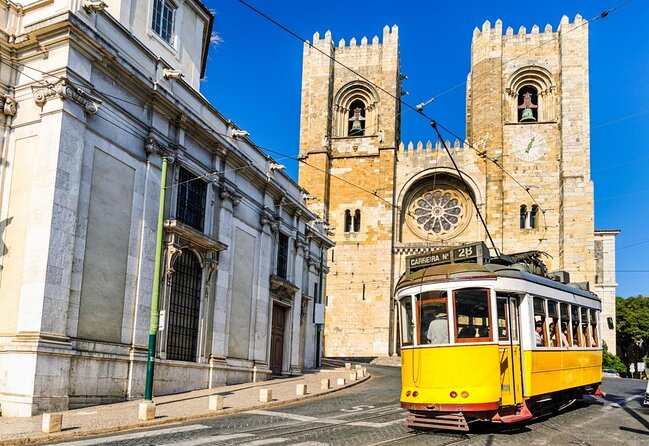
Next up: Basilica of Saint Mary Major of Lisbon, also known as Sé de Lisboa. Construction began in 1148, just a year after Afonso Henriques conquered the city. That timeline alone gives this church weight. It’s considered the oldest church in Lisbon, so you’re seeing not only architecture, but time layers.
Why this stop fits with a food and wine tour: older churches and marketplaces often sit close together in European cities because communities formed around daily life, trade, and gathering spots. You’re not just looking at a building, you’re getting a sense of how Lisbon grew into itself.
Sé de Lisboa is a good “pause” stop, too. It gives your legs a break from nonstop streets, and it sets context for the neighborhoods that come after in Alfama and Graça.
Largo das Portas do Sol: The view that ties Lisbon together
Now you’re in Alfama, at Largo das Portas do Sol, one of Lisbon’s most iconic viewing squares. This is the spot where your eyes can sweep across:
- The Tagus River
- Baixa Pombalina
- Castelo de São Jorge
The name Portas do Sol connects to old city walls, with a gate facing east so morning sunlight could enter. Today, the square works like a meeting point and a photo stop, and it’s also a classic sunset area.
For practical reasons, I like this stop because the viewpoint helps you “place” everything you just saw. It turns the route into a story you can remember, rather than a list of streets.
Miradouro Nossa Senhora do Monte in Graça: Panoramas and a chapel
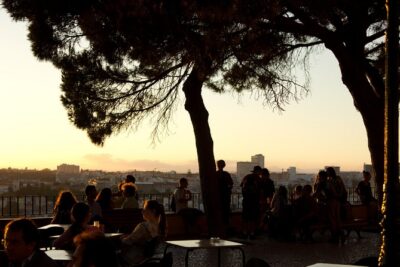
One of the tour’s top viewpoint moments is Miradouro Nossa Senhora do Monte in Graça. It’s described as one of Lisbon’s most iconic viewpoints, with wide panoramic views across the city and toward the Tagus.
This stop also has a built-in history layer. The site connects to the reconquest period in the 12th century, and it includes the Chapel of Nossa Senhora do Monte. The chapel became a pilgrimage site, and it saw renovations over time, including after the 1755 earthquake.
If you want a single moment that feels like Lisbon’s “big picture,” this is it. The tuk tuk gets you close, then you can take in the view without a long hike.
My only note: viewpoints mean wind. Even if the day looks calm, you might appreciate the tour’s protective covers when you pause for photos.
São Vicente de Fora and the National Pantheon: Spiritual Lisbon with structure
The route then crosses into the area where the Monastery of São Vicente de Fora sits, on high ground near the borders of Graça and Alfama. It’s called de fora because of historical jurisdiction, a detail that sounds small until you realize Lisbon’s old boundaries shaped where influence lived.
From there, you reach the National Pantheon of Portugal, located in the Church of Santa Engrácia. The building history goes back to an earlier church ordered in 1568 by Infanta Maria, daughter of King Manuel I. It became a pantheon in 1916.
What I like about this stop for travelers is that it gives you an anchor. Lisbon can feel like it’s all viewpoints and street corners, but places like these remind you that Lisbon also runs on institutions, rituals, and civic memory.
Chafariz de El-Rei: The water story you can actually see
One of the most interesting stops on the route is the Chafariz de El-Rei, described as the first public ornamental fountain in Lisbon. It dates back to the 13th century, built using excellent groundwater in Alfama.
Here’s why this matters beyond “pretty fountain” status:
- The water supply system ties into Lisbon’s Age of Discovery era
- Channeling of water from springs supported ships, with references to 1487
- The current façade dates from 1864
You can also learn about the social design of the fountain. It once had multiple gutters, each reserved for a social group. That turns a simple architectural feature into a window into how people lived and shared public space.
If you like small details that reveal big systems, this is a great stop. And because it’s tangible, it’s easier to remember than a purely scenic overlook.
Praça do Comércio: Finish where the riverfront power used to be
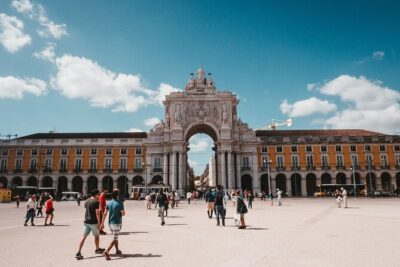
The tour’s finishing point in downtown Lisbon is Praça do Comércio, still known historically as Terreiro do Paço. This square sits next to the Tagus River and was the palace site of Portuguese kings for about two centuries.
It’s huge, around 36,000 square meters, bordered by arches. Even if you’re not counting measurements, you’ll feel the scale. This is the kind of place where Lisbon looks confident and planned, especially compared to the maze-like streets elsewhere.
It’s a fitting end to a food and wine day, because markets and riverside commerce belong together. This is where you can step back, look around, and understand why Lisbon’s location shaped its culture.
Guides make the difference, and names matter
A private tour is only as good as the person behind the steering wheel and the story delivery. The guide is your translator for Lisbon, whether you care most about viewpoints or food culture.
If you can request a guide, you may see names come up, like Arthur and Thiago. One standout quality from guide comments is the sense that they genuinely love Lisbon and explain it clearly. On a 3-hour route, that matters. You want context fast, and you want it tied to what you’re actually seeing outside your window.
Practical tips so you enjoy every stop
A few things I’d plan for, based on how this tour is built:
- Wear comfortable shoes for cobblestones, especially around Bairro Alto.
- Bring a light layer even in warm weather. Lisbon can turn breezy quickly near the river and viewpoints.
- If you’re sensitive to walking, note that the tuk tuk brings you close, but viewpoints and landmarks still involve short steps and standing for photos.
- Expect that the route and photo stops are preset. The tour can adjust for street closures or demonstrations, but it’s not designed for detours.
- If you’re booking from a cruise, double-check the meeting point and stay inside the terminal area near the correct exit. This is a tour that depends on everyone being in the right spot on time.
Also, one unusual detail: there’s a minimum mandatory weight of 9 kg and a minimum age of 2 years. That can matter for families booking a private vehicle.
Should you book this Food & Wine Lisbon Tour in a private eco tuk tuk?
Book it if you want:
- A 3-hour private route that covers multiple Lisbon neighborhoods without turning your day into a stair workout
- A taste of wine and cheese included with sightseeing
- Expert local guidance and planned photo stops, so you’re not wasting time figuring out where to stand
I would not book it as your only food plan in Lisbon if:
- You’re chasing a heavy, restaurant-style tasting itinerary, all meal-focused and long seated courses
- You need major flexibility to modify the route or linger extra time at one spot
My final take: this is a strong value for people who want a guided sampler of Lisbon’s culture, views, and food moments in a short time window. If you like learning while moving, and you’re happy with snack-sized tastings, it’s a smart way to get oriented fast.
FAQ
How long is the Lisbon Food & Wine tour?
It runs for about 3 hours.
What does the tour include for food and drink?
It includes snacks and different tastings of wine, cheeses, etc.
Is the tour private or shared?
It’s a private tour/activity. Only your group participates.
Does the tour offer pickup?
Pickup is offered, but pick-up and drop-off at your hotel is not included. For the 3- and 4-hour options, pickup can be arranged at the Lisbon Cruise Port (Jardim do Tabaco Quay).
Can vegetarians be accommodated?
Yes. The menu can be adapted for vegetarians.
Is the vehicle electric?
Yes. The tour uses a 100% electric and sustainable vehicle.
Where does the tour start?
The start point is Lisbon Cruise Port, Jardim do Tabaco Quay, at Av. Infante Dom Henrique, 1100-651 Lisboa, Portugal.
Does the tour run in bad weather?
Tours run in rain or heat. Cancellation happens only under extreme conditions.
What is the cancellation refund policy?
You can cancel for a full refund up to 24 hours in advance of the experience start time. If you cancel less than 24 hours before, you do not receive a refund.
Are gratuities included?
No. Gratuities for the driver-guide are not included.
Other Days Out Around Lisbon





Nobody Else Aboard, Other Private Lisbon Bookings




Guide-Led Outings in Lisbon, More Bookings



Newly added around Lisbon
- Lisbon: Street Art Walk
★ 5.0 · 79 reviews - From Lisbon: Nazare Big Waves and Óbidos Guide Day Trip
★ 4.7 · 79 reviews - Small Group Walking Tour of Belém
★ 4.9 · 80 reviews - Lisbon: Regaleira, Sintra, Cape Rock & Cascais Day Trip
★ 4.6 · 80 reviews - Lisbon: Evening Local Food Crawl with Drink Pairings
★ 4.6 · 80 reviews - From Lisbon: Sintra and Portuguese Coast Private Day Tour
★ 5.0 · 80 reviews - Lisbon: Authentic Fado Show, Dinner and Night Tour
★ 4.6 · 80 reviews - Golden Hour Boat Tour – Sailing by the Monuments with Wine
★ 5.0 · 81 reviews - Hard Rock Cafe Lisbon with Set Lunch or Dinner
★ 4.0 · 81 reviews - Fado Musical Experience with Portuguese Wine & Appetizers
★ 4.5 · 81 reviews
Other boats, other operators: Wine Tours.
 ★ 4.7From Porto: Douro Valley w/ Boat Tour, Wine Tasting & LunchFrom $8219,061 reviews
 ★ 4.8Porto: Live Fado Show with Glass of Port WineFrom $236,498 reviews
 ★ 5.0Winner 2025 Undiscovered Lisbon Food & Wine Tour by Eating EuropeFrom $1256,390 reviews
 ★ 4.6Douro Valley: Wine Tour with Lunch, Tastings & River CruiseFrom $1136,081 reviews
 ★ 5.0Douro Valley: Historical Sites, Wine Experience, Lunch & CruiseFrom $1075,133 reviews
 ★ 5.0Authentic Small Group Douro Wine Tour with Lunch & River CruiseFrom $1334,775 reviews
 ★ 4.7Lisbon: Live Fado Show with Port Wine in Historic CenterFrom $174,166 reviews
 ★ 4.5Porto: Cálem Cellar Tour, Interactive Museum & Wine TastingFrom $234,113 reviews
Filed under