

REVIEW · WALKING TOURS
Best of Lisbon Small-Group Guided Walking Tour
Lisbon, told on foot. A tight group of up to 14 keeps things personal, and guides like Felipe and Jose turn the big squares into clear stories you can remember. You also get the comfort-food hit of a classic pastel de nata plus a wine tasting and tapa, so the walk is fun and not just lectures.
This is a half-day walking tour that hits the city’s key neighborhoods, views, and monuments in a smart order. One thing to keep in mind is that Lisbon streets can be uneven and hilly, so moderate fitness and comfortable grip shoes matter.
In This Review
- Key things that make this tour a standout
- Meeting at Praça Dom Pedro IV and getting oriented fast
- Rossio nerves, São Domingos square, and the city’s most dramatic stair-step streets
- Estação do Rossio: why that train building feels like a landmark, not a station
- Largo do Carmo and the Carnation Revolution, in the middle of a small square
- Santa Justa viewpoint and why elevators belong on your Lisbon list
- Chiado and Rua Augusta: smart shopping streets with a quieter brain behind them
- Baixa after the 1755 earthquake: urban planning you can actually walk through
- Miradouro Chão do Loureiro: the viewpoint break that makes the walking worth it
- Alfama: Moorish roots, fado corners, and narrow alleys that change by the step
- Final stop at Praça do Comércio: where Atlantic travelers were welcomed
- Food and wine: how the included tasting actually fits the route
- Price, value, and who this is best for
- Should you book this Best of Lisbon walking tour?
- FAQ
- How long is the Best of Lisbon small-group walking tour?
- How many people are in the group?
- Where does the tour start and end?
- What food and drink are included?
- Is the tour in English, and do I get a mobile ticket?
- Is there free cancellation, and are service animals allowed?
Key things that make this tour a standout
- Up to 14 people means you can actually hear your guide and ask questions
- Pastel de nata plus wine tasting and tapa gives you a real taste of Portugal during the sightseeing
- A smooth route through Baixa, Chiado, and Alfama helps you understand how the city fits together
- Independence, revolution, and engineering stops connect Lisbon landmarks to big national turning points
- Great photo breaks at viewpoints like Miradouro Chão do Loureiro and along the way into Alfama
- Guides with personality can turn a long walk into a story you keep thinking about
Other Lisbon calcada routes we have followed on foot
- Lisbon: History, Stories and Lifestyle Walking Tour★ 4.8 · 10,902 reviews
- Best of Lisbon Small-Group Guided Walking Tour★ 5.0 · 4,869 reviews
- Best of Lisbon Walking Tour: Rossio, Chiado & Alfama★ 4.9 · 2,700 reviews
- Age of Discoveries Walking Tour in Belém★ 5.0 · 1,513 reviews
Meeting at Praça Dom Pedro IV and getting oriented fast
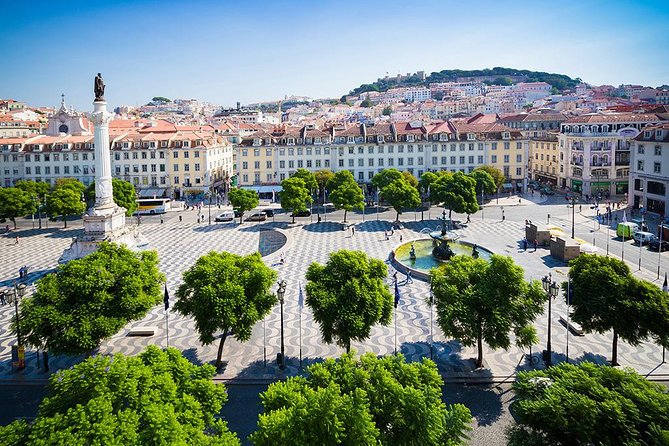
Your day starts at Praça Dom Pedro IV, right in the Baixa neighborhood. This square is the nerve center for a reason: it is central, easy to find, and it sets you up for the rest of the walk. Expect the feel of a real city hub, not a quiet tourist bubble.
One of the clever details your guide explains is how the 19th-century paving and stonework help shape the square’s look, including a wave-like impression tied to the nearby Atlantic. It is the kind of thing you would normally walk past. On this tour, you slow down just enough to notice it.
Then you move onward through nearby squares, with quick stops that keep the pace lively and the history understandable. You will see a classic Lisbon mix of big public spaces and smaller corners where life happens.
What I like most here: you get a map in your head within the first hour, even before you reach the viewpoints.
Rossio nerves, São Domingos square, and the city’s most dramatic stair-step streets
From the start, the tour threads through some of Lisbon’s most recognizable central spots, including São Domingos square, where you pause at the church of São Domingos. The point is not to treat it like a museum visit. It is to show you how these religious buildings, squares, and streets form the scaffolding of daily life.
Next comes one of Lisbon’s most visually striking moments: Restauradores Square, built around Portugal’s fight for independence from Spain in 1640. In the middle, the obelisk rises as a memorial to the Restoration War, with names and battle dates that your guide helps connect to what was happening politically at the time.
This matters because it stops Lisbon from feeling like a pile of pretty buildings. The architecture starts to make sense as a record of power shifts, national pride, and change.
Estação do Rossio: why that train building feels like a landmark, not a station
After the squares, you reach Estação do Rossio, one of the standout historical center buildings. Even if you never plan to ride trains in Lisbon, the exterior is a big deal: it takes inspiration from Manueline architecture, that ornate Portuguese style you see in a few signature structures around the country.
Your guide also points out the tunnel connection toward Sintra. That helps you understand Lisbon as a hub that connects the capital to its surrounding kingdoms, coastlines, and hill towns. If you are thinking about a day trip to Sintra later, this stop gives you a mental link right away.
At this stage, the walking is still manageable, but you start to feel the rhythm of the city: square to street to square, with sudden changes in elevation and view lines.
Practical tip: bring layers. Lisbon weather can shift quickly, especially as you move toward open viewpoints.
Largo do Carmo and the Carnation Revolution, in the middle of a small square

Largo do Carmo is one of those places where the scale is modest, but the story is huge. This stop ties Lisbon to the Carnation Revolution of 1974, the moment a dictatorship after a 48-year rule collapsed.
Your guide frames it in a way that makes the revolution feel grounded, not abstract. You learn why this small area became a key chapter, and you connect it to the broader idea of how public spaces can become stages for political change.
This is also a good moment to slow down. You get a quick historical anchor before heading into neighborhoods where the streets become more atmospheric.
Other guide-led outings in Lisbon we have booked



Santa Justa viewpoint and why elevators belong on your Lisbon list
From Largo do Carmo, the tour moves toward Elevador de Santa Justa. Even if you do not ride it, the stop is worth it for the view options and the sheer Lisbon-ness of the structure. The historic center has plenty of ups and downs, so a viewpoint stop here gives you a break from walking while still feeling like sightseeing.
This is also where a good guide can help you reduce frustration on hills. In past groups, guides have used nearby public elevators and escalators where available to keep the tour feeling easier than you would expect. If your guide does that, you will feel it immediately.
Chiado and Rua Augusta: smart shopping streets with a quieter brain behind them
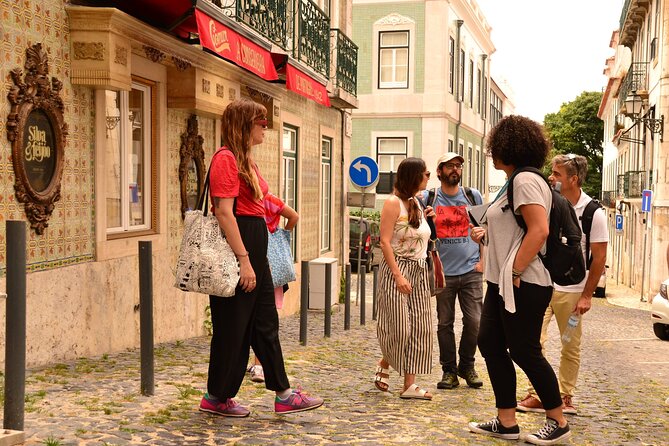
Then you head into Chiado, the elegant neighborhood that developed in the 19th century for the city’s intellectual and wealthier crowd. This is where facades start telling a different story. The focus is on boutiques, theaters, bookstores, and vintage cafés, all packed into streets that feel designed for strolling.
Your guide highlights how the neighborhood’s older identity still shows through what is still standing. It is a nice shift from monuments and memorials. You start seeing Lisbon as a living culture, not just a timeline.
From Chiado, you walk to Rua Augusta, Lisbon’s main downtown street. This is also one of the most expensive and fancy avenues in the city, which makes the energy feel a bit different from the quieter alleys later in Alfama. If you want to understand how Lisbon markets itself, this is a good place to notice it.
Baixa after the 1755 earthquake: urban planning you can actually walk through

Baixa is Lisbon’s downtown, and it is central to understanding the city’s shape. Your guide explains how this area was rebuilt after the 18th-century earthquake, following new rules of urbanism and anti-seismic architecture. It is a rare chance to see city planning explained in human scale, not on a map.
The practical value here is huge. When you walk Baixa, you start to understand why the streets lay out the way they do, and why Lisbon’s center feels more grid-like than some of the older neighborhoods climbing uphill.
You also get time to look around and catch the city’s geometry before continuing to higher viewpoints.
What I like most: the tour makes the rebuilding feel purposeful, not just tragic. You walk through the results of innovation.
Miradouro Chão do Loureiro: the viewpoint break that makes the walking worth it
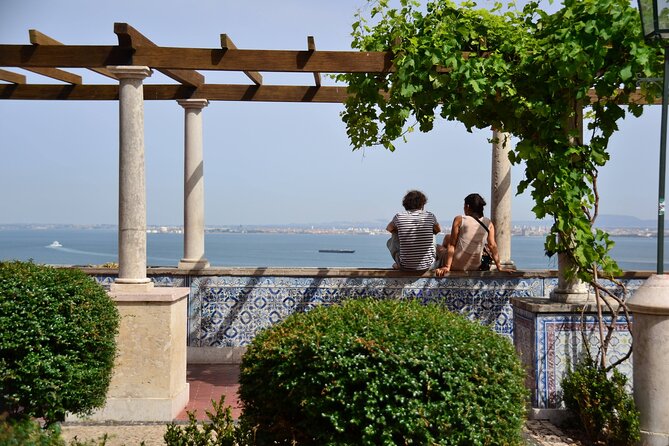
After the downtown stretch, you reach Miradouro Chão do Loureiro for a panoramic view. Viewpoints can be hit-or-miss if they feel like a quick stop and then you rush away. Here, it works because it is placed after Baixa, so you can compare the city center’s structure with the older quarters rising beyond it.
This break also helps if you are traveling with any jet lag. It is a good time to rest your legs, take photos, and get your bearings before the narrow-street part of Lisbon begins.
Alfama: Moorish roots, fado corners, and narrow alleys that change by the step
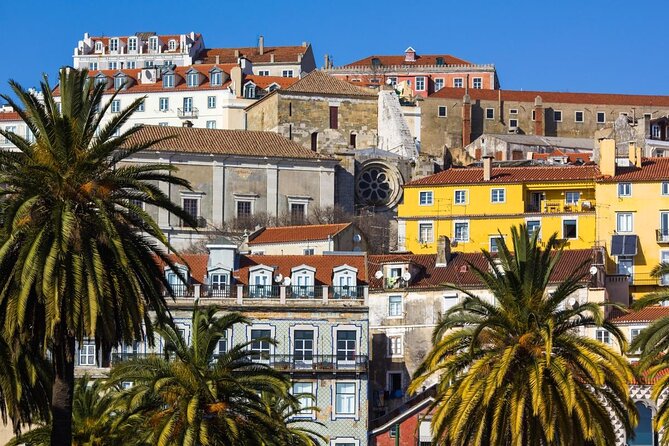
Alfama is the oldest quarter in Lisbon, and it is where the city gets its most atmospheric reputation for a reason. Expect narrow streets, Moorish heritage cues, and plenty of spots linked to fado music.
Your guide points out fado restaurants tucked into alleys and down winding lanes, and helps connect fado’s melancholic tone to the way Portugal expresses feeling through music. Walking into Alfama feels different from Baixa. The streets tighten. The light shifts. You start moving slower without realizing it.
If you want an authentic sensory Lisbon moment, this is it. It is not staged. It is a neighborhood where the soundtrack is part of the architecture.
Shoes matter here: the stones and slopes are part of the charm, but you will want grip and cushion.
Final stop at Praça do Comércio: where Atlantic travelers were welcomed
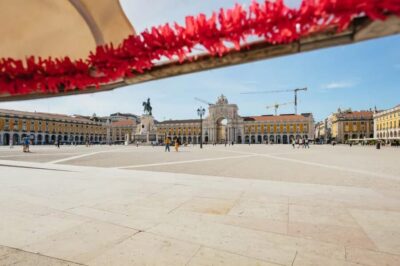
Your tour ends at Praça do Comércio, also known as Terreiro do Paço because of the Royal Ribeira Palace that used to be there before the big 1755 Lisbon earthquake. This is the classic waterfront-feeling square, flat and open, and it lets you finish with a view instead of another climb.
Your guide explains how the reception hall concept worked for travelers arriving from the Atlantic, and then how the area was remodeled as part of the Pombaline downtown rebuilding. Even if you have never studied the earthquake, the story lands because you can see the square’s openness and its relationship to the river.
This ending is smart for another reason: you finish near the kind of Lisbon scenery that makes it easy to keep exploring on your own.
Food and wine: how the included tasting actually fits the route
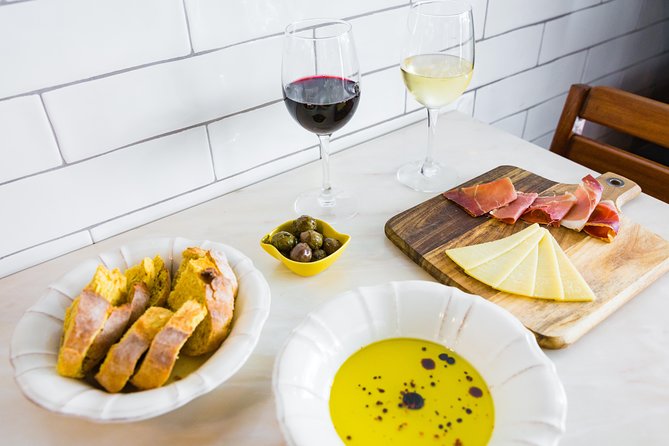
The tour includes a classic pastel de nata pastry, plus a wine tasting and a tapa. This is not just an add-on. It is timed to keep energy up so you can focus on the walking and the stories without getting hungry.
Pastel de nata is a perfect Lisbon entry point. It is iconic, comforting, and easy to enjoy while you are soaking up sights. The wine tasting and tapa add a more local flavor, and it helps you start picking out what kind of places you want to return to later.
If you prefer simple meals, the included snack stops are enough to keep you going until dinner. If you are a big eater, you will still likely want to add a proper lunch or late meal after the tour.
Price, value, and who this is best for
At $23.94 per person for a 3 to 4 hour small-group walk, this is strong value when you factor in the guide plus the food and wine components. You are paying for orientation and interpretation, not just walking in circles.
This tour is especially worth it if:
- you are in Lisbon for a short time and want a big-picture route
- you like history that feels connected to streets and architecture
- you want a guided start so you can explore more confidently afterward
- you enjoy neighborhoods like Chiado and Alfama, but you want context while you’re there
- you value a group that stays small and attentive
It may not be the best fit if:
- you want major museum interiors or long cathedral-style visits
- you expect every major landmark to be visited on the route
- hills and uneven streets are a hard no for you
One guest noted a disappointment that Lisbon Cathedral was not included, so if that is your top priority, plan a separate stop.
Should you book this Best of Lisbon walking tour?
I would book this if you want a high-impact introduction to central Lisbon with a guide who explains what you are seeing and keeps the day moving. The combination of squares, neighborhoods, viewpoints, and included tastings makes it feel like a complete half-day, not a rushed checklist.
Skip it or pair it with other plans if you are chasing specific single-site highlights, or if you have very limited walking ability. Lisbon’s stones and slopes are part of the experience, even when a guide manages the pace well.
FAQ
How long is the Best of Lisbon small-group walking tour?
The tour lasts about 3 to 4 hours.
How many people are in the group?
The group size is capped at a maximum of 14 travelers.
Where does the tour start and end?
It starts at Praça Dom Pedro IV, 1100 Lisboa, Portugal, and ends at Praça do Comércio, 1100-148 Portugal.
What food and drink are included?
The tour includes a local guide, a pastel de nata pastry, and a wine tasting with a tapa.
Is the tour in English, and do I get a mobile ticket?
Yes, the tour is offered in English and you receive a mobile ticket.
Is there free cancellation, and are service animals allowed?
Free cancellation is available up to 24 hours in advance for a full refund. Service animals are allowed.
Other Days Out Around Lisbon





Guide-Led Outings in Lisbon, More Bookings





On Foot Around Lisbon, Other Guided Walks




Newly added around Lisbon
- Lisbon: Street Art Walk
★ 5.0 · 79 reviews - From Lisbon: Nazare Big Waves and Óbidos Guide Day Trip
★ 4.7 · 79 reviews - Small Group Walking Tour of Belém
★ 4.9 · 80 reviews - Lisbon: Regaleira, Sintra, Cape Rock & Cascais Day Trip
★ 4.6 · 80 reviews - Lisbon: Evening Local Food Crawl with Drink Pairings
★ 4.6 · 80 reviews - From Lisbon: Sintra and Portuguese Coast Private Day Tour
★ 5.0 · 80 reviews - Lisbon: Authentic Fado Show, Dinner and Night Tour
★ 4.6 · 80 reviews - Golden Hour Boat Tour – Sailing by the Monuments with Wine
★ 5.0 · 81 reviews - Hard Rock Cafe Lisbon with Set Lunch or Dinner
★ 4.0 · 81 reviews - Fado Musical Experience with Portuguese Wine & Appetizers
★ 4.5 · 81 reviews
Other boats, other operators: Walking Tours.
 ★ 4.8Lisbon: History, Stories and Lifestyle Walking TourFrom $2910,902 reviews
 ★ 4.9Lisbon: Food and Wine Small Group Walking TourFrom $724,082 reviews
 ★ 5.0Porto Walking Tour, Lello Bookshop, River Cruise and Cable CarFrom $723,354 reviews
 ★ 4.7Funchal: Old Town Walking TourFrom $193,233 reviews
 ★ 4.9Best of Lisbon Walking Tour: Rossio, Chiado & AlfamaFrom $232,700 reviews
 ★ 5.0Experience Porto’s Charm: 3-Hour Guided Walking TourFrom $352,432 reviews
 ★ 4.7Madeira: Enjoy a Guided Levada Walk in the Rabaçal ValleyFrom $502,197 reviews
 ★ 4.8Porto: 3-Hour Guided City Highlights Walking TourFrom $342,050 reviews
Filed under