
REVIEW · ALFAMA AND OLD LISBON WALKS
Lisbon Downtown & Alfama with a guide Walking tour
Lisbon’s oldest streets hit fast, and stay with you. This small-group guided walk threads Alfama and the downtown core with clear stories about monuments, earthquakes, and the city’s everyday character.
I especially like how the guide pacing keeps the walk fun, not frantic, and how stories connect buildings to real Portuguese life. Guides such as Bruno and Marina stand out for turning turning points in history into something you can picture on the sidewalk, and you also get Fado Museum context that makes the music feel local, not touristy.
One consideration: it’s a lot of walking on uneven streets and steep stretches, so good shoes and a steady pace matter.
In This Review
- Key highlights I’d circle before you go
- Why this Lisbon Downtown and Alfama walk feels different
- Meeting at Rua dos Douradores, then walking toward the heart
- Praça do Comércio (Terreiro do Paço): Lisbon’s grand stage after 1755
- Jose Saramago Foundation building: 16th-century style in a modern role
- Fado Museum: what you learn before you hear fado anywhere else
- Alfama: medieval lanes that still feel stubbornly real
- National Pantheon area: where centuries of building become memory
- Feira da Ladra: flea-market atmosphere on market days
- Cerca Moura viewpoints: Moorish wall angles and landmark framing
- Lisbon Cathedral and the Afonso I and mosque story
- Church of Saint Anthony: a superstition you can try
- Monastery history, then Porta do Mar, the Door of the Sea
- The final canned fish stop: taste Lisbon without a sit-down meal
- Price and what you get for it
- Pace, footwear, and who this tour fits best
- Should you book this Lisbon Downtown and Alfama walk?
- FAQ
- How long is the Lisbon Downtown & Alfama walking tour?
- What is the group size limit?
- Where does the tour start and end?
- What time do I meet for the tour?
- What languages are available?
- Is food or drinks included?
- Do I need a mobile device for this tour?
- What should I bring for the walk?
- Will the tour run in bad weather?
- Can I get a full refund if I cancel?
Key highlights I’d circle before you go
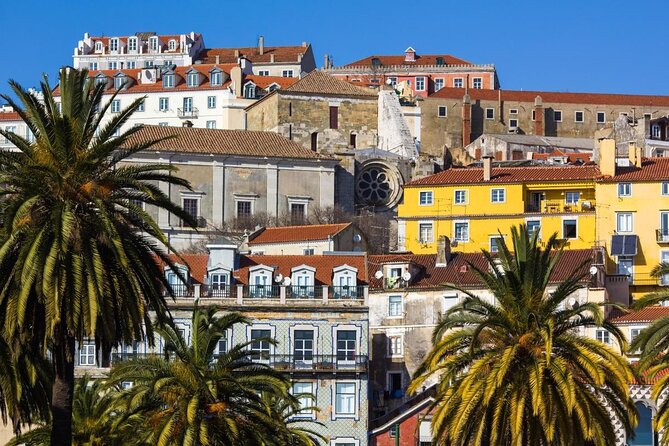
- Alfama’s medieval lanes: older blocks that survived the 1755 earthquake, plus big photo angles
- Praça do Comércio and the Terreiro do Paço story: how Lisbon rebuilt after 1755 under Pombal
- Fado Museum stop: learn what the music is really carrying in Portuguese culture
- Cerca Moura viewpoint circuit: Moorish wall viewpoints that frame Lisbon’s landmarks in one sweep
- Cathedral to Saint Anthony sequence: a packed religious route with Afonso I, mosque history, and local traditions
- Small group size: a max of 20 people so you can actually ask questions without yelling
Other walks through the old Lisbon quarters we have reviewed in Lisbon
- Alfama Tour in Lisbon Old Town★ 5.0 · 4,936 reviews
- Private Lisbon Sightseeing Tuk-Tuk Tour: Alfama, Belém & More★ 5.0 · 4,277 reviews
- Lisbon: Hills, Alfama, and Mouraria Tour by Electric Bike★ 4.8 · 3,438 reviews
- Best of Lisbon Walking Tour: Rossio, Chiado & Alfama★ 4.9 · 2,700 reviews
Why this Lisbon Downtown and Alfama walk feels different
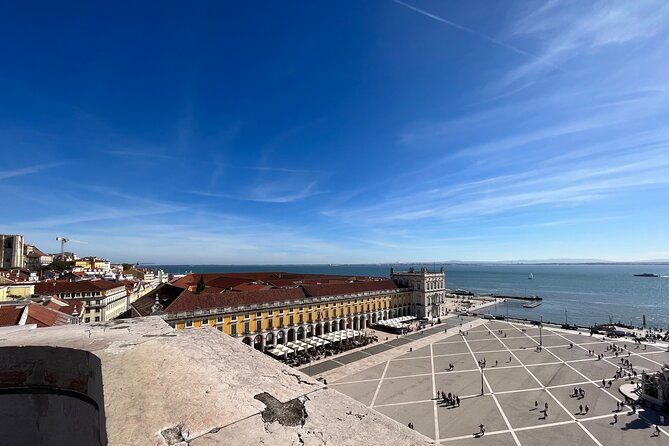
This is the kind of tour that gives you bearings quickly. You start near Rua dos Douradores, then work your way through the center and into Alfama, where narrow streets, lookout spots, and historic churches do the heavy lifting. At about 2 hours (per the duration given), it’s best thought of as an efficient orientation walk with real stops, not a long, slow sightseeing day.
I like that the tour is built around “why” as much as “what.” The route touches the architectural and cultural anchors that shape how Lisbon works: the grand downtown squares facing the Tagus, the layers of Islamic and Christian history you can still read in the city plan, and the music culture that became tied to neighborhoods like Alfama. With a guide leading the story and (optionally) multilingual audio commentary on your device, you can follow along even when the street turns abruptly uphill.
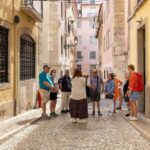
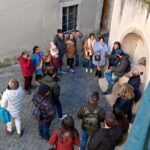
Another practical plus: it’s small-group with a cap of 20. That matters in Lisbon, because you do not want to be stuck behind a crowd in a narrow alley. The guide can keep the group together and slow down when you hit stairs or viewpoints.
Meeting at Rua dos Douradores, then walking toward the heart
The meeting point is Rua dos Douradores (Rua dos Douradores n.16, starting near R. dos Douradores, 1100 Lisboa). Tours run at 09:45 and 13:45, and the walk ends at Praça do Rossio.
Why that matters: Rua dos Douradores is a central starting point, so you can usually reach it without a complicated plan. You’ll also feel the gradual shift from the more open downtown spaces into Alfama’s tighter, older streets.
You also get a mobile ticket, and there’s a strong “bring your own phone” vibe here. The tour includes multilingual audio commentary and 5 free self-guided walking tours in the Vox City app, but a mobile device is not included. If you want to use the audio, bring your phone with battery to spare.
If you’re traveling in shoulder season, I’d still treat this as a walking commitment. The tour notes call out that a considerable amount of walking is involved, and you’ll be on uneven surfaces.
Praça do Comércio (Terreiro do Paço): Lisbon’s grand stage after 1755
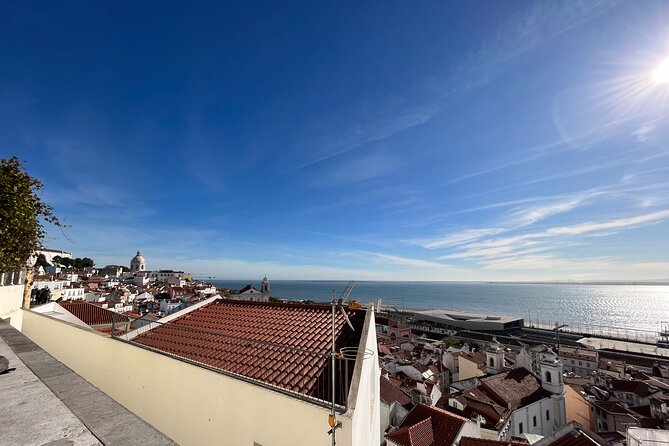
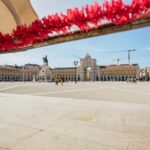
Praça do Comércio is the kind of square that instantly resets your sense of scale. You’re facing the Tagus to the south, and the open waterfront space makes the rest of Lisbon’s hills feel even steeper.
The guide focus here is not just the view. You’ll learn that this area was once hosted by the Paço da Ribeira until the 1755 Lisbon earthquake destroyed it. After the disaster, the square was rebuilt as part of the Pombaline Downtown plan (Baixa), connected to Sebastião José de Carvalho e Melo, the 1st Marquis of Pombal.
A smart way to enjoy this stop: take 2 minutes to look south over the water, then look back toward the streets that funnel into the old center. That’s the pattern you’ll keep seeing for the rest of the walk.
This square is also where the Augusta Street Arch comes in. The arch is described as a kind of symbolic grand entryway, linked to ideas like Solomon’s Temple, and it’s packed with Portugal references meant to honor cultural identity. Even if the details are dense, the key payoff is simple: you connect Lisbon’s monuments to the way the city tells its own story.
Jose Saramago Foundation building: 16th-century style in a modern role
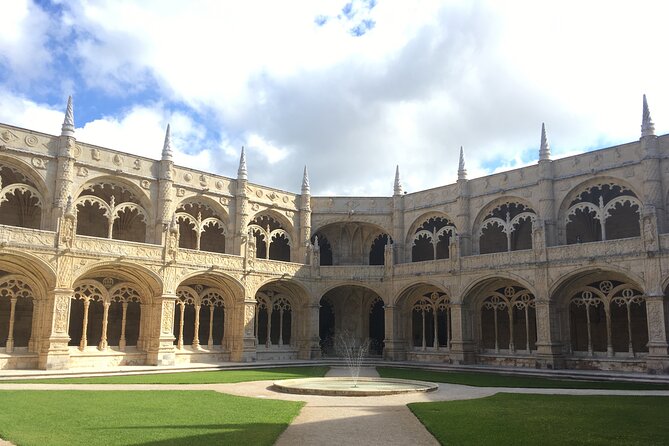
You’ll pass by a building originally built in 1521, highlighted as a strong example of Lisbon’s 16th-century architectural style. Today it’s the headquarters of the José Saramago Foundation.
This stop works because it shows Lisbon doesn’t only preserve stone. It repurposes it. You can think of it as the city putting its literary pride to practical use, right in the same zone where you’re also learning about monarchy, rebuilding, and older faith architecture.
If you’re the type who likes to notice details in doorways, stonework, and street-level planning, this is a good moment to slow down. It’s also an easy mental reset before the tour turns more tightly into Alfama’s alley networks.
Other Lisbon calcada routes we have followed on foot




Fado Museum: what you learn before you hear fado anywhere else
The Fado Museum stop is one of the more culture-heavy points in this route. The museum is framed around preserving the legacy of fado, the traditional Portuguese guitar-led music style, and showing how deeply it shaped Portuguese cultural influence.
Why it’s worth including on a walking tour: once you learn the context, fado stops feeling like a performance you watch and start feeling like something shaped by place and history. That helps if you plan to do an evening fado show later, because you’ll know what to listen for in the themes and tone.
In practice, museum time here is guided by the tour flow, so don’t treat it like a full self-guided museum day. Treat it like a guided “key” that unlocks better understanding for the rest of your trip.
Alfama: medieval lanes that still feel stubbornly real
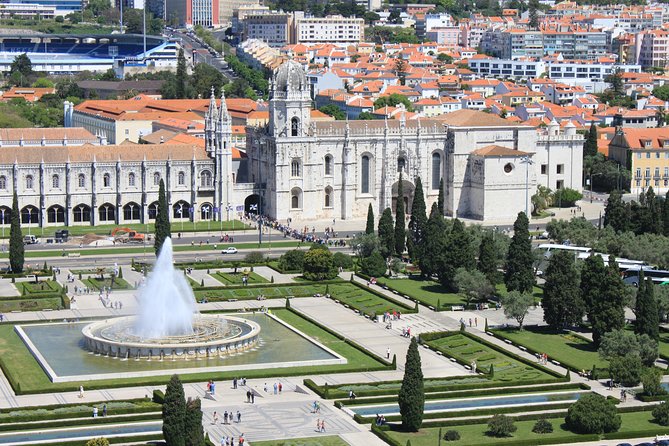
When you enter Alfama, the tour gives you the big reason it’s so memorable for walkers and photographers: Alfama survived the 1755 earthquake because its foundation is dense bedrock. That one fact explains why you still get that older, lived-in feeling when you walk its residential alleys.
This is also where Lisbon’s walking physics become obvious. The streets are narrow, the turns are sudden, and the views reward you right when your legs start negotiating with gravity. If you want photos, this is your area. If you want shade, aim to step into smaller lanes early, because afternoon sun can be rough.
A guide-led explanation helps you spot what you’d otherwise miss: Alfama is not just a pretty maze. It’s a district whose survival shaped what Lisbon looks like today, including the mix of defensive city logic and everyday life.
If you’re with someone who gets tired easily, the small-group size helps. A guide can adjust walking speed and keep you from feeling rushed.
National Pantheon area: where centuries of building become memory

Next comes the National Pantheon stop in the story chain. The tour description highlights a building in Alfama’s alleys that took over 280 years to build, and notes it’s a resting place of many Portuguese heroes.
This stop works well after Alfama’s narrowness because the building and its purpose feel different from the street-level rhythm. You’re shifting from the daily texture of Alfama to a more formal reminder of national identity.
One practical tip: if you feel you’re “zooming through” because you’re excited to see everything, pause here. National Pantheon is the kind of site where one or two details matter more than trying to take in everything at once.
Feira da Ladra: flea-market atmosphere on market days
The Feira da Ladra is an open-air flea market held every Tuesday and Saturday around Campo de Santa Clara. It’s described as for locals and tourists alike.
If your dates match a market day, this is a fun contrast to the big monument stops. Museums and palaces tell one kind of Lisbon story. A market tells another: what people trade, how they browse, what’s for sale, and how the neighborhood shows itself.
In planning terms, this stop is worth it because it changes the pace from “look up and read history” to “look at objects and people movement.” Even if you don’t buy anything, you’ll feel the city’s real rhythm.
Cerca Moura viewpoints: Moorish wall angles and landmark framing
You’ll hit a couple of viewpoint moments tied to the Cerca Moura (Moorish city wall) area. One viewing point is described as coming from an old gate, roughly halfway between São Jorge Castle above and the cathedral, and it’s reputed to be Lisbon’s oldest building.
Even if you don’t care about the exact dating, the payoff is still practical. These viewpoints help you map Lisbon in your head: castle up high, cathedral in the plan, and the city unfolding below.
The other viewpoint includes a church originally built by the Knights of the Order of Malta in the 12th century. That detail is a reminder that Lisbon’s layers are not abstract. They show up in the places people built, guarded, and worshipped.
For photo planning: expect that your best shots will come in bursts, not in long sessions. Bring your energy for 10 to 20 minute windows at each look.
Lisbon Cathedral and the Afonso I and mosque story
The Lisbon Cathedral stop is where the tour compresses multiple eras into one site. The cathedral is presented as commissioned by King Afonso I of Portugal in 1150, built where a mosque erected by Islamic Moors once stood.
You’ll also hear that collapse and renovation works created today’s mixture of styles. That’s important for you as a visitor because it explains why the building looks like more than one building at once. It’s not a design glitch. It’s Lisbon surviving, rebuilding, and adapting across generations.
This is a good place to slow down and read the structure from outside to in. Even if you only catch a portion of the interior, you’ll understand what changed and what survived once you connect the mosque origin to the later Catholic cathedral role.
Church of Saint Anthony: a superstition you can try
The tour then points out the church built on the purported birthplace of Saint Anthony of Lisbon. Saint Anthony is noted as a patron saint connected to newlyweds and marriage vows, with a tradition where single women might throw a coin to the saint’s statue, hoping to get married within a year.
Even if you treat the tradition lightly, it’s part of why Lisbon feels human. People come with hope, habits, and rituals that keep showing up in daily life.
This stop also helps you connect Alfama’s faith sites to the neighborhood’s identity. Lisbon’s spiritual landmarks are not just architecture. They’re part of community tradition, and you’ll feel that even during a guided walk.
Monastery history, then Porta do Mar, the Door of the Sea
The tour includes a monastery presented as an example for later church-building in Portugal, and it says it was in use until the abolition of religious orders in the early 19th century. That gives you a timeline anchor: the building mattered for centuries, then the city changed its relationship to religious institutions.
After that, you reach a small plaza within 500 meters of São Jorge Castle, leading into the area identified as Porta do Mar, named the Door of the Sea. It’s described as one of the main entrances into the city from the beach and harbour when Lisbon was fortified.
This sequence is clever because it pairs two ways of understanding the past. The monastery is a spiritual and educational center story. Porta do Mar is a defense and logistics story. Together they show Lisbon as both a religious city and a strategic harbor city.
If you’re walking with a partner, this is a great place to agree on one thing to remember. I’d pick the phrase Door of the Sea, because it instantly makes Lisbon’s geography feel logical.
The final canned fish stop: taste Lisbon without a sit-down meal
The last stop described is a well-known family-owned grocery store that specializes in canned fish. This is an easy ending point because it connects Lisbon’s coastal life to what you can buy and take home.
Even though food and drinks are listed as not included, this sort of shop stop can still be valuable. It shows you one honest, practical Lisbon habit: keep simple, shelf-stable flavors ready for when you do not want a full restaurant plan.
Use this as your gentle reminder to build your trip around small local purchases rather than only big-ticket meals.
Price and what you get for it
Pricing is listed as $3, and you should treat this as a value statement: you’re paying mainly for a guide-led walk, not for admissions or meals. Most of the major stops in the route are marked as free admission tickets or free entry, at least in the provided descriptions.
So the “value” is your human guide plus the route logic. You’re getting a structured way to walk the most story-dense parts of Lisbon center and Alfama in about two hours, with context on the earthquake, rebuilding, Islamic and Christian overlap, and the cultural role of fado.
If you’re trying to decide between this and a longer, pricier sightseeing day, here’s the honest way to think about it. This one is for getting your head and feet oriented. If you want a slower, eat-and-dawdle type of day, you’ll probably add separate time for food and extra museum browsing.
Pace, footwear, and who this tour fits best
The tour notes are pretty clear: wear tennis shoes or other appropriate footwear, bring water, and plan for summer sun or winter cold. The streets can be uneven, and you should expect a steady climb and descent typical of Lisbon’s layout.
Who fits best: people who like walking, photos, and short guided stops. Also a strong fit if you want a first-day orientation. Alfama is visually dramatic, but without context it can feel like just scenery. With a guide, it becomes a set of connected stories.
Who might struggle: if you hate stairs, or if you don’t want any steep stretches, this might feel more intense than you expect for a tour marketed as simple sightseeing. The description calls for moderate physical fitness level, and the walking volume is not trivial.
Should you book this Lisbon Downtown and Alfama walk?
If you want a fast way to understand Lisbon beyond postcard views, I’d book it. The route concentrates on the key ideas that make Lisbon make sense: 1755 rebuilds, Alfama’s survival, and the culture thread through fado. Add the small-group size and the chance to ask questions, and you get a good shot at learning without getting tired too fast.
Book it with realistic expectations: it’s a walking tour with a guided story flow, and you’ll need comfortable shoes and a phone with battery if you plan to use the multilingual audio. If you’re after a food-focused day or a sit-down museum marathon, you’ll likely prefer a different kind of tour and then come here for orientation.
FAQ
How long is the Lisbon Downtown & Alfama walking tour?
The duration is listed as approximately 2 hours.
What is the group size limit?
The tour has a maximum of 20 travelers.
Where does the tour start and end?
It starts at Rua dos Douradores (R. dos Douradores, 1100 Lisboa) and ends at Rossio Square (Praça do Rossio, 1100-200 Lisboa).
What time do I meet for the tour?
Meeting times are listed as 09:45 and 13:45.
What languages are available?
English, Spanish, and Portuguese are available all year round, and the tour includes multilingual audio commentary in English, French, Italian, Spanish, Chinese, and German.
Is food or drinks included?
Food and drinks are not included unless specified.
Do I need a mobile device for this tour?
A mobile device is not included, but the tour mentions mobile ticketing and audio commentary, so you will want your own phone if you plan to use the audio.
What should I bring for the walk?
Bring tennis shoes or appropriate footwear, a bottle of water, and plan for weather by bringing sunscreen in summer or a jacket in winter.
Will the tour run in bad weather?
In adverse weather conditions like heavy rain, the tour will not be canceled unless there are official warnings and alerts.
Can I get a full refund if I cancel?
Yes. You can cancel up to 24 hours in advance for a full refund.
Guide-Led Outings in Lisbon, More Bookings



On Foot Around Lisbon, Other Guided Walks



Alfama and the Old Quarters, Other Walks We Reviewed


Newly added around Lisbon
- Tour in Italian of Belém
★ 5.0 · 100 reviews - Lisbon: Shrine of Fátima Half Day Tour
★ 3.5 · 100 reviews - Boat tours in the Óbidos Lagoon
★ 5.0 · 100 reviews - Private Sintra Half Day Tour
★ 4.6 · 100 reviews - Lisbon: Guided Riverside Segway Tour
★ 4.9 · 101 reviews - Private Tour: Sintra and Cascais Day Trip from Lisbon
★ 5.0 · 102 reviews - Lisbon Food & Local Drinks Evening Tour by Food Lover Tour
★ 5.0 · 102 reviews - From Lisbon: Algarve, Benagil Sea Cave & Lagos Full-Day Tour
★ 5.0 · 102 reviews - Private Transfer to/from Lisbon Airport, Train Station or Port
★ 4.0 · 103 reviews - Lisbon: 2H Sunset Boat Cruise Tour with Drinks
★ 5.0 · 103 reviews
Other boats, other operators: Alfama and Old Lisbon Walks.
 ★ 5.0Private Lisbon Sightseeing Tuk-Tuk Tour: Alfama, Belém & MoreFrom $524,277 reviews
 ★ 4.8Lisbon: Hills, Alfama, and Mouraria Tour by Electric BikeFrom $253,438 reviews
 ★ 4.6Lisbon: Fado in Chiado Live ShowFrom $273,095 reviews
 ★ 4.9Best of Lisbon Walking Tour: Rossio, Chiado & AlfamaFrom $232,700 reviews
 ★ 4.3Lisbon: São Jorge Castle E-Ticket and Audio GuideFrom $302,182 reviews
 ★ 5.0Lisbon Small-Group Food Tour with 18 Tastings in Alfama DistrictFrom $1261,967 reviews
 ★ 4.9Lisbon: Baixa District Food Tour with Dinner and DrinksFrom $821,870 reviews
 ★ 4.5Lisbon E-Bike Tour Commerce Square, Mouraria and AlfamaFrom $301,688 reviews