
REVIEW · FOOD & DRINK
Private group Lisbon Roots, Food & Cultural Walk
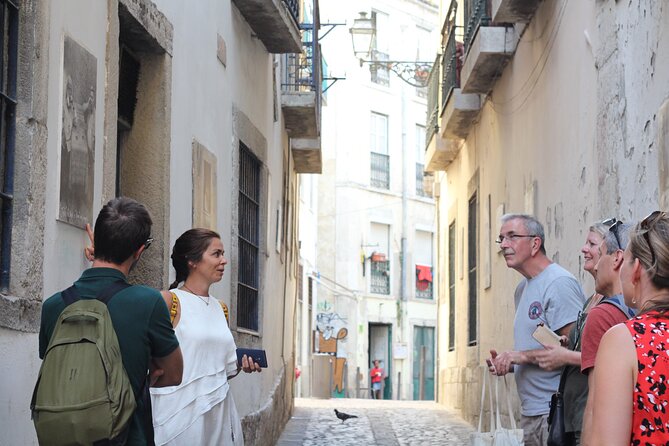
Lisbon tastes better when you leave the main drag. This private 3.5-hour Roots, Food & Cultural Walk pairs Portuguese food and wine with real neighborhood stories, from Mouraria’s Fado roots to iconic squares.
I really like the pacing and the payoff. You get 10+ tastings plus wine and snacks, and you also walk off the tourist track where Lisbon’s culture actually shows up in small details.
The only real catch is the walking. The route has cobblestones, some steps, and uphill bits, so comfy shoes matter.
In This Review
- Key highlights you should know
- Private Lisbon Roots, Food & Cultural Walk: what it feels like
- Your route starts in Mouraria, the Fado neighborhood
- Igreja de São Domingos and the scars of Lisbon’s disasters
- Rossio and Praça da Figueira, where Lisbon’s streets turn political
- Santa Justa elevator: the view stop that costs extra (if you want it)
- Martim Moniz, Tram 28, and the entryway to Mouraria
- The 19th-century theater and Rossio station, both built for people to gather
- Capela and Largo de São Domingos: where Lisbon’s tolerance message lands
- Tastings and wine: why this tour is more than a sightseeing loop
- How to handle the physical side: cobblestones, steps, and timing
- What I’d pair this walk with on your Lisbon day
- Should you book Taste of Lisboa Food Tours?
- FAQ
- How long is the Lisbon Roots, Food & Cultural Walk?
- Is wine and alcohol included?
- Where does the tour start and end?
- Is hotel pickup included?
- Is admission included for attractions like Santa Justa?
- What if I have dietary restrictions?
- What is the cancellation policy?
Key highlights you should know

- Mouraria focus: Fado landmarks and a multiethnic neighborhood route that changes how you see Lisbon
- Food stops that teach: 6 stops and more than 10 tastings, including Portuguese staples and wine culture
- Wine is part of the plan: Expect alcoholic drinks during the tasting sequence
- Landmarks with context: Churches and squares connected to Lisbon earthquakes, fires, and 1506 tragedy
- A view you earn: Santa Justa elevator is included as a stop, with skyline views if you pay to go up
- Locals as guides: Guides such as Pedro, Daniella, Daniel, and Ricardo are repeatedly noted for fun, history tied to food
Other Lisbon calcada routes we have followed on foot
- Lisbon: History, Stories and Lifestyle Walking Tour★ 4.8 · 10,902 reviews
- Best of Lisbon Small-Group Guided Walking Tour★ 5.0 · 4,869 reviews
- Best of Lisbon Walking Tour: Rossio, Chiado & Alfama★ 4.9 · 2,700 reviews
- Age of Discoveries Walking Tour in Belém★ 5.0 · 1,513 reviews
Private Lisbon Roots, Food & Cultural Walk: what it feels like
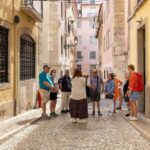
This is not a sit-and-stare tour. It is a guided walk that treats Lisbon like a living menu. You start in the heart of the city and move through neighborhoods where the food culture is part of daily life, not museum display.
At $325.60 per person for a private group, the big value is what is included. You are paying for a local guide, multiple tasting stops, and drinks, not just for walking between sights. Over 3.5 hours, you should come away with a stronger sense of where Portuguese flavors come from, and how to order like a local after you leave the tour.
You also end in a central, practical area near the Confeitaria Nacional in Praça da Figueira. That helps if you want to keep going on your own that same day, maybe toward the metro or onward toward other sights.
Your route starts in Mouraria, the Fado neighborhood
Mouraria is the kind of Lisbon neighborhood that makes sense fast once you see it on foot. The tour’s early focus is the area’s role in the birth of Fado and its reputation as Lisbon’s most multicultural district.
One of the clearest signals you are in the right place is the Monumento Mouraria Berço do Fado. It is a marble block with carved guitar details, dedicated to Fado and to Mouraria as the cradle of the genre. The monument ties the music to real people and a real neighborhood story, including references to major historic voices like Maria Severa and Fernando Mauricio. That context matters because it changes what you hear when you later stumble on Fado in tavern spaces.
After the Fado tribute, the walk turns toward the Chapel of Our Lady of Health, known in Portuguese for its protection against plague and other evils. The chapel was built in 1505 by Lisbon’s artillerymen, later associated with Our Lady of Health in 1569, and it also carries marks from earthquake damage and restoration work. Even if you are not a religious-history person, you’ll feel how Lisbon links daily life to fear, protection, and community prayers.
Then you move to the square area around Largo de São Domingos, a place that locals and the African community use regularly. This stop is also where a modern mural makes the past harder to ignore: Lisbon, City of Tolerance, written in 34 languages, referencing the Jewish victims of 1506. It is one of those “you can see it and then think about it” moments, right where people gather for everyday life.
Practical takeaway: this stretch is a strong example of how the tour connects culture to place, not culture as a lecture.
Igreja de São Domingos and the scars of Lisbon’s disasters
Lisbon’s old churches can feel like they belong to postcards. This walk treats them like survivors.
São Domingos Church originally dates to the 13th century and has lived through centuries of damage. The big story here is that it was severely damaged by earthquakes and a major fire, and after the fire of 1959 it stayed closed for decades before reopening in the 1990s.
When you get inside, the interior is described as simply restored, still reminiscent of signs from the fire. That creates a different kind of atmosphere than a fully “new-looking” restoration would. It gives you a sense of continuity, and it also makes the tour’s bigger point more believable: Lisbon didn’t reset itself every time something went wrong. It adapted, repaired, and continued.
This stop is short, and the payoff is mostly atmosphere plus the historical connection. If you want a break from walking, it gives you a breather without turning the tour into a museum hour.
Rossio and Praça da Figueira, where Lisbon’s streets turn political

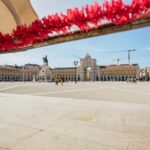
As the route shifts into the downtown core, you hit the areas where Lisbon has long gathered. Rossio is the famous name for King Pedro IV Square in the Pombaline downtown. You’ll recognize it as a hub because it functions like one. It is described as a meeting place for both locals and tourists, and it has a long record of political and public events, including revolts, celebrations, and darker historic moments like executions.
The energy here is the kind you only get in central squares that have been important for centuries. It is also where you can easily orient yourself for the rest of the day, which is handy when you want to pair this walk with other activities.
Right near it is Praça da Figueira, another central square with a layered past. Before the 1755 earthquake, the site had the All-Saints Hospital. The current underground car park construction revealed foundations, which is a reminder that Lisbon’s layers are literal, not just storybook talk.
Praça da Figueira also ties into the city’s redesign under the Marquis of Pombal. Today it is mostly hotels, shops, and cafes, but the square still feels like a crossroads. There’s also a bronze equestrian statue of D. João I that dates to 1971.
Potential drawback to keep in mind: downtown squares can be visually busy. The tour helps because it gives you a reason for each place. Without that, you might just see beautiful paving and move on.
More private, just-your-group bookings in Lisbon we have reviewed


Santa Justa elevator: the view stop that costs extra (if you want it)
The Elevador de Santa Justa, also known as the Elevator of Carmo, is one of Lisbon’s best-loved landmarks. Built in 1902 by Raoul de Mesnier du Ponsard, it connects downtown to Bairro Alto, bridging a big elevation difference in the city.
Here’s why it is worth treating as more than a photo spot. The elevator structure is tied to post-Eiffel iron architecture, and it rises about 45 meters. The top area reaches you via a spiral staircase, and the view can include Rossio Square, the castle, and the river.
Important detail: the stop includes time at the elevator, but the admission is not included. If you want the lift up and the full viewpoint, you should plan to pay extra on the day. If you skip it, you can still appreciate the ironwork and get something from the perspective at ground level.
Martim Moniz, Tram 28, and the entryway to Mouraria
Martim Moniz Square is the starting point of Tram 28, which runs through the oldest parts of Lisbon. This is one of those lines you can see from far away, and it can get long if you try to board at the wrong time.
The useful part for this tour is that the square acts like a gate toward Mouraria. It is described as having a mini Chinatown feel, and it also connects you to the multicultural texture that makes the earlier Mouraria stops feel earned, not random.
If you are planning your own time after the tour, this is a good place to remember. Tram 28 is iconic, but lines can be stubborn. If your goal is a quick ride, you’ll likely do better planning the timing carefully.
The 19th-century theater and Rossio station, both built for people to gather
Between the outdoor squares, the walk includes a theater space built in the nineteenth century. The point here is less architecture trivia and more social history: culture once belonged to elites, and this theater is now open to everyone. Inside, there are guided tours, a bookstore, and a lounge area with a café or restaurant, plus large portraits of actresses printed on the main hall walls.
Then the walk reaches Rossio Train Station, Lisbon’s main train station. It’s not just a transport hub. The exterior takes inspiration from Portuguese Manueline architecture, with ornate details. You enter through two horseshoe-shaped archways, and the roofline includes turrets and pinacols.
The station is also practical for day-trip thinking. It connects Lisbon to Sintra and passes through the stations that serve Palácio Nacional de Queluz.
This is a good stop if you want to end the tour in a place where your next move is easy. You can keep exploring on foot, hop on public transit, or plan a rail trip without guessing.
Capela and Largo de São Domingos: where Lisbon’s tolerance message lands
The Chapel of Our Lady of Health and Largo de São Domingos are strong in combination. The chapel connects to protection against plague and other disasters, while the square mural connects to the 1506 Jewish massacre and Lisbon’s long memory.
The memorial focus at Largo de São Domingos references the Lisbon Massacre also known as the 1506 Easter Slaughter. The story begins with a mass in April and a claim of a miracle, and it also describes how a New Christian was beaten to death after the crowd rejected an explanation. After that, Jews in the city were accused of heresy.
There is also mention that those condemned by the Portuguese Inquisition were left waiting to be burned alive at Rossio. It is heavy material, but it is handled by placing it in context where people actually walk through the city, not in a detached setting.
If you prefer lighter tours, this might be the most serious part of your walk. I think it is still worth it, because it explains why the “Lisbon City of Tolerance” message feels real instead of decorative.
Tastings and wine: why this tour is more than a sightseeing loop
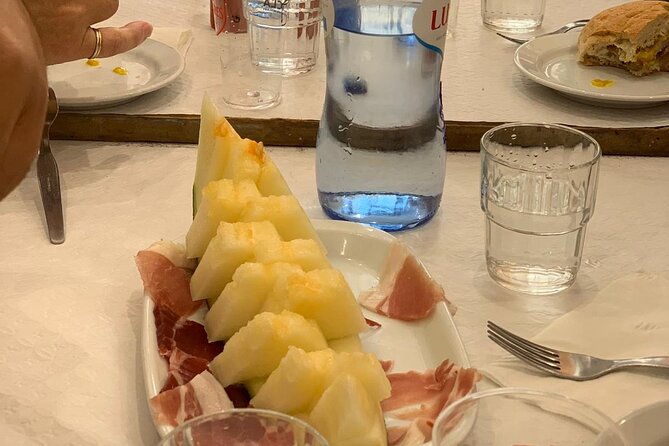
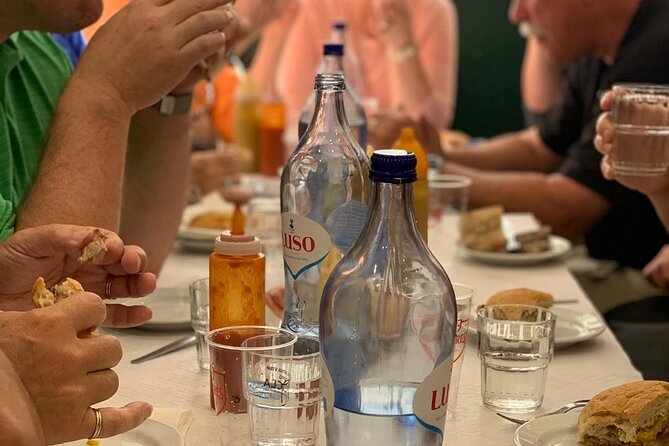
This walk includes food tastings at multiple local stops. You get 6 stops and more than 10 tastings overall, with wine tastings and coffee or tea plus snacks. Alcoholic beverages are part of the included experience.
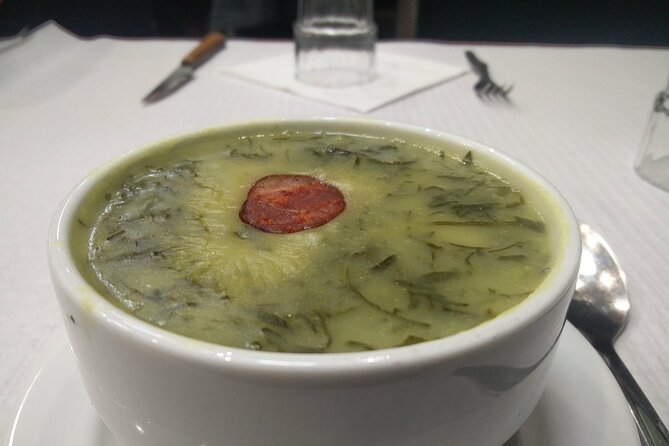
From the way the tour is described, the tasting sequence is designed to teach you how Portuguese food culture works, including influences that shaped what Lisbon eats. In customer feedback, people highlight variety like appetizers, soup, tapas-style bites, dessert, and port, plus coffees. The key is that it is not only “one bite, one sip” every stop. You should leave full enough that lunch or dinner planning becomes easier.
What I like for value: you are not just buying food. You are buying a guided method for sampling. Once you learn what combinations are common and where flavors fit, you can repeat the style on your own later.
A practical note for planning your appetite: come hungry. The tour is designed to be a feed, and you’ll want space for the later sweets and drinks.
Dietary restrictions are your responsibility to flag in advance. The tour data says they cannot adapt tastings on the day if you don’t inform them in the booking form. If you are vegetarian or have allergies, message the organizer before you arrive so you do not waste time worrying mid-walk.
How to handle the physical side: cobblestones, steps, and timing
The route is listed as medium physical level. Expect cobblestones, uphill walking, and climbing down steps typical of old Lisbon streets.
That matters because Lisbon’s charm often rides on uneven pavement. If you show up in soft sneakers or sandals with no grip, your feet will notice before your taste buds do.
My practical advice:
- Wear shoes you can trust on stone streets.
- Bring water, even if tastings include drinks. You can sip as you go.
- Plan bathroom breaks around the short landmark stops, not while moving between them.
Also, consider the elevator option. If you choose to go up, you’ll add stairs into the mix. It’s not required to enjoy the day, but it does add another vertical layer.
What I’d pair this walk with on your Lisbon day
Because the tour ends near Praça da Figueira and Confeitaria Nacional, you’re in a perfect spot to continue in the downtown area. If you want a classic next step, head toward nearby viewpoints or hop into museums on your schedule.
If you want to stretch the food theme, plan your next meal with Portuguese comfort in mind. Think simple classics, the kind that match what you sampled during the walk. You’ll likely find it easier to order and less likely to feel lost.
If you plan a day trip, Rossio Train Station makes that easier, because trains to Sintra and connections toward Queluz are right there.
Should you book Taste of Lisboa Food Tours?
Book it if you want your Lisbon day to feel like a local day. You’ll get 10+ tastings, wine included, and a guided route through Mouraria and the downtown core, with real context tied to Fado and Lisbon’s historic events.
Skip it if your priority is relaxing sightseeing with minimal walking. The cobblestones and steps are real, and the elevator admission is not included if you want the full viewpoint.
For best results, bring clear dietary needs to the organizer ahead of time and wear good shoes. If you do those two things, this private walk is a strong way to earn Lisbon’s flavor, not just watch it from the sidewalk.
FAQ
How long is the Lisbon Roots, Food & Cultural Walk?
The walk lasts about 3 hours 30 minutes.
Is wine and alcohol included?
Yes. The tour includes wine tasting and alcoholic beverages as part of the tastings.
Where does the tour start and end?
It starts at St. Dominic’s Square, Largo São Domingos, 1150-114 Lisboa, Portugal. It ends at Confeitaria Nacional, Praça da Figueira 18B, 1100-241 Lisboa, Portugal.
Is hotel pickup included?
No. Hotel pickup and drop-off are not included.
Is admission included for attractions like Santa Justa?
Admission for Elevador de Santa Justa is not included. Other stops listed as free include Igreja de São Domingos, Monumento Mouraria Berço do Fado, Praca da Figueira, Praca Martim Moniz, Capela de Nossa Senhora da Saúde, Largo de São Domingos, and the memorial as Vitimas do Massacre Judaico de 1506.
What if I have dietary restrictions?
You should inform the organizer in the booking form. The tour data says tastings cannot be adapted on the day if dietary restrictions were not provided in advance.
What is the cancellation policy?
Free cancellation is available up to 24 hours in advance for a full refund. If you cancel less than 24 hours before the start time, the amount paid is not refunded.
Tables and Tasting Stops Across Lisbon





Nobody Else Aboard, Other Private Lisbon Bookings




On Foot Around Lisbon, Other Guided Walks



Newly added around Lisbon
- Lisbon: Street Art Walk
★ 5.0 · 79 reviews - From Lisbon: Nazare Big Waves and Óbidos Guide Day Trip
★ 4.7 · 79 reviews - Small Group Walking Tour of Belém
★ 4.9 · 80 reviews - Lisbon: Regaleira, Sintra, Cape Rock & Cascais Day Trip
★ 4.6 · 80 reviews - Lisbon: Evening Local Food Crawl with Drink Pairings
★ 4.6 · 80 reviews - From Lisbon: Sintra and Portuguese Coast Private Day Tour
★ 5.0 · 80 reviews - Lisbon: Authentic Fado Show, Dinner and Night Tour
★ 4.6 · 80 reviews - Golden Hour Boat Tour – Sailing by the Monuments with Wine
★ 5.0 · 81 reviews - Hard Rock Cafe Lisbon with Set Lunch or Dinner
★ 4.0 · 81 reviews - Fado Musical Experience with Portuguese Wine & Appetizers
★ 4.5 · 81 reviews
Other boats, other operators: Food & Drink.
 ★ 4.7From Porto: Douro Valley w/ Boat Tour, Wine Tasting & LunchFrom $8219,061 reviews
 ★ 5.0Winner 2025 Undiscovered Lisbon Food & Wine Tour by Eating EuropeFrom $1256,390 reviews
 ★ 4.5Porto: Cálem Cellar Tour, Interactive Museum & Wine TastingFrom $234,113 reviews
 ★ 4.9Lisbon: Food and Wine Small Group Walking TourFrom $724,082 reviews
 ★ 5.0Douro Valley Small-Group Tour with Wine Tasting, Lunch and BoatFrom $1693,642 reviews
 ★ 4.4Porto: Cálem Cellar Tour, Fado Show & Wine TastingFrom $333,530 reviews
 ★ 4.6Porto: Taylor’s Port Cellars & TastingFrom $293,374 reviews
 ★ 4.8Porto: Cockburn’s Port Lodge Tour and TastingFrom $353,360 reviews
Filed under