
REVIEW · STREET ART
LISBON Street Art Tour
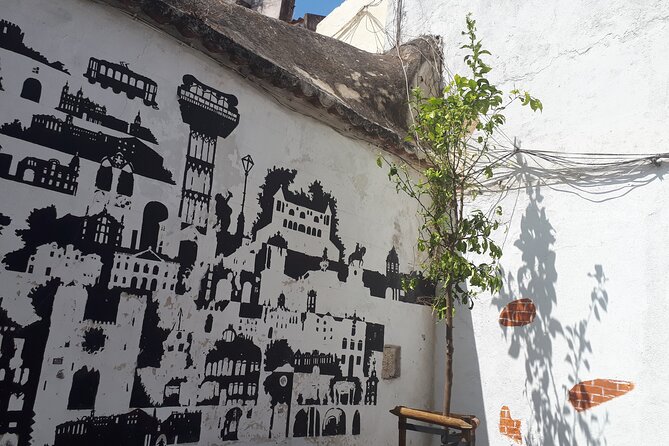
Street art in Lisbon is hiding everywhere. This 3-hour walk turns Mouraria and Graça into an open-air gallery, with small group attention and street art stops tied to local life. You get photo moments, fado roots, and big viewpoints built into the route.
What I really like is the guide focus. With a maximum of 10 people, you get time to ask questions and slow down at the best walls. You may even hear the difference between street art and graffiti, plus how artists use images to talk about culture and community.
The trade-off is that this is not a stroller stroll. Expect uphill stairs and some steep sections, so bring good walking shoes and plan for weather, especially if you’re going in winter.
In This Review
- Key things you’ll notice on this Lisbon street art walk
- Street art in Lisbon works best when someone points it out
- Meeting at Largo da Graça 13, then walking the hills on purpose
- Stop 1: Escadinhas de São Cristóvão and Mouraria’s fado roots
- Stop 2: Miradouro da Graça for one of Lisbon’s best street art views
- Stop 3: Graça and São Vicente murals, from local voices to international names
- Stop 4: Jardim Botto Machado and the world’s longest azulejo wall
- What to watch for as you walk, so you actually learn something
- Walking prep: stairs, umbrellas, and how to survive Lisbon comfortably
- Price and value: about $24.20 for a small-group culture lesson
- Should you book this Lisbon street art tour?
- FAQ
- How long is the Lisbon Street Art Tour?
- How much does the tour cost?
- Is the tour offered in English?
- What is the maximum group size?
- Is the walking difficult?
- Where does the tour start and where does it end?
- Are service animals allowed?
- Are admission tickets needed for the stops?
- What is the cancellation refund policy?
Key things you’ll notice on this Lisbon street art walk
- Mouraria fado roots on Escadinhas de São Cristóvão: a street-by-street way to connect music, neighborhood memory, and wall art.
- Miradouro da Graça viewpoint time: just enough climbing to earn one of the best sightlines for art spotting.
- Big murals in Graça and São Vicente: from local to international street artists, plus stops with special community recognition like Walls of Fame.
- Jardim Botto Machado’s long azulejo wall: traditional Portuguese tiles framed as a street-level photo mission.
- Max 10 travelers, English guide: a smaller group means you are not just following, you are actually looking.
Other mural routes around Lisbon we have walked
- Lisbon: Street Art Tour★ 4.9 · 1,324 reviews
- Lisbon: Kickstart Street Art Walking Tour★ 4.9 · 717 reviews
- Lisbon: Street Art Tuk Tuk Tour★ 4.9 · 372 reviews
- LISBON Street Art Tour★ 5.0 · 371 reviews
Street art in Lisbon works best when someone points it out

Lisbon’s walls are doing double duty. They are decoration, sure, but they are also local commentary, neighborhood identity, and sometimes just a clever way to turn an ordinary corner into a conversation.
On this tour, you’re not jumping from one random mural to the next. The walk is built around Lisbon’s historic neighborhoods, so each art stop comes with context you can use while you keep exploring on your own. That matters, because street art can change fast, and even the same street can feel different from week to week.
I like that the experience leans into real places, not museum vibes. You’ll be moving through streets with atmosphere, stopping at viewpoints and tile walls, and learning how the art connects to what Lisbon is feeling.
Meeting at Largo da Graça 13, then walking the hills on purpose
You start at Largo da Graça 13, and you finish in the Graça or Alfama area depending on time and how the group is doing. That setup is practical, because you end in the middle of where you likely want to keep wandering anyway.
This tour runs in English and uses a mobile ticket. You are also near public transportation, which helps if you want to pair the walk with other neighborhood plans.
One more practical detail: the pace assumes moderate physical fitness. Even if you feel fine on flat ground, Lisbon’s charm comes with stairs. The good news is the route includes shorter stops, so you can catch your breath and keep your eyes sharp.
Stop 1: Escadinhas de São Cristóvão and Mouraria’s fado roots
Your first stop is Escadinhas de São Cristóvão, in the Mouraria area. The streets here feel like an open-air museum, and the theme is clear right away: you are looking at how fado’s roots connect to an authentic neighborhood.
What makes this stop special is the way it blends art and local story. You’ll focus on the characteristics of Mouraria shown in wall art and also through photographs of fado singers. It is not just lyrics-and-legend. It is Lisbon’s street culture shown where it actually grew.
There’s also a practical photo angle. Narrow streets and layered facades can make murals easy to miss if you are hurrying. With a guide, you get the cue to stop, reframe, and look at small details you would otherwise walk past.
Time at this stop is about an hour, and there’s no admission ticket needed. So you can treat it like your “set the lens” moment for the whole tour.
Stop 2: Miradouro da Graça for one of Lisbon’s best street art views

Next you climb to Miradouro da Graça, named for Sophia de Mello Breyner Andresen. This is the short, high-impact break in the middle of the walk, and it is built around a simple idea: the best street art in Lisbon often becomes easiest to spot from a viewpoint.
The viewpoint time is about 15 minutes, and yes, it takes effort to reach. But the payoff is seeing how neighborhoods layer on top of each other, with murals and streets sitting in the bigger context of the hill city.
This is also a smart moment if you like photography. From up high, you can frame street art with architecture and street lines. It turns a wall you might think is just colorful into something you can actually map in your head.
No admission fee is listed here, either. Keep your camera ready, but also keep your eyes on what the guide is pointing out. The point is to look like a local, not like a tourist with a camera stick.




Stop 3: Graça and São Vicente murals, from local voices to international names
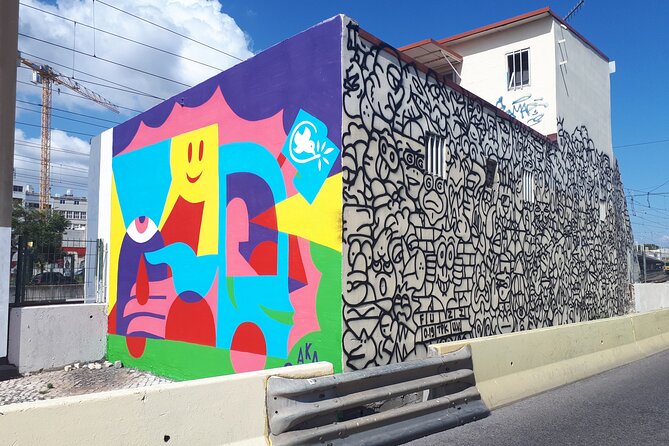
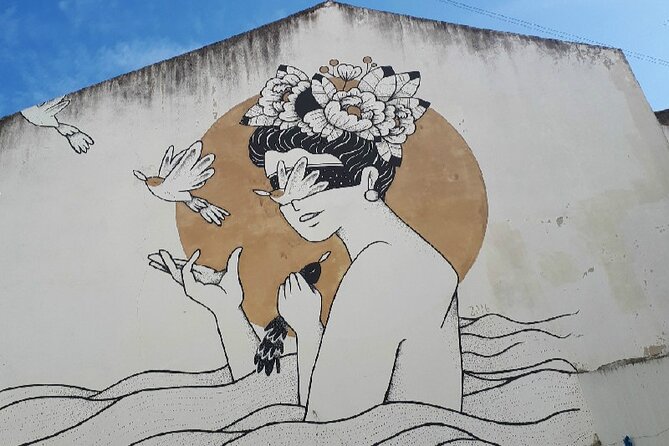
After the viewpoint, you land in Graça and São Vicente, and this is where the walls get loud. Graça is described as an authentic neighborhood with lots of big murals, and your walk is designed to show that range.
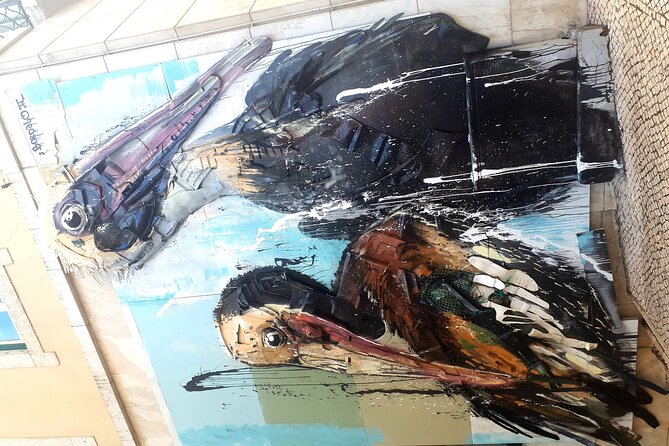
You’ll pass a mix of local work and also pieces by international street artists. That is useful because it shows Lisbon’s street art scene isn’t sealed off inside one style. It’s connected, and it keeps absorbing new artistic voices while still rooted in the neighborhood.
Another named stop here is the route’s Walls of Fame. The idea is community recognition, so you get the sense that street art is not only about artists spraying paint. It’s also about visibility, permission, and local identity. (Street art in Lisbon can include legal and community-supported work, and a good guide helps you spot the difference.)
This section runs about 1.5 hours. With more time, you can linger longer and learn how to read murals: color choices, placement, scale, and the message behind the imagery.
One thing I like about this part is that it nudges you to look beyond the obvious. If you’re the kind of person who always spots things in a room, you’ll start spotting story details in walls too. If you don’t, the guide will still point out the small stuff you would otherwise miss.
Stop 4: Jardim Botto Machado and the world’s longest azulejo wall

Then comes a different flavor of street-level art: azulejos. At Jardim Botto Machado, you’ll see a long azulejo wall described as the longest azulejo wall in the world.
This stop is about 15 minutes, and it is timed like a photo break and a cultural palate cleanser. Murals can dominate your attention for the first half of the tour, but tiles bring Lisbon’s traditional visual language right into the conversation.
The theme is Lisbon in traditional, colorful representation. Azulejos have their own symbolism and history, and placing this stop at the end (after murals) helps you see continuity. Lisbon doesn’t treat street art as a separate universe from its heritage. It treats visual art as part of everyday life.
No admission ticket is listed here, either. You can use your time to study the patterns closely, not just snap a quick shot, because the details are the point.
What to watch for as you walk, so you actually learn something

The best part of a street art tour is not the list of stops. It’s your new habit of seeing.
Here’s what I suggest you watch for at each wall:
- Placement: Is the art hidden on a side wall, or does it claim a main facade?
- Scale: Small marks can be political or personal. Big murals often aim for public conversation.
- Technique clues: Stenciling, hand-painted realism, and tile-like effects can signal different intentions.
- Community tie-ins: Look for name recognition and local references. Even when you do not know the full story, the placement gives clues.
One of the standout strengths of this experience is that the guide work can go beyond surface visuals. Some guides on this kind of walk are artists themselves, and guides mentioned by name in participant notes include Diego, Diogo, Ben, Vero, and Luisa. You may also hear special stories from a working artist perspective, including how legal street art moves through a community process.
Also, street art is often temporary. Even if you return later, the wall may look different. That is not a flaw. It is part of why the tour teaches you to pay attention now.
Walking prep: stairs, umbrellas, and how to survive Lisbon comfortably
This tour is very much a walking experience. Plan for uphill stretches and stair climbing, with some sections feeling steep even if they are short.
So pack like you’re doing two things at once:
1) Stay comfortable enough to keep looking.
2) Stay flexible enough if weather changes.
Comfortable walking shoes are the #1 call. In winter months, participants advise bringing an umbrella, especially if January rain or drizzle hits.
If you can, bring a small snack or breakfast beforehand. The route takes about 3 hours, and you will want your energy. Also, keep water handy, because hills can feel more exhausting when you’re focused on small details.
If you have limited mobility or you know stairs are a deal breaker, this probably won’t feel fun. You might be able to handle some walking, but you should assume stairs will be part of the design.
Price and value: about $24.20 for a small-group culture lesson
At $24.20 per person for about 3 hours, this tour is priced like a good neighborhood activity, not a luxury experience. The value comes from two places: the small group size and the fact that the stops themselves don’t charge admission.
With a maximum of 10 travelers, you are less likely to feel rushed. That matters on a street art tour because the best moments are the quiet ones, when a guide points out something you would miss.
You also get English narration, which is a practical convenience. If you want a quick overview of Lisbon’s street art scene without spending a full day on it, this is the kind of structured walk that helps you hit the ground running.
And if you like momentum, the tour is a strong setup for later. You’ll leave knowing what to look for, where the neighborhoods feel most alive, and how to spot murals and azulejos while you wander more freely.
One extra planning note: this is commonly booked about 20 days in advance on average. If your dates are fixed, it’s smart to reserve early rather than gambling.
Should you book this Lisbon street art tour?
Book it if you want a different side of Lisbon that still feels real and local. This is a great choice if you like street art, photography, fado-adjacent culture, or you simply enjoy learning how a city tells stories on its walls.
Skip it (or think twice) if you need level ground. The route includes uphill walking and stairs, and it is built for people with moderate physical fitness. Also, if you hate walking in the rain, bring weather gear, because you will still be outside for the whole experience.
For me, the deciding factor is the mix. You get Mouraria’s fado roots, a Miradouro viewpoint moment, the big mural power of Graça and São Vicente, and then azulejos at Jardim Botto Machado. That variety keeps the tour from feeling like one long mural chase.
FAQ
How long is the Lisbon Street Art Tour?
It runs for about 3 hours.
How much does the tour cost?
The price is listed as $24.20 per person.
Is the tour offered in English?
Yes, it is offered in English.
What is the maximum group size?
The tour has a maximum of 10 travelers.
Is the walking difficult?
The tour is best suited for people with a moderate physical fitness level. Expect uphill walking and stairs, so wear comfortable shoes.
Where does the tour start and where does it end?
It starts at Largo da Graça 13, 1170-364 Lisboa, Portugal. It ends somewhere in Graça or Alfama, depending on time and the group’s energy.
Are service animals allowed?
Yes, service animals are allowed.
Are admission tickets needed for the stops?
The tour notes free admission for the stops listed.
What is the cancellation refund policy?
You can cancel for a full refund up to 24 hours before the experience starts. If you cancel less than 24 hours before, the amount paid is not refunded.
Mural Routes Around Lisbon, Other Walks





Other Days Out Around Lisbon





Newly added around Lisbon
- Lisbon: Street Art Walk
★ 5.0 · 79 reviews - From Lisbon: Nazare Big Waves and Óbidos Guide Day Trip
★ 4.7 · 79 reviews - Small Group Walking Tour of Belém
★ 4.9 · 80 reviews - Lisbon: Regaleira, Sintra, Cape Rock & Cascais Day Trip
★ 4.6 · 80 reviews - Lisbon: Evening Local Food Crawl with Drink Pairings
★ 4.6 · 80 reviews - From Lisbon: Sintra and Portuguese Coast Private Day Tour
★ 5.0 · 80 reviews - Lisbon: Authentic Fado Show, Dinner and Night Tour
★ 4.6 · 80 reviews - Golden Hour Boat Tour – Sailing by the Monuments with Wine
★ 5.0 · 81 reviews - Hard Rock Cafe Lisbon with Set Lunch or Dinner
★ 4.0 · 81 reviews - Fado Musical Experience with Portuguese Wine & Appetizers
★ 4.5 · 81 reviews
Other boats, other operators: Street Art.
 ★ 4.9Lisbon: Street Art TourFrom $401,324 reviews
 ★ 4.9Lisbon: Kickstart Street Art Walking TourFrom $23717 reviews
 ★ 4.9Lisbon: Street Art Tuk Tuk TourFrom $165372 reviews
 ★ 5.03-Hour Guided Street Art Walking Tour of LisbonFrom $42278 reviews
 ★ 4.8Porto: Half-Day Street Art TourFrom $25232 reviews
 ★ 5.0Lisbon Street Art Walking TourFrom $33141 reviews
 ★ 4.8Lisbon: 3-Hour Street Art Tuk Tuk TourFrom $21286 reviews
 ★ 5.0Lisbon: Street Art WalkFrom $4079 reviews
Filed under