
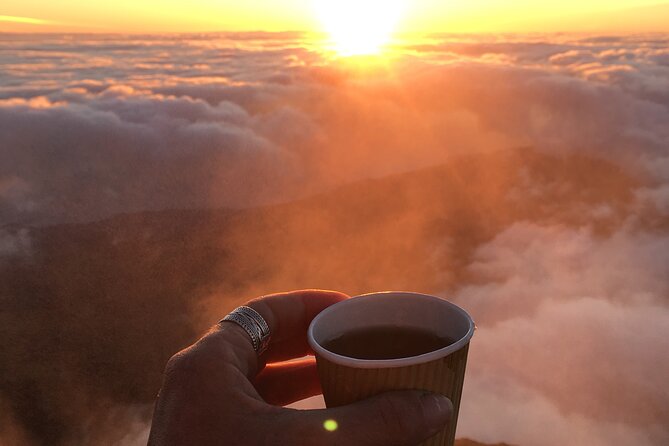
REVIEW · PICO ISLAND, FAIAL AND THE CENTRAL AZORES
Pico Mountain: Climb the Highest Point of Portugal 2351m
Pico’s summit feels like a victory lap. This is a guided grind to the 2351m summit of Pico Mountain, Portugal’s highest point, starting up at Casa da Montanha around 1200m. I like the guided pacing with practical safety cues, and I love how the top delivers big-open views you can actually recognize, including directions toward Terceira and Graciosa. The main downside to plan for is that this is a steep, hours-long hike on volcanic rock, not a stroll.
What makes it work well is the structure: you meet, get a briefing, review equipment, and receive your locators before you start up. The first part of the trail is basically a “try it now” segment, so if your breathing spikes or balance goes sideways early, you’ll be warned that the rest may not suit you. You also get trekking poles, plus the day is capped at a small group size (maximum 10), which helps the guide manage tempo.
Expect about 7 hours total, with roughly 8 km of hiking on volcanic rock and an average slope around 30%. Many groups start early, sometimes before sunrise, which helps with comfort, but it also means you should show up ready and protected from sun and wind. Meals are not included, so you’ll want to think about eating before and after.
In This Review
- Key highlights you should care about
- Why Pico’s 2351m summit is such a big deal
- Casa da Montanha briefing, equipment check, and starting smarter
- The climb profile: 8 km of volcanic rock and a 30% uphill average
- How the guide manages safety on a long, steep day
- Pace and timing: what 7 hours feels like in real life
- Summit rewards: views, height, and a possible summit toast
- Gear that matters: trekking poles, shoes, water, and sun defense
- Photos, videos, and why the price can be fair value
- Where this fits best: who should book, and who should consider another option
- Booking decision: should you climb Pico Mountain with GOclimb Azores?
- FAQ
- How long is the Pico Mountain climb?
- How long is the trail and what kind of ground is it?
- Where do we meet for the summit hike?
- Is this tour really beginner-friendly if I have no mountaineering experience?
- Are meals included?
- What’s included in the tour price?
- What age limits apply?
- What happens if the weather is poor?
- If I cancel, do I get my money back?
Key highlights you should care about
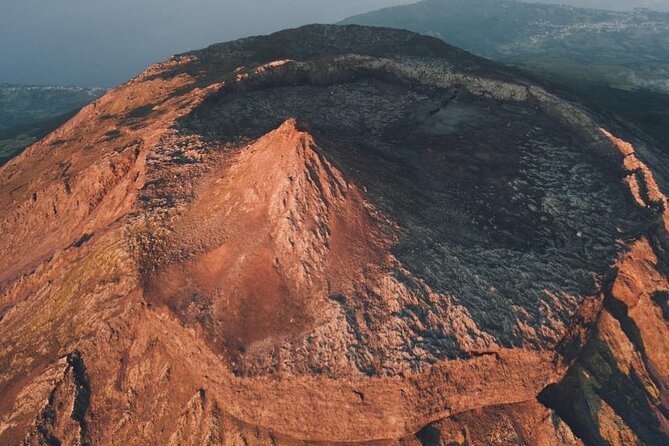
- 2351m summit of Portugal on Pico Mountain with a guided return to the start
- Volcanic rock trail of about 8 km, with an average 30% slope
- Maximum 10 people so the guide can actually watch pace and footing
- Briefing at Casa da Montanha (1200m) plus equipment review and locators
- Early-morning start times that often mean cooler climbing conditions
- Photos and videos included so you don’t lose your summit moment to your camera
More central-group island hops we have made in Pico
- Pico Mountain: Climb the Highest Point of Portugal 2351m★ 5.0 · 187 reviews
- Route DA Pico Island★ 5.0 · 101 reviews
Why Pico’s 2351m summit is such a big deal
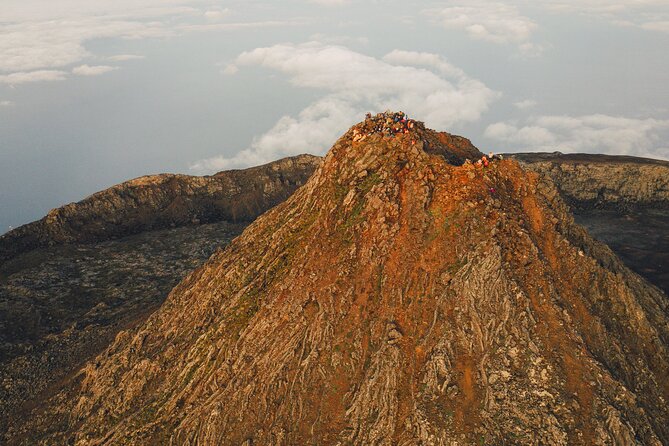
Pico Mountain is the headline act for the Azores, and the reason is simple: you’re going to Portugal’s highest point, 2351m, with the kind of steep ascent that forces you to focus on your body and your steps. The hike feels earned, not staged. That matters because on Pico you’re not just “doing a walk,” you’re moving across real volcanic terrain with serious elevation change.
The other reason this summit climb hits is the visibility you can get on clear days. When the weather cooperates, the view can reach as far as Terceira and Graciosa. Even when you don’t have perfect visibility, the mountain air plus the sense of height still delivers that I-am-on-a-real-peak feeling.
Casa da Montanha briefing, equipment check, and starting smarter
You begin at the Mountain House meeting point at Caminho Florestal nº 9 in Candelária, then connect with Casa da Montanha around 1200m for the pre-hike briefing. This is where you’ll get your overview, review what you need, and receive your locators before setting off toward the top and back.
I like this setup because it reduces guesswork. A summit day goes smoother when you understand what’s coming, how the guide will handle pacing, and what gear matters on rocky volcanic ground. One practical detail that stands out: the guide explicitly treats the early portion of the climb as a first test, watching for signs like intense breathing changes or balance problems.
That means your body’s response in the first stretch matters. If you start and immediately feel out of control, don’t “push through” blindly. Take the guidance seriously, because the rest of the day is still steep for hours.
The climb profile: 8 km of volcanic rock and a 30% uphill average
The route is about 8 km in total length on volcanic rock, with an average slope around 30%. On paper, “average slope” sounds like a math detail. On your legs, it’s constant work. You’ll be climbing long enough that small mistakes in pacing become big mistakes by the time you’re higher up.
Volcanic rock changes the game. It’s grippy sometimes and sometimes it feels like it has its own rules, especially after wind or moisture. Your footing matters more than speed. That’s why trekking poles are included, and why you should plan to use them actively, not just carry them.
Also note the “terrain and level change warning” approach. The first part of the hike isn’t just the warm-up. It’s a real sampling of the differences in level and the type of terrain you’ll face for the next few hours. If you’re prone to lightheadedness on steep grades, or your balance isn’t steady on uneven ground, treat this as a heads-up for how hard the day will be.
How the guide manages safety on a long, steep day
This is guided hiking with a professional, experienced guide, and it shows in how the day is paced. Across past groups, guides like Raisa, Isabel, Nunu, Haise, and Raina (same role, different spelling seen) come up in the feedback. Names vary by date, but the pattern is consistent: someone is focused on keeping the whole group safe and moving at the right speed.
Guides are also attentive to individual needs. Several accounts highlight that the guide supported people in the exact way they needed, whether that meant more frequent short breaks, calmer encouragement, or managing who goes at what pace. In other words, this isn’t a “one tempo fits all” hike, even if the group includes different fitness levels.
One practical thing: you should expect small breaks rather than nonstop grinding. You’ll likely stop for hydration and short rest moments so you can keep your breathing steady and your footing careful. There can even be bonus moments like a cave sighting on the return for some groups, but don’t bank on extras, focus on the main route and safety.
Pace and timing: what 7 hours feels like in real life
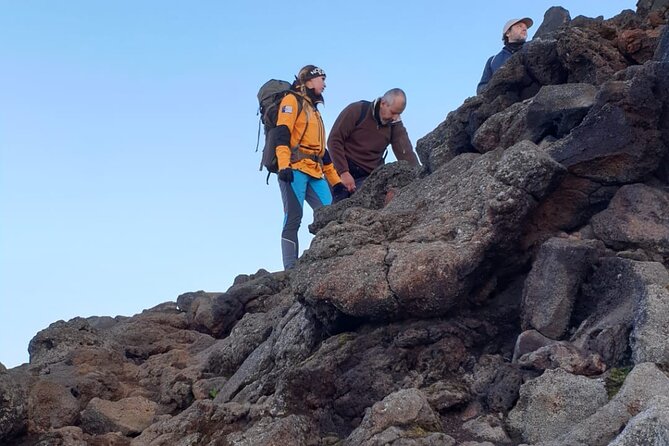
The tour time is about 7 hours, and you should plan that it can stretch depending on group pace. The steepness is the real driver, not the distance. You’ll spend a lot of time working upward, then you’ll spend just as much time being careful downward.
Downhills are where people lose concentration. Even when you’re feeling okay on the way up, stepping down on uneven volcanic rock requires focus. If you’re the type who tends to rush when tired, put that on your watch list. The safest plan is controlled steps and short pauses if needed.
Timing also matters. Some groups start before sunrise, even around 6:30 in one case, which makes the hike cooler and often less harsh for breathing and energy. That early start can be a lifesaver in sun and heat later in the day. But it also means you should prepare the night before: water bottle ready, sun protection packed, and your shoes tied properly.
Summit rewards: views, height, and a possible summit toast
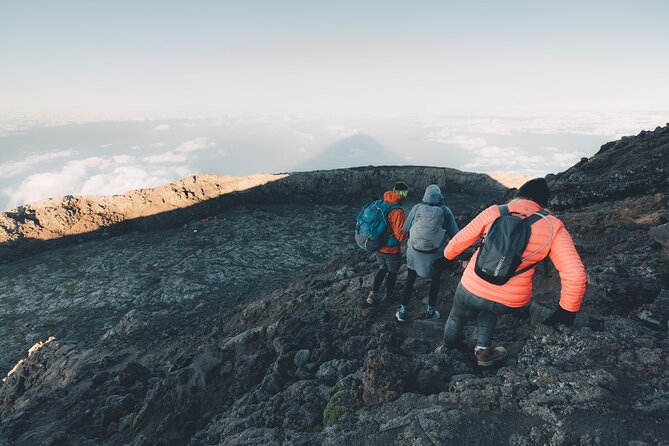
When you reach the top, the reward is both visual and emotional. The elevation makes the terrain feel dramatic, and the sky often feels closer. On clear days, the view can extend toward other Azorean islands, including Terceira and Graciosa, which makes the summit feel more than just “high ground.”
You might also notice the mountain’s personality up top, including signs of geothermal activity in some areas. That kind of detail helps you feel connected to what’s physically happening there, not just the photo you came for.
Some groups get a little celebration at the summit. One mention includes a small toast, even a round of schnaps, shared at the top. Don’t treat it as guaranteed, but do treat the summit as a moment worth lingering at, because the descent will demand your attention again soon after.
Gear that matters: trekking poles, shoes, water, and sun defense
Trekking poles are included, which is great value. Use them. Poles reduce strain on knees and improve balance on steep rock, especially when the ground changes.
Good hiking shoes are strongly implied by the steep, uneven terrain. If you show up in anything that slips on rock, you’ll feel it quickly. This hike also needs you to be able to hike for hours with an intense cardio component. If you don’t have that base yet, train for uneven slopes beforehand if you can.
Bring water, and plan snacks even though meals aren’t included. The tour does not list meals, so you should treat the day like a self-supported hike in the food sense. You can still rely on the guide’s break timing, but you should not assume a full meal plan will be provided.
Finally, sun protection is not optional. One account includes a sunburn even after sunscreen, even with the early start. Pico can have strong light and windy exposure. Pack sunscreen, a hat or cap, and consider sunglasses. If you’re someone who burns easily, bring extra layers for wind and temperature swings.
Photos, videos, and why the price can be fair value
The price is $90.74 per person for this guided summit climb, lasting about 7 hours. For many people, the value isn’t just the guide. It’s the full package: trekking poles, personal insurance, and quality photos and videos included.
That photo and video component matters because a summit hike is the kind of day where you stop thinking about your camera. You want to focus on breathing, footing, and the moment. When the day includes professional-quality photos and video, you can get real summit memories without taking time from the climb.
You’re also getting small group support, with a maximum of 10 people. That tends to translate to less “lost time” and better pacing management compared with big group hikes, especially on steep terrain where everyone’s step pattern matters.
The one value tradeoff is meals are not included. You’ll pay for food somewhere else, so budget for that. If you go in thinking it’s a full day with lunch handled, you’ll feel the gap.
Where this fits best: who should book, and who should consider another option
This is a good match if you’re in good physical condition and you like a real uphill challenge. The hike is described as iconic and memorable, even for people without mountaineering experience, but the trail is still steep, uneven, and demanding over time.
It is also a good fit if you want a guided day where someone takes responsibility for route pacing and safety cues. The success pattern in the feedback is clear: guides help groups reach the top safely, and they adjust breaks to keep people steady.
It may not fit if:
- you are over 60 or under 12, since groups exclude those ages, with private activity requested for a different price
- your balance is shaky on uneven ground
- you know steep cardio wipes you out fast
- you’re expecting lunch and full meal coverage
If you fall in the “close but not sure” category, consider a private activity so you can match the hike to your fitness level more precisely.
Booking decision: should you climb Pico Mountain with GOclimb Azores?
If you want the highest point of Portugal at 2351m, and you want to do it with structure, guides, and safety-minded pacing, this is a strong choice. I’d book it if you’re comfortable with a steep 8 km volcanic rock hike and you’ll show up with proper shoes, sun protection, and your own snacks and water plan.
Skip it or switch to a private option if you don’t handle steep grades well, if you fall under the age limits, or if long descents make you lose focus. This hike gives you an incredible summit payoff, but it demands respect for the climb and the descent.
FAQ
How long is the Pico Mountain climb?
The activity lasts about 7 hours, including the ascent and the return.
How long is the trail and what kind of ground is it?
The trail is approximately 8 km long and is entirely on volcanic rock, with an average slope of about 30%.
Where do we meet for the summit hike?
You start at the Mountain House, Caminho Florestal nº 9 Candelária, 9950-000 Madalena, Portugal, and the activity ends back at the same meeting point.
Is this tour really beginner-friendly if I have no mountaineering experience?
Yes, it’s described as suitable for people in good physical condition even without mountaineering experience, but it is still a steep, challenging hike.
Are meals included?
No. Meals are not included.
What’s included in the tour price?
Included are all fees and taxes, personal insurance, quality photos and videos, a professional guide, and walking sticks (trekking poles).
What age limits apply?
People over 60 years old and children under 12 years old are not included in the group. A private activity can be requested at a different price.
What happens if the weather is poor?
This experience requires good weather. If it’s canceled due to poor weather, you’ll be offered a different date or a full refund.
If I cancel, do I get my money back?
There is free cancellation. You can cancel up to 24 hours in advance for a full refund.
Pico, Faial and the Central Group, More Island Hops
Newly added around Pico
- Wine Tour
★ 5.0 · 52 reviews - Route DA Pico Island
★ 5.0 · 101 reviews - Pico Mountain: Climb the Highest Point of Portugal 2351m
★ 5.0 · 187 reviews
Other boats, other operators: Pico Island, Faial and the Central Azores.
 ★ 4.3Lisbon: São Jorge Castle E-Ticket and Audio GuideFrom $302,182 reviews
 ★ 4.6Lisbon: Sao Jorge Castle Skip-the-Line Ticket with GuideFrom $371,191 reviews
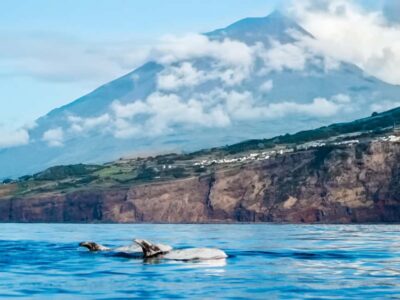 ★ 4.9Pico Island: Whale Watching Experience from LajesFrom $68492 reviews
 ★ 4.5São Jorge Castle Skip-the-line Entry TicketFrom $36440 reviews
 ★ 4.8Pico Island: Azores Whale & Dolphin Watching on Zodiac BoatFrom $53408 reviews
 ★ 4.9Horta: University Startup Whale and Dolphin RIB Boat TripFrom $101225 reviews
 ★ 5.0Faial Island: Full Day Tour – Nature and Local CultureFrom $114213 reviews
 ★ 4.8Faial Island: Half Day TourFrom $69181 reviews
Filed under