
REVIEW · ALFAMA AND OLD LISBON WALKS
Lisbon: Alfama and São Jorge Castle Quarters Walking Tour
Alfama rewards slow steps and good shoes. This route clicks because you move through the labyrinth of streets near São Jorge and pick up real context for Lisbon’s oldest neighborhood, including the story behind fado at Largo do Chafariz de Dentro. I also like the panoramic payoff from Portas do Sol, where the city suddenly makes sense in one glance. One thing to plan for, though: the tour focuses on the castle area but does not include entering São Jorge Castle.
It works well if you want more than a scenic walk. A good guide keeps the route organized, tells the why behind what you’re seeing, and points out places you can return to after the tour.
You’ll start at Casa dos Bicos, Campo das Cebolas, and the guide carries a black bag with the Lisboa Autêntica logo. The nearest metro stop is Terreiro do Paço, so getting there is usually straightforward.
In This Review
- Key highlights worth your attention
- Starting at Casa dos Bicos, then getting your bearings in Alfama
- Roman Olisipo and Moorish Al-Hamma, thermal waters explained on the way
- Finding hidden stairways, patios, and the former Jewish Quarter traces
- Lisbon Cathedral interior visit, where styles layer instead of compete
- Portas do Sol panoramas, plus how to use viewpoints smartly
- Fado origins and Largo do Chafariz de Dentro, customs you can feel
- São Jorge Castle focus, what you’ll see if you do not enter
- House of Spikes and survivors after 1755, why meeting point matters
- Price and pacing for 150 minutes, is $23 good value?
- Who this tour suits best, and who should skip it
- Should you book Lisbon Alfama and São Jorge Castle Quarters?
- FAQ
- Where is the tour meeting point?
- How long is the walking tour?
- What is included in the price?
- Is entrance to São Jorge Castle included?
- What should I bring?
- Which languages are offered?
Key highlights worth your attention
- Casa dos Bicos (House of Spikes), a striking 1520s building that survived the 1755 earthquake era
- Roman Olisipo to Moorish Al-Hamma, including why Alfama is linked to thermal waters
- Cetária traces, evidence of old Roman salting tanks you’d otherwise miss
- Lisbon Cathedral interior visit, showing a mix of architectural styles
- Portas do Sol viewpoints, built for photos and for understanding the city’s layout
- Fado origins and customs, plus a walk that hints at earlier Jewish Quarter streets and squares
Other walks through the old Lisbon quarters we have reviewed in Lisbon
- Alfama Tour in Lisbon Old Town★ 5.0 · 4,936 reviews
- Private Lisbon Sightseeing Tuk-Tuk Tour: Alfama, Belém & More★ 5.0 · 4,277 reviews
- Lisbon: Hills, Alfama, and Mouraria Tour by Electric Bike★ 4.8 · 3,438 reviews
- Best of Lisbon Walking Tour: Rossio, Chiado & Alfama★ 4.9 · 2,700 reviews
Starting at Casa dos Bicos, then getting your bearings in Alfama
Your money here is buying orientation. Alfama can feel like a maze until you understand the logic: walls, elevations, and old neighborhoods layered on top of each other. The tour starts at Campo das Cebolas at Casa dos Bicos, sometimes called the House of Spikes because of its sharp, diamond-like façade.
This is a smart first stop. Casa dos Bicos is not just pretty, it’s a survival story. It dates back around 1523 and is described as a rare survivor from the 1755 Lisbon Earthquake. That matters because Lisbon’s look today is shaped by repeated rebuilding, not just original construction. From the start, you’re training your eyes to notice what survived and what changed.
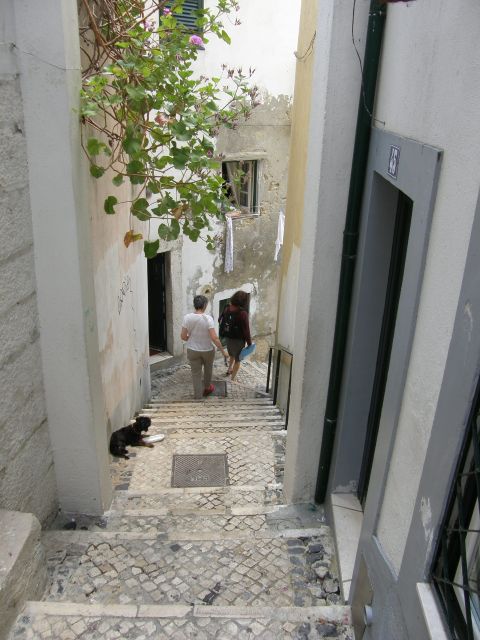
Then you head into Alfama. You’re walking lanes and stairways rather than museum halls, so you’ll feel why locals live this way. Expect narrow passages, interior patios, and sudden turns that make you slow down. That’s not a downside. It’s the point. In a short 150 minutes, you’ll get the kind of bearings that help you wander later on your own.
Roman Olisipo and Moorish Al-Hamma, thermal waters explained on the way
One reason this walking tour feels more grounded than a basic “pretty streets” loop is that it ties Lisbon to older identities. You’ll hear Lisbon’s older name, Olisipo, and learn how the Romans encountered the thermal waters of the Alfama area.
The story gets even better when the narrative shifts to the Muslim period. Alfama’s thermal reputation continues, but the name changes: the Romans’ thermal waters connect to the Moorish name Al-Hamma. You’re not just collecting dates. You’re learning how place names and uses shift over centuries, while the physical geography stays.
You also get a very tangible relic on the route: evidence of old Roman salting tanks at the Cetária. Even if you’re not a “Roman ruins” person, this stop helps you picture how the Roman economy worked here. Salt production and preservation were big, and it makes sense for a coastal city that needed to feed people near and far.
The guide will keep the walk moving, but the stops are paced so the information lands. I like how the tour uses these historical breadcrumbs to explain why Alfama developed the way it did, rather than treating history like trivia you forget after the photo.
Finding hidden stairways, patios, and the former Jewish Quarter traces

Alfama is famous for small-group wander energy, and this route uses that strength. You’ll wander through alleys and interior patios, with what feel like secret stairways and hidden squares appearing as the guide calls your attention to them.
This section is valuable because it makes Alfama feel walkable, not random. A place like Lisbon Cathedral later becomes easier to appreciate once you’ve already seen how neighborhoods sit on top of each other, and how the city grew outward from walls.
You’ll also get traces of what used to be the Jewish Quarter. The tour doesn’t present this as a lecture-only topic. Instead, it uses the street pattern and the micro-locations, the kind you’d otherwise pass without noticing. That’s the difference between seeing Alfama and understanding Alfama, even if your map is already filled with top sights.
One practical note: Alfama has steep bits. Comfortable clothes matter because you’ll be doing a lot of walking on irregular pavement, plus the kind of stairs that make you grateful for your footwear.
Lisbon Cathedral interior visit, where styles layer instead of compete

Lisbon Cathedral, the Sé, is a “don’t just look, go inside” kind of place. This tour includes an entrance and guided visit, which I consider a core value because cathedral interiors can look confusing if you only catch the façade.
You’ll be looking at a mix of architectural styles, shaped by different periods rather than one single design moment. That blend is the perfect match for Alfama. Lisbon, as a city, didn’t develop in one neat era. It was rebuilt, expanded, modified, and repurposed. The Cathedral reflects that same pattern.
From a practical standpoint, this stop also breaks up the walking rhythm. You get shade, seats when possible, and a calmer pace for the last stretch of the tour’s first half. And it gives your guide a chance to connect what you saw earlier, like the city’s older identities and influences, to the medieval and later Lisbon that people recognized as the capital.
More central-group island hops we have made in Lisbon


Portas do Sol panoramas, plus how to use viewpoints smartly
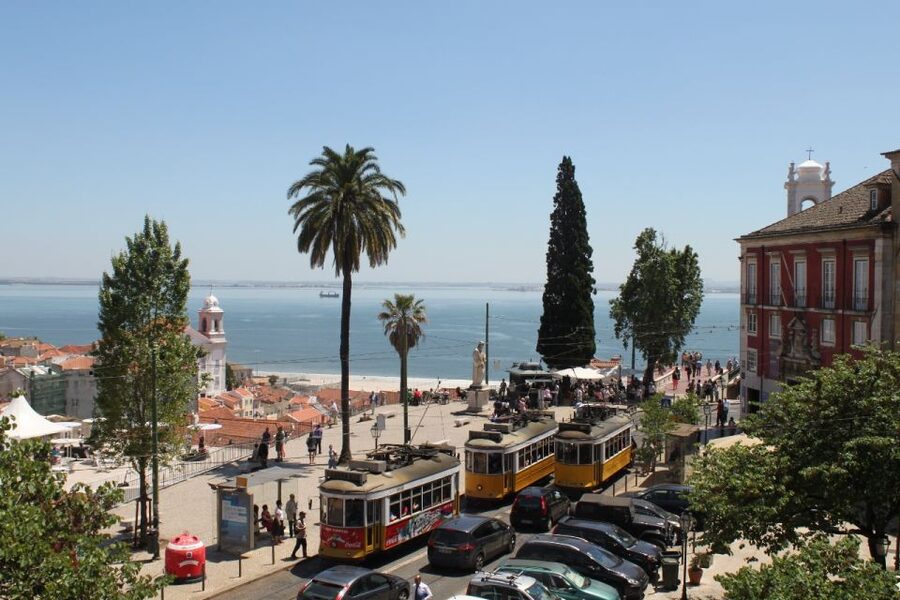
Portas do Sol is one of those belvederes that earns its reputation. The tour includes panoramic views from here, and you’ll see why the spot became a must-do. It’s not just a photo stop. It’s a “map in your head” stop.
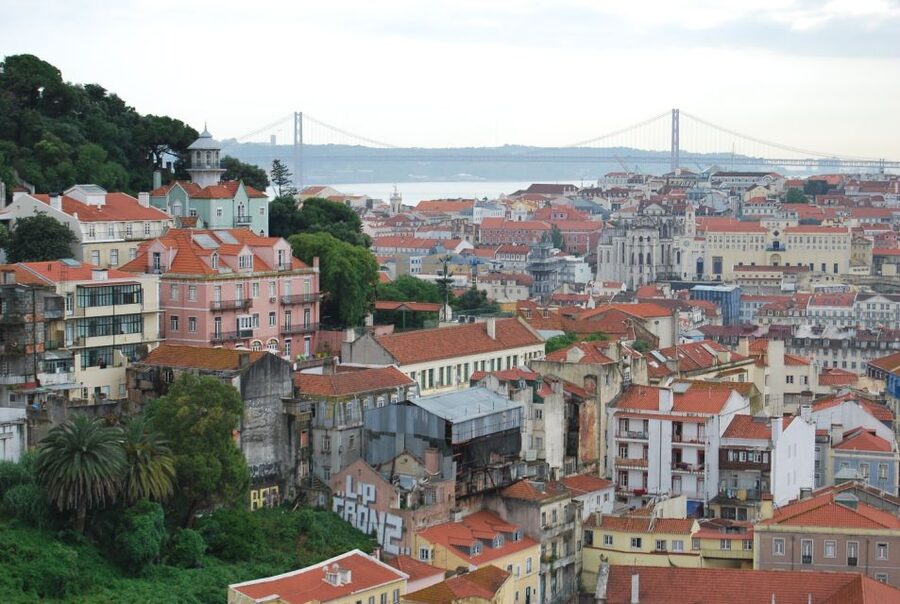
Standing at a viewpoint like this makes the streets below stop being abstract. You start understanding how Alfama climbs, where the walls and highest points likely guided development, and how neighborhoods funnel toward major landmarks. That context is especially helpful if you plan to explore on your own after the tour.
If you care about photos, here’s the practical approach I’d use: aim to take a wide shot first, then zoom in with your eyes on specific points the guide mentions. Viewpoints get busy, but you can still work efficiently. A little patience buys you better angles and less rushing.
And because this is a guided walk, you won’t just stand there wondering what you’re looking at. The route gives you the names and the why behind what you see.
Fado origins and Largo do Chafariz de Dentro, customs you can feel
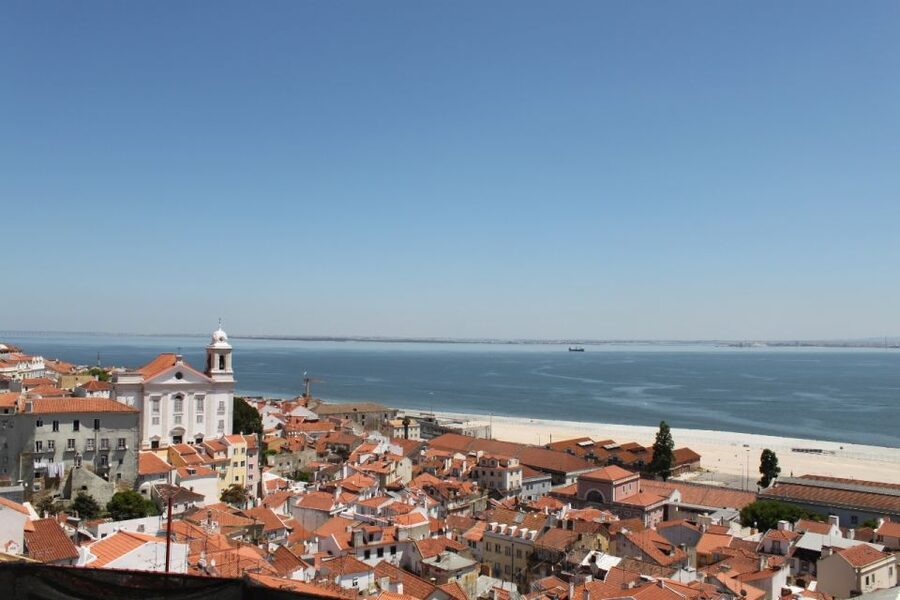
Fado can be a blur if you only treat it like background music. This tour gives it a place in everyday life. You’ll learn about the birth of fado music and pass through Largo do Chafariz de Dentro, framed as one of the city’s oldest customs.
Even if you don’t plan to watch a fado show tonight, this stop helps you understand why fado belongs to Lisbon’s backstreets and not just concert stages. The “how” matters. You learn that fado grew from local life, local rhythms, and the specific character of neighborhoods like Alfama.
This is also one of the stops where a great guide can make a difference. Some guides leading this walk have been described as particularly engaging, including people named Ricardo (mentioned as a history teacher), Agatha, Helena, Lucy, and Fatima. Names aside, the pattern is consistent: you get stories that connect the cultural practice to the actual streets around you.
For your planning, I’d think of this as the cultural thread that ties the architecture and archaeology together. After the walk, you’ll be more likely to notice fado references as you move through the city.
São Jorge Castle focus, what you’ll see if you do not enter
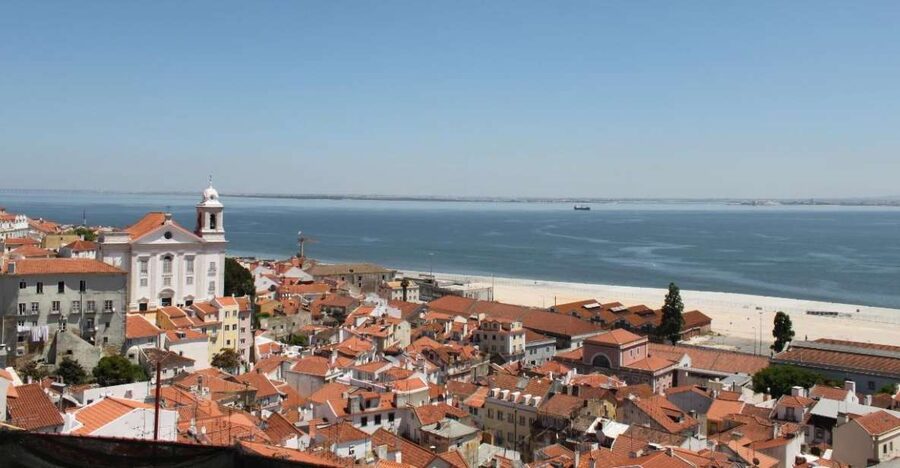
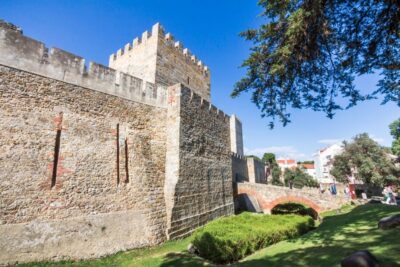
The tour headline includes São Jorge Castle, and you should understand what that means. You follow the path of the city walls and the Moorish castle of São Jorge, so you get the feel of the fortress footprint.
But entrance to São Jorge Castle is not included. So the experience leans toward the exterior and the walls area rather than a full inside visit with museum-style exhibits.
That’s not automatically bad, but it is a key planning point. If you specifically want the castle interior, add that as a separate visit. Think of this tour as the “why Alfama and São Jorge belong together” walk, not the complete castle ticket in one package.
You’ll still get real value from being up in that zone. Castle walls and viewpoints give you the city’s vertical story. Lisbon is a city of hills, and this part helps you understand why the streets fold and rise the way they do.
House of Spikes and survivors after 1755, why meeting point matters
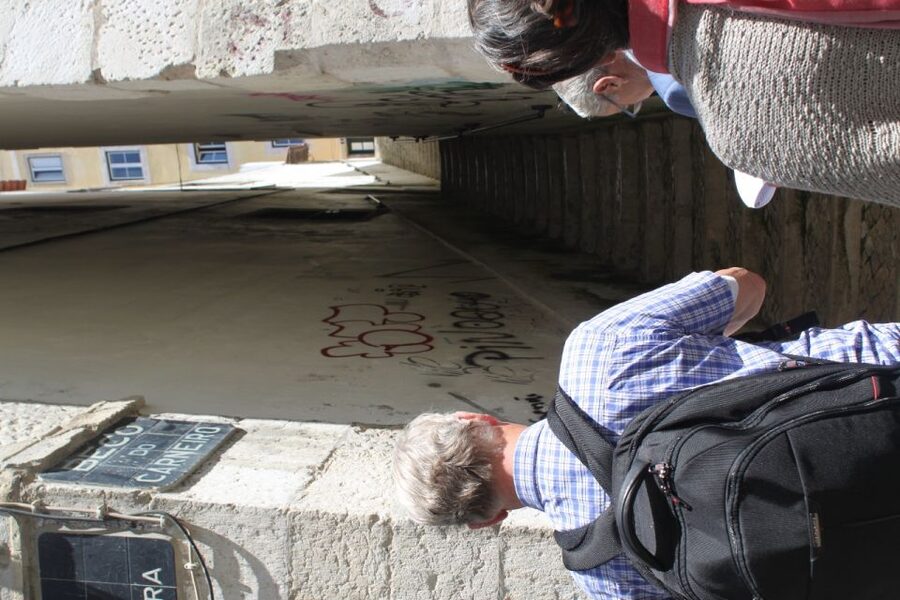
Casa dos Bicos is more than a convenient meeting place. It’s also one of the most dramatic starting visuals you could ask for in Alfama, and it sets expectations for the walk.
The façade with spikes is hard to ignore. But the fact that it survived the 1755 earthquake era is what makes it memorable. You start the day holding a building that represents persistence, not an idealized “old town postcard.” That’s useful because Lisbon’s historic districts are not frozen in time. They’re living layers.
You’ll meet near Campo das Cebolas, and the guide is easy to spot by the black Lisboa Autêntica bag. That detail helps on arrival, especially if you’re catching the metro and want to avoid standing in the wrong spot while your time window passes.
Also note: the tour includes personal protection equipment, specifically a mask and disinfectant gel. It’s a small item, but it’s nice to know you’re not caught without it.
Price and pacing for 150 minutes, is $23 good value?
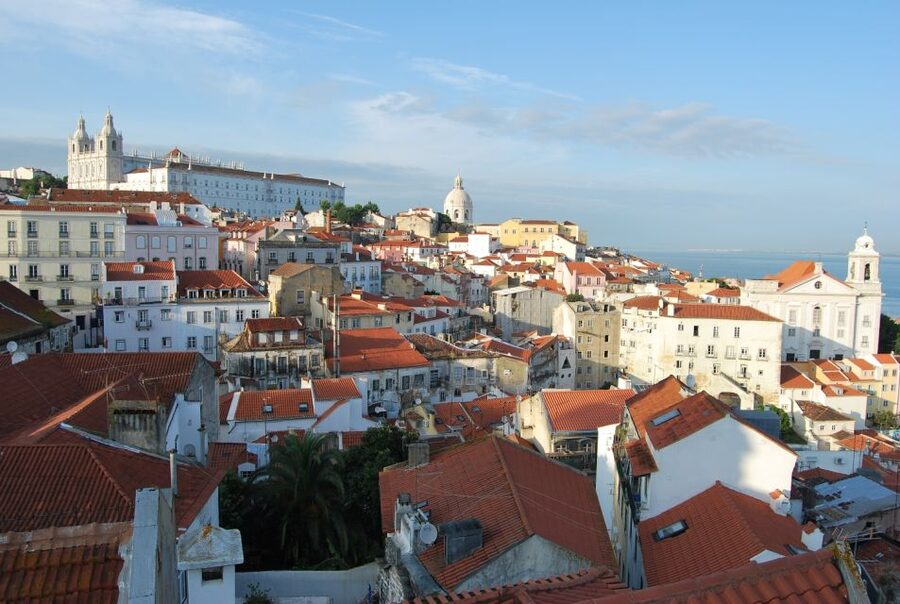
At $23 per person for a 150-minute guided walk, you’re paying for a couple of things that are hard to DIY alone in Alfama: navigation plus explanation. Alfama’s streets can be fun to get lost in, but you’ll waste time if you don’t know which lanes connect to the big ideas, like Roman Olisipo, Moorish naming, and Lisbon Cathedral’s layered architecture.
This price also buys actual guiding time at multiple stops, plus a guided entrance at Lisbon Cathedral. That cathedral entrance component makes the cost feel less like a generic “walking tour fee” and more like a tour plus a museum-like stop.
The tradeoff, again, is São Jorge Castle entrance. If you hoped the whole castle would be included, you might feel a gap. But if you treat this as a half-day primer for Alfama and the São Jorge zone, the price makes sense.
Pacing-wise, it’s a half-day walk, so plan on comfortable clothing and shoes. The tour is not billed for mobility limitations, so if you have any concerns about uneven ground and stairs, you’ll want to think twice and consider a different format.
Who this tour suits best, and who should skip it
This is a strong fit if:
- You like walking neighborhoods where the streets matter, not just the view from one spot
- You want context for Lisbon’s oldest quarter, including Roman and Moorish layers
- You appreciate a guided stop inside Lisbon Cathedral
- You want fado placed in its neighborhood setting, not just as entertainment
You might want to skip or choose a different option if:
- You need a highly accessible route, because the area includes hills and stairways
- You are specifically hunting for an inside visit to São Jorge Castle, since entrance is not included
- You prefer long periods of sitting, because much of the value here comes from moving through Alfama’s back lanes
Should you book Lisbon Alfama and São Jorge Castle Quarters?
I’d book this if you want a first taste of Lisbon that actually teaches you how the city works. The combination of Casa dos Bicos as a historic anchor, Roman Olisipo and Moorish Al-Hamma context, Lisbon Cathedral inside access, and viewpoint time at Portas do Sol is a smart use of 150 minutes.
If your goal is solely to spend time inside São Jorge Castle, then this is not the only thing you should buy. But if your goal is to understand Alfama and connect it to the castle and the culture around it, this is the kind of guided walk that makes your later wandering feel easier and more meaningful.
FAQ
Where is the tour meeting point?
Meet at Campo das Cebolas, Casa dos Bicos (the House of Spikes). The guide will be holding a black bag with the Lisboa Autêntica logo. The nearest metro is Terreiro do Paço.
How long is the walking tour?
The tour lasts 150 minutes.
What is included in the price?
You get a live guide, entrance and guided tour of Lisbon Cathedral, and personal protection equipment (mask and disinfectant gel).
Is entrance to São Jorge Castle included?
No. Entrance to São Jorge Castle is not included. The tour focuses on the castle area from the outside.
What should I bring?
Bring comfortable clothes, and plan for a walking-focused experience.
Which languages are offered?
The live tour guide is offered in Spanish, Portuguese, German, English, and French.
On Foot Around Lisbon, Other Guided Walks




Pico, Faial and the Central Group, More Island Hops


Alfama and the Old Quarters, Other Walks We Reviewed


Newly added around Lisbon
- Charming Sintra on Private Guided Tour with History (All Day)
★ 5.0 · 38 reviews - Setubal & Comporta Trip with Horseback Riding from Lisbon
★ 4.5 · 38 reviews - 2H Private Sailing Catamaran “Vertigo” Tour in Lisbon up to 18pax
★ 5.0 · 38 reviews - Private Open Top Coastal Tour with Coffee Included
★ 5.0 · 38 reviews - Lisbon Oceanarium and Belém and Modern Lisbon bus Hop On Hop Off Tours 48h
★ 3.5 · 38 reviews - Lisbon Cruise Port Private Transfer to/from Lisbon Airport
★ 4.5 · 38 reviews - Private Lisbon Wine & Tile Painting Tour – Sesimbra & Traditions
★ 5.0 · 38 reviews - City of Neighborhoods Tour 1H 30M Private Tour by Tuk Tuk
★ 5.0 · 38 reviews - Romantic Private Sailboat in Lisbon for couples
★ 5.0 · 38 reviews - City Highlights Eco Tuk Tours
★ 4.8 · 38 reviews
Other boats, other operators: Alfama and Old Lisbon Walks.
 ★ 5.0Private Lisbon Sightseeing Tuk-Tuk Tour: Alfama, Belém & MoreFrom $524,277 reviews
 ★ 4.8Lisbon: Hills, Alfama, and Mouraria Tour by Electric BikeFrom $253,438 reviews
 ★ 4.6Lisbon: Fado in Chiado Live ShowFrom $273,095 reviews
 ★ 4.9Best of Lisbon Walking Tour: Rossio, Chiado & AlfamaFrom $232,700 reviews
 ★ 4.3Lisbon: São Jorge Castle E-Ticket and Audio GuideFrom $302,182 reviews
 ★ 5.0Lisbon Small-Group Food Tour with 18 Tastings in Alfama DistrictFrom $1261,967 reviews
 ★ 4.9Lisbon: Baixa District Food Tour with Dinner and DrinksFrom $821,870 reviews
 ★ 4.5Lisbon E-Bike Tour Commerce Square, Mouraria and AlfamaFrom $301,688 reviews