

REVIEW · ALFAMA AND OLD LISBON WALKS
Old Lisbon: Alfama and Sao Jorge neighborhood 3-Hour Walking Tour
Alfama and São Jorge feel like Lisbon’s time machine. This 3-hour walk takes you through the oldest streets and up toward São Jorge Castle, with stops that tie together Roman, Moorish, Jewish, and Christian eras. I especially like that the route mixes major sights (Lisbon Cathedral and the castle area) with the everyday side of neighborhood life, and that the guides bring the place to life with local details, like Eleanor and Fatima sharing context plus practical help. The one drawback to plan for is physical effort, including a meaningful climb (about 110 meters) before you descend again.
The small-group size, max 15 people, is the difference between rushing and actually understanding what you’re seeing. You’ll get a guided visit inside Lisbon Cathedral, plus time for viewpoints like Portas do Sol. If you dislike church stops in general or you want long stretches of pure street time, you might find the pacing a bit structured.
In This Review
- Key things I think you’ll appreciate on this tour
- Old Lisbon on foot: why this route works
- Starting at Casa dos Bicos, then letting the neighborhood do the talking
- Lisbon Cathedral plus Portas do Sol: the best quick win
- Roman “Olisipo,” Moorish naming, and how walls shape the city
- Alfama alleys, hidden squares, and the Jewish Quarter connection
- Up toward São Jorge: castle quarters and River Tagus views
- Guide styles that make or break a walking tour
- What’s included in the ticket, and what you should budget for
- Pace, distance, and what to wear for Alfama and São Jorge
- Getting your best value: how to plan the rest of your Lisbon day
- Should you book the Alfama and São Jorge 3-hour walking tour?
- FAQ
- How long is the Old Lisbon: Alfama and São Jorge neighborhood walking tour?
- Where does the tour start and end?
- What is included in the price?
- Is food or drinks included?
- How large is the group?
- What if the weather is bad?
Key things I think you’ll appreciate on this tour
- Small group, up to 15 people, so you can ask questions and keep a human pace
- Lisbon Cathedral included, with time to connect architecture to the city’s shifting eras
- São Jorge Castle viewpoint time, including strong River Tagus sightlines from the hilltop area
- Fado origin context, tied to the lanes and meeting points around older Lisbon
- Local-start tour design, beginning at Casa dos Bicos and moving through layers of the city
- Practical guide benefits, including recommendations for what to do after the walk
Other walks through the old Lisbon quarters we have reviewed in Lisbon
- Alfama Tour in Lisbon Old Town★ 5.0 · 4,936 reviews
- Private Lisbon Sightseeing Tuk-Tuk Tour: Alfama, Belém & More★ 5.0 · 4,277 reviews
- Lisbon: Hills, Alfama, and Mouraria Tour by Electric Bike★ 4.8 · 3,438 reviews
- Best of Lisbon Walking Tour: Rossio, Chiado & Alfama★ 4.9 · 2,700 reviews
Old Lisbon on foot: why this route works
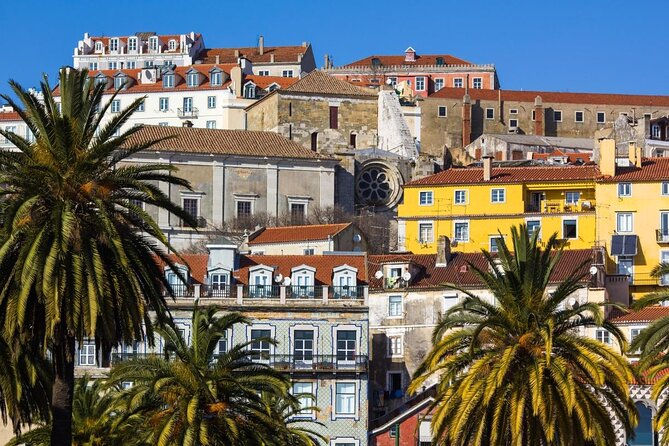
Lisbon has plenty of places to see. The problem is that the old districts can also be hard to navigate, with tight alleys, sudden dead ends, and hills that make “just wander” plans turn into a long, tiring guess. This tour helps you get your bearings fast. You move through Alfama and up toward São Jorge in a way that makes the city’s layers click, instead of feeling like disconnected stops on a map.
I like that it’s not only about famous monuments. The tour connects the dots: where Lisbon’s earlier names and populations fit in, how walls and fortifications shaped movement, and why certain squares and streets became gathering points. You also get viewpoint time, not just photo-time. That matters here because Lisbon’s best “wow” moments often require perspective, and the guide’s route gets you that perspective efficiently.
One more detail that I think is underrated: the tour returns to the starting point at Casa dos Bicos. That helps you plan your afternoon, whether you want a late lunch nearby or a follow-up visit to something you didn’t have time for.
Starting at Casa dos Bicos, then letting the neighborhood do the talking
The tour meet-up is at Casa dos Bicos, tied to the José Saramago Foundation, at R. dos Bacalhoeiros 10. It’s a smart starting point because the building itself already tells a survival story. Casa dos Bicos dates around 1523 and is described as one of the rare survivors of the 1755 Lisbon Earthquake.
Right from the start, you’re set up for what makes Alfama special. Instead of treating the neighborhood as scenery, the tour treats it as evidence. You’ll even hear about Roman-era traces you can still find around the area, including the old Roman salting tanks at Cetária. For me, those small “this is still here” moments are what turn history from a school lesson into a walk you can physically track.
Also, the tour’s structure means you’re not just waiting around for explanations. You’re walking between periods and places, so the history changes as the street layout changes. It’s the kind of approach that makes the old town feel navigable, even if you’re not used to hillside neighborhoods.
Lisbon Cathedral plus Portas do Sol: the best quick win
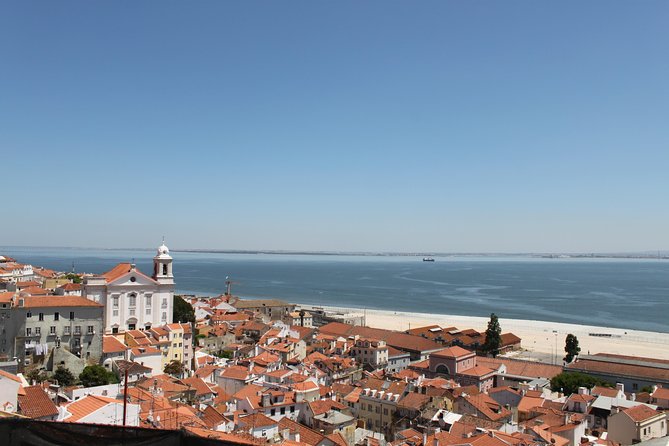
Lisbon Cathedral is stop-worthy on its own, but it becomes more interesting when you understand why it stands where it does. The tour includes a guided visit with time to see Lisbon Cathedral, built in the 12th century and later modified in a mix of architectural styles. That blend is a theme for the whole tour, since Lisbon’s buildings often reflect whoever held power and influence at the time.
You also get panoramic viewpoints from Portas do Sol belvedere. That’s where the geography does work for you. From up high, the city’s density makes sense, and the River Tagus stops being a distant idea and becomes a real part of the scene.
Practical note: churches can be quieter and more time-focused than street corners, and the tour includes more than one religious site. If you prefer purely outdoors street walking, you might feel the schedule gets a bit “inside” at times. Still, the stops are used as story anchors, not as random detours.
Roman “Olisipo,” Moorish naming, and how walls shape the city
One of the strongest parts of this tour is how it threads together Lisbon’s identity across eras. You’ll travel back to Roman times, when Lisbon was known as “Olisipo.” Then you’ll connect that to the idea of thermal waters in the Alfama area, which were discovered by Romans, later followed by the Muslim name “Al-Hamma.”
This isn’t just trivia. The tour uses these references to explain why places feel the way they do today. Roman and Moorish influence is not always visible in obvious ruins, but you can often feel it in street alignment, fortification patterns, and how neighborhoods were organized for defense and daily life.
The guide also takes you along the path of city walls on the way toward São Jorge, and you’ll move in and around the kinds of spaces people used for practical living. That’s where you begin to understand how “structure” creates “routine,” and why certain squares and streets became repeated destinations over centuries.
More central-group island hops we have made in Lisbon


Alfama alleys, hidden squares, and the Jewish Quarter connection
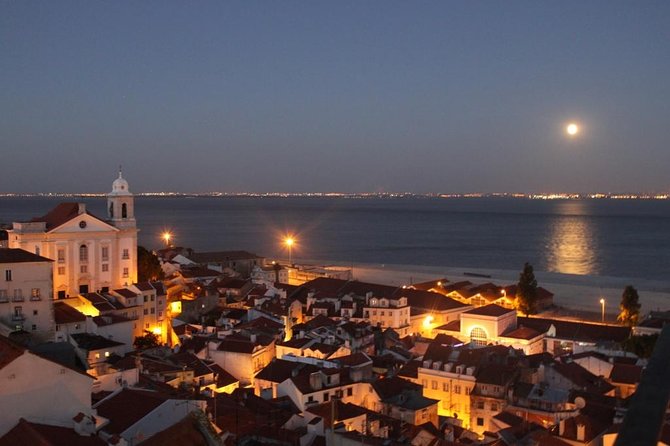
Here’s where the tour stops being a list of landmarks and becomes a guided walk through social history. You’ll wander a labyrinth of alleys and interior patios, where you can spot secret stairways and hidden squares that lead toward what used to be Lisbon’s Jewish Quarter.
This area matters because it shows how Lisbon’s identities changed over time. You’ll also hear about the birth of fado music as part of the story, tied to the meeting points and older customs you pass along the route.
A key stop in this section is Largo do Chafariz de Dentro, mentioned as one of the oldest customs you experience as you pass through. Even if you don’t know the details beforehand, the guide’s explanation helps you understand why these squares show up again and again in Lisbon’s cultural memory.
If you’re the kind of traveler who loves walking into neighborhoods and figuring out how people live on normal days, this part is for you. It’s also one of the best segments for photo breaks because the street shapes give you different angles naturally, without you needing to hunt for viewpoints every five minutes.
Up toward São Jorge: castle quarters and River Tagus views
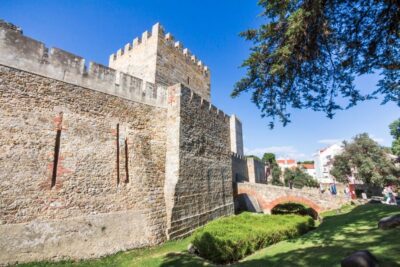
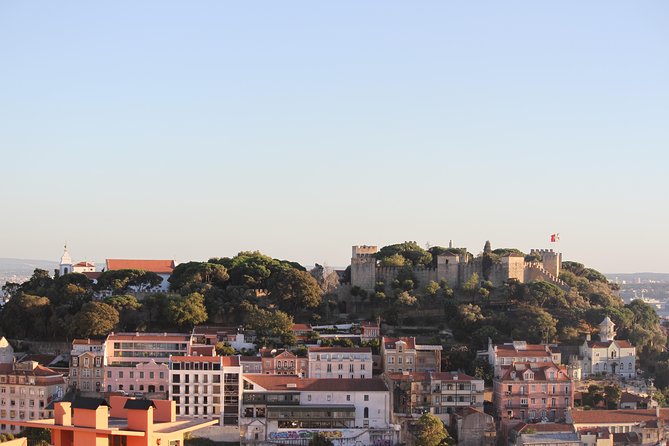
São Jorge Castle is the hilltop payoff. The tour includes a stop at the Torre da Igreja do Castelo de São Jorge and time to explore castle quarters. It’s a logical step after the alley maze, because the castle area gives you the “why” behind the layout. Fortifications are about protection and control, and São Jorge explains both.
You also get to enjoy stunning views of the River Tagus from a viewpoint as part of the route. Even if you’ve seen Lisbon photos already, the best views here come with context. Looking down, you understand why the streets funnel the way they do, and you see how the city grew around topography.
The walk includes a climb to the top of São Jorge hill, and there’s a clear descent afterward. That means the effort is not optional, but it is managed. Since the tour is designed as a 3-hour experience, it typically aims to feel like a steady walk with stops, not an endurance test.
Guide styles that make or break a walking tour
For a tour like this, the guide is not optional. It’s the person who turns streets into stories and keeps the pace realistic.
Several guides are mentioned in the experience feedback, and the common thread is enthusiasm plus an eye for how different people experience the same streets. Eleanor is highlighted for being very knowledgeable and very sensitive to an elderly, slow-walking pace, while Fatima is praised for growing up in the area and for connecting the walk to local life away from the thickest tourist patterns. Joao gets credit for passion and for showing corners and telling childhood stories that other guides might miss. Alex is described as doing a great job with shortcuts that save time in dead ends and maze-like streets.
This matters for you because the route can feel straightforward on paper and confusing on foot. A good guide reduces frustration. They also provide safety and common sense when moving through streets with heavy traffic. One review notes the guide protected the group while walking due to crazy car drivers, and that kind of practical attentiveness is worth paying for in old city areas.
In other words, the small group is not just a comfort perk. It’s the setup that allows the guide to adjust explanations, answer questions, and keep the day flowing.
What’s included in the ticket, and what you should budget for
This tour costs $24.14 per person for about 3 hours. That pricing works best when you value guided interpretation, not just admission to sites. You’re getting a professional guide, plus entrance and guided tour at Lisbon Cathedral. There’s also liability and personal accident insurance included.
You’ll also receive PPE, specifically a mask and disinfectant gel. That’s a small thing, but it signals the tour is thinking about practical on-the-go hygiene.
What is not included: food and drinks. So you should plan a meal either before you go or afterward. A tip from the experience feedback that you can use for planning: after the walk, it helps to have a restaurant in mind. One guide reportedly led people to a terrific restaurant for dinner, and that’s a good example of the kind of local follow-up support you may get.
If you’re traveling later in the day, keep in mind the tour ends back at the meeting point. That makes it easier to continue nearby without reorganizing your entire afternoon.
Pace, distance, and what to wear for Alfama and São Jorge
Even though it’s described as a walking tour, the real question is how the walk feels. You’ll be going from the lower part near the river up toward São Jorge hill, with a climb of about 110 meters (364 feet). Then you descend back down. That’s not extreme hiking, but it is real elevation, plus cobblestones and tight turns.
Most travelers can participate, but if you’re sensitive to stairs and slopes, go in expecting frequent “slow down” moments. The tour structure helps, but physics still applies. In the feedback, elderly slow-walking pace was accommodated well, which suggests the guides manage timing and attention rather than pushing a fast walking tempo.
What to wear:
- Comfortable walking shoes with solid grip for cobblestones
- Light layers, because Lisbon weather can shift quickly
- A small bottle of water, even though food and drinks are not included
And a small sanity tip: arrive a few minutes early so you’re ready to start when the group meets. In a neighborhood like Alfama, everyone benefits from getting going on time.
Getting your best value: how to plan the rest of your Lisbon day
A tour like this is a perfect “foundation” experience. It helps you understand where you are in Lisbon, not just what you saw. Once you’ve got the structure in your head, it’s easier to decide where to spend extra time afterward.
The guide is also set up to point you toward the best places to visit for the rest of your stay. That might mean a viewpoint you should revisit at a different time of day, or neighborhoods that match your interests. If you’re curious about fado, for example, this tour’s explanation of how fado connects to older customs and locations can make later fado bar choices feel more meaningful.
One more practical planning detail: this tour tends to book about 28 days in advance on average. If your dates are during peak season or around major holidays, don’t wait until the last minute.
Finally, if weather is poor, the tour can be canceled and you’ll be offered another date or a full refund. You can usually treat this as a good reason to plan flexible timing in Lisbon, especially if you’re juggling multiple outdoor activities.
Should you book the Alfama and São Jorge 3-hour walking tour?
Book it if you want your Lisbon to feel connected. This is not a grab-a-photo-and-go walk. You’ll get guided context at Lisbon Cathedral, you’ll work your way through old lanes and meaningful squares, and you’ll reach São Jorge for River Tagus views without needing to plan a complex self-guided route.
Skip it, or adjust expectations, if you hate structured stops inside churches. The tour includes more than one religious stop as part of the story of Lisbon’s evolution, and the pacing is designed to explain eras, not just provide unlimited street wandering.
If you like small groups, clear guidance, and a route that helps you understand the city’s layers in a few hours, this is a strong value pick at $24.14. For many people, it’s the kind of experience that makes the rest of Lisbon click.
FAQ
How long is the Old Lisbon: Alfama and São Jorge neighborhood walking tour?
It lasts about 3 hours.
Where does the tour start and end?
It starts at Casa dos Bicos (José Saramago Foundation), R. dos Bacalhoeiros 10, 1100-135 Lisboa, Portugal. It ends back at the meeting point.
What is included in the price?
Included are a professional guide, entrance and guided tour at Lisbon Cathedral, liability and personal accident insurance, and PPE (mask and disinfectant gel).
Is food or drinks included?
No. Food and drinks are not included.
How large is the group?
The tour has a maximum of 15 travelers.
What if the weather is bad?
The tour requires good weather. If it’s canceled due to poor weather, you’ll be offered a different date or a full refund.
On Foot Around Lisbon, Other Guided Walks





Pico, Faial and the Central Group, More Island Hops




Alfama and the Old Quarters, Other Walks We Reviewed



Newly added around Lisbon
- Charming Sintra on Private Guided Tour with History (All Day)
★ 5.0 · 38 reviews - Setubal & Comporta Trip with Horseback Riding from Lisbon
★ 4.5 · 38 reviews - 2H Private Sailing Catamaran “Vertigo” Tour in Lisbon up to 18pax
★ 5.0 · 38 reviews - Private Open Top Coastal Tour with Coffee Included
★ 5.0 · 38 reviews - Lisbon Oceanarium and Belém and Modern Lisbon bus Hop On Hop Off Tours 48h
★ 3.5 · 38 reviews - Lisbon Cruise Port Private Transfer to/from Lisbon Airport
★ 4.5 · 38 reviews - Private Lisbon Wine & Tile Painting Tour – Sesimbra & Traditions
★ 5.0 · 38 reviews - City of Neighborhoods Tour 1H 30M Private Tour by Tuk Tuk
★ 5.0 · 38 reviews - Romantic Private Sailboat in Lisbon for couples
★ 5.0 · 38 reviews - City Highlights Eco Tuk Tours
★ 4.8 · 38 reviews
Other boats, other operators: Alfama and Old Lisbon Walks.
 ★ 5.0Private Lisbon Sightseeing Tuk-Tuk Tour: Alfama, Belém & MoreFrom $524,277 reviews
 ★ 4.8Lisbon: Hills, Alfama, and Mouraria Tour by Electric BikeFrom $253,438 reviews
 ★ 4.6Lisbon: Fado in Chiado Live ShowFrom $273,095 reviews
 ★ 4.9Best of Lisbon Walking Tour: Rossio, Chiado & AlfamaFrom $232,700 reviews
 ★ 4.3Lisbon: São Jorge Castle E-Ticket and Audio GuideFrom $302,182 reviews
 ★ 5.0Lisbon Small-Group Food Tour with 18 Tastings in Alfama DistrictFrom $1261,967 reviews
 ★ 4.9Lisbon: Baixa District Food Tour with Dinner and DrinksFrom $821,870 reviews
 ★ 4.5Lisbon E-Bike Tour Commerce Square, Mouraria and AlfamaFrom $301,688 reviews