
REVIEW · WALKING TOURS
PORTO: Historical Walking Tour
Porto hits you fast, and this walk hits back. In about 3 hours, you glide from tiled wonder (São Bento) to Art Nouveau streets, with a strong dose of storytelling about why Porto looks and feels the way it does. I love the way the route mixes big icons like Livraria Lello with the real textures of the medieval lanes around Sé. You’ll also get a proper drink moment, with Porto wine, plus bread and olive oil on the included side.
The only real catch is the walking. Several people note it can feel long once you reach the 2 hour mark, especially if you’re not used to steep, uneven old-city streets. Come in with good shoes, and you’ll be fine.
In This Review
- Key takeaways before you lace up
- Starting in Porto’s old-city orbit from R. de Mouzinho da Silveira
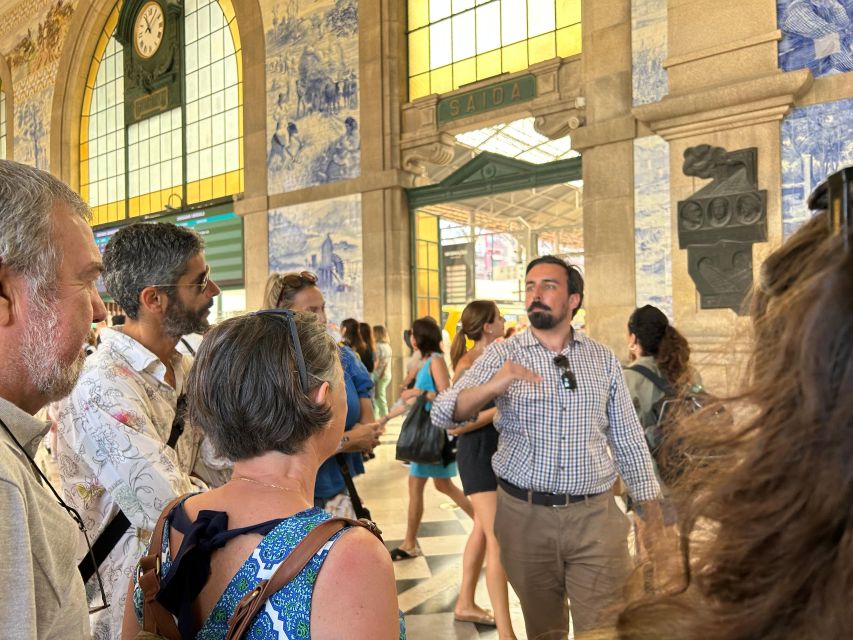
- São Bento Station: tiles, scale, and instant Porto mood
- Avenida dos Aliados and Porto City Hall: the city’s formal face
- Livraria Lello and Art Nouveau streets: style with a story
- Iglesia do Carmen and Vitória: religion, views, and neighborhood character
- Sé neighborhood: medieval lanes that teach you how Porto grew
- Clérigos Tower: a symbol you spot, then understand
- Dom Luís Bridge: the river view that makes Porto make sense
- Palacio da Bolsa: a refined stop that shifts the mood
- Wine, bread and olive oil, then a Virtudes Gardens picnic option
- How much walking is too much for this 3-hour route?
- Value check: why $21 feels fair for what you get
- Should you book this Porto historical walking tour?
- FAQ
- How long is the historical walking tour in Porto?
- Where does the tour meet?
- What language is the live guide?
- What major sights are included on the walk?
- Do I get panoramic views during the tour?
- Is Porto wine included?
- Is there food included besides wine?
- What’s included in the optional Virtudes Gardens picnic?
- Is the picnic required?
- What is the cancellation policy?
Key takeaways before you lace up
- Panoramic payoff built into the route as you reach Dom Luís Bridge and the river side.
- Sé neighborhood, not just postcard stops, with narrow lanes and medieval atmosphere.
- Art Nouveau detours that explain why Porto’s architecture is more than pretty facades.
- Lello Bookshop time for photos and context, one of Portugal’s most famous bookstores.
- Porto wine plus a picnic option if you want the relaxed end-of-day finish in Virtudes Gardens.
- Guides like Pedro or Gregorio bring Porto’s history to life with clear, funny storytelling.
Other Porto calcada routes we have followed on foot
- Porto Walking Tour, Lello Bookshop, River Cruise and Cable Car★ 5.0 · 3,354 reviews
- Experience Porto’s Charm: 3-Hour Guided Walking Tour★ 5.0 · 2,432 reviews
- Porto: 3-Hour Guided City Highlights Walking Tour★ 4.8 · 2,050 reviews
- Porto: Wine Tasting with Tapas Walking Tour★ 4.4 · 1,541 reviews
Starting in Porto’s old-city orbit from R. de Mouzinho da Silveira
Tours meet at R. de Mouzinho da Silveira 34, which is a convenient “start now, get oriented fast” kind of location for walking into the historic core. This matters because Porto is not flat. Even when you do not notice the slope at first, your legs will.
From the start, the tour does a smart thing: it moves you between neighborhoods where Porto’s story changes. You go from arrival-zone energy (rail station) to civic pride (city hall area) to the more atmospheric medieval zone (Sé). By the time you reach the views over the river, you understand what you’re looking at, instead of just snapping pictures.
If you like to learn while you wander, this tour style fits. You spend your time in the places you’d otherwise hit in a scattershot way.
São Bento Station: tiles, scale, and instant Porto mood
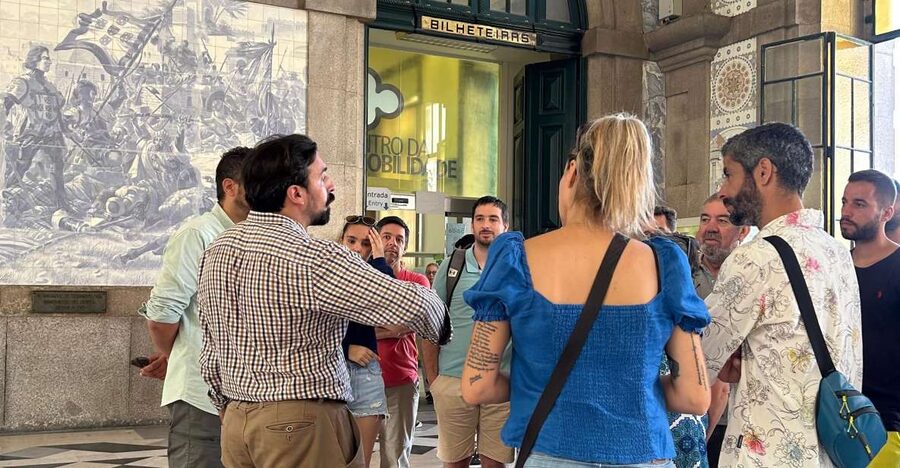
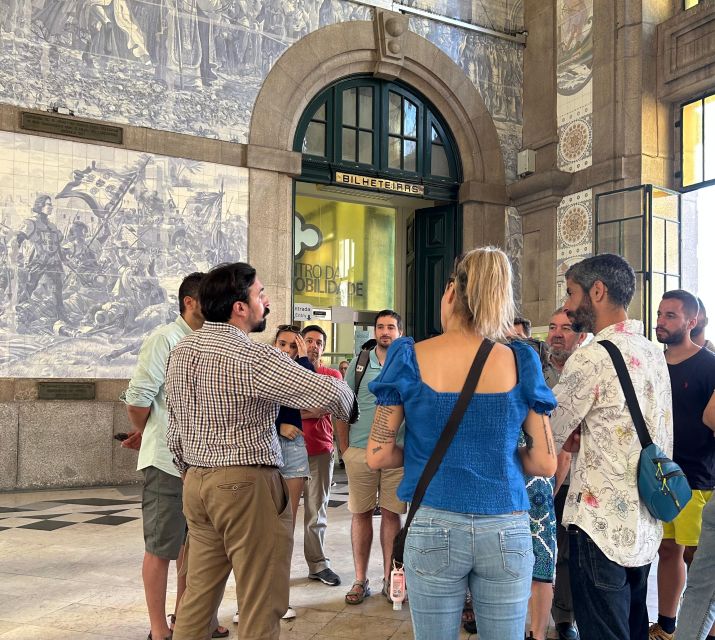
The first major stop is São Bento Station, where you get a short visit. The big point here is not just that it’s beautiful. It’s that Porto uses art to tell stories, even in everyday places.
In a few minutes, you see how the city’s identity shows up in public spaces. That sets you up for the rest of the walk: the same Porto that paints history on station walls is the Porto that later shows up through architecture, churches, and street patterns.
Practical tip: arrive ready to look up and around. Tiled artwork rewards slow scanning, and a guide’s pace helps you notice details you’d otherwise miss.
Avenida dos Aliados and Porto City Hall: the city’s formal face
Next you move toward Avenida dos Aliados and Porto City Hall. These stops are brief, but they do serve a purpose. They give you the contrast you need. Porto is not only medieval lanes and religious towers. It also has civic grandeur, wide views down streets, and the kind of central area where people actually pass through on normal days.
This is where the walking tour becomes more than sightseeing. It becomes a map of how Porto is organized: where it gathers, where it performs its public life, and how the older quarters sit around it.
If you want an easy mental shortcut for later, this stretch helps. You start to feel the “shape” of the city.
Livraria Lello and Art Nouveau streets: style with a story
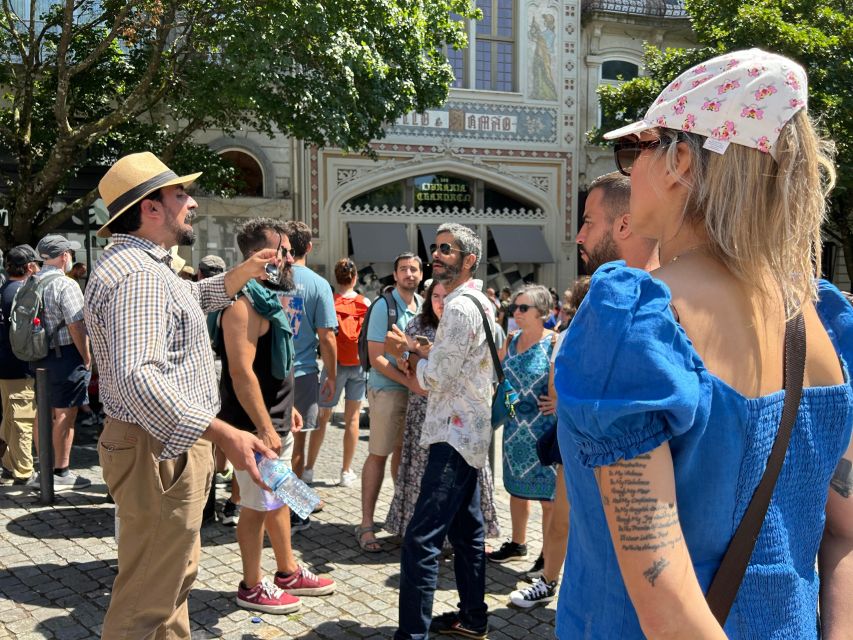
You’ll pass by Livraria Lello & Irmão next, one of the oldest bookstores in Portugal. Even if you do not plan to spend a long time inside anywhere, the impact is real. The building and its reputation bring in both architecture fans and literary lovers.
What I like about this part of the tour is the context. A famous place can become a trap, where you just queue and pose. Here, you’re guided to understand why Lello fits Porto’s identity, not just why it’s popular.
You also get time with Art Nouveau buildings, which is more than decoration. In Porto, that style feels like a bridge between eras, when the city wanted to show modern flair while still leaning on its older bones. A good guide helps you see those transitions as you walk.
Other centuries-deep routes through Porto we have joined
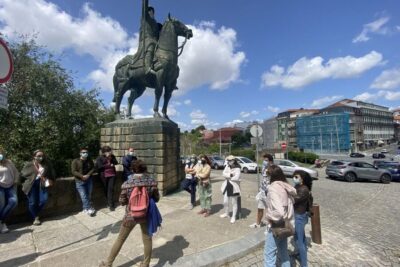

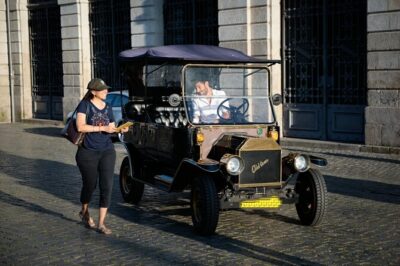
Iglesia do Carmen and Vitória: religion, views, and neighborhood character
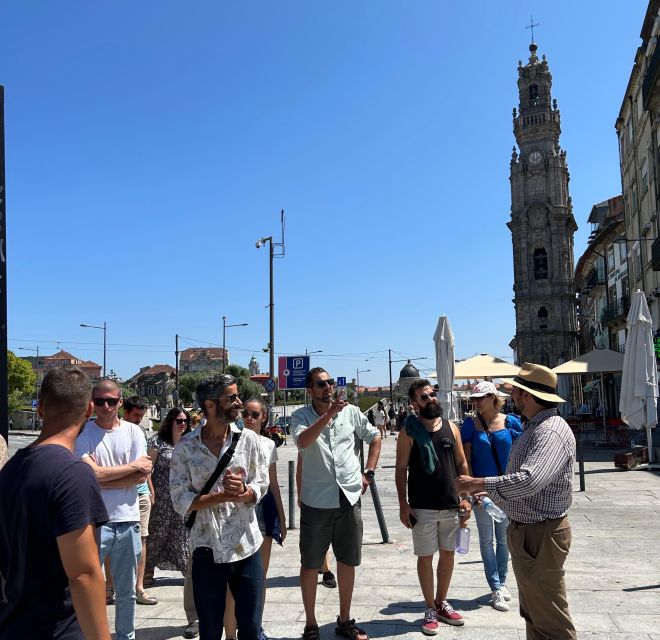
As you continue, you pass Igreja do Carmo (Igreja do Carmen, Porto) and then reach Vitória for a break time. This is a useful pause, because it breaks the rhythm before the steeper, denser old-city section.
In this part of town, the tour shifts from “big-name landmarks” to “how Porto neighborhoods feel.” You’re not just reading a brochure. You’re moving through streets where churches and viewpoints anchor the daily flow of the city.
If you’re hoping to get your bearings for later exploration, Vitória is a good place to stop and refocus. After the break, you’ll go into Sé with better energy.
Sé neighborhood: medieval lanes that teach you how Porto grew
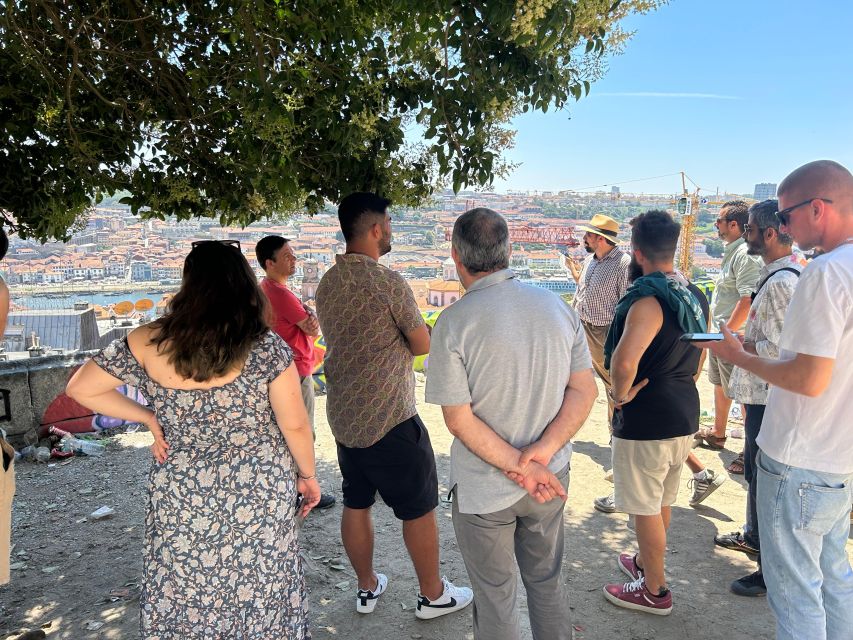
Then comes the heart of the experience, the Sé neighborhood. This is where the tour leans into narrow medieval streets and the sense that you’re walking inside old Porto instead of around it.
The guide’s job here is key. Without explanations, Sé can turn into generic “old streets, pretty stone.” With a good guide, it becomes a lesson in how the city’s defensive and spiritual centers shaped its growth, including why certain buildings dominate views and why alleys behave the way they do.
This is also where you get what many people seem to love most: the feeling that the tour is not just a list of stops. You actually get lost on purpose, in a controlled way, which helps you remember the route later.
One note: this section is full of uneven surfaces. Take your time and keep your eyes on the ground as well as the details.
Clérigos Tower: a symbol you spot, then understand
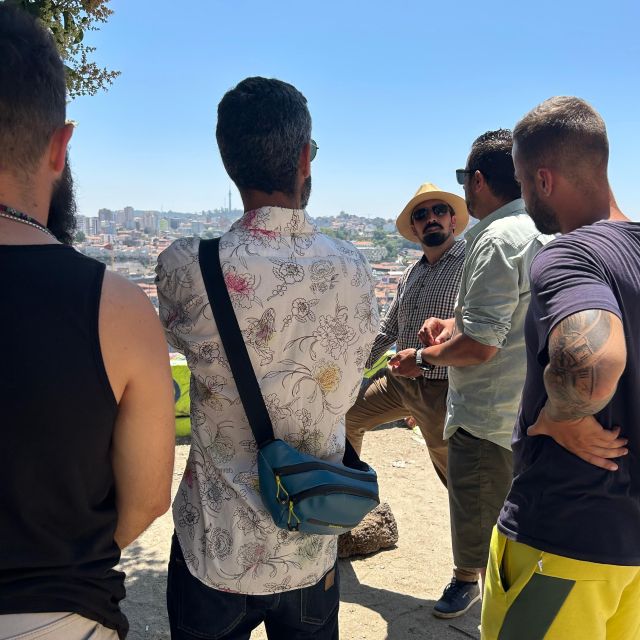
Later, you’ll pass Clérigos Tower, described as one of Porto’s most characteristic symbols and a landmark you can see from multiple points. This is a great example of why guided timing matters.
From street level, a tower can look impressive but still feel “random.” In a walking tour sequence, it starts to click. You learn why it’s so visible, why it became a reference point, and why it anchors the city’s skyline in people’s minds.
If you enjoy architecture that you can connect to geography, Clérigos is a smart stop. It turns the city’s vertical element into a navigational tool.
Dom Luís Bridge: the river view that makes Porto make sense
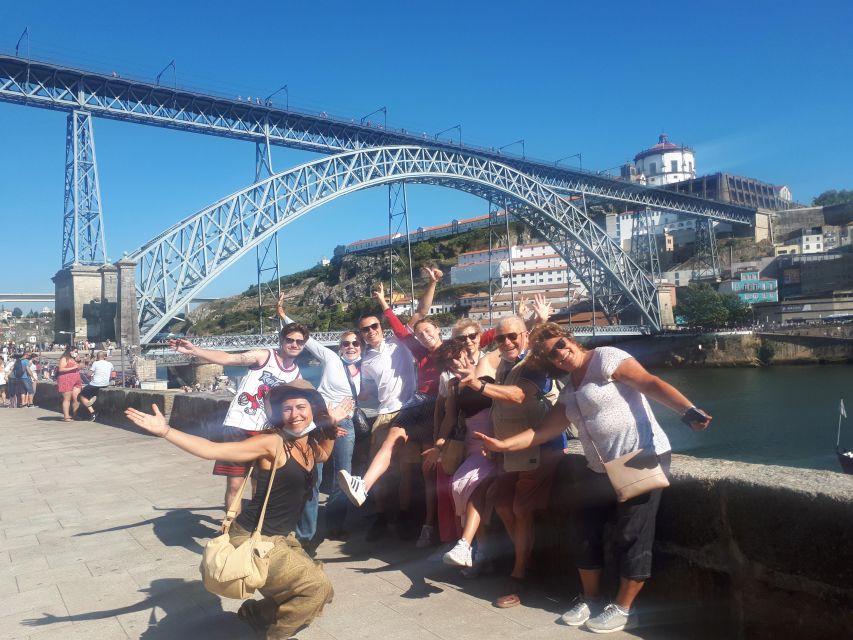
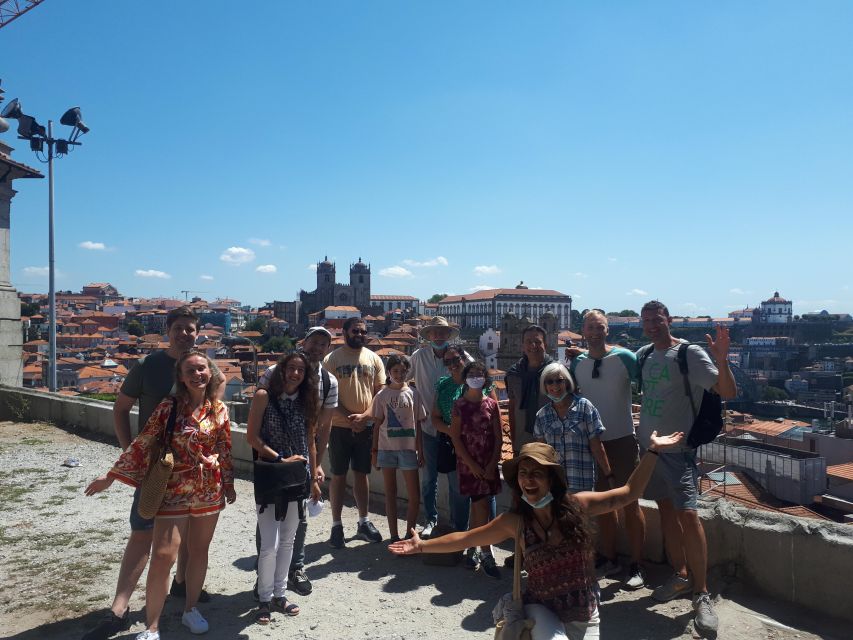
You then reach Dom Luís Bridge, and this is your panoramic moment. The tour builds toward it, so when you finally look out over the downtown Porto and the river, it feels earned.
Bridges in Porto are not just transport. They’re dramatic lines across the Douro that tie neighborhoods together. The view also clarifies the relationship between Porto and Vila Nova de Gaia, the other side of the river where so much of Porto’s wine identity lives.
I’d call this the “yes, that’s why” part of the walk. Even if you skip most guided info, the view tends to land.
Wear shoes you trust. When you’re enjoying a view, you still need safe footing.
Palacio da Bolsa: a refined stop that shifts the mood
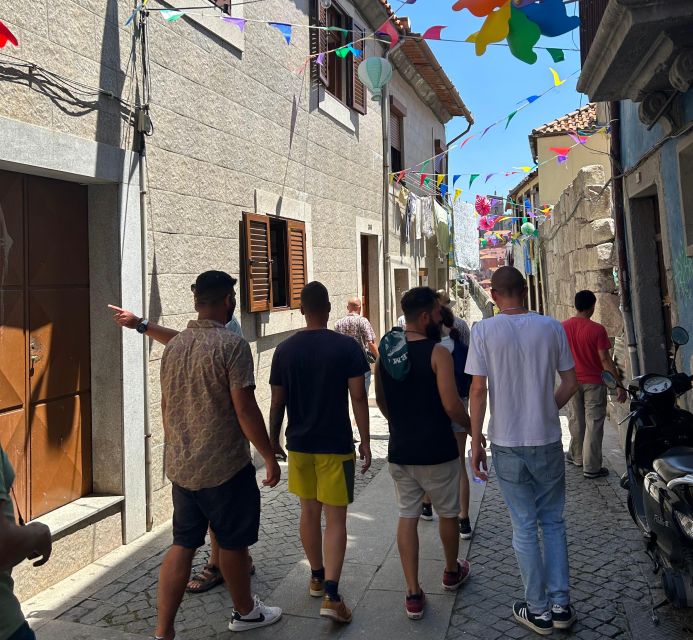
After the bridge, you pass Palacio da Bolsa. Even if you only get a brief look here, it adds a different flavor to the tour.
The tour starts with stations and public streets, then moves into churches and old quarters. Palacio da Bolsa brings in the more polished, wealth-linked side of Porto. It’s a visual reminder that the city’s history is not only religious and medieval. It also has a commercial and institutional layer, tied to the money and influence that shaped Porto into what it is today.
It’s also a good breather from the most tightly packed lane walking. The route rhythm changes again, which keeps the walk from feeling like one long sprint.
Wine, bread and olive oil, then a Virtudes Gardens picnic option
At the end, you get the included tastings: Porto wine and bread and olive oil. This is a practical choice for a walking tour. It gives you a calm moment when you want to stop thinking about the next turn and start absorbing what you just saw.
Then you have a choice. You can finish with a picnic in Virtudes Gardens. If you opt in, you receive a picnic box plus a traditional Portuguese picnic blanket. The box includes bread, cheese, hams, fruit, Portuguese pastries, and 1 bottle of wine, which turns the final stretch into a slower, more local-feeling experience.
Even the garden location makes sense for a historical walk. You reach a scenic viewpoint area, then you do what people in Porto might actually do: sit, snack, and let the city come to you.
The tour also mentions a small surprise shared with the group at the end. The details are not spelled out, but the point is you end in a social, relaxed way, not just “walk ends, goodbye.”
How much walking is too much for this 3-hour route?
This tour is priced and shaped as a true walking experience, so your comfort matters.
The duration is 3 hours, and while many people say it goes quickly, others feel it might run long by the time you hit the 2 hour point. That’s especially true if you have a slower walking pace or your legs get tired on uneven streets.
My advice:
- Plan for breaks when the guide does them, like the Vitória break.
- Wear supportive shoes with grip.
- If you travel with mobility constraints, consider whether a lot of old-street walking is worth it for you.
The upside is that once you’ve done this loop, you often feel like you can navigate Porto with way less stress afterward.
Value check: why $21 feels fair for what you get
At $21 per person for a 3-hour guided walk, the value comes from the mix. You’re not only paying for a route. You’re paying for context and timing across a dense historic center where getting it wrong costs you time.
You also get tangible inclusions:
- A live English-speaking guide
- Porto wine
- Bread and olive oil
- Optional picnic with a full Portuguese spread and 1 bottle of wine
And the big “value multiplier” is orientation. This tour hits major symbols and then explains how they fit together: station tile storytelling, Art Nouveau style, medieval Sé lanes, and river views from the bridge.
If you only have a day or two in Porto and want the city to stop feeling random, this is the kind of purchase that pays off every time you walk outside afterward.
Should you book this Porto historical walking tour?
Book it if:
- You want a guided overview of Porto’s historic core rather than a pick-and-choose self-walk.
- You like architecture plus atmosphere, and you do not mind narrow medieval streets.
- You want river views plus food and drink at the end, with an optional picnic in Virtudes Gardens.
- You appreciate guides who tell stories with humor, and you like the idea of meeting a guide such as Pedro or Gregorio.
Skip or rethink if:
- You have limited stamina. Old streets can wear you down, and some people felt 3 hours is a bit long.
- You prefer public transport and shorter stop-and-go segments with minimal walking.
If you’re aiming for the best “first Porto experience,” this walk is a strong match. You’ll come away with a mental map, a few postcard-worthy moments, and the kind of ending that makes it feel like more than sightseeing.
FAQ
How long is the historical walking tour in Porto?
The tour lasts 3 hours.
Where does the tour meet?
The starting location is R. de Mouzinho da Silveira 34.
What language is the live guide?
The tour is offered with a live guide in English.
What major sights are included on the walk?
You’ll visit or pass key stops such as São Bento Station, Avenida dos Aliados, Porto City Hall, Livraria Lello & Irmão, Igreja do Carmen, Sé, Dom Luís Bridge, and Palacio da Bolsa. You also see Clérigos Tower and spend time around Vitória.
Do I get panoramic views during the tour?
Yes. The tour includes panoramic views of downtown Porto and the river, with the bridge area highlighted.
Is Porto wine included?
Yes. Porto wine is included in the tour.
Is there food included besides wine?
Yes. The tour includes bread and olive oil, and you can also choose an optional picnic.
What’s included in the optional Virtudes Gardens picnic?
The picnic box includes bread, cheese, hams, fruit, 1 bottle of wine, Portuguese pastries, plus a traditional Portuguese picnic blanket.
Is the picnic required?
No. The picnic is optional. If you choose it, it’s included at the end of the tour in Virtudes Gardens.
What is the cancellation policy?
You can cancel up to 24 hours in advance for a full refund.
Other Days Out Around Porto




Centuries-Deep Routes Through Porto




On Foot Around Porto, Other Guided Walks




Newly added around Porto
- From Porto: Douro Valley 3 Vineyards Tour with Lunch
★ 4.8 · 79 reviews - Best of Porto Private Walking Tour
★ 5.0 · 80 reviews - Douro Valley in a Tesla
★ 5.0 · 81 reviews - Porto 360°: Helicopter Flight, Guided Walking Tour & River Cruise
★ 5.0 · 81 reviews - Private Transfer from Porto to Lisbon
★ 5.0 · 82 reviews - Minho Tour Private (Braga and Guimarães) Full Day
★ 5.0 · 82 reviews - Porto: Taylor’s Port Cellar Tour & WOW Wine Experience
★ 4.7 · 82 reviews - Porto Tile Painting Workshop in artist studio
★ 5.0 · 83 reviews - Private Tour
★ 5.0 · 83 reviews - City Bike Rental in Porto
★ 5.0 · 84 reviews
Other boats, other operators: Walking Tours.
 ★ 4.8Lisbon: History, Stories and Lifestyle Walking TourFrom $2910,902 reviews
 ★ 5.0Best of Lisbon Small-Group Guided Walking TourFrom $234,869 reviews
 ★ 4.9Lisbon: Food and Wine Small Group Walking TourFrom $724,082 reviews
 ★ 5.0Porto Walking Tour, Lello Bookshop, River Cruise and Cable CarFrom $723,354 reviews
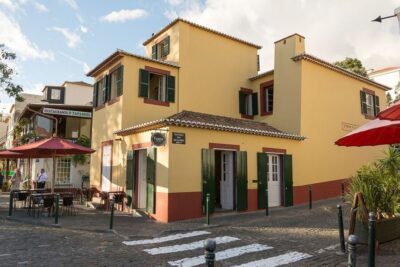 ★ 4.7Funchal: Old Town Walking TourFrom $193,233 reviews
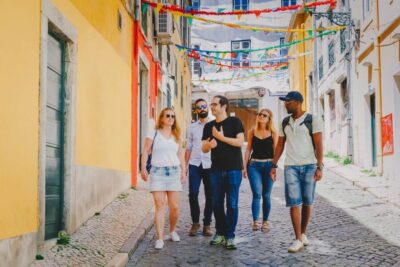 ★ 4.9Best of Lisbon Walking Tour: Rossio, Chiado & AlfamaFrom $232,700 reviews
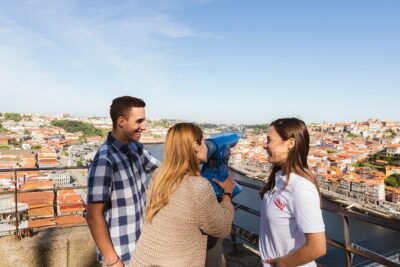 ★ 5.0Experience Porto’s Charm: 3-Hour Guided Walking TourFrom $352,432 reviews
 ★ 4.7Madeira: Enjoy a Guided Levada Walk in the Rabaçal ValleyFrom $502,197 reviews
Filed under