
REVIEW · WALKING TOURS
Half Day Historical Walking Tour about the Slave Trade in Lisbon
Lisbon has a second, darker map. I really liked how this half-day historical walking tour connects slavery to real street corners, and I loved the small group size that keeps the pace human and the questions coming. It is a direct look at Portugal’s Age of Discovery, not the postcard version.
One heads-up: the subject is heavy, and the walk is about 3 hours, with a moderate amount of walking.
In This Review
- Quick take
- Lisbon’s Slave Trade Tour, in Plain Walk-and-Talk Terms
- Meet at Largo do Chafariz de Dentro and Set the Theme Fast
- Alfama: A City of Many Civilizations and the Presence of Slavery
- Campo das Cebolas: Where a Victims’ Memorial Will Be Raised
- Praça do Comércio and Terreiro do Paço: Lisbon’s Commercial Heart
- Baixa, Rossio, and Restauradores: Daily Life for the Enslaved
- Igreja de S Domingos: How Religion Intersected with Enslavement
- Largo do Carmo: The 25th of April and the End of the Colonial Empire
- The Pace, Group Size, and Comfort Level You Can Expect
- Price and Value: Why $39.78 Can Be a Good Deal Here
- Who This Tour Fits Best (and Who Might Want to Skip)
- Tips to Make the Most of It
- Should You Book This Lisbon Slave Trade Walking Tour?
- FAQ
- How long is the Half Day Historical Walking Tour about the Slave Trade in Lisbon?
- What is the price per person?
- Where do I meet the guide?
- Where does the tour end?
- What language is the tour offered in?
- How big is the group?
- What is included in the price?
- What is not included?
- What is the cancellation policy?
Quick take
- Small group (max 8) keeps it interactive and easier to hear every detail.
- Route through Alfama and Baixa ties big ideas to specific places in Lisbon.
- Portugal, Africa, and the Atlantic trade are explained in clear, grounded steps.
- Places linked to religion and daily life expand the story beyond ships and dates.
- Hard history handled with care, with time for questions and discussion.
- Works well for teens and curious adults who can handle serious topics.
Other Lisbon calcada routes we have followed on foot
- Lisbon: History, Stories and Lifestyle Walking Tour★ 4.8 · 10,902 reviews
- Best of Lisbon Small-Group Guided Walking Tour★ 5.0 · 4,869 reviews
- Best of Lisbon Walking Tour: Rossio, Chiado & Alfama★ 4.9 · 2,700 reviews
- Age of Discoveries Walking Tour in Belém★ 5.0 · 1,513 reviews
Lisbon’s Slave Trade Tour, in Plain Walk-and-Talk Terms
This is the kind of Lisbon tour that makes you stop seeing the city as scenery. You walk through historic neighborhoods while the guide turns Portuguese maritime ambition, colonial trade, and racial hierarchy into something you can actually point to on the ground.
I think the biggest value is the way it connects systems to locations. Instead of treating slavery as a distant chapter in a textbook, you get a guided route through areas where commerce and power played out, and where different communities lived side by side under unequal rules.
The walking is roughly 3 hours, so you get real coverage without the feeling of being dragged around all day. Still, you should wear comfy shoes and keep your expectations set: this is an educational experience built around a difficult topic.
Meet at Largo do Chafariz de Dentro and Set the Theme Fast

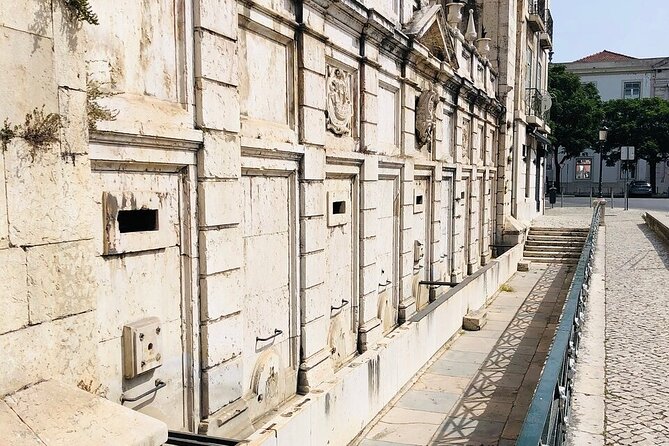
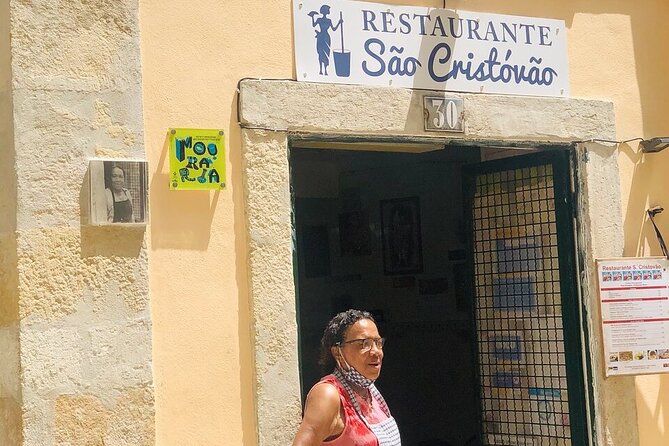
You start at Largo do Chafariz de Dentro 30, and the guide begins with an introduction to the theme right away. That early framing matters, because the tour is built to help you connect later stops to a bigger story, not just collect facts as you go.
This first stretch also gives you a mental gear shift. Lisbon’s “discovery” story is usually told as progress, exploration, and ships returning home. Here, you hear how the same expansion connected to human commodification, and how African connections shaped Portuguese culture and economics.
You’ll get a professional guide throughout, and the tone is designed for conversation. The group stays small, so you are not forced into a silent queue while history rushes past.
Alfama: A City of Many Civilizations and the Presence of Slavery
Next you head into Alfama, Lisbon’s oldest neighborhood. It is a great choice of area for this topic, because the district already feels layered, like multiple eras overlap in the same narrow streets.
The guide walks you through how different civilizations who settled in Portugal practiced slavery, from the Romans to the Moors. Then the story tightens toward Portugal’s role in the Atlantic Slave Trade in the mid-15th century, a pivot point that helps explain why Lisbon became so entangled in the broader trade network.
This is one of the tour’s strengths: it does not isolate Portugal as some random actor. You get the sense of a long build-up, where institutions, labor, and power structures developed over time and then fed into oceanic commerce.
Alfama also gives you the practical benefit of variety without exhausting slopes. You still need to stay aware of uneven sidewalks, but the route is designed to keep the pace steady.
Campo das Cebolas: Where a Victims’ Memorial Will Be Raised
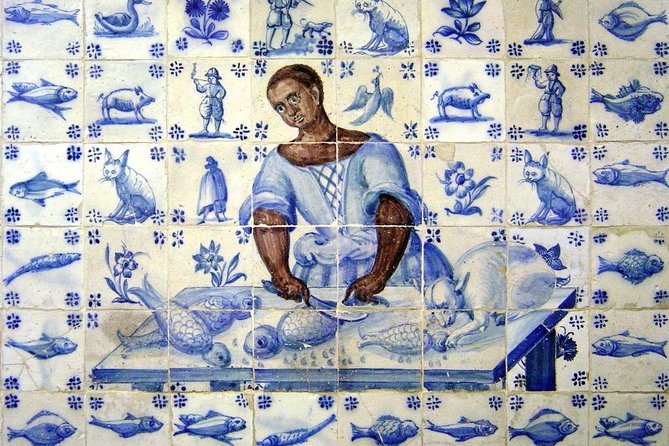
At Campo das Cebolas, you pause at a site tied to the future monument to victims of the Slave Trade. This stop is brief, but it hits emotionally because it signals something important: this history is not just “over there” in the past.
There is also a lesson in the timing. When a community chooses to remember, it shows what that place values now. The guide uses this kind of point to connect present-day memory, public acknowledgment, and the long aftermath of colonial rule and racial hierarchy.
If you prefer tours that wrap everything in neat closure, this one may feel intentionally unfinished, because memory work usually is. But for most people, that makes the experience more honest.
Other centuries-deep routes through Lisbon we have joined


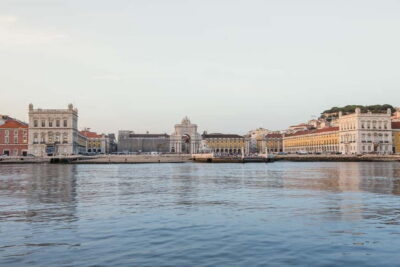

Praça do Comércio and Terreiro do Paço: Lisbon’s Commercial Heart
Then you reach Praca do Comercio, also known as Terreiro do Paco. This is the commercial heart of Lisbon, which makes it a powerful setting for understanding slavery as part of colonial trade.
The guide frames the slave trade as not only a cruel practice but also a mechanism tied to finance, shipping, and profit. In other words, slavery was embedded in systems that helped Lisbon function as a commercial hub, not treated as a side issue.
This stop is especially worth it if you have ever wondered why some cities built themselves on trade and then moved on quickly. Here, you get a clearer link between wealth, bureaucracy, and human suffering, all in the same breath.
Also, the scenery helps you picture scale. Even if you are not thinking about history, the space is about movement and exchange. That makes the theme feel grounded instead of abstract.
Baixa, Rossio, and Restauradores: Daily Life for the Enslaved
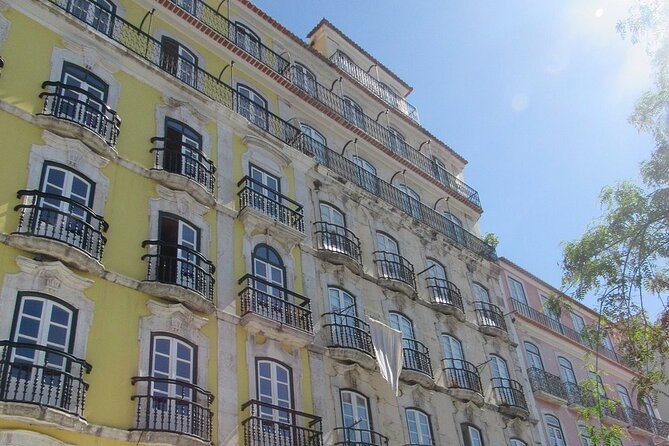
Your walk continues through Baixa, Rossio, and Restauradores, and this is where the tour gets personal. You learn about the day-to-day lives of enslaved people in Lisbon, including captives from Africa and from across the globe.
This portion matters because it shifts your mental image. If all you picture is ships and auctions, you miss how control showed up in neighborhoods, workplaces, and religious and social institutions. Lisbon was not just a transit point, it was a living city where coercion shaped daily routines.
The guide also connects those lived realities to broader cultural and political forces, including how people justified slavery. You end up with a better sense of how institutions can rationalize harm, and how ordinary places can be built on unequal power.
Practical note: this is where good shoes pay off. You are still on your feet, and city walking adds up when you are learning new names, dates, and locations.
Igreja de S Domingos: How Religion Intersected with Enslavement
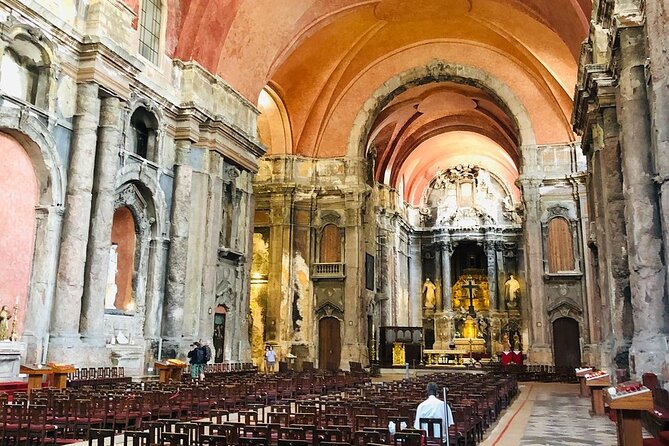
At Igreja de S Domingos, you focus on how enslaved captives interacted with Lisbon’s religious organizations. This is not presented as a simple good versus bad story. It is presented as a complicated reality of how moral authority and social systems can overlap.
That complexity is exactly why I like this stop. The Age of Discovery narrative often glosses over the uncomfortable parts. Here, the guide helps you see how theology, institutions, and daily life collided in ways that affected human beings directly.
You will get a sense that religion was not only a private belief system. It also functioned in public life, and that shaped how slavery was accepted, challenged, or administered.
Even if you do not consider yourself religious, you will likely find this stop clarifies how societies make room for contradiction, then keep going.
Largo do Carmo: The 25th of April and the End of the Colonial Empire
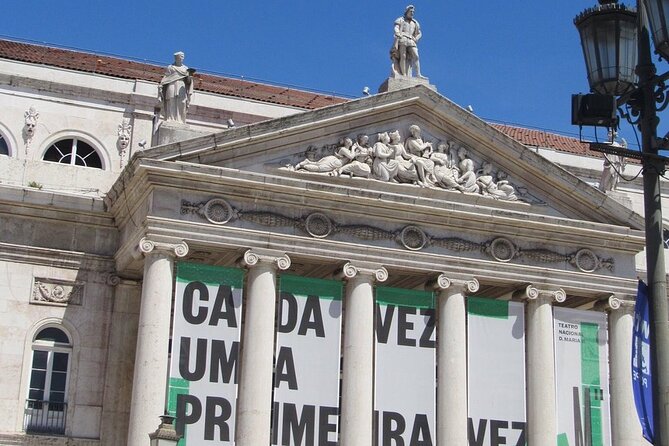
At Largo do Carmo, you move into later history tied to the 25th of April coup and the revolution that followed. The guide connects those events to the demise of the Portuguese colonial empire in the mid-1970s, which helps close one major loop in the story.
This stop is useful because it prevents the tour from stopping at “then it happened.” You get a broader arc, from early involvement in Atlantic slavery, to centuries of colonial rule, to eventual political rupture.
It also gives you a way to think about legacy. Even when formal empire ends, the social and economic aftershocks do not disappear neatly. The route sets you up to notice how the past can still shape identity, institutions, and memory.
Expect this part to feel reflective. The pace here is still guided, but the theme shifts toward consequences rather than just mechanisms.
The Pace, Group Size, and Comfort Level You Can Expect
The total time is about 3 hours, with multiple short stops that keep the tour from turning into one long lecture. The itinerary includes brief stretches at each location, which helps you absorb facts without losing the plot.
The group size cap is 8 travelers, and that makes a noticeable difference. You can ask questions, and the guide can respond without rushing you or answering from 30 feet away.
The tour is in English, and you get a mobile ticket. There is no hotel pickup, so you’ll use public transport or just walk to the meeting point. The meeting point is well placed, and the route stays near central areas.
Fitness-wise, it is labeled as moderate. It is not recommended for travelers with walking difficulties, so if you have mobility limits, you may want to choose something else.
Price and Value: Why $39.78 Can Be a Good Deal Here
At $39.78 per person, this tour may sound like a lot until you compare what you get. You are paying for a professional guide, a small group, and an experience designed for one focused topic that is usually missing from standard city tours.
Local taxes are included, and each stop is free in terms of admission. That means you are not hit with extra entry fees that can quietly inflate the total cost.
The value also comes from the careful topic selection. Most Lisbon tours skim the glossy “Age of Discovery” headlines. This one takes the slower, harder angle that explains how Portuguese expansion connected to Africa, slavery, and lasting racial structure.
If you enjoy history but dislike wandering through monuments with no context, this price starts to look like a bargain. You get a guided argument, step by step, anchored to Lisbon streets.
Who This Tour Fits Best (and Who Might Want to Skip)
I think this tour is ideal if you want Lisbon to be more honest than postcard marketing. It suits curious adults, history-minded travelers, and people who like when a guide answers questions directly instead of steering away from the hard parts.
It can also work well for teenagers. One family noted that their teens stayed focused the whole time, which tells me the guide uses clear structure and keeps pace manageable.
Who should maybe skip? If you are expecting light sightseeing, this will feel heavy. If you have limited walking ability, the moderate walking requirement could be an issue.
Also, if you are the type who hates discussion and just wants passive entertainment, this tour’s interactive style may not be your thing. But if you want context, it is a strong match.
Tips to Make the Most of It
Bring questions. The guide makes space for Q and A, and the small group format helps you get real answers instead of quick sound bites.
Use smart pacing for yourself. Take a moment at each stop to look up at the buildings and imagine the role those institutions and streets played. Even a few seconds of mental visualization helps the facts stick.
And pick the right mood. This tour deals with slavery, religion, colonial trade, and the afterlife of empire. Plan something gentle after, so your mind has room to process.
Finally, pack for Lisbon walking. Even if the route is not described as extreme, Lisbon sidewalks can be uneven. Comfortable shoes are not optional.
Should You Book This Lisbon Slave Trade Walking Tour?
If you want Lisbon beyond the usual narrative, I would book this. The combination of small-group size, a clearly structured route, and thoughtful connections between commerce, religion, and lived experience makes it feel like more than a standard history walk.
I’d especially recommend it if you care about accuracy and respect in how difficult history is handled. People also praise the guide’s preparation and the way he responds to questions with care, plus the use of visual supports to keep complex material understandable.
Skip it only if you cannot do moderate walking or if heavy, sensitive history will shut you down. Otherwise, this is one of those tours that leaves you with a sharper lens for every neighborhood you visit afterward.
FAQ
How long is the Half Day Historical Walking Tour about the Slave Trade in Lisbon?
The tour lasts about 3 hours.
What is the price per person?
It costs $39.78 per person.
Where do I meet the guide?
Meet at Largo do Chafariz de Dentro 30, 1100-605 Lisboa, Portugal.
Where does the tour end?
The tour ends at Largo do Carmo, 1200-092 Lisboa, Portugal.
What language is the tour offered in?
The tour is offered in English.
How big is the group?
This tour has a maximum of 8 travelers.
What is included in the price?
Local taxes and a professional guide are included.
What is not included?
Food and drinks, plus hotel pickup and drop-off, are not included.
What is the cancellation policy?
You can cancel for a full refund up to 24 hours in advance of the experience start time. If you cancel less than 24 hours before, the amount paid is not refunded.
Other Days Out Around Lisbon




Centuries-Deep Routes Through Lisbon




On Foot Around Lisbon, Other Guided Walks



Newly added around Lisbon
- Lisbon: Street Art Walk
★ 5.0 · 79 reviews - From Lisbon: Nazare Big Waves and Óbidos Guide Day Trip
★ 4.7 · 79 reviews - Small Group Walking Tour of Belém
★ 4.9 · 80 reviews - Lisbon: Regaleira, Sintra, Cape Rock & Cascais Day Trip
★ 4.6 · 80 reviews - Lisbon: Evening Local Food Crawl with Drink Pairings
★ 4.6 · 80 reviews - From Lisbon: Sintra and Portuguese Coast Private Day Tour
★ 5.0 · 80 reviews - Lisbon: Authentic Fado Show, Dinner and Night Tour
★ 4.6 · 80 reviews - Golden Hour Boat Tour – Sailing by the Monuments with Wine
★ 5.0 · 81 reviews - Hard Rock Cafe Lisbon with Set Lunch or Dinner
★ 4.0 · 81 reviews - Fado Musical Experience with Portuguese Wine & Appetizers
★ 4.5 · 81 reviews
Other boats, other operators: Walking Tours.
 ★ 4.8Lisbon: History, Stories and Lifestyle Walking TourFrom $2910,902 reviews
 ★ 5.0Best of Lisbon Small-Group Guided Walking TourFrom $234,869 reviews
 ★ 4.9Lisbon: Food and Wine Small Group Walking TourFrom $724,082 reviews
 ★ 5.0Porto Walking Tour, Lello Bookshop, River Cruise and Cable CarFrom $723,354 reviews
 ★ 4.7Funchal: Old Town Walking TourFrom $193,233 reviews
 ★ 4.9Best of Lisbon Walking Tour: Rossio, Chiado & AlfamaFrom $232,700 reviews
 ★ 5.0Experience Porto’s Charm: 3-Hour Guided Walking TourFrom $352,432 reviews
 ★ 4.7Madeira: Enjoy a Guided Levada Walk in the Rabaçal ValleyFrom $502,197 reviews
Filed under