

REVIEW · WALKING TOURS
Lisbon: 3-Hour The Slave Trade – An Historical Walking Tour
Lisbon’s beauty has a darker shadow. This 3-hour historical walking tour connects the city center you know with the human cost that helped power Portugal’s wealth. It’s not the usual postcard lesson, it’s a focused walk through monuments, churches, squares, and street-level clues tied to the Atlantic slave trade.
Two things I really like: first, the guide (often Rui Fernandes) brings a rare blend of history, political science, and economics, so you get the context behind the facts. Second, the small group setup means you can ask questions and actually hear the answers.
One thing to consider: this topic is heavy, and the pace is built around discussion, so if you want a light, purely scenic stroll, this will feel intense. Comfortable shoes matter, since you are on foot for the full time.
In This Review
- Key highlights you should care about
- Starting at Largo do Chafariz de Dentro, What the Walk Feels Like
- How Lisbon Shaped the Atlantic Slave Trade, from Henry the Navigator to Brazil
- Back streets, churches, and squares that carry the story in plain sight
- The tour’s focus on daily life in enslaved Lisbon
- The mid-tour coffee and the chance to ask everything
- What happens after abolition, and why liberation movements matter
- Pace, comfort, and group size that keeps the walk enjoyable
- Price and value: what $35 buys in real terms
- Who should book this tour, and who might want a different option
- Should you book the Lisbon 3-Hour The Slave Trade Historical Walking Tour?
- FAQ
- Where does the tour meet?
- How long is the Lisbon slave trade walking tour?
- What group size should I expect?
- Is the tour offered in English?
- What’s included in the tour price?
- What should I bring?
- Is free cancellation available?
Key highlights you should care about

- Prince Henry the Navigator to the Atlantic slave trade: early 1400s origins and how the system scaled.
- Rui Fernandes and an academic-style approach: history plus political and economic reasoning.
- Street-level Lisbon, not a lecture hall: you learn by walking past the places where the story still shows.
- Daily life in enslaved Lisbon: not just big dates, but how the trade affected real people.
- One coffee break plus bathroom stop: a real reset point mid-walk.
- Focused on the parts mass tourism skips: Portugal’s role, abolition in Portugal, and African liberation struggles.
Other Lisbon calcada routes we have followed on foot
- Lisbon: History, Stories and Lifestyle Walking Tour★ 4.8 · 10,902 reviews
- Best of Lisbon Small-Group Guided Walking Tour★ 5.0 · 4,869 reviews
- Best of Lisbon Walking Tour: Rossio, Chiado & Alfama★ 4.9 · 2,700 reviews
- Age of Discoveries Walking Tour in Belém★ 5.0 · 1,513 reviews
Starting at Largo do Chafariz de Dentro, What the Walk Feels Like
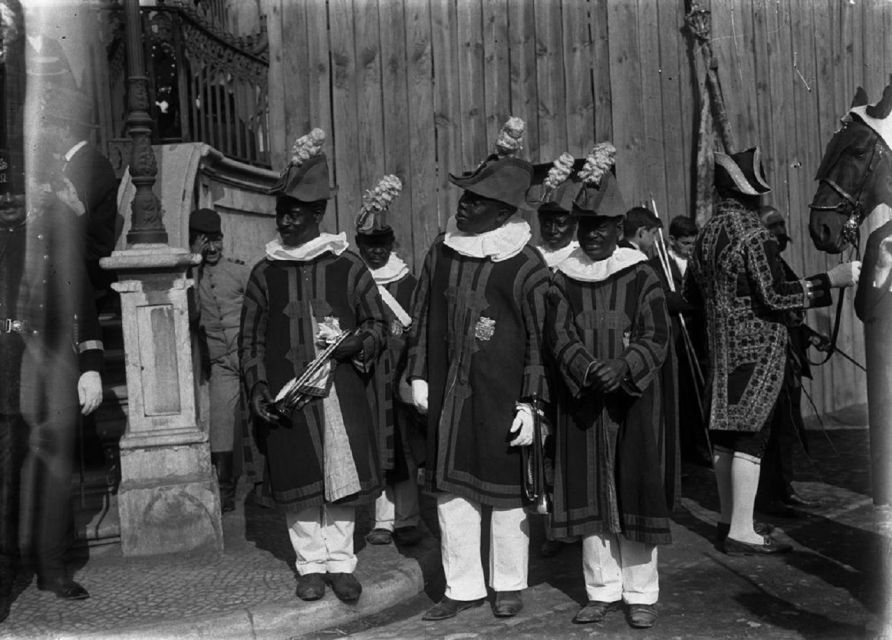
You meet at Largo do Chafariz de Dentro, and right away you’re in the Lisbon that makes walking work. Cobblestones and compact streets are part of the experience, but the route is designed to keep the walking mostly flat, with minimal inclines. That means you can stay engaged instead of spending the whole time bracing for uphill steps.
In the first stretch, you’re not just “seeing Lisbon,” you’re learning how to read it. Expect the guide to point out patterns you might otherwise miss, like how street names, building uses, and the placement of key public spaces connect to earlier centuries. The tone is respectful and direct, but it never feels like a cold history lesson. It’s more like the city is showing its receipts.
A practical note for your plan: since this is a walking tour from the start, you’ll want to build in extra time to get there comfortably and not rush your shoes or water situation.
How Lisbon Shaped the Atlantic Slave Trade, from Henry the Navigator to Brazil
The big backbone of the tour is Portugal’s role in what’s now called the Atlantic slave trade. The story begins in the first half of the 15th century, linked to Prince Henry the Navigator, and it explains how a system developed that moved people from Africa into slavery across the ocean to the Americas.
Here’s why I think that framing matters for you: if you only focus on one country, the topic stays abstract. This tour keeps zooming out to show the chain of decisions and incentives. It also brings numbers into view in a careful way, including the estimate of 12 to 14 million Africans sold into slavery and taken across the Atlantic, with the crime lasting for centuries. You get the scale, but you also get the logic that made it possible.
Then the tour connects Lisbon to Brazil, not just as a distant colony, but as an engine of demand that helped sustain the system. That connection helps you understand why the wealth you see in Lisbon is not neutral. Money, power, and maritime capability all tie back to human bondage in the Atlantic world.
Back streets, churches, and squares that carry the story in plain sight
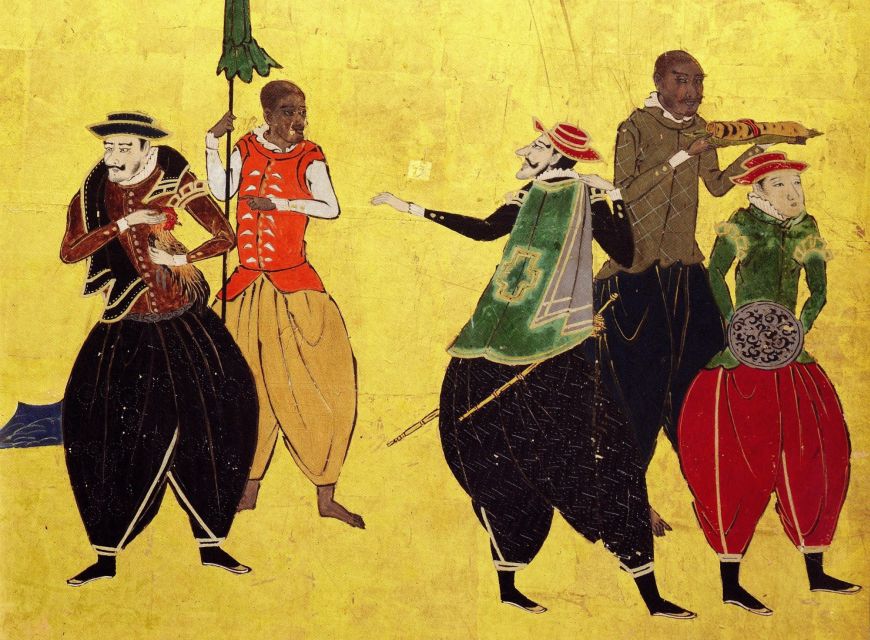
Lisbon has a talent for blending old and new. This is one reason I like this style of walking tour. Instead of a museum room where you might get one angle, you get the story distributed across the city. You pass monuments, churches, and public squares that the guide links to slavery and the institutions around it.
What makes these stops useful is the guide’s method. They don’t just point at a building and name a date. They connect what you’re seeing to the bigger question: how did Portuguese society normalize and operationalize slavery over time?
You also get attention to the “I didn’t know that” details that don’t show up in typical sightseeing routes. The tour covers the genesis of slavery in the Iberian peninsula, then tracks how the Atlantic slave trade formed. That matters because it explains the shift from older forms of captivity and inequality into the transatlantic system with its full commercial scale.
One tradeoff: since this is a walking experience focused on contextual storytelling, it won’t replace a museum visit if you want deeper archival material. Think of it as the map and the meaning before you go deeper on your own.
The tour’s focus on daily life in enslaved Lisbon
Many history tours do dates. This one spends time on lived experience, including the day-to-day aspects of the life of an enslaved person in historical Lisbon. That section is especially important because it interrupts the tendency to treat the slave trade like a distant economic event.
Instead, the guide treats human beings as more than a statistic. You learn how the trade shaped institutions and social life, and you get a clearer picture of how slavery operated on the ground. Even when the details can feel uncomfortable, the structure helps you stay oriented: what happened, how it worked, and where it fit within Portugal’s development.
I also appreciate that the tour addresses the moral and political dimensions alongside the economics. It’s not just why trade made money, it’s how power justified itself, and how society held those justifications in place for so long.
Other centuries-deep routes through Lisbon we have joined




The mid-tour coffee and the chance to ask everything
This tour includes one coffee break and one WC break during the 3 hours. It’s a simple feature, but it makes a difference because the topic needs mental space. You’re not just being rushed from stop to stop. You can catch your breath, check your notes, and regroup.
This is also where the small group format pays off. With only a small number of participants, the guide can answer questions without shutting down the pace. Past groups have emphasized that Rui is patient, keeps a clear and even tempo, and makes time for questions rather than treating them as interruptions.
If you want to get real value, come with curiosity. Ask about how the story connects to present-day Portugal, or how the Age of Discovery mindset shaped policy. The tour is designed for that back-and-forth, and the guide uses it to clarify points as you go.
What happens after abolition, and why liberation movements matter
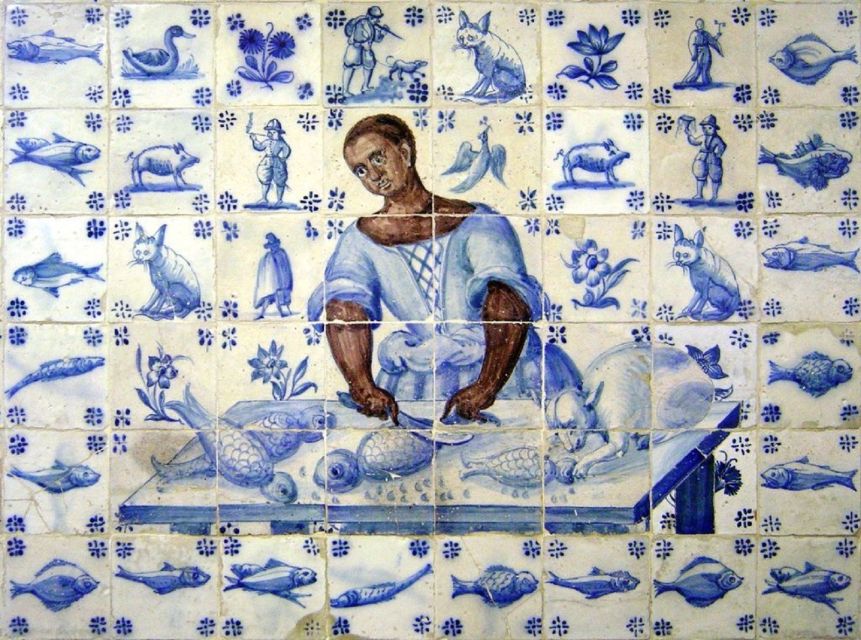
A lot of tours stop once abolition enters the conversation. This one continues, covering the abolition of trade in Portugal and then moving toward the larger picture in Africa, including the Portuguese colonies in Africa and the struggle for liberation by African nationalists.
This portion helps you avoid a common trap: ending the story at a policy change. Instead, you see that abolition in one place does not instantly erase systems elsewhere. It also highlights how long-term political change was driven by people fighting for liberation, not just governments changing their minds.
From a visitor standpoint, this is where the tour becomes more than a Lisbon topic. It turns into an international history lens, showing how Portuguese colonial structures and Atlantic connections influenced later struggles. You end the walk understanding that the past is not only in buildings, it’s in the political relationships that followed.
Pace, comfort, and group size that keeps the walk enjoyable
The tour runs for about 3 hours and is led in English by a licensed local guide. Small group is a big part of the experience: it’s limited to a maximum of 6 participants (the tour also notes a small-group size capped at 8, but the max 6 detail is what you should plan for in practice). Either way, you should expect a discussion-friendly setup.
Walking style matters too. Reviews describe the route as mostly flat, with minimal inclines, which makes it feel doable for many ages. Still, Lisbon cobblestones are Lisbon cobblestones. Wear shoes you trust for traction and comfort.
What I’d tell you to do for your own enjoyment: bring a small layer for morning or evening cool, and keep your phone charged enough to capture street details you want to research later. The guide also uses visual aids, so you’ll get better recall if you jot a few keywords during key explanations.
Price and value: what $35 buys in real terms
At $35 per person for 3 hours, this tour is priced as a specialized walking experience, not a big-van bus tour. I think the value comes from three places.
First, the subject is specific and rarely covered in mass tourism: Portugal’s role in the Atlantic slave trade, plus the way that history appears in Lisbon’s streets and institutions. That’s the kind of knowledge you cannot easily get from a casual city stroll.
Second, you’re getting an expert guide with a background that spans history, politics, and economics. The goal isn’t to overwhelm you with facts, it’s to give you a working understanding you can use while planning the rest of your trip.
Third, the format is efficient. A walking tour of this length with a coffee and WC stop keeps the experience moving without exhausting you. And with a group small enough for real conversation, you’re paying for access to a guide, not just admission to a route.
If you’re budgeting, this is one of those spend-the-money-on-understanding options. It will change how you see Lisbon, even after the tour ends.
Who should book this tour, and who might want a different option
This tour fits best if you want Lisbon with context. If you enjoy history that connects the dots, and you want the kind of explanation that answers why Portugal mattered in the Atlantic slave trade, you’ll likely appreciate the structure.
It’s also a good choice if you like asking questions. The guide’s style is patient and inclusive, with time for dialogue, including sensitive discussions when people ask personal or family-history related questions.
Who might reconsider: if you want a purely scenic walk, or you get uncomfortable with intense, human-focused historical content, this may not be your best match. This is not a light theme tour. It’s a serious look at how a “beautiful city” is also a city shaped by slavery.
Should you book the Lisbon 3-Hour The Slave Trade Historical Walking Tour?
If your Lisbon wish list includes real understanding, not just highlights, I’d book it. Start with this tour when you want to calibrate your awareness of the city before you go into museums or research on your own. You’ll walk away with a stronger sense of Lisbon’s development and the way the Atlantic slave trade reshaped institutions, economies, and societies over centuries.
One smart way to make the most of it: go in with one or two questions you actually care about. For example, ask how the trade connected to Brazil, or what Portuguese abolition meant in practice. When you do, the small-group format turns the walk into a guided conversation, not a one-way lecture.
FAQ
Where does the tour meet?
The tour meets your guide at Largo do Chafariz de Dentro.
How long is the Lisbon slave trade walking tour?
The tour duration is listed as 3 hours.
What group size should I expect?
It is described as a small group limited to a maximum of 6 participants.
Is the tour offered in English?
Yes, the tour is listed as English.
What’s included in the tour price?
The included items are a live tour guide and local taxes and fees. The tour also includes one coffee and one WC break.
What should I bring?
You should bring comfortable shoes.
Is free cancellation available?
Yes, you can cancel up to 24 hours in advance for a full refund.
Other Days Out Around Lisbon





Centuries-Deep Routes Through Lisbon




On Foot Around Lisbon, Other Guided Walks




Newly added around Lisbon
- Lisbon: Street Art Walk
★ 5.0 · 79 reviews - From Lisbon: Nazare Big Waves and Óbidos Guide Day Trip
★ 4.7 · 79 reviews - Small Group Walking Tour of Belém
★ 4.9 · 80 reviews - Lisbon: Regaleira, Sintra, Cape Rock & Cascais Day Trip
★ 4.6 · 80 reviews - Lisbon: Evening Local Food Crawl with Drink Pairings
★ 4.6 · 80 reviews - From Lisbon: Sintra and Portuguese Coast Private Day Tour
★ 5.0 · 80 reviews - Lisbon: Authentic Fado Show, Dinner and Night Tour
★ 4.6 · 80 reviews - Golden Hour Boat Tour – Sailing by the Monuments with Wine
★ 5.0 · 81 reviews - Hard Rock Cafe Lisbon with Set Lunch or Dinner
★ 4.0 · 81 reviews - Fado Musical Experience with Portuguese Wine & Appetizers
★ 4.5 · 81 reviews
Other boats, other operators: Walking Tours.
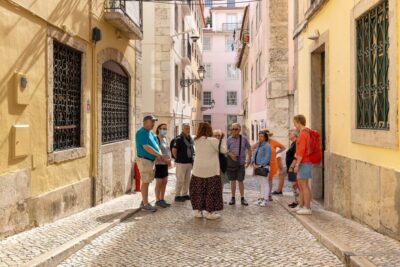 ★ 4.8Lisbon: History, Stories and Lifestyle Walking TourFrom $2910,902 reviews
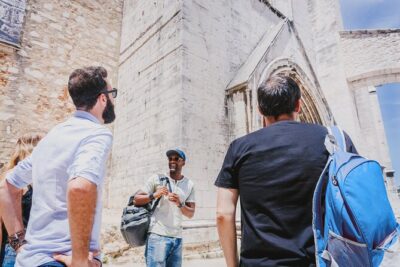 ★ 5.0Best of Lisbon Small-Group Guided Walking TourFrom $234,869 reviews
 ★ 4.9Lisbon: Food and Wine Small Group Walking TourFrom $724,082 reviews
 ★ 5.0Porto Walking Tour, Lello Bookshop, River Cruise and Cable CarFrom $723,354 reviews
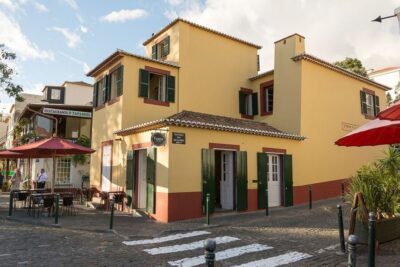 ★ 4.7Funchal: Old Town Walking TourFrom $193,233 reviews
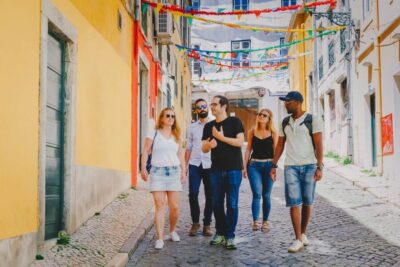 ★ 4.9Best of Lisbon Walking Tour: Rossio, Chiado & AlfamaFrom $232,700 reviews
 ★ 5.0Experience Porto’s Charm: 3-Hour Guided Walking TourFrom $352,432 reviews
 ★ 4.7Madeira: Enjoy a Guided Levada Walk in the Rabaçal ValleyFrom $502,197 reviews