
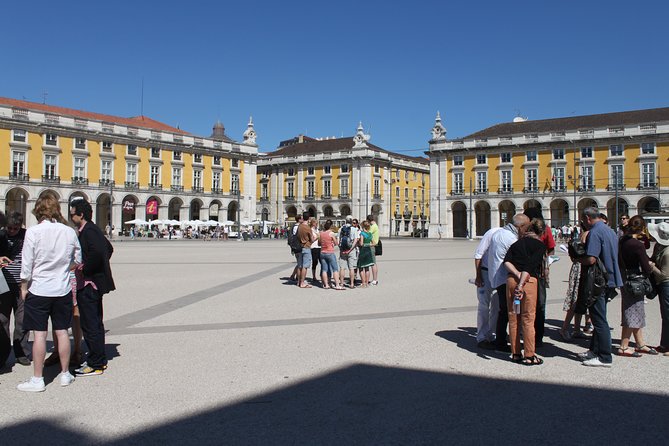
REVIEW · WALKING TOURS
Lisbon Essential Walking Tour: History, Stories and Lifestyle
Lisbon reveals itself in smart, walkable chunks. In about three hours, you move through key neighborhoods and learn the stories that explain why Lisbon looks and feels the way it does.
I especially love that the route ends at Lisbon Cathedral, giving the whole walk a clear arc from early Lisbon to today. One thing to watch: a small number of guests have reported meeting-point mix-ups, so double-check the start location on your confirmation before you go.
A local guide stitches the scenes together so you understand the geography, not just the photos.
Viewpoints plus churches help you connect Lisbon’s hills to its art and power struggles.
Most stops are free to enter, so you can spend your money only where you choose.
Tram ride and coffee break are included, which keeps energy up during a hilly walk.
Small groups (max 15) make it easier to ask questions and get practical tips.
In This Review
- A 3-Hour Lisbon Primer From Bairro Alto to the Cathedral
- Why This Route Works for First-Time Visitors
- Bairro Alto: Where Lisbon Rebuilt After 1755
- Miradouro São Pedro de Alcântara: The Views That Explain the Map
- Igreja de São Roque: Jesuit Art With an Austere Facade
- Convento e Igreja do Carmo: Gothic Architecture and the 1974 Revolution
- Santa Justa Elevator: A Viewpoint You Can Choose to Pay For
- Coffee and Pastry in Baixa: Fuel for the Slower Parts
- Praça da Figueira and the Tram Ride Up to Portas do Sol
- Alfama: Fado Houses, St. Anthony Festivals, and Narrow Streets to the River
- Lisbon Cathedral: Ending With a Building That Changes With Time
- Price, Group Size, and What You Get for $30.25
- Practical Comfort Notes Before You Go
- So, Should You Book It?
- FAQ
- How long is the Lisbon Essential Walking Tour?
- How much does the tour cost?
- What languages are available?
- What’s included in the price?
- Are any entrances included?
- Is the tram ride included?
- Do I get a mobile ticket?
- Where does the tour start and end?
- What is the cancellation policy?
- Is the group size small and are service animals allowed?
A 3-Hour Lisbon Primer From Bairro Alto to the Cathedral
This is the kind of tour you do on day one, when you feel a little overwhelmed by Lisbon’s hills and winding streets. You get a guided walk that hits major landmarks, but it is also about how the city grew, what survived, and what changed after big historical shocks.
You’ll cover roughly 3 hours, and you can expect a good amount of uphill and downhill. One review mentioned close to 4 miles of walking, so bring the right shoes and expect real movement, not a slow stroll.
Other Lisbon calcada routes we have followed on foot
- Lisbon: History, Stories and Lifestyle Walking Tour★ 4.8 · 10,902 reviews
- Best of Lisbon Small-Group Guided Walking Tour★ 5.0 · 4,869 reviews
- Best of Lisbon Walking Tour: Rossio, Chiado & Alfama★ 4.9 · 2,700 reviews
- Age of Discoveries Walking Tour in Belém★ 5.0 · 1,513 reviews
Why This Route Works for First-Time Visitors
Lisbon is built on hills, and the fun part is that the viewpoints are part of the story. The tour uses that geography on purpose, starting high in Bairro Alto, then stepping down through classic churches, before sliding into Baixa and Alfama.
That matters because the city’s layout can feel random if you explore alone. With a guide, each stop gives you a mental map you can reuse later, especially when you’re deciding where to wander on your own.
It also helps that the time is spent in “walk to the next idea” chunks. You are not waiting around for long museum lines, and the included breaks keep the day comfortable.
Bairro Alto: Where Lisbon Rebuilt After 1755
Bairro Alto kicks things off in a neighborhood with deep roots, described as around five centuries old. You’ll learn how Lisbon’s evolution shaped daily life up on the hills, and why Bairro Alto became a place people wanted after the city’s major earthquake in 1755.
After 1755, families moved in from Baixa and Bairro districts as the city renewed. Even if you only catch the story in fragments, you start seeing Bairro Alto as more than a pretty postcard spot. It becomes a living neighborhood that responded to disaster, housing needs, and the pull of the city center.
If you’re the kind of traveler who likes context, this first stop is your payoff. You begin with an explanation of the city’s “why,” then you start stacking viewpoints and monuments on top of it.
Miradouro São Pedro de Alcântara: The Views That Explain the Map
From Bairro Alto, you head through the garden area of São Pedro de Alcântara and then you hit the classic lookout moment. This miradouro gives you a strong view over Baixa and across toward the south bank of the Tagus.
Here’s why it’s valuable: Lisbon’s charm is partly in perspective. When you see Baixa spread out below and the river open up in the distance, you understand where everything connects, including why people built neighborhoods up on slopes and why the waterfront matters.
It’s also a great reset point. After the early walking, the viewpoint feels like a breather that still advances the story.
Igreja de São Roque: Jesuit Art With an Austere Facade
Next comes Igreja de São Roque, a church with a museum-style interior that surprises many people. The outside can feel austere, but the inside is full of gilding, decorative tiles, and paintings.
This church was built by the Jesuits, and the tour highlights how early it was in Portugal and even among early Jesuit churches worldwide. That detail makes the place feel less like generic “pretty church number three,” and more like a window into how religious orders shaped art and culture.
For me, the best part is that it’s presented as both faith and artistry. You get to understand the Mannerist and Baroque look without needing to be an art expert.
Other centuries-deep routes through Lisbon we have joined




Convento e Igreja do Carmo: Gothic Architecture and the 1974 Revolution
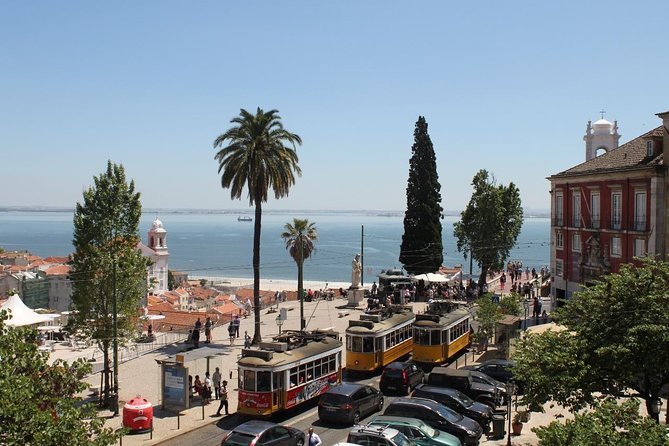
As the walk goes downhill, you reach the Carmo convent and church, known for Gothic architecture. It’s a striking contrast to the more ornate church interiors earlier in the route.
The big reason this stop matters is political history. This is tied to the Carnation Revolution in 1974, the moment that ended nearly five decades of dictatorship. You don’t just learn that the revolution happened, you feel how Lisbon’s physical spaces became stages for change.
If you care about modern European history, this stop gives you a Lisbon-specific anchor. It also helps you spot why Lisbon talks so openly about identity, freedom, and civic memory.
Santa Justa Elevator: A Viewpoint You Can Choose to Pay For
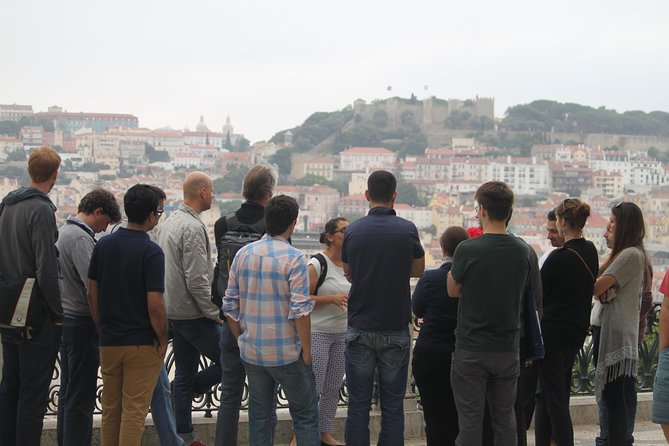
Then you arrive at Santa Justa elevator, an impressive structure in Gothic Revival style. The payoff is the viewpoint, because it’s one of the best angles for seeing the city’s layers.
Important practical note: the elevator admission is not included. So you’re deciding on the spot whether you want to add that extra cost for the added height and views.
If you’re the type who loves viewpoints enough to pay for them, this is your moment. If you prefer to keep spending controlled, you can still enjoy the exterior and the lead-in to the next areas.
Coffee and Pastry in Baixa: Fuel for the Slower Parts
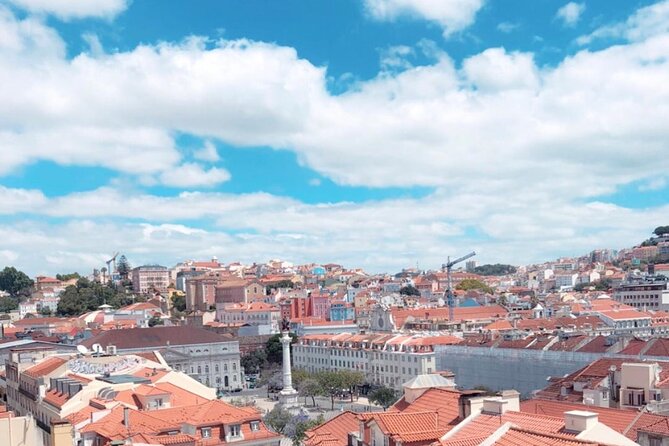
Now you drop into Baixa de Lisboa, and you get a included coffee and pastry break at a local café. This is one of those details that makes a guided walk feel friendly instead of exhausting.
Baixa is the city’s central plane, and the break gives you a chance to regroup before moving into busier streets and tighter lanes. It also helps you avoid the common mistake of arriving at Alfama too hungry and too tired.
The best value here is time. You do not have to hunt for a café mid-walk, and you get a short pause that keeps the pace realistic.
Praça da Figueira and the Tram Ride Up to Portas do Sol
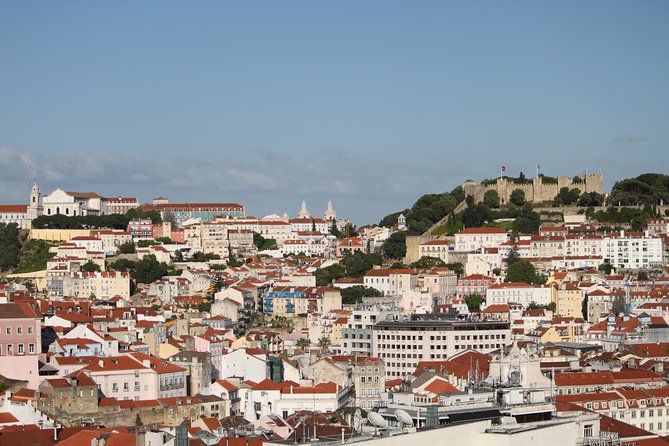
From Baixa, you’ll see sights around Praça da Figueira and then you take a tram ride that helps you move between elevations. The tour includes this tram segment, and it is designed to connect you to what comes next.
Then you ride up from the castle area toward Portas do Sol, where you’re set up for Alfama. The tram component is not only fun, it’s strategic, because it reduces how much steep walking you have to do.
This is also the part where Lisbon starts to feel more like a lived-in maze than an attraction list. You get the transportation flavor, not just the stationary postcard stops.
Alfama: Fado Houses, St. Anthony Festivals, and Narrow Streets to the River
At Portas do Sol, you look toward major landmarks including the Monastery of São Vicente de Fora and the National Pantheon. Then the tour points you into Alfama, described as one of Lisbon’s oldest traditional neighborhoods.
Alfama is famous for fado houses and for religious festivals, especially those tied to St. Anthony. Even if you’re not in town for a festival day, you pick up the patterns that make Alfama feel cultural rather than just historic.
And yes, the streets are narrow and angled, leading your eyes toward the Tagus. This is where the earlier viewpoint makes sense, because you now know what you’re looking at and why the hills matter.
It’s also a great reminder that Lisbon’s identity is not locked behind museum doors. It spills out onto sidewalks, into music traditions, and into public rituals.
Lisbon Cathedral: Ending With a Building That Changes With Time
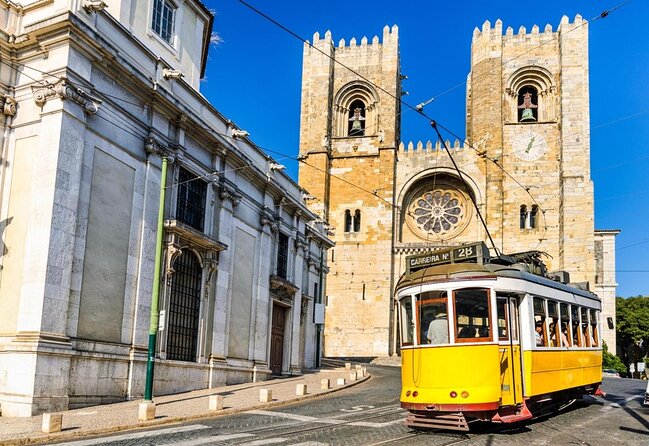
The walk finishes at Lisbon Cathedral, built in 1150, a few years after Lisbon was taken back from the Moors. Over time, the cathedral went through architectural changes, resulting in a mix of styles.
This ending is smart because it gives you a historical “through-line.” You’ve talked about renewal after disaster, religious influence, political revolution, and neighborhood character. Ending at a layered monument lets you feel the idea of continuity and change.
Also, by the time you’re there, you usually have enough context to notice details instead of just taking a quick look and moving on.
Price, Group Size, and What You Get for $30.25
At $30.25 per person for about three hours, the best value is what’s bundled into the time. You get a professional guide, a tram trip, a coffee and pastry break, and insurance coverage mentioned with the tour.
Many stops are free to enter, which matters if you are watching your spending. The big paid add-on opportunity is Santa Justa elevator, and since it is not included, you only pay if you want the experience.
Small group size, up to 15 people, is another quiet value perk. It tends to mean fewer people competing for the guide’s attention at tight viewpoints and better opportunities to ask questions about where to go next.
Based on the guide praise, the tour also earns its value through clarity and pacing. Guides like Paulo, Ana, Ricardo, and Beatrice are repeatedly described as engaging and fun, with practical tips to help you keep exploring after the walk ends.
Practical Comfort Notes Before You Go
This is a walking tour with hill work, so come prepared for steps and uneven routes. Even though the tour states that most travelers can participate, individual comfort matters because Lisbon’s “easy” can still be steep.
Bring water, and wear shoes you trust. One review specifically called out comfortable shoes and warned the tour is not ideal for people with trouble walking.
If you have mobility concerns, consider whether you’ll want to slow down at each viewpoint and church stop. The tour moves with a guided pace, so it helps to plan for short breaks and expect stairs.
So, Should You Book It?
Yes, I think this is a smart booking for first-timers who want a guided foundation fast. You’ll come away with a usable mental map, a feel for Lisbon’s major neighborhoods, and a set of story threads you can connect when you roam later.
I’d book it early in your trip, especially if you want to understand the city’s layers instead of just collecting landmarks. Just do two things first: check the meeting point details carefully on your confirmation, and set your expectations for a real walking experience with viewpoints, not a slow sightseeing ride.
If you want Lisbon with context, this one is a solid value.
FAQ
How long is the Lisbon Essential Walking Tour?
It lasts about 3 hours.
How much does the tour cost?
The price is $30.25 per person.
What languages are available?
The tour is offered in English, and it is available in multiple languages if you select them during booking.
What’s included in the price?
It includes a professional guide, a tram trip, a coffee and cake break, and liability and personal accident insurance.
Are any entrances included?
The church and museum stops listed are free, while the Elevador de Santa Justa admission is not included.
Is the tram ride included?
Yes, the tram trip is included.
Do I get a mobile ticket?
Yes, the tour uses a mobile ticket.
Where does the tour start and end?
It starts and ends in Lisbon, Portugal, with the exact meeting location shown on the Google Maps link provided.
What is the cancellation policy?
You can cancel for a full refund up to 24 hours in advance.
Is the group size small and are service animals allowed?
The maximum group size is 15 travelers, and service animals are allowed.
Other Days Out Around Lisbon





Centuries-Deep Routes Through Lisbon




On Foot Around Lisbon, Other Guided Walks




Newly added around Lisbon
- Lisbon: Street Art Walk
★ 5.0 · 79 reviews - From Lisbon: Nazare Big Waves and Óbidos Guide Day Trip
★ 4.7 · 79 reviews - Small Group Walking Tour of Belém
★ 4.9 · 80 reviews - Lisbon: Regaleira, Sintra, Cape Rock & Cascais Day Trip
★ 4.6 · 80 reviews - Lisbon: Evening Local Food Crawl with Drink Pairings
★ 4.6 · 80 reviews - From Lisbon: Sintra and Portuguese Coast Private Day Tour
★ 5.0 · 80 reviews - Lisbon: Authentic Fado Show, Dinner and Night Tour
★ 4.6 · 80 reviews - Golden Hour Boat Tour – Sailing by the Monuments with Wine
★ 5.0 · 81 reviews - Hard Rock Cafe Lisbon with Set Lunch or Dinner
★ 4.0 · 81 reviews - Fado Musical Experience with Portuguese Wine & Appetizers
★ 4.5 · 81 reviews
Other boats, other operators: Walking Tours.
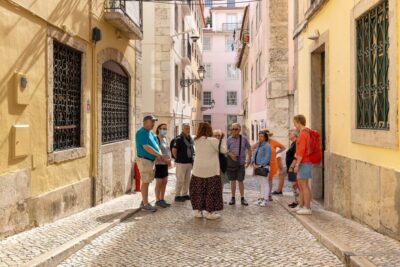 ★ 4.8Lisbon: History, Stories and Lifestyle Walking TourFrom $2910,902 reviews
 ★ 5.0Best of Lisbon Small-Group Guided Walking TourFrom $234,869 reviews
 ★ 4.9Lisbon: Food and Wine Small Group Walking TourFrom $724,082 reviews
 ★ 5.0Porto Walking Tour, Lello Bookshop, River Cruise and Cable CarFrom $723,354 reviews
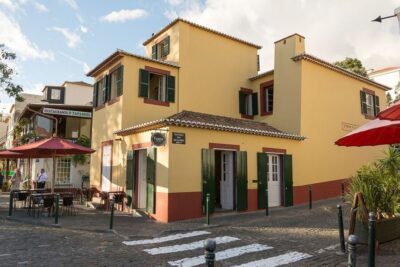 ★ 4.7Funchal: Old Town Walking TourFrom $193,233 reviews
 ★ 4.9Best of Lisbon Walking Tour: Rossio, Chiado & AlfamaFrom $232,700 reviews
 ★ 5.0Experience Porto’s Charm: 3-Hour Guided Walking TourFrom $352,432 reviews
 ★ 4.7Madeira: Enjoy a Guided Levada Walk in the Rabaçal ValleyFrom $502,197 reviews
Filed under