
REVIEW · WALKING TOURS
Lisbon Walking Tour – The Perfect Introduction to the City
Lisbon clicks fast on this walk. For just $1.25, you get a quick downtown sweep packed with big moments like the Earthquake of 1755, and you land at the best places to start exploring on your own. I especially like the way the route mixes landmark sights with street-level history, and how guides bring the city’s dramatic past into everyday corners. The one watch-out: some guides can be fast talkers, so if you need a slower pace, keep your questions ready.
This is an easy, small-group stroll, up to 20 people, and it runs in English with a mobile ticket. You meet at Praça do Comércio, and the guide should be easy to spot with an orange umbrella near the arch and the statue in the middle. It’s a smart first-day option because it covers so much ground without feeling like a checklist.
You’ll also walk from monumental squares toward areas that feel more local, with the ending near Camões Square and down into Bairro Alto. If you want Lisbon’s layout, stories, and practical next steps in one go, this does the job.
In This Review
- Key Highlights You Will Actually Feel While Walking
- Why This 2.5-Hour Intro Walk Makes Sense for First-Time Lisbon
- Meeting at Praça do Comércio, Finding Your Guide in Seconds
- Praça do Comércio to Dom Pedro IV: The Squares That Shape Downtown Lisbon
- Rua Augusta: The Most Important Street, Plus the Sense of Lisbon Motion
- Santa Justa Elevator Stop: Landmark Views and the Earthquake Story in One Frame
- Churches and Memory: 1506 Memorial, Igreja de S Domingos, and Igreja de São Roque
- Carmo Church Ruins and Largo do Carmo: Where Portugal’s Modern Story Happens
- Avenida da Liberdade and Casa do Alentejo: The City’s Stylish Side
- Estacao do Rossio, Praca Luis de Camoes, and the Finish Near Bairro Alto
- Pace, Rain, and the Pay-What-You-See-Fit Guide Style
- Who Should Book This Tour, and Who Might Prefer Something Else
- Should You Book This Lisbon Walking Tour? My Take
- FAQ
- How long is the Lisbon walking tour?
- Where do I meet the guide?
- Where does the tour end?
- Is the tour offered in English?
- What is the price per person?
- Do I need tickets for attractions along the way?
- How big is the group?
- Is a mobile ticket used?
- Is tipping included or required?
- What if it rains?
- Can I cancel for free?
Key Highlights You Will Actually Feel While Walking
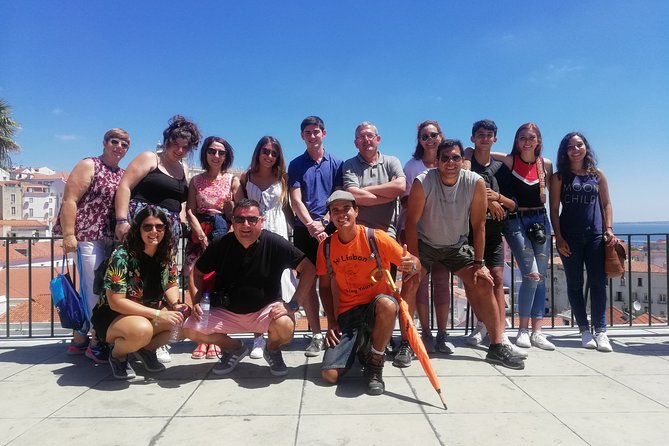
- Orange umbrella start at Praça do Comércio, between the big arch and the central statue
- Earthquake 1755 stories tied to the buildings and churches you pass
- Santa Justa Elevator on the route for instant Lisbon landmark payoff
- Carmo ruins area and modern Portugal at Largo do Carmo
- 1506 memorial stop honoring the Jewish victims of the massacre
- Small group size with a guide who keeps things moving for about 2.5 hours
Other Lisbon calcada routes we have followed on foot
- Lisbon: History, Stories and Lifestyle Walking Tour★ 4.8 · 10,902 reviews
- Best of Lisbon Small-Group Guided Walking Tour★ 5.0 · 4,869 reviews
- Best of Lisbon Walking Tour: Rossio, Chiado & Alfama★ 4.9 · 2,700 reviews
- Age of Discoveries Walking Tour in Belém★ 5.0 · 1,513 reviews
Why This 2.5-Hour Intro Walk Makes Sense for First-Time Lisbon
This tour is built for orientation. You get a tight, walkable map of downtown Lisbon, so your second day stops making sense instead of feeling random.
At $1.25 per person, the value is hard to beat. Even if you only remember a handful of stories and locations, you still leave with a clearer mental picture of where everything sits, from Praça do Comércio up through the city core.
The length also matters. Two hours 30 minutes is long enough to make progress, but short enough that you still have energy to explore afterward without feeling cooked.
Meeting at Praça do Comércio, Finding Your Guide in Seconds
The starting point is Praça do Comércio, Lisbon’s classic riverside square. When you get there, look for the guide with an orange umbrella between the big arch and the statue in the middle, near the Statue of D. José I area.
This is helpful because it reduces the usual “Where do we meet?” stress. You can arrive, orient yourself, and be ready to start rather than wandering for a long minute looking for a random group.
Also, you’re starting in a space that’s easy to see and easy to describe. That matters when you have early light, crowds forming, or you just want the day to start smoothly.
Praça do Comércio to Dom Pedro IV: The Squares That Shape Downtown Lisbon
Your walk begins in Praça do Comércio, the biggest square in Lisbon. Even if you have never been to the city before, this is the kind of place that immediately shows you the scale of the downtown and the city’s river connection.
From there, you move through nearby civic and commercial areas that feel like Lisbon’s daily heartbeat. You’ll pass Municipal Square, where the city hall is located, and it’s a good reminder that Lisbon is not only viewpoints and tiles. It’s also bureaucracy, business, and real city life.
Then comes Praca Dom Pedro IV, one of Lisbon’s oldest squares. This stop gives you the historical anchor for the route, and it also helps you understand why Lisbon’s streets feel like they were planned for movement, not just wandering.
If you do this early, you’ll notice how much easier it is to later choose the right streets for your mood, whether you want drama, shade, or quick access back toward public transport.
Rua Augusta: The Most Important Street, Plus the Sense of Lisbon Motion

Rua Augusta is where downtown feels most “alive.” It’s Lisbon’s main street, and walking it with a guide helps you connect the dots between landmarks you see and the broader story of how the city rebuilt and reorganized itself.
This is one of the stops where you get the most benefit from having someone narrate. The street looks straightforward on your own, but when you understand what happened in the past, the present streets feel intentional.
It’s also a nice break in the tour rhythm. By this point, you’re warming up, your feet are working, and you get a central spine of the city that makes future directions less confusing.
More whole-city loops around Lisbon we have ridden





Santa Justa Elevator Stop: Landmark Views and the Earthquake Story in One Frame
The Santa Justa Elevator is one of Europe’s famous landmarks, and stopping near it gives you instant wow factor. Even if you never plan to ride, it’s still a great sight marker for where you are in Lisbon’s vertical geography.
More importantly, this stop ties into the big reason Lisbon’s old center looks the way it does. You’ll hear about the Great Lisbon Earthquake of 1755, and once that story is on the table, the buildings and churches you pass stop feeling random.
You start noticing themes, like survival, repair, and why certain neighborhoods became symbols of what went wrong and what people tried next. That’s the kind of context that makes Lisbon history useful, not just decorative.
Churches and Memory: 1506 Memorial, Igreja de S Domingos, and Igreja de São Roque
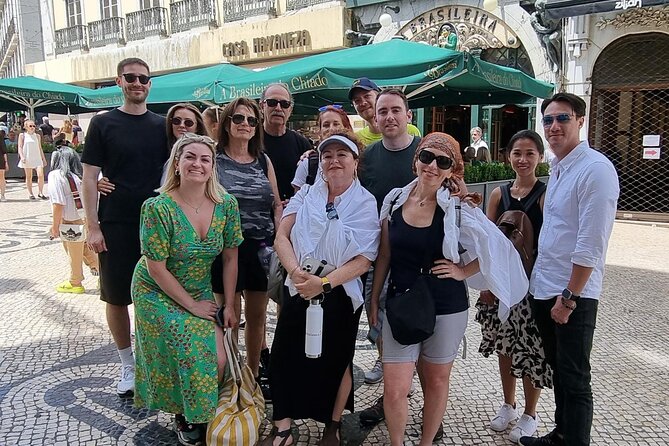
Lisbon doesn’t do history quietly, and this part of the walk is where that becomes obvious.
You’ll stop at a memorial honoring the victims of the Jewish massacre of 1506. It’s a solemn pause, and it also gives you a clearer sense of how Lisbon’s past included community violence, not only royal pageantry.
Next is Igreja de S Domingos, described as one of the most impressive churches in Europe. This kind of stop is worth it because Lisbon churches often feel more like architecture lessons than religious tourism. You’re seeing how faith, artistry, and city identity overlap in stone and space.
Then you move to Igreja de Sao Roque. This one gets called out because it survived the earthquake in 1755. That survival detail changes how you look at it, because you’re comparing what stayed standing with what had to be rebuilt or reimagined.
If you care about how cities actually evolve, not just how they look, these stops are the emotional center of the tour.
Carmo Church Ruins and Largo do Carmo: Where Portugal’s Modern Story Happens
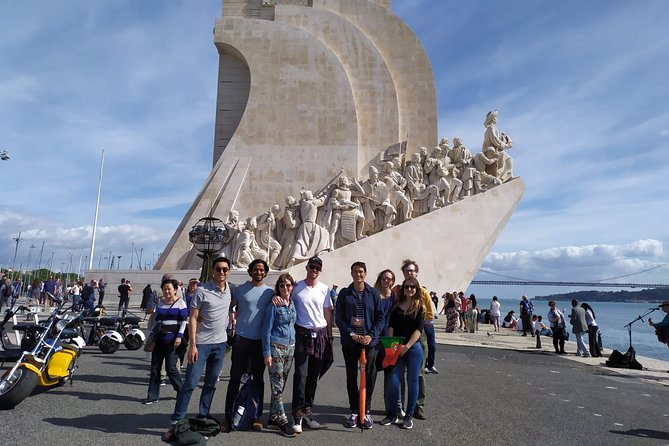
Largo do Carmo is a key turning point on this walk. This is the place where the Carnation Revolution took place, and the stop makes Portugal’s modern history feel less distant.
Right here, the conversation shifts from 1755 to the 1970s, and that contrast helps you understand Lisbon as a city with multiple eras of disruption and reinvention. Old damage and new political change are both part of the same identity.
The Carmo Church ruins area also connects to the earthquake story, giving you a physical reminder that 1755 was not just an abstract event in a textbook. You see the aftermath, then connect it to why later generations remembered, built, and chose new paths.
If you want a tour that gives you more than postcard facts, this stop is where that happens.
Avenida da Liberdade and Casa do Alentejo: The City’s Stylish Side
Once you leave the oldest core squares behind, the walk starts shifting in tone.
Avenida da Liberdade is Lisbon’s fancy avenue. You don’t just pass it like a corridor. It helps you understand that Lisbon has a showy, grand side that sits right next to older streets and church squares.
You’ll also get to Casa do Alentejo, described as one of the most charming houses in Lisbon. This is a lighter, more intimate stop, and it helps break up the heavier history moments.
The payoff for you is simple. After the tour, when you hear Lisbon described as both elegant and historic, you’ll know exactly what people mean because you walked through both types of streets.
Estacao do Rossio, Praca Luis de Camoes, and the Finish Near Bairro Alto
Estacao do Rossio is the old central station of Lisbon, and it’s a smart included stop because it anchors your next moves. Stations are where you immediately visualize how to travel around, and Rossio is one of the key points for getting your bearings.
From there, you reach Praca Luis de Camoes, one of Lisbon’s most iconic squares. This square works well as a finish line because it’s recognizable and easy to find again after your morning walk.
Then the route heads into Bairro Alto, Lisbon’s famous nightlife area. It’s the kind of ending that leaves you with options. If you want dinner, bars, or just a stroll for atmosphere, you’re positioned right where those plans start making sense.
Pace, Rain, and the Pay-What-You-See-Fit Guide Style
This tour runs on foot and stays active for about 2 hours 30 minutes. It’s manageable for most people, and the group is capped at 20, so you’re not trapped in a huge shuffle.
Footwear is the unglamorous hero here. Wear comfy shoes, especially if you’ve got slick pavement or you’re sensitive to cobbles.
On rain days, plan on it still going. One guide-led experience is noted as continuing even with pouring conditions, and the practical takeaway is simple: bring a poncho and an umbrella if rain is possible. Lisbon weather loves surprise.
Finally, the guide compensation is pay-what-you-see-fit at the end. That tends to be the fairest setup because it matches effort and experience instead of forcing a fixed amount. One thing to know, though, is that guide speaking styles can vary. Some people reported guides talking quickly, so if you need more time to process, ask questions early and slow the group down when appropriate.
Who Should Book This Tour, and Who Might Prefer Something Else
This is best for:
- First-time visitors who need a city map made of walking stops
- Travelers who like history explained through places, not through slides
- People who want practical suggestions while they build their bearings, since guides often share how to move around and what to try next
It might be less ideal if:
- You need very slow pacing and long stops at each viewpoint
- You’re hoping for lots of indoor time, because this is a walking-based experience
- You’re highly sensitive to listening clarity, since a few participants flagged that some guides speak fast
If you’re the type who likes to return later to the sites that hit you emotionally, this tour sets up the perfect shortlist for day two and three.
Should You Book This Lisbon Walking Tour? My Take
Yes, you should book it if your goal is a strong first impression plus usable context. The route hits major downtown anchors, and the way the earthquake of 1755 and the Carnation Revolution are woven into real locations gives the walk meaning beyond sightseeing.
It’s also one of those deals that you feel even if you only partly pay attention. With the small-group size, English narration, mobile ticket, and the landmark sequence from Praça do Comércio through churches and up to Bairro Alto, you’re buying time saved.
If you’re worried about pace, choose a time you feel fresh. Arrive a few minutes early at Praça do Comércio, find the orange umbrella fast, and tell the guide right away that you prefer slower explanations. Then you get the best of what the tour is designed to do, quick orientation with real story power.
FAQ
How long is the Lisbon walking tour?
The tour runs about 2 hours 30 minutes.
Where do I meet the guide?
You meet at Praça do Comércio (1100-148 Lisbon). Look for the guide with an orange umbrella between the big arch and the statue in the middle.
Where does the tour end?
The tour ends around Praça Luís de Camões (Largo Luís de Camões). That area is the finish point.
Is the tour offered in English?
Yes, it is offered in English.
What is the price per person?
The price is listed as $1.25 per person.
Do I need tickets for attractions along the way?
The stops listed are marked as Admission Ticket Free, so you are not paying separate entry fees for the listed sights.
How big is the group?
The tour has a maximum of 20 travelers.
Is a mobile ticket used?
Yes, you receive a mobile ticket.
Is tipping included or required?
At the end of the tour, you pay your guide whatever you see fit.
What if it rains?
The tour still goes in rain, so bring a rain poncho and umbrella if bad weather is possible.
Can I cancel for free?
Yes. Free cancellation is available if you cancel up to 24 hours in advance for a full refund.
Other Days Out Around Lisbon





Whole-City Loops of Lisbon, More Routes




On Foot Around Lisbon, Other Guided Walks




Newly added around Lisbon
- Lisbon: Street Art Walk
★ 5.0 · 79 reviews - From Lisbon: Nazare Big Waves and Óbidos Guide Day Trip
★ 4.7 · 79 reviews - Small Group Walking Tour of Belém
★ 4.9 · 80 reviews - Lisbon: Regaleira, Sintra, Cape Rock & Cascais Day Trip
★ 4.6 · 80 reviews - Lisbon: Evening Local Food Crawl with Drink Pairings
★ 4.6 · 80 reviews - From Lisbon: Sintra and Portuguese Coast Private Day Tour
★ 5.0 · 80 reviews - Lisbon: Authentic Fado Show, Dinner and Night Tour
★ 4.6 · 80 reviews - Golden Hour Boat Tour – Sailing by the Monuments with Wine
★ 5.0 · 81 reviews - Hard Rock Cafe Lisbon with Set Lunch or Dinner
★ 4.0 · 81 reviews - Fado Musical Experience with Portuguese Wine & Appetizers
★ 4.5 · 81 reviews
Other boats, other operators: Walking Tours.
 ★ 4.8Lisbon: History, Stories and Lifestyle Walking TourFrom $2910,902 reviews
 ★ 5.0Best of Lisbon Small-Group Guided Walking TourFrom $234,869 reviews
 ★ 4.9Lisbon: Food and Wine Small Group Walking TourFrom $724,082 reviews
 ★ 5.0Porto Walking Tour, Lello Bookshop, River Cruise and Cable CarFrom $723,354 reviews
 ★ 4.7Funchal: Old Town Walking TourFrom $193,233 reviews
 ★ 4.9Best of Lisbon Walking Tour: Rossio, Chiado & AlfamaFrom $232,700 reviews
 ★ 5.0Experience Porto’s Charm: 3-Hour Guided Walking TourFrom $352,432 reviews
 ★ 4.7Madeira: Enjoy a Guided Levada Walk in the Rabaçal ValleyFrom $502,197 reviews
Filed under