
REVIEW · PASTEIS DE NATA AND LISBON FOOD WALKS
Pastel de Nata Baking Class – Portugal’s Famous Custard Tart
Custard tarts meet real hands-on technique. In Lagos, this Pastéis de Nata baking class turns a famous Portuguese dessert into something you can actually recreate, with clear steps and a real focus on the custard and pastry method. What I like most is how the session is taught in a lively, friendly way by Joana and her team, and how you still get to eat what you make, warm from the oven.
There is one thing to know before you book: you may not roll and craft every bit of the pastry dough yourself. Some prep work uses pastry made earlier to save time and reduce waste, so your hands-on work centers on the custard, assembling, and baking.
In This Review
- Key highlights worth planning around
- Entering The Kitchen in Lagos, and what the 2-hour format really means
- What you learn: custard, puff pastry, assembly, and baking
- Joana and team: lively English instruction that keeps you moving
- The pastry question: how much is truly hands-on?
- Assembling Pastéis de Nata: where technique turns into texture
- Baking and the fun wait: timing, scent, and the moment you taste
- Recipe PDF by email: the best kind of souvenir
- Price and value: is $78.44 worth 2 hours?
- Who should book this Pastéis de Nata class in Lagos
- The decision: should you book, or skip?
- FAQ
- How long is the Pastel de Nata baking class?
- Is the class taught in English?
- What’s included in the class?
- Will I get a recipe after the class?
- Are there any limits on group size?
- Can I cancel and get a refund?
Key highlights worth planning around
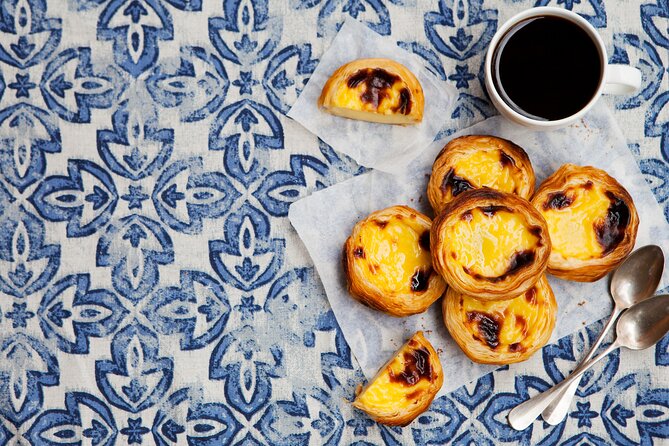
- Small group size in English (up to 10 people, led for English speakers)
- Make the custard, prep the pastry, assemble, then bake
- Leave with a recipe PDF by email so you can try again at home
- A fun kitchen vibe, with games while you wait for baking in reviews
- Part of the pastry may be pre-made for sustainability and timing, so expect teamwork over total DIY dough
Still weighing up the options? These are other Lagos trips our reviewers have actually been on.
- Boat trip to the grottos at Ponta da Piedade, Lagos★ 5.0 · 1,197 reviews
- Boat Trip to Ponta da Piedade from Lagos★ 5.0 · 1,016 reviews
- From Lagos: Kayak Tour of Ponta da Piedade Caves on Catamaran★ 5.0 · 905 reviews
- Boat trip to the caves of Benagil★ 5.0 · 830 reviews
Entering The Kitchen in Lagos, and what the 2-hour format really means
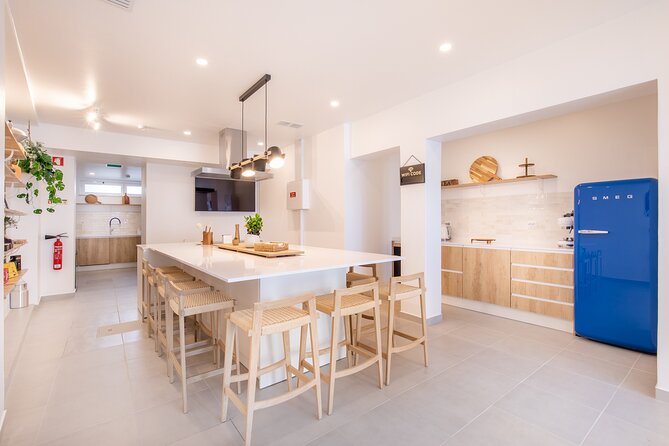
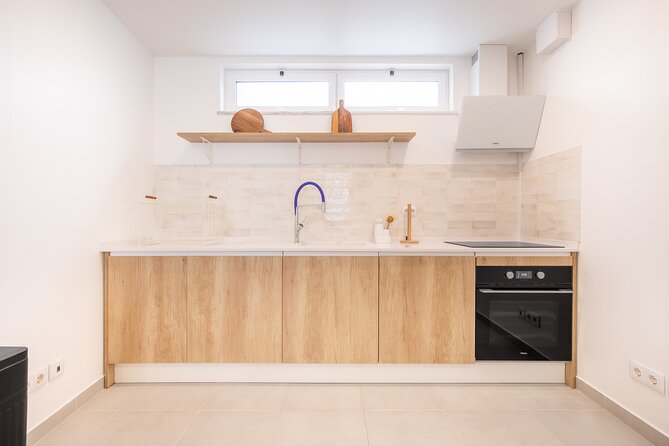
The class meets at Rua Lucinda Anino dos Santos F in Lagos, and it ends back at the same spot. Expect to spend about 2 hours in the kitchen, which is a nice length for a holiday day when you want something hands-on without losing an entire afternoon.
You’ll get a mobile ticket, and the class is offered in English. It’s also described as being near public transportation, which matters in Lagos because getting around can be easy or annoying depending on where you’re staying. Service animals are allowed, which is a helpful practical detail if you need accommodations.
The biggest practical win here is pacing. Pastéis de Nata are simple to describe, but the technique has timing. A tight schedule means you’ll do the important parts in the right order, then taste the results before you lose momentum.
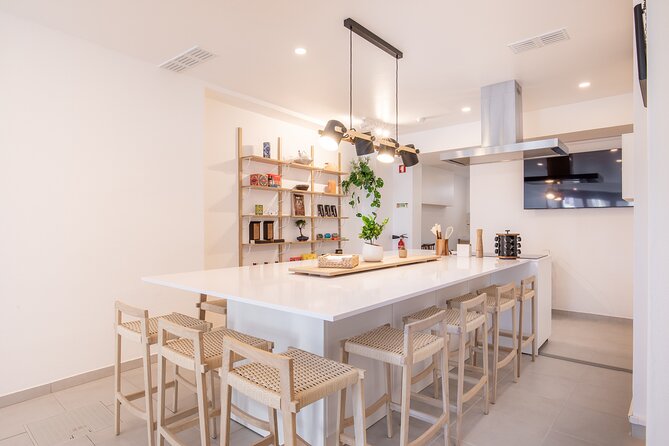
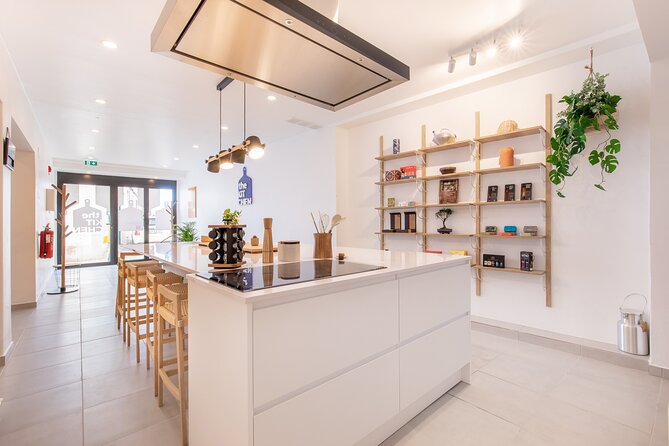
And yes, the setting matters. Reviews consistently call out a beautiful kitchen and a welcoming atmosphere, with Joana Glória described as engaging and entertaining. That matters because custard and pastry can feel fussy if the guidance is vague. Here, the vibe is friendly and structured, so you spend your energy learning rather than guessing.
What you learn: custard, puff pastry, assembly, and baking
The class is built around the full sequence, so you’re not just mixing things and hoping. You’ll learn how to:
- make the creamy custard
- prepare the puff pastry
- combine both parts into the tart cups
- bake until you get that classic look
What does that mean in real life for you? It means you’ll understand what changes when custard thickens, how pastry behaves when it bakes, and why assembly technique affects the final texture. Pastéis de Nata are known for that contrast: crisp, blistered pastry with a custard filling that’s set but still silky.
You’ll also taste what you bake. That is not a small detail. Learning dessert technique is one thing, but eating the finished tarts right away is how you connect the process to the result. It helps you remember what good custard feels like and what “ready” looks like when it’s time to bake.
The class also includes a dessert focus only, which keeps it simple. One course, Pastel de Nata, cooked during the class, eaten at the end.
Joana and team: lively English instruction that keeps you moving
In reviews, Joana Glória and her team get a lot of credit for being entertaining and engaging. I like that approach because Pastéis de Nata are all about follow-through. If you’re relaxed, but still clear on steps, you’re more likely to nail the tricky parts.
Expect step-by-step teaching and chances to ask questions. Reviews mention that questions get answered, and instructions are described as easy to follow, even for people with no cooking experience.
There are also small moments that make the class feel less like a factory demo. One review mentions games while waiting for the sweets to cook. Even if you skip the game, that pacing trick matters, because waiting is where some people lose focus in baking classes.
And on the human side, reviews highlight a warm, almost family-like group feel. If you’re traveling solo or with friends, that social comfort can turn a “food activity” into a memory you’ll talk about later.
The pastry question: how much is truly hands-on?

Here’s the honest part. One review notes you may not make the full pastry case from scratch because it can be too time-consuming. Instead, you work with pastry that has been prepared in advance.
That might sound like a drawback, but it can actually be a smart compromise. The provider explains that using pastry made by previous participants is part of a sustainability approach, so the dough is reused rather than discarded. It also keeps the class on track, so everyone can focus on the parts that require attention and technique: custard, assembly, and baking.
So what should you expect your role to be?
- You will likely participate in key steps tied to the lesson goals.
- You may be assigned parts of the process, such as working on the custard filling and assembling into tart cases that were prepared earlier.
- You still end with tarts that come from the class work and get baked during your session.
What I’d do as a planner: if your top goal is learning custard and understanding assembly and baking, this class is a strong fit. If your top goal is rolling and crafting every inch of dough yourself, you should be ready for the fact that time and sustainability shape what you do.
The good news is that even when something goes a little imperfect, the result can still be delicious. One review laughs about pastry cases escaping their molds, and the tarts still tasting great. That tells me the class is focused on helping you learn rather than scolding small mishaps.



Assembling Pastéis de Nata: where technique turns into texture
Pastéis de Nata assembly is where you feel the difference between a tutorial and real instruction. In a hands-on class like this, you get guided practice combining custard with prepared pastry cups and managing portion and placement.
Even if you’ve never worked with Portuguese custard tarts before, the learning target is simple: create consistent tarts that bake evenly.
Key things you’ll be learning in practice:
- how custard behaves when poured and when it bakes
- how pastry cups hold shape
- how to assemble without overfilling or underfilling
- how baking transforms both elements
I also like that the class is structured around the final bake. Many cooking classes stop at mixing. Here, you finish the process and see what happens when heat hits pastry and custard. That’s what helps you later when you try again at home.
And because the group is small (maximum 10), you’re less likely to be stuck watching. You get time to do the steps, not just observe them.
Baking and the fun wait: timing, scent, and the moment you taste
The baking part is the payoff. You take what you made, put it in the oven, then wait just long enough to feel the kitchen shift from “learning” to “getting fed.”
In reviews, people mention games during the waiting time, which helps break up the “stand around and watch” problem. It also gives you something to do while you pay attention to the oven and the transformation happening inside.
You’ll bake during the class and then eat the Pastel de Nata dessert you cooked. Reviews also mention that there’s often a small serving of port wine with the tarts at the end, which fits the Portuguese dessert culture nicely.
One more small but important detail: tasting while the tarts are fresh from baking helps you calibrate. You’ll notice how the custard sets and how the pastry edges behave when they are crisp and warm. That’s hard to replicate later if you never tasted the real thing right after baking.
Recipe PDF by email: the best kind of souvenir
A real value-add is the email follow-up. After the experience, you receive an email with a PDF recipe so you can recreate Pastéis de Nata at home.
This is practical. Cooking classes are fun in the moment, but you want something that lasts past the vacation high. A recipe you can save and use again means you can practice without searching the internet from scratch. You’ll also remember what your teacher meant when you see a step you didn’t fully understand during the class.
If you’re the type who likes repeating one standout food moment from each trip, this works well. If you’re not, you can still keep the PDF for guests, future baking experiments, or a rainy-day project.
Price and value: is $78.44 worth 2 hours?
At $78.44 per person for about 2 hours, you’re paying for more than ingredients. You’re paying for:
- guided technique in English
- access to a proper kitchen and tools
- the sequence coaching (custard, pastry, assembly, baking)
- a finished tasting for dessert
- a recipe PDF afterward
For an activity in the Algarve, where food experiences range from simple tastings to full-day tours, this class sits in a middle lane that can be a good deal if you want skill-building. If you only want one plate of dessert, a café purchase is cheaper. But if you want to go home with a repeatable technique, the price becomes more reasonable.
Also consider what you get in the group setting. With a max group size of 10, you’re not just part of a crowd. You can ask questions, get guidance, and do the steps.
One caution on value: if you were expecting to make every part of the pastry case dough from scratch, the class may feel slightly less hands-on than you imagine. But if you understand that the goal is the full custard tart result and learning the technique that matters most, the cost feels more like tuition than a fancy snack.
Who should book this Pastéis de Nata class in Lagos
This class is a strong match if:
- you want a fun, guided dessert project with clear steps
- you love Portuguese food and want to learn what makes Pastéis de Nata work
- you’re traveling with friends and want a shared activity that ends with tasting
- you have no cooking experience and want help without stress
It also suits couples and solo travelers because the group stays small and the teaching is described as friendly and welcoming.
If you’re a hardcore baker who wants total control over every dough step, you might find the pre-made pastry approach less satisfying. But you’ll still learn custard, assembly, and baking, which are the parts that most people struggle to replicate at home.
One more tip from the tone of the reviews: the atmosphere is meant to feel celebratory and relaxed. If it’s a birthday or special moment, you can ask about a candle or similar little touch. One participant specifically described a birthday candle moment added to a tart.
The decision: should you book, or skip?
Book it if you want a small-group, English-friendly cooking class in Lagos that teaches you how Pastéis de Nata come together, then lets you eat your results immediately. The combination of structured steps, a kitchen you can actually work in, and a recipe PDF afterward makes it more useful than a simple food stop.
Skip it if you’re looking for purely hands-on pastry dough craftsmanship from start to finish. Some time-saving and sustainability choices mean you may not do every dough step yourself. If that’s your must-have, search for a class that explicitly promises full dough preparation per participant.
FAQ
How long is the Pastel de Nata baking class?
It runs for about 2 hours.
Is the class taught in English?
Yes, it is offered in English.
What’s included in the class?
The class includes all ingredients and cooking tools needed, plus the chance to eat the freshly baked Pastéis de Nata at the end.
Will I get a recipe after the class?
Yes. You receive an email with a PDF recipe so you can recreate Pastéis de Nata at home.
Are there any limits on group size?
Yes. The experience has a maximum of 10 travelers.
Can I cancel and get a refund?
You can cancel for a full refund up to 24 hours before the experience starts. If you cancel less than 24 hours before start time, the amount paid is not refunded.
Benches and Studios Across Lagos


Newly added around Lagos
- 2,5-hour Semi-private Kite Course with your own Kite!
★ 5.0 · 38 reviews - 3 Hour Boat Trip to Ponta da Piedade
★ 4.5 · 39 reviews - Beautiful coastal drive to the Ponta da Piedade caves in Lagos
★ 5.0 · 40 reviews - Ponta da Piedade Boat Tour to Caves and Beaches with Local Guide
★ 5.0 · 44 reviews - Sunrise SUP Caves Tour in Lagos – Small Group Experience
★ 5.0 · 49 reviews - Benagil Caves- Speed Boat Tour
★ 4.5 · 51 reviews - Sunset Yoga at Lagos’s beautiful beach by el Sol Lifestyle
★ 5.0 · 52 reviews - Paddleboard rental in Lagos
★ 5.0 · 53 reviews - Sunrise Hot Air Balloon Flight in Algarve
★ 5.0 · 59 reviews - Half-Day Private Cruise with Drinks and Nibbles Included in Lagos
★ 5.0 · 71 reviews
Other boats, other operators: Pasteis de Nata and Lisbon Food Walks.
 ★ 4.9Lisbon: Pastel de Nata Baking ClassFrom $642,106 reviews
 ★ 5.0Porto: Pastel de Nata Cooking Class with Grandma’s RecipeFrom $331,565 reviews
 ★ 4.9Porto: Pastel de Nata Pastry-Making WorkshopFrom $411,542 reviews
 ★ 4.8Porto: Pastel de Nata Cooking Class with Port Wine – SéFrom $41888 reviews
 ★ 4.9Workshops Pasteis de Nata in Porto, PortugalFrom $40520 reviews
 ★ 5.0Pastel de Nata Masterclass at a Real Bakery in Downtown LisbonFrom $84491 reviews
 ★ 5.0Pastel de Nata Pastry Class: Bake and Enjoy Your Own TreatsFrom $66485 reviews
 ★ 4.9Porto: Pastel de Nata Cooking Class from ScratchFrom $50468 reviews