
REVIEW · PASTEIS DE NATA AND LISBON FOOD WALKS
Porto: Pastel de Nata Pastry-Making Workshop
Port wine turns baking lessons into real fun. I love how the pastel de nata lesson is hands-on, with step-by-step guidance that makes the custard and rolling feel doable, and I like that the group stays small enough for real conversation while you bake. You will get a glass of Port wine as you work. One heads-up: the dough itself is already prepared, because it takes about three hours to do properly.
Meet on Rua Chã 77, in front of the Cathedral, at Boiler Studio. Expect English instruction, a max group size of nine people, and you taking home at least two pastries in a handy cardboard pastry box.
Hosts like Ana, Sarah, Patricia, and Maria are repeatedly praised for their humor and inclusive teaching, which matters when you are doing something fiddly like rolling thin dough. The class runs about 1.5 hours, so it fits easily between Porto sights.
In This Review
- Key things you will notice right away
- Boiler Studio on Rua Chã 77, right by Porto’s big landmarks
- What really happens during the 1.5-hour pastel de nata workshop
- The wine break is part of the recipe, not a side note
- Custard, rolling, and the tips you’ll actually use at home
- Taking pastel de natas home, including the box
- Price and value: $41 for wine, instruction, and take-home pastries
- Who this workshop is best for
- Tips to get the most from your class
- Should you book this Porto pastel de nata workshop?
Key things you will notice right away
- Small group size (up to 9) means you are not watching from the sidelines
- Port wine and other drinks turn the oven wait into a social moment
- Step-by-step pastel de nata coaching helps you replicate it later
- Dough is pre-made, but you still do the rolling and filling work
- Recipe sheet plus take-home pastries makes it more than a one-time snack
- Insider Porto tips from the host add value beyond the kitchen
More pastelaria stops and tasca crawls we have eaten our way around in Porto
- Porto: Pastel de Nata Pastry-Making Workshop★ 4.9 · 1,542 reviews
- Porto: Pastel de Nata Cooking Class with Port Wine – Sé★ 4.8 · 888 reviews
- Workshops Pasteis de Nata in Porto, Portugal★ 4.9 · 520 reviews
- Pastel de Nata | Workshop from scratch | Porto’s city center★ 5.0 · 449 reviews
Boiler Studio on Rua Chã 77, right by Porto’s big landmarks
This workshop meets at Boiler Studio on Rua Chã 77, on a very typical Porto street directly in front of the Cathedral. That location is practical. You can pair the class with a Cathedral stop before or after, instead of spending your limited time commuting across town.
You are also close to a cluster of Porto favorites, including São Bento Train Station, Luís I Bridge, Time Out Market, and the Cathedral itself. I like these kind of lessons in a central spot because it keeps the day simple: bake, then wander.
The studio setup also matters. Multiple participants mention it feels clean, bright, and well run, with a layout that makes it easy to follow along. If you have ever joined a cooking class where everything happens “somewhere else,” this one is designed so you can actually see, touch, and ask questions.
What really happens during the 1.5-hour pastel de nata workshop
The class is built around making the famous Portuguese pastry pastel de nata, but with one smart time-saving choice: the dough is not made in the workshop. It needs about three hours to develop properly, so you work with prepared dough instead.
That still leaves you plenty to do. You roll out the dough, prepare the egg custard filling, and assemble the pastries under guidance from an experienced instructor. You get step-by-step direction, and the pacing is set so everyone can participate without feeling rushed.
Here’s the rhythm you should expect:
- You arrive at Boiler Studio and get oriented.
- The instructor explains the process in clear stages, and the group follows along.
- You roll the pastry dough and portion the custard.
- The pastries bake while you enjoy drinks.
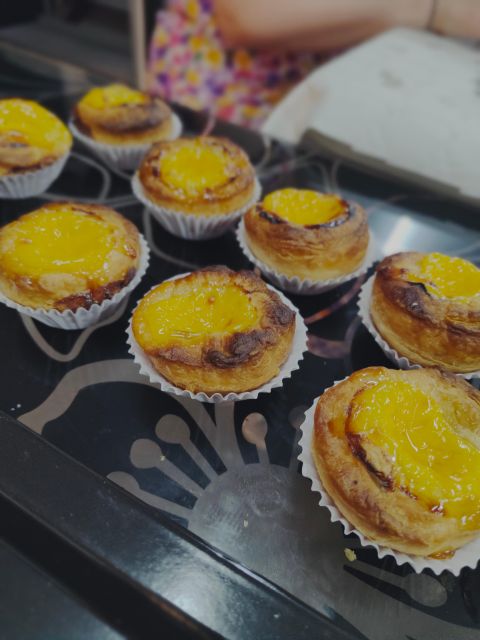
- You taste the finished pastel de natas hot from the oven.
- You pack extra pastries to take home in a cardboard pastry box.
One more detail that makes the experience feel fair: the workshop is described as a maximum of nine people, and the host brings everyone in at different stages. Some reviews mention being brought to the front of the table in steps, so you are actively working rather than standing back.
If you want to do absolutely every step yourself, the activity notes that you should ask for more information about a private workshop. For most people, the shared format is the sweet spot because it keeps the class moving and friendly.
The wine break is part of the recipe, not a side note
This is not a dry, sit-there-and-watch type of class. You get a glass of wine during the lesson, specifically Port wine, or you may be offered regular wine or a mimosa depending on the session.
Past participants call out the drinks as genuinely enjoyable. One mentioned Port tonic, and many highlight that they had two drinks each during the experience. That can sound like a perk, but it also changes the mood. Waiting for the oven is no longer “dead time.” It becomes conversation time.
The social angle is where the best reviews get emotional. People praise hosts like Ana, Sarah, Patricia, and Maria for humor and for including everyone. You are making something finicky, so having a teacher who keeps the energy light can be the difference between feeling stressed and feeling confident.
Also, the class includes local guidance from the host. You may get insider tips on where to eat in Porto, not just generic sightseeing lists. That is valuable because Porto’s food scene is real, and it changes block by block.
Custard, rolling, and the tips you’ll actually use at home
The biggest promise of this workshop is that you leave with a recipe and enough know-how to make pastel de natas again. The recipe is given to participants, and multiple reviews specifically say they could recreate the pastries later.
Here’s what that usually means in practical terms. You are not just copying a written recipe. You are learning the “why” behind the steps the instructor emphasizes, especially things like rolling the dough thin enough and getting the custard portion right so the final pastry sets properly.
Even though the dough is pre-made, you still do the parts that matter most for shaping and consistency: rolling, filling, and assembling. That means you are not stuck doing only the fun part, like eating. You get the muscle memory.
One useful expectation to set: if you have big baking plans for at home with multiple pans, a review notes that one baking dish pack may not be enough to do it in one reasonable session. That is not a reason to skip the workshop. It is just good to know so you do not run into timing issues later.
Other Porto benches and studios we have sat down at
Taking pastel de natas home, including the box
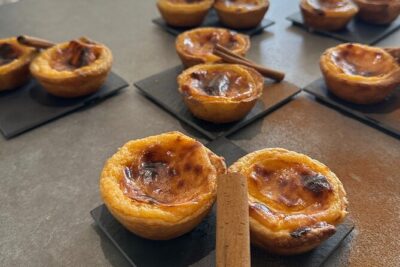
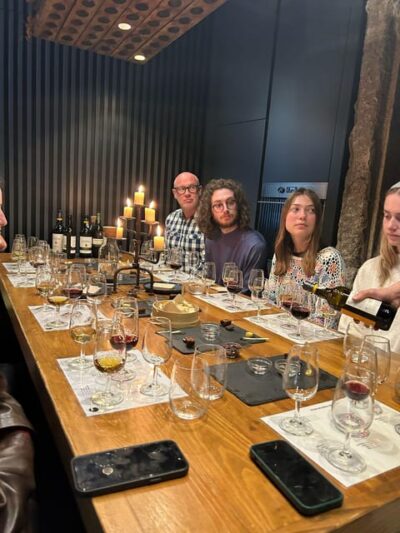
When the pastries come out, you savor them warm. The activity description also clearly states you can take home two or more pastel de natas, packaged in a convenient cardboard pastry box.
This is a smart inclusion. If you are touring Porto and you want a dessert souvenir that does not turn into a gooey mess, you need packaging and timing. The class builds that in.
In several reviews, people mention leaving with multiple tarts, sometimes three each. Even if your exact number varies by how the workshop allocates steps, the deal is consistent: you get to eat some right away and still take more home.
Price and value: $41 for wine, instruction, and take-home pastries
At $41 per person for about 1.5 hours, the value comes from what you actually receive.
You are paying for:
- a structured pastry-making workshop
- one glass of wine (Port wine, regular wine, or a mimosa)
- at least two pastel de natas to take away
- English instruction
- a recipe sheet plus tips during the process
If you simply wanted to taste pastel de nata, you could buy them in Porto. But cooking classes add something else: you learn technique and you get guided feedback. And you get the experience in a central location, by the Cathedral, which saves your day from extra transit time.
The one trade-off is the pre-made dough. If you are dreaming of a true from-scratch pastry-building session, this is not that kind of workshop. But if your goal is to learn the method and walk away with usable guidance, the time-saving choice actually helps. You can focus on rolling, custard, assembly, and results.
Who this workshop is best for
This is a strong match if you:
- want a hands-on food experience in central Porto
- like learning recipes you can repeat at home
- enjoy social activities with people from different countries
- want a rainy-day plan that does not feel like a “tour bus” stop
It is also a good option for older kids. The notes say children over 10 are welcome. It is not suitable for children under 10.
If you are the kind of traveler who gets bored in classes, check your expectations. This is not a long lecture. It is work at the table, with step-by-step coaching and time to taste what you make.
Tips to get the most from your class
A few practical things will help your session feel smooth:
- Go in hungry, but not stuffed. You are tasting the pastries warm and you will be taking more home.
- Plan your day so you have time to enjoy the Cathedral area after. The meeting point is right there on Rua Chã.
- If you want every step yourself, ask ahead about a private workshop. The group format divides participation into stages.
- Expect English instruction and a small group. That is part of the appeal, so arrive ready to work and ask questions.
The repeated praise for hosts like Ana, Sarah, Patricia, and Maria is not random. Their energy shows up in how the group is guided, and that matters for making pastries successfully on the first try.
Should you book this Porto pastel de nata workshop?
I would book it if you want a short, central, hands-on food lesson that ends with warm pastries and takes-home rewards. The combination of step-by-step instruction, Port wine and other drinks, and the chance to leave with a recipe you can actually use makes the $41 price feel fair.
Skip it only if you are specifically searching for a full from-scratch dough session or you dislike any interactive class where you have to roll dough and assemble custard.
If your Porto trip includes time near the Cathedral anyway, this class is an efficient way to turn that time into something you can taste, share, and recreate.
Benches and Studios Across Porto


Pastelarias and Tascas, More Lisbon Food Walks

Newly added around Porto
- From Porto: Douro Valley 3 Vineyards Tour with Lunch
★ 4.8 · 79 reviews - Best of Porto Private Walking Tour
★ 5.0 · 80 reviews - Douro Valley in a Tesla
★ 5.0 · 81 reviews - Porto 360°: Helicopter Flight, Guided Walking Tour & River Cruise
★ 5.0 · 81 reviews - Private Transfer from Porto to Lisbon
★ 5.0 · 82 reviews - Minho Tour Private (Braga and Guimarães) Full Day
★ 5.0 · 82 reviews - Porto: Taylor’s Port Cellar Tour & WOW Wine Experience
★ 4.7 · 82 reviews - Porto Tile Painting Workshop in artist studio
★ 5.0 · 83 reviews - Private Tour
★ 5.0 · 83 reviews - City Bike Rental in Porto
★ 5.0 · 84 reviews
Other boats, other operators: Pasteis de Nata and Lisbon Food Walks.
 ★ 4.9Lisbon: Pastel de Nata Baking ClassFrom $642,106 reviews
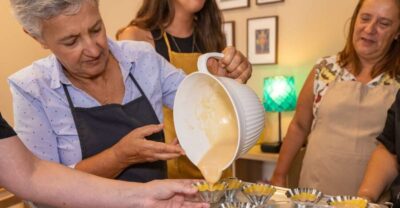 ★ 5.0Porto: Pastel de Nata Cooking Class with Grandma’s RecipeFrom $331,565 reviews
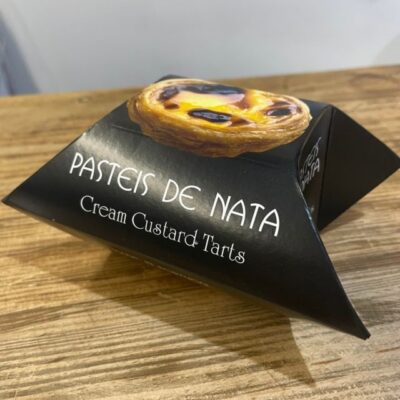 ★ 4.8Porto: Pastel de Nata Cooking Class with Port Wine – SéFrom $41888 reviews
 ★ 4.9Workshops Pasteis de Nata in Porto, PortugalFrom $40520 reviews
 ★ 5.0Pastel de Nata Masterclass at a Real Bakery in Downtown LisbonFrom $84491 reviews
 ★ 5.0Pastel de Nata Pastry Class: Bake and Enjoy Your Own TreatsFrom $66485 reviews
 ★ 4.9Porto: Pastel de Nata Cooking Class from ScratchFrom $50468 reviews
 ★ 4.8Lisbon: 2-Hour Pastel de Nata Cooking ClassFrom $64461 reviews