
REVIEW · PASTEIS DE NATA AND LISBON FOOD WALKS
Pastel de Nata | Workshop from scratch | Porto’s city center
Pastel de nata, without the guesswork. This hands-on Porto workshop teaches the dough from scratch, then puts you in the kitchen for each key step, with local wine and plenty of instructor attention. I also love the small-group setup, where you actually get to try components instead of watching from the sidelines. One possible drawback: it is adult-focused, not gluten or lactose friendly, and you cannot bring companions into the workshop space.
The vibe here is fun and practical. The teaching style comes through in the names people mention most often, like Vanessa, Anna, Clara, Ana, and Mariah, with a shared focus on clear steps and keeping things from feeling stressful. You will likely hear jokes, get real pastry-chef tips, and learn why the pastry and cream behave the way they do.
Timing is strict, so plan like a pro. The class starts at the scheduled time, the door closes when it starts, and you cannot join once it begins. It is also max 12 travelers, in English, with a mobile ticket and a city-center meeting point near public transport.
In This Review
- Key things you should know before you go
- How the Porto workshop actually plays out in 2.5 hours
- Getting inside: meeting point, language, and the no-late-entry rule
- Learning the dough: why this class is worth the money
- Assembling and filling: where you start to feel the rhythm
- Baking results and the warm finish
- Wine and Portuguese culture talk, without getting stuck in a lecture
- Who this class is best for (and who should skip it)
- Value and price: is $48.36 actually fair?
- Practical tips so your pastel de nata session goes smoothly
- Should you book this Pastel de Nata workshop?
- FAQ
- Where is the meeting point for the workshop?
- How long is the pastel de nata workshop?
- What do I get to eat and drink during the class?
- Is the workshop hands-on, or will I only watch?
- Can children join the workshop?
- Can I enter the workshop after it starts?
- What is the cancellation window for a refund?
Key things you should know before you go
- Hands-on dough work: You make the pastry from scratch, not just assemble pastries.
- Small group size: Up to 12 people means more chances to participate and ask questions.
- Wine plus coffee or tea: Local wine shows up during the session, plus coffee or tea.
- Turn-taking during phases: You alternate through different parts of the process as the session moves.
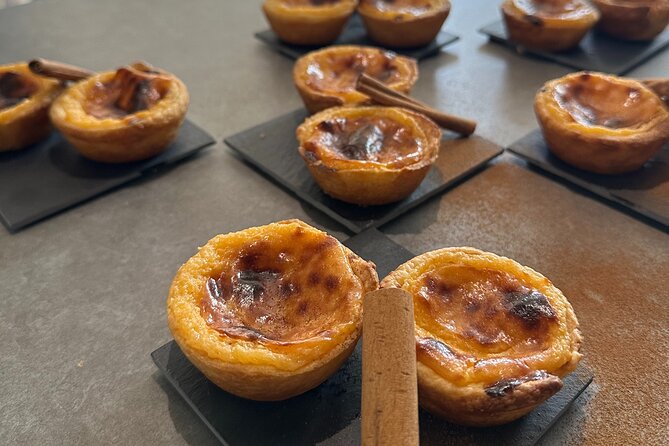
- Warm payoff at the end: You leave with freshly baked pastel de nata to eat while warm.
- Watch the limits: Adults only in practice, and it is not suitable if you need gluten and lactose free options.
More pastelaria stops and tasca crawls we have eaten our way around in Porto
- Porto: Pastel de Nata Pastry-Making Workshop★ 4.9 · 1,542 reviews
- Porto: Pastel de Nata Cooking Class with Port Wine – Sé★ 4.8 · 888 reviews
- Pastel de Nata | Workshop from scratch | Porto’s city center★ 5.0 · 449 reviews
- Porto: Pastel de Nata Cooking Class with Porto Wine (Sé do Porto)★ 5.0 · 340 reviews
How the Porto workshop actually plays out in 2.5 hours
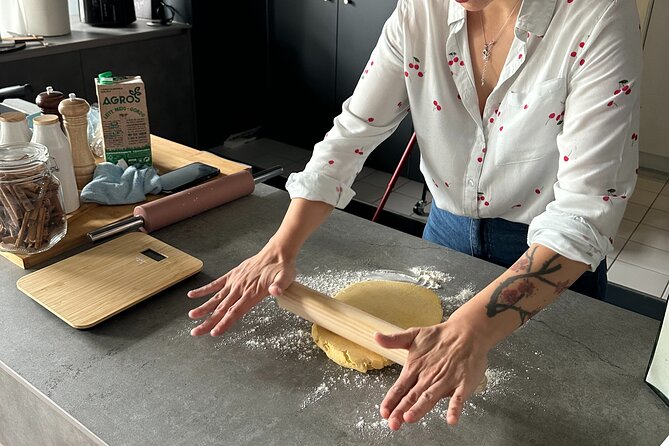
This is a true workshop, so think kitchen time, not a museum-style demo. The session runs about 2 hours 30 minutes, and the flow is built around you learning the whole logic of pastel de nata, from dough to baking to eating.
The setting is a compact studio kitchen in Porto’s city center, with a meeting point at R. do Souto 67. Since the tour ends back at the same meeting point, you are not signing up for a long walk around town. You are signing up to make a dessert that you can repeat at home, which is a rare value in food experiences.
Two practical details matter a lot here. First, the door closes at the start time, no exceptions. Second, only people with reservations can enter, so do not plan on bringing friends or family to watch from inside.
Getting inside: meeting point, language, and the no-late-entry rule
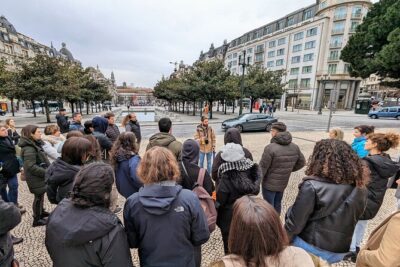
You meet at R. do Souto 67, 4050-595 Porto. It is near public transportation, which makes it easier to fit into a day of walking. The experience is offered in English, so you should not need to hunt for translation support.
The “no late entry” rule is strict for logistical reasons, and it is enforced. If you show up after the session starts, entry is closed and you will not be allowed in. The upside is that everyone gets the same start point, and the instructor can keep the timing tight for dough handling and baking.
One more constraint to keep in mind: children under 15 are not permitted, and kids 15 to 17 can only join if accompanied by an adult. The workshop is designed as an adult group setting, and the food steps involve enough real kitchen work that they do not want distractions or safety issues.
Learning the dough: why this class is worth the money
Pastel de nata is famous, but what most people get wrong at home is the pastry foundation. This workshop is built around making the dough from scratch, and you will get hands-on with the dough phases rather than just assembling finished layers.
People mention learning techniques such as rough puff style pastry work. That matters because the signature texture is not just about cream. The layers and how they expand in the oven determine the flakiness and the contrast between crisp pastry edges and creamy filling.
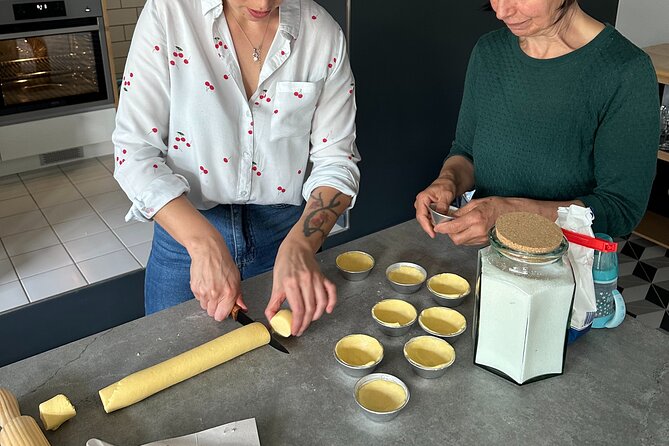
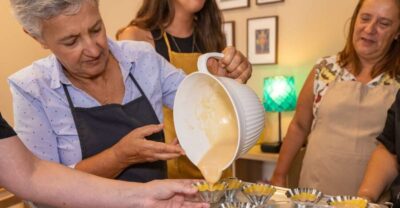
In this kind of workshop, the best part for me is the turn-taking. The instructor alternates participants through different phases, so you get to practice the parts that are usually intimidating, like handling dough and following steps in the right order. Several people also note clear, patient coaching, plus small tips that make a visible difference, which is exactly what you want if you want to bake again later.
If you are thinking, I can just buy pastry sheets and fake it, here is the reality. You will miss the technique. This course is priced higher than a simple pastry tasting, but that is because it is teaching a skill, not selling a snack.
Assembling and filling: where you start to feel the rhythm
Once the dough is ready, you move into assembly. This is where you learn how the tart form works, how the cream behaves, and how to keep everything consistent across batches.
From the feedback, the most praised moments are when the instructor integrates everyone into the process, even if you have never baked before. People repeatedly point out that the class is interactive but not chaotic, which is a big deal when you are dealing with pastry timing.
A helpful detail that comes up in the teaching approach is an emphasis on process quality. The same recipe can taste average or fantastic based on small steps: how the dough is formed, how the filling is handled, and how the baking stage is timed. You will likely get those practical cues during demonstrations and then repeat them as you work at your station.
Also, expect to hear about flavor balance. There is mention of a simple syrup process as part of the workflow, which helps explain that glossy top and the sweet finish people expect from a top-quality pastel de nata.
More whole-city loops around Porto we have ridden



Baking results and the warm finish
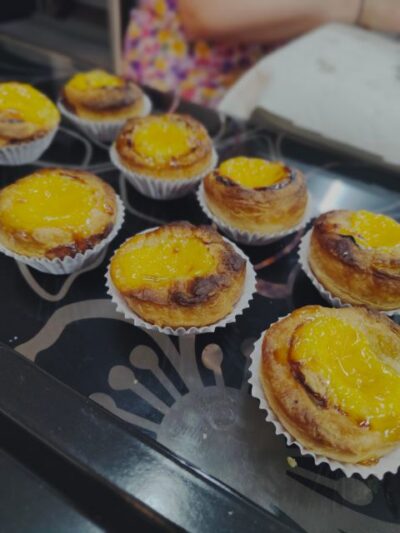
By the time your pastries are baking, you will understand why pastel de nata is served warm. The pastry needs heat to show its texture, and the cream needs warmth to taste right.
At the end, you sit down and enjoy the fruits of your work. The dessert is pastel de nata, served warm, and the pairing includes espresso-style coffee vibes for some people, plus coffee or tea that is included in the workshop.
Here is my practical advice based on what people report: eat them quickly. Pastel de nata can lose its best texture if it cools too far, unless you have a way to reheat. If you are taking extras for later, aim to rewarm them before the taste slips.
Some people also mention having enough pastries for the next day. That can happen depending on the session size and how the instructor distributes the final batch, but do not assume leftovers are guaranteed. If you want to share, ask the instructor when you are packing or whether they plan extra.
Wine and Portuguese culture talk, without getting stuck in a lecture
Yes, there is wine. Local wine is included, and it shows up during the fun, interactive session, not as a separate tasting event. That makes the class feel like a social workshop rather than a strict culinary school.
The cultural part is woven into the food. You hear about Portuguese pastry basics and why pastel de nata became a symbol of the country’s baking world. The best style here is simple and conversational, which matches the overall tone people describe: engaging, funny at times, and focused on real food technique.
If you are the type who likes food history but hates long lectures, this is likely a good fit. You get just enough background to appreciate what you are making, then you go back to hands-on work.
Who this class is best for (and who should skip it)
This is best for you if:
- you want a skill you can repeat at home, not just a photo-friendly food stop
- you like small-group learning, where you can ask questions while you work
- you enjoy food plus a drink, and you are comfortable getting involved
It is also ideal if you are visiting Porto and want something that feels local but does not require a huge time commitment. Two and a half hours in a kitchen is a smart alternative to another long sit-down meal.
You might want to skip it if:
- you need gluten free and lactose free options, since it is not suitable for people intolerant to gluten and lactose
- you need to bring a child, since children under 15 cannot join
- you are traveling with companions who want to watch from inside, because companions are not allowed in the space
- you are worried about timing, since you cannot enter after the start time
If you love baking already, you will still pick up technique cues, especially for dough handling and the syrup finish. Several people mention even experienced cooks learning new methods, which says a lot.
Value and price: is $48.36 actually fair?
At $48.36 per person for about 2 hours 30 minutes, this workshop sits in the middle of what you might expect for a hands-on cooking class. The key value is what is included: coffee and/or tea, local wine, and the full learning process, including dough making and baking.
Could you eat pastel de nata for less? Of course. Porto has plenty of pastries at street-level prices. But buying pastry does not teach you the technique that creates the right texture. This is the difference between tasting Porto and learning a Porto habit.
Also, the small group size is part of the cost justification. With a maximum of 12 people, you are not stuck waiting for the instructor to notice you. Many people highlight that you rotate through different phases, so you are not passive for most of the experience.
Finally, you leave with warm pastries you made yourself. That is a practical payoff, not just a souvenir.
Practical tips so your pastel de nata session goes smoothly
Bring patience for dough work. Puff-style dough and filling steps have timing, so rushing is not your friend. Go in expecting to get flour on your hands, then wash up after.
Dress for activity. You are in a kitchen, and you will be working close to your hands and ingredients. Comfortable clothes beat your best outfit here.
Arrive early. The workshop door closes at the scheduled time, and you cannot join once it has started. If you are running late, that is the one thing you cannot fix.
Plan your day around it. Since the session ends back at the meeting point, you can build a simple schedule: morning or afternoon workshop, then a nearby stroll or meal after you are done.
Should you book this Pastel de Nata workshop?
If you want the real Porto version of pastel de nata, and you want to learn how to make it, I think this is a smart buy. The best reason to book is that you are not just eating pastries, you are building technique, and you get hands-on practice in a small group.
Skip it if you need gluten and lactose free food, if you are bringing kids under 15, or if you cannot be on time. The timing rule is the deal breaker. If you can meet the start time and you are ready to roll up your sleeves, you will likely feel like you learned something you can use again.
Also, if you are the type who enjoys Portuguese food culture when it connects directly to what you are doing, this format hits the mark.
FAQ
Where is the meeting point for the workshop?
The meeting point is R. do Souto 67, 4050-595 Porto, Portugal.
How long is the pastel de nata workshop?
It lasts about 2 hours 30 minutes.
What do I get to eat and drink during the class?
You will make and enjoy pastel de nata. Coffee and/or tea are included, and local wine is included as well.
Is the workshop hands-on, or will I only watch?
It is a group workshop where you alternately participate in different phases of making the pastel de nata, so you should expect hands-on work rather than only watching.
Can children join the workshop?
Children under 15 are not allowed to participate or accompany customers with reservations. Children aged 15 to 17 can only participate if accompanied by an adult.
Can I enter the workshop after it starts?
No. It is not possible to enter once the workshop has started. The door is closed at the scheduled time with no exceptions.
What is the cancellation window for a refund?
You can cancel up to 24 hours in advance of the experience start time for a full refund. If you cancel less than 24 hours before, the amount you paid is not refunded.
Benches and Studios Across Porto


Whole-City Loops of Porto, More Routes




Pastelarias and Tascas, More Lisbon Food Walks

Newly added around Porto
- From Porto: 516 Arouca Bridge and Paiva Walkways Guided Tour
★ 5.0 · 38 reviews - Private Vinho Verde Region Wine Tour from Porto Including Lunch
★ 5.0 · 39 reviews - Surf Lesson | Surf Lessons
★ 5.0 · 39 reviews - Bike or E-Bike Tour of Porto and Atlantic Coast
★ 5.0 · 39 reviews - Porto Street Art Tour
★ 4.5 · 39 reviews - Private Porto Secrets Walking Tour + Personal Port Wine Tasting
★ 4.5 · 39 reviews - Douro Valley Premium Private
★ 5.0 · 39 reviews - Private Tour to stunning Douro Valley and most renowned wineries
★ 5.0 · 39 reviews - Off the Beaten Track in Porto: Private City Tour
★ 5.0 · 39 reviews - Porto Sunset Bike Tour
★ 4.5 · 39 reviews
Other boats, other operators: Pasteis de Nata and Lisbon Food Walks.
 ★ 4.9Lisbon: Pastel de Nata Baking ClassFrom $642,106 reviews
 ★ 5.0Porto: Pastel de Nata Cooking Class with Grandma’s RecipeFrom $331,565 reviews
 ★ 4.9Porto: Pastel de Nata Pastry-Making WorkshopFrom $411,542 reviews
 ★ 4.8Porto: Pastel de Nata Cooking Class with Port Wine – SéFrom $41888 reviews
 ★ 4.9Workshops Pasteis de Nata in Porto, PortugalFrom $40520 reviews
 ★ 5.0Pastel de Nata Masterclass at a Real Bakery in Downtown LisbonFrom $84491 reviews
 ★ 5.0Pastel de Nata Pastry Class: Bake and Enjoy Your Own TreatsFrom $66485 reviews
 ★ 4.9Porto: Pastel de Nata Cooking Class from ScratchFrom $50468 reviews